2015-2026 Audi Vibration, Booming, Clacking Noises
Audi Technical Service Bulletin 2079542/1 addresses customer complaints of vibration, booming, or clacking noises in 2015-2026 Audi models. The TSB identifies foreign objects, such as stones, trapped in the underbody or subframe area as the cause, leading to unfiltered noise transmission to the…
 Sarah Mitchell2021 Audi e-tron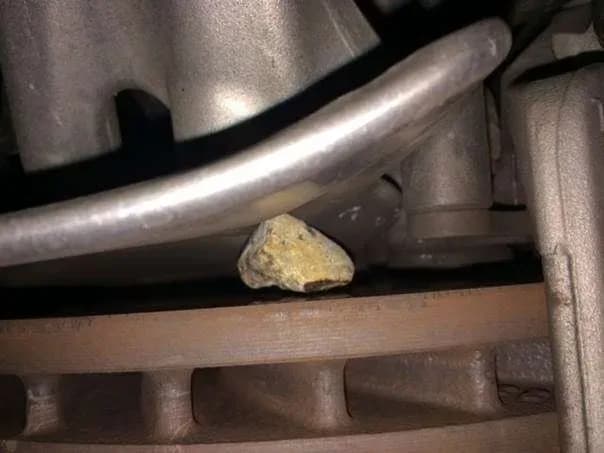
Şu araçlar için de geçerli
- Audi A3
- 2022–2026
- Audi A4
- 2021–2025
- Audi A4 allroad
- 2021–2025
- Audi A5
- 2021–2024
- Audi A6
- 2021–2025
- Audi A6 allroad
- 2021–2026
- Audi A7
- 2021–2025
- Audi A7 e
- 2021–2022
- Audi A8 L e
- 2021
- Audi e-tron
- 2022–2023
- Audi e-tron GT
- 2022–2026
- Audi e-tron Sportback
- 2021–2022
- Audi Q3
- 2021–2025
- Audi Q5
- 2021–2025
- Audi Q5 e
- 2021, 2023, 2024, 2025
- Audi Q7
- 2021–2026
- Audi Q8
- 2021–2026
- Audi R8
- 2021–2023
- Audi RS 3
- 2022–2026
- Audi RS 5
- 2021–2024
- Audi RS 6 Avant
- 2021–2026
- Audi RS 7
- 2021–2026
- Audi RS e-tron GT
- 2022, 2023, 2024, 2026
- Audi RS Q8
- 2021–2026
- Audi S e-tron GT
- 2026
- Audi S3
- 2022–2026
- Audi S4
- 2021–2025
- Audi S5
- 2021–2024
- Audi S6
- 2021–2025
- Audi S7
- 2021–2025
- Audi S8
- 2021–2026
- Audi SQ5
- 2021–2025
- Audi SQ7
- 2021–2026
- Audi SQ8
- 2021–2026
- Audi TT
- 2021–2023
- Audi TT RS
- 2021–2022
- Audi TTS
- 2021–2023
▸ 31 tane daha göster▾ Daha az göster
Owners of various 2015-2026 Audi models may experience unusual Audi vibration noises, booming, or clacking sounds while driving or after applying significant steering lock. This issue is detailed in Technical Service Bulletin (TSB) 2079542/1, issued by Audi to address these specific customer complaints. The TSB, with a release date of September 29, 2025, clarifies that these noises are typically not due to a component failure but rather external factors. This bulletin provides guidance for technicians to identify and resolve the root cause of these unwanted sounds.
This Technical Service Bulletin, identified as Transaction No. 2079542/1, applies to all Audi models from model years 2015 through 2026. It addresses a common customer concern where environmental factors lead to foreign objects becoming lodged in the vehicle's undercarriage, causing noticeable and often irritating Audi vibration noises and other sounds.
Symptoms of Foreign Object Noise
The TSB identifies a comprehensive range of specific Audi vibration noises and complaints that owners might notice. These symptoms are categorized by the type of noise and the vehicle area where they are perceived, providing a detailed picture for diagnosis.
General Vehicle Noises and Vibrations
Customers frequently report a variety of general noises and vibrations that affect the entire vehicle:
- Vibrating Noises: These are often described as a persistent shaking or trembling sensation, reported from both the rear and front areas of the entire vehicle.
- Buzzing Noises: A low, continuous sound, similar to a hum or drone, is frequently reported, particularly emanating from the rear and front sections of the vehicle.
- Chattering Noises: These distinct, rapid, repetitive sounds are commonly reported from the front of the vehicle.
- Snapping Noises: Sharp, sudden, and brief sounds are also noted, often originating from either the front or rear of the vehicle.
- General Noise and Vibrations: Broader complaints encompass unspecified noises and vibrations affecting the entire vehicle, indicating a pervasive issue without a precise location.
Specific Component-Related Noises
Beyond general vehicle complaints, the TSB also highlights specific noise and vibration issues linked to particular components and their locations within the vehicle's structure:
- Chassis Components: Noises and vibrations are reported from the chassis, specifically involving the wheels, tires, and tire pressure monitoring system.
- Underbody Trim: Noise and vibrations are noted from the body attachments and installations, particularly concerning the insulation and heat protection of the underbody trim. These can be localized to the right or left side.
- Engine Compartment Tray: Similar noise and vibrations are reported from the insulation and heat protection associated with the engine compartment tray.
- Engine Operation: General noises and vibrations can be perceived during the engine's operation.
- Engine Mount: Specific noise and vibrations are linked to the engine housing, crankshaft drive, and engine mount, often perceived from the rear of the engine.
- Transmission Housing and Mounts: Complaints involve noise and vibrations from the transmission housing, parking lock mechanism, and the transmission mount. In some instances, the pendulum support or transmission carrier might be reported as "component, automotive fluids -> damaged," suggesting a more direct impact or stress from trapped objects. These issues can be localized to the front or rear of the transmission area.
These varied and detailed descriptions help technicians pinpoint the potential location of the foreign object causing the Audi vibration noises and other acoustic disturbances.
Technical Background: The Root Cause of Noise Transmission
Audi's technical background for TSB 2079542/1 provides a clear explanation for the occurrence of these noises. The primary cause is attributed to environmental factors, specifically the ingress of stones, gravel, or similar foreign objects into critical areas of the vehicle's undercarriage. These objects can become lodged in the cross member or subframe area.
When foreign objects get stuck in these structural components, they create a direct, unfiltered pathway for vibrations and noises to be transmitted into the vehicle's body. Normally, the vehicle's design incorporates various dampening and isolation measures to prevent road noise and vibrations from reaching the cabin. However, a trapped object bypasses these protective layers, effectively creating a bridge that transmits mechanical vibrations directly. This direct transmission results in the noticeable booming, clacking, or Audi vibration noises experienced by the driver and passengers, as the vehicle's sound insulation is rendered ineffective against this direct contact. The TSB explicitly states that there has been "No production change" to address this, indicating it's an external factor rather than a manufacturing defect.
Diagnosis and Inspection Procedure
When diagnosing these complaints, technicians are advised to first confirm the customer's reported symptoms. The "Workshop findings" section of TSB 2079542/1 states that "The customer statement can be reproduced," which is the initial step in verifying the issue. The crucial step in resolving the Audi vibration noises is a thorough inspection of the vehicle's underfloor area.
The "Service" section of the TSB provides a direct instruction: "Before replacing components, make sure that no stones are trapped in the underfloor area (refer to example photos)." This emphasizes that component replacement should not be the first course of action. Instead, a meticulous visual and physical inspection is required.
Technicians should:
- Lift the Vehicle: Safely raise the vehicle on a suitable workshop lift to provide full and clear access to the entire underbody.
- Visual Inspection: Systematically examine all potential trapping points. This includes the cross member, subframe, suspension components, underbody panels, transmission housing, engine mounts, and any associated insulation or heat shields.
- Focus on Common Areas: Pay close attention to areas identified in the TSB's example photos. These images illustrate stones lodged in various locations, such as between suspension arms and the subframe, within structural cavities, or resting on components like the transmission carrier or engine mount. The photos show stones of varying sizes, from small pebbles to larger rocks, capable of causing significant noise.
- Tactile Inspection: Gently tap or prod components suspected of harboring foreign objects. The presence of a stone can often be detected by sound or feel.
- Documentation: Note the location and size of any foreign objects found.
This detailed inspection is paramount, as even small, seemingly innocuous objects can be the source of significant noise and vibration. The goal is to identify and remove all trapped debris before considering more extensive and potentially unnecessary repairs.
Repair Procedure Summary
The repair procedure for addressing these Audi vibration noises is primarily focused on the identification and removal of foreign objects. As outlined in Technical Service Bulletin 2079542/1, the process is straightforward but requires thoroughness:
Vehicle Preparation:
- Safely raise the vehicle on a suitable workshop lift to provide full and clear access to the entire underbody.
- Ensure adequate lighting to thoroughly inspect all nooks and crannies of the undercarriage.
Locate Foreign Objects:
- Following the guidance from the "Diagnosis and Inspection Procedure," meticulously inspect the cross member, subframe, suspension components, underbody trim, engine compartment tray, transmission housing, parking lock mechanism, transmission carrier, and engine mounts.
- Refer to the example photos provided in the TSB for typical locations where stones and debris tend to become lodged. These images serve as a visual guide to common problem areas.
Object Removal:
- Once a foreign object (e.g., a stone) is identified, carefully dislodge and remove it. This may involve using various tools such as:
- Pry tools: To gently dislodge objects from tight spaces.
- Air guns: To blow out loose debris or smaller particles.
- Grabber tools/forceps: For reaching and extracting objects in confined areas.
- Exercise caution to avoid damaging any vehicle components, wiring, or hoses during the removal process. Ensure all removed debris is accounted for and disposed of properly.
- Once a foreign object (e.g., a stone) is identified, carefully dislodge and remove it. This may involve using various tools such as:
Post-Removal Verification:
- After removing all identified foreign objects, perform a final visual check of the affected areas to ensure no debris remains.
- Lower the vehicle and conduct a road test to confirm that the vibration, booming, or clacking noises have been eliminated.
- If the noises persist, a further, more detailed inspection may be necessary, potentially extending to areas not initially suspected.
This process, though seemingly simple, requires the expertise of qualified technicians who understand the vehicle's structure and can ensure the complete removal of debris without causing secondary damage. The TSB does not specify any special tools or part numbers for this procedure, as the primary action is removal rather than replacement.
Important Warranty Information
A critical piece of information for owners is explicitly stated in TSB 2079542/1 under the "Warranty" section: "This is not a fault which is covered under warranty."
This means that any inspection, diagnosis, and removal of foreign objects causing Audi vibration noises will typically not be covered under the standard vehicle warranty. Since the issue stems from external environmental factors (such as road debris like stones) rather than a manufacturing defect or component failure, the cost associated with addressing these noises will generally be the responsibility of the vehicle owner. Owners should be aware of this policy when seeking service for these types of complaints. It is always advisable to confirm specific costs and coverage with an authorized Audi service center.
Source: NHTSA ID: 10243431
Galeri
5 görsel
Frequently Asked Questions
- What causes vibration, booming, or clacking noises in my Audi?
- According to Audi TSB 2079542/1, these noises are typically caused by foreign objects, such as stones or debris, becoming trapped in the vehicle's underbody, specifically in the cross member or subframe area. These trapped objects transmit unfiltered vibrations and noises into the vehicle's cabin.
- Which Audi models are affected by TSB 2079542/1?
- This Technical Service Bulletin applies to a wide range of Audi models from model years 2015 through 2026, including various A, S, RS, Q, SQ, and e-tron series vehicles. A comprehensive list of affected models can be found in the official NHTSA documentation for TSB 2079542/1.
- Will my warranty cover the repair for these Audi vibration noises?
- No, Audi TSB 2079542/1 explicitly states that this is not a fault covered under warranty. Since the issue stems from external environmental factors (foreign objects), the cost of inspection and removal will typically be the owner's responsibility.
- What should I do if my Audi is making these noises?
- If you experience vibration, booming, or clacking noises, especially after applying steering lock, it's recommended to have your vehicle inspected by an authorized Audi service center. Technicians will perform a thorough check of the underbody for any trapped foreign objects as outlined in TSB 2079542/1.
- Are there any specific areas where foreign objects commonly get stuck?
- Yes, the TSB highlights the cross member/subframe area as a common location. Additionally, complaints are noted for underbody trim, engine compartment trays, transmission housing, and engine mount areas. Technicians will inspect these specific points for lodged debris.
Related Articles
2021 Audi e-tron Electrical Malfunction and Power Loss
A 2021 Audi e-tron owner reported a severe 'Electrical Malfunction' resulting in complete loss of power on the highway. The issue has persisted despite dealer attempts to fix it over five months, posing significant safety risks.
2021-2026 Audi UTR Troubleshooting & FAQs TSB 2081409/1
This Audi Technical Service Bulletin (TSB 2081409/1) provides comprehensive answers to frequently asked questions and troubleshooting steps for the Audi Universal Traffic Recorder (UTR) accessory, covering topics like SD card compatibility, video playback, Wi-Fi issues, and more.
2021-2025 Audi Emergency Call System Fault TSB
Audi has released Technical Service Bulletin 2059528/18 to address an "Emergency call function: malfunction! Function unavailable. Please contact service" warning, often accompanied by a red SOS LED and DTC B200000. This issue affects various 2021-2025 Audi models and is due to a software problem…
2021-2026 Audi Adaptive Light System Fault C12B3FA TSB
Audi has released Technical Service Bulletin 2054202/7 to address an intermittent 'Audi adaptive light: system fault' message and DTC C12B3FA in various 2021-2026 models. This TSB outlines diagnosis and resolution for driver assistance system malfunctions.
2021-2026 Audi Parking Aid False Warnings TSB 2024323/12
This Technical Service Bulletin (TSB 2024323/12) details diagnostic and repair procedures for 2021-2026 Audi vehicles experiencing false parking aid warnings. Learn about environmental factors, sensor checks, and proper installation to resolve issues like 'Parking aid does not work / warning is…
Yorum bırakın
Yorumlar moderasyondan geçer ve görünmesi biraz zaman alabilir. Sadece adınız ve soyadınızın baş harfi herkese açık olarak gösterilir.
Yorumlar
İlk yorum sizden olsun.