Chrysler (FCA US, LLC) is recalling certain 2020-2025 Jeep Wrangler 4Xe and 2022-2026 Grand Cherokee 4Xe vehicles. The high voltage battery may fail internally and lead to a vehicle fire while parked or driving.
Chrysler (FCA US, LLC) is recalling certain 2018-2024 Jeep Wrangler vehicles. The wiring harness for the rearview camera and the center brake light may short circuit, which can disable the rearview camera image and center brake light. As such, these vehicles fail to comply with the requirements of Federal Motor Vehicle Safety Standard numbers 111, "Rear Visibility" and 108, "Lamps, Reflective Devices, and Associated Equipment."
Chrysler (FCA US, LLC) is recalling certain 2020-2024 Jeep Gladiator and 2018-2024 Jeep Wrangler vehicles. The instrument panel cluster may experience an internal short circuit and fail. As such, these vehicles fail to comply with the requirements of Federal Motor Vehicle Safety Standard number 101, "Controls and Displays."
I own a 2023 Jeep Wrangler 4-Door Sahara 4xe (VIN [XXX], plug-in hybrid). Since new, this vehicle has had repeated electrical and high-voltage (HV) hybrid battery system failures. About eight months after purchase, at approximately 6,590 miles, the vehicle lost power and would not restart in a parking lot ("Service Charging System" warning) and had to be towed to the dealer (Repair Order #[XXX], 10/18/2023–10/20/2023); a 12V battery failure was diagnosed. On February 9–10, 2026, the dealer performed Recall Campaign 68C (JL/WL PHEV HV Battery) on this vehicle — a software/module update to the BPCM, HCP, AHCP, PCM, TCM, and IDCM, plus an HV battery diagnostic analysis (Repair Order #[XXX]). On [XXX], at approximately 22,692 miles, the check engine light illuminated and the dealer diagnosed a hybrid (HV) battery failure. The manufacturer (Stellantis/FCA US LLC) subsequently opened a warranty case (#[XXX]) and a lemon-law repurchase case (#[XXX]), confirming the vehicle could not be repaired and offering repurchase or $15,000 cash compensation. As of this filing, the vehicle remains at the dealership, out of service, well past the dealer's own promised repair completion date. Across its ownership, this vehicle has been out of service for HV-battery- and electrical-system-related repairs for a documented cumulative total of approximately 50 days. I am filing this report because a vehicle losing propulsion/electrical power unexpectedly, and a manufacturer needing to run an HV battery software recall campaign on this same vehicle only six months before a full HV battery failure, both raise safety concerns beyond an ordinary warranty repair, and I want this pattern on record in case other owners of this model are experiencing the same failures. INFORMATION REDACTED PURSUANT TO THE FREEDOM OF INFORMATION ACT (FOIA), 5 U.S.C. 552(B)(6)
No injuries · No fire · No crash
Vehicle left me stranded in the middle of an intersection XXX due to high voltage battery failure. Vehicle was totally inoperable. This is the second time the battery has failed. First battery replacement was XXX. Also serviced XXX for battery issues. Vehicle had to be towed to the dealership, date unknown when battery will arrive for replacement. I'm now left with a vehicle that will have zero value for resale. I do not feel safe driving this vehicle and cannot consider driving the Jeep for a long distance. I tried to chat one of the agents associated with NHTSA named [XXX], she was very rude. I hope you can understand this situation is extremely upsetting. Thank you. INFORMATION REDACTED PURSUANT TO THE FREEDOM OF INFORMATION ACT (FOIA), 5 U.S.C. 552(B)(6)
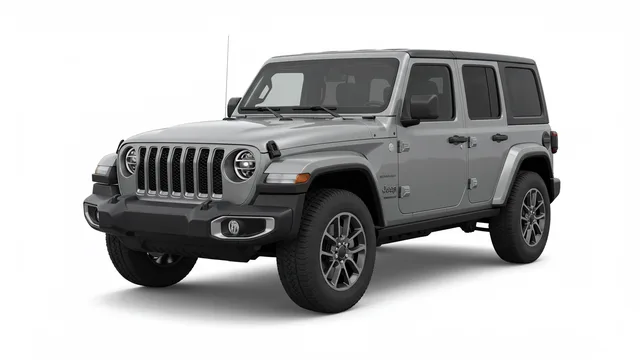
Chrysler (FCA US, LLC) (Stellantis) is recalling certain 2023-2024 Ram 1500, Jeep Wrangler, Jeep Wagoneer, Jeep Grand Wagoneer, Chrysler Pacifica, Ram 3500, Ram 3500 cab chassis, Ram 2500, Ram 4500 cab chassis, Ram 5500 cab chassis, 2023 Jeep Gladiator, Jeep Grand Cherokee, Jeep Grand Cherokee L, Ram 3500 Cab Chassis with a GVWR less than 10,000 lbs., and Chrysler Voyager vehicles. The steering column control module may not be welded properly, which can prevent the driver's air bag from deploying in a crash. As such, these vehicles fail to comply with the requirements of Federal Motor Vehicle Safety Standard number 208, "Occupant Crash Protection."
Chrysler (FCA US, LLC) is recalling certain 2021-2024 Jeep Wrangler and 2022-2024 Jeep Grand Cherokee vehicles. A hybrid control processor (HCP) software error may cause the defrosting and defogging system to be inoperative. As such, these vehicles fail to comply with the requirements of Federal Motor Vehicle Safety Standard number 103, "Windshield Defrosting and Defogging Systems."
No injuries · No fire · No crash
This vehicle is subject to two open NHTSA fire-risk recalls. The remedies provided so far have not corrected the underlying defects. Recall 25V-741 (Safety Recall 95B/68C), high-voltage battery fire risk: On 1/9-20/2025, dealer reprogrammed BPCM and TCM software only (Invoice #52682); no parts replaced; mileage 18,680. On 1/6-7/2026 - one year later - the dealer performed a SECOND remedy for the SAME recall: reprogrammed BPCM, AHCP/HCP, and PCM software only (Invoice #61639); no parts replaced; mileage 31,553-31,561. Reprogramming the same modules twice within 12 months for the same fire-risk recall, with no battery hardware ever replaced, indicates the first remedy failed to correct the defect. The recall notice describes battery pack replacement as a possible remedy "if needed," but this has never been performed. Recall 26V363000 (issued 6/4/2026), EPS pump wiring fire risk: On 7/10/2026, dealer inspected the power steering pump harness connector only (Invoice #66268, "Safety Recall 21D"); no parts replaced; mileage 36,871-36,874. Across 3 remedy visits spanning both recalls, only software reprogramming or connector inspection was performed - zero hardware parts replaced. This pattern indicates the fire-risk defects remain uncorrected. Requesting NHTSA review the adequacy of these recall remedies.
No injuries · No fire · No crash
Battery pack replacement twice and engine replacement this jeep had problems right after I got it new been in the shop 12 times over and over again they can not get it right
No injuries · No fire · No crash
My 2023 Jeep Wrangler 4xe High Altitude received FCA Recall 68C. Since the recall was completed, the vehicle has experienced repeated and unpredictable reductions in available propulsion during normal driving. The problem is most noticeable when accelerating to merge onto highways, enter traffic, or pass slower vehicles. During these situations, I depress the accelerator expecting normal acceleration, but the vehicle frequently provides significantly reduced power. There is a noticeable delay before the gasoline engine produces sufficient propulsion, leaving the vehicle unable to accelerate as expected for several seconds. Based on my experience, the condition is significantly worse during hot weather. As outside temperatures increase, the hesitation and reduction in available propulsion appear to occur more frequently and are more pronounced. This has caused me to lose confidence in the vehicle's ability to accelerate when needed. This condition creates a serious safety hazard because surrounding traffic continues at highway speeds while my vehicle is unable to accelerate as commanded. In [XXX], this hazard is particularly acute because many interstate and highway entrance ramps are relatively short, requiring drivers to accelerate quickly to merge safely into traffic traveling at highway speeds. When the vehicle unexpectedly limits propulsion or delays engaging the gasoline engine, there may not be sufficient distance to reach the speed necessary to merge safely, increasing the risk of a collision. The same issue also affects attempts to pass slower vehicles on two-lane highways, where timely acceleration is essential for safe operation. The vehicle does not display diagnostic trouble codes or warning messages when this occurs. Because no diagnostic codes are stored, I have not taken the vehicle to the dealer, as other owners have reported that dealerships are unable to identify or repair the condition in the absence of fault codes. The lack of diagnostic codes INFORMATION REDACTED PURSUANT TO THE FREEDOM OF IN
No injuries · No fire · No crash