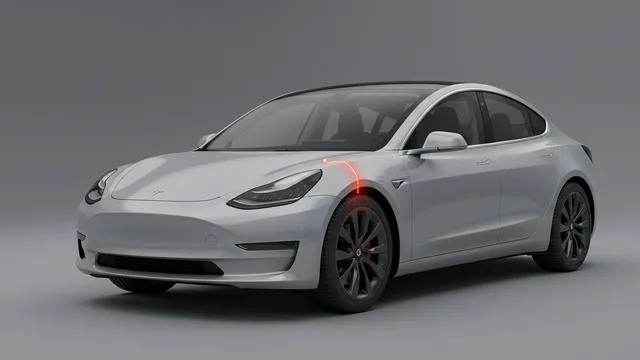
Tesla, Inc. (Tesla) is recalling certain 2024 Cybertruck, 2017-2025 Model 3, and 2020-2025 Model Y vehicles. The tire pressure monitoring system (TPMS) warning light may not remain illuminated between drive cycles, failing to warn the driver of low tire pressure. As such, these vehicles fail to comply with the requirements of Federal Motor Vehicle Safety Standard number 138, "Tire Pressure Monitoring Systems."
Tesla, Inc. (Tesla) is recalling certain 2021-2024 Model 3, Model S, Model X, and 2020-2024 Model Y vehicles. The hood latch assembly may fail to detect an unlatched hood condition after the hood has been opened.
Tesla, Inc. (Tesla) is recalling certain 2012-2024 Model S, 2015-2024 Model X, 2017-2023 Model 3, and 2020-2023 Model Y vehicles. In the event of an unbelted driver, the seat belt warning light and audible chime may not activate as intended. As such, these vehicles fail to comply with the requirements of Federal Motor Vehicle Safety Standard number 208, "Occupant Crash Protection."
Tesla, Inc. (Tesla) is recalling certain 2013, 2018-2021 Model S, 2020-2021 Model X, 2018-2022 Model 3, and 2020-2022 Model Y vehicles. A factory reset muted the Pedestrian Warning System (PWS) sounds. As such, these vehicles fail to comply with the requirements of Federal Motor Vehicle Safety Standard number 141, "Minimum Sound Requirements for Hybrid and Electric Vehicles."
Tesla, Inc. (Tesla) is recalling certain 2012-2023 Model S, 2016-2024 Model X, 2017-2023 Model 3, 2019-2024 Model Y, and 2024 Cybertruck vehicles. An incorrect font size is displayed on the instrument panel for the Brake, Park, and Antilock Brake System (ABS) warning lights. As such, these vehicles fail to comply with the requirements of Federal Motor Vehicle Safety Standard number 105, "Hydraulic and Electric Brake Systems" and 135, "Light Vehicle Brake Systems."

The 2022 Tesla Model 3 has a clean record with no recalls, owner complaints, or federal investigations. However, several manufacturer service bulletins address specific issues like a missing reinforcement plate, Occupant Classification System (OCS) replacement, and trunk water leaks.
Tesla vehicles from 2021-2024, including Model 3, Model Y, Model S, and Model X, receive their owner's manual content digitally, integrated directly into the vehicle's software and displayed on the touchscreen. This content is customized to your specific vehicle configuration and software version.
Tesla vehicles from model years 2021-2024, including the Model 3, Model S, Model X, and Model Y, feature a digital owner's manual integrated directly into the vehicle's touchscreen. This manual is customized to your specific vehicle configuration and software version, providing relevant…
Tesla vehicles, including the 2021-2024 Model 3, S, X, Y, and Cybertruck, do not come with physical owner's manuals. Instead, all essential information is integrated directly into the vehicle's software, accessible via the touchscreen. This digital format ensures owners always have the most…
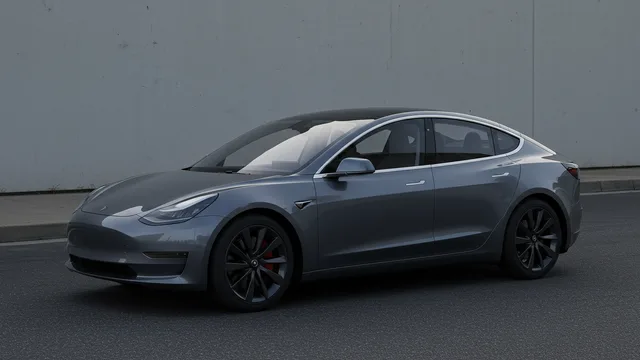
Tesla vehicles from 2021-2024, including Model 3, Model S, Model X, Model Y, and Cybertruck, feature an integrated digital owner's manual. Access it directly via your car's touchscreen, where content dynamically adjusts to your specific vehicle configuration and software version.
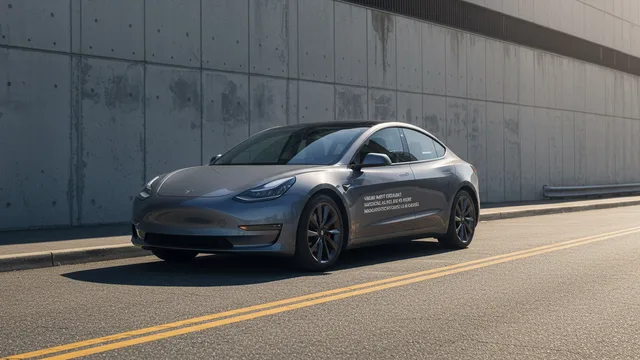
Tesla vehicles from 2021-2024, including the Model 3, Model Y, Model S, Model X, and Cybertruck, feature a digital-only owner's manual integrated directly into the vehicle's software. This guide explains how to access and utilize this dynamic, touchscreen-based resource, referencing NHTSA…
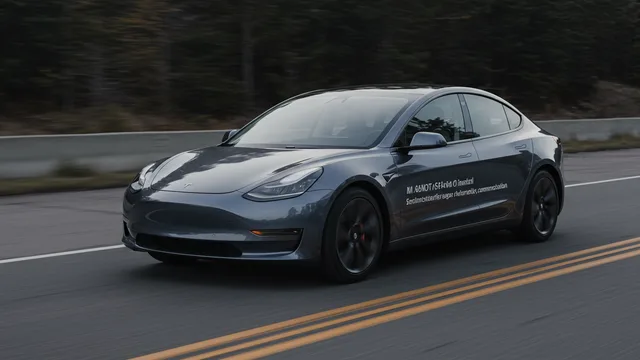
This article provides an overview of the digital owner's manual for 2021-2024 Tesla Model 3, S, X, and Y vehicles, which is integrated into the vehicle's touchscreen and updated over-the-air. Learn about its structure and key safety information.
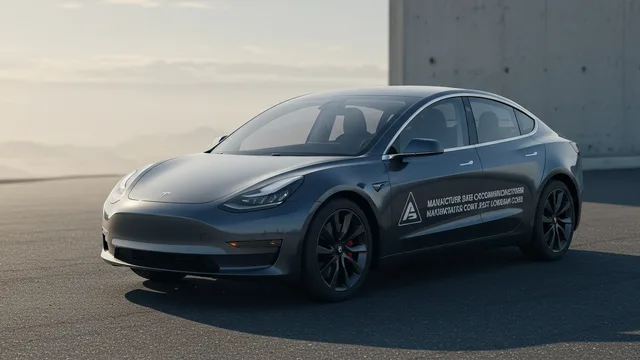
Tesla vehicles from 2021-2024, including the Model 3, S, X, and Y, feature an integrated digital owner's manual accessible via the touchscreen. This document (NHTSA ID 11005740) represents a comprehensive PDF snapshot of the manual content, tailored to your vehicle's configuration.
Tesla vehicles from 2021-2024, including Model 3, S, X, and Y, feature an integrated digital owner's manual accessible directly through the vehicle's touchscreen. This manual updates over-the-air and provides context-specific information, eliminating the need for a physical copy.
Tesla vehicles from 2021-2024, including Model 3, S, X, and Y, utilize an integrated digital owner's manual accessible via the vehicle's touchscreen. This system provides dynamic, vehicle-specific information, eliminating the need for a physical manual. This article explains how Tesla's digital…
Tesla vehicles from 2021-2024, including Model 3, Model Y, Model S, Model X, and Cybertruck, do not come with a physical owner's manual. Instead, all relevant content is integrated into the vehicle's touchscreen, dynamically updating with software versions and vehicle configurations.
Tesla vehicles from 2021-2024, including Model 3, S, X, and Y, feature an integrated digital owner's manual accessible via the touchscreen. This guide dynamically adjusts its content based on your vehicle's specific configuration and software version, providing up-to-date and personalized…
The Tesla service center in San Antonio Texas installed new tires and a new wheel on my vehicle and one of the tires was installed inside out based on the manufacturer’s specifications. I’ve been driving this vehicle for about 4 months /5k miles with the risk of this tire malfunctioning and causing an accident.
No injuries · No fire · No crash
To Whom It May Concern, I am reporting what I believe is a foreseeable child-safety risk involving Tesla’s Toybox feature. Tesla allows parents to PIN-restrict Arcade, Theater, and the web browser, but Toybox remains accessible. Recently, I briefly went inside my home to use the bathroom, and my child slipped outside and climbed into my parked Tesla specifically to use the touchscreen and Toybox. Fortunately, I discovered him quickly. In hot weather, however, a child remaining unnoticed inside a parked vehicle could face serious injury or death, particularly if climate control were disabled, changed, or failed. Tesla already has the software infrastructure to restrict entertainment features. Adding Toybox to Parental Controls appears to be a straightforward safety improvement. I believe this omission creates an unnecessary and foreseeable risk to children and warrants review as a potential vehicle safety concern. Sincerely, [XXX] Tesla Model 3 Owner INFORMATION REDACTED PURSUANT TO THE FREEDOM OF INFORMATION ACT (FOIA), 5 U.S.C. 552(B)(6)
No injuries · No fire · No crash
My 2022 Tesla Model 3 has experienced recurring intermittent loss/reduction of power steering assistance. The vehicle displays “Steering assist reduced – Steering may require increased effort.” The problem has occurred multiple times over a period of months and may disappear after the vehicle is power cycled or the alert clears. Tesla previously evaluated the vehicle for this condition. On July 8, 2026, Tesla documented the steering-assist-reduced complaint and recommended replacement of the RWD steering rack/steering gear, with an estimated repair cost of approximately $3,018. On August 20, 2026, the warning occurred again. Tesla Service Mode recorded fault EPAS3S_a005_sent2Mia, described as “Torque Sensor 2 signal not received,” with the potential impact listed as “Steering assist reduced.” The vehicle simultaneously generated UI_a020_SteeringReduced. The warning subsequently cleared again, but this is a recurring intermittent failure involving the vehicle’s electronic power-assisted steering system. I am concerned that the steering assistance could become reduced or unavailable while driving. Tesla has already determined that replacement of the steering rack is required, but the repair is customer-pay. I am reporting this because this appears to be a recurring safety-related steering defect and I am concerned that other vehicles may experience the same failure.
No injuries · No fire · No crash
the suspension lower lateral links bushings are wearing down without much usage. my car had 31k miles and the bushings already need to be replaced. this is very dangerous.
No injuries · No fire · No crash
I am the owner of a 2022 Tesla Model 3. The front control arms on this vehicle are defective as manufactured. From the factory, these components have demonstrated premature failure, abnormal noise, loosening, and/or separation risk that is not consistent with normal wear on a low-mileage vehicle of this age. Symptoms experienced include [describe your exact symptoms clearly and factually — examples: progressive clicking, clunking, popping, or creaking from the front suspension/wheel area; especially noticeable during low-speed turns, reverse, or over bumps; any feeling of looseness, pull, or change in handling; any actual detachment or near-detachment]. These symptoms began at approximately 75000 miles on July 27th 2026. This is not isolated wear. Front control-arm and related suspension-link failures (including lower lateral links that can detach from the subframe) have been the subject of multiple owner complaints, prior Tesla recalls (including NHTSA campaign 21V-835 for improperly torqued lateral-link fasteners on certain Model 3/Y vehicles and the later 23V-235 expansion), technical service bulletins addressing water intrusion and noise in upper control arms, and a current NHTSA preliminary evaluation (opened 2026) into front lower lateral-link detachment on a large population of Model 3 and Model Y vehicles. Owners report that failures can occur with little or no prior dashboard warning, only possible audible cues, and can render the vehicle undrivable or cause sudden changes in alignment and directional control. A sudden separation or failure of a front control arm/lateral link while the vehicle is in motion creates an unreasonable risk of loss of vehicle control, crash, or injury to the driver, passengers, and other road users. Because the condition appears to originate from factory assembly, design, or component durability issues rather than owner abuse or ordinary high-mileage wear, and because similar failures are widely reported across Tesla owners.
No injuries · No fire · No crash