2021-2023 Audi Check Engine Light DTC U014000 U110100
Audi has issued Technical Service Bulletin PSS 97 (2067133/1) addressing a sporadic yellow check engine light accompanied by DTCs U014000 and U110100. This TSB affects various 2021-2023 Audi models. Owners are advised that component replacement is not necessary, as a software update is being…
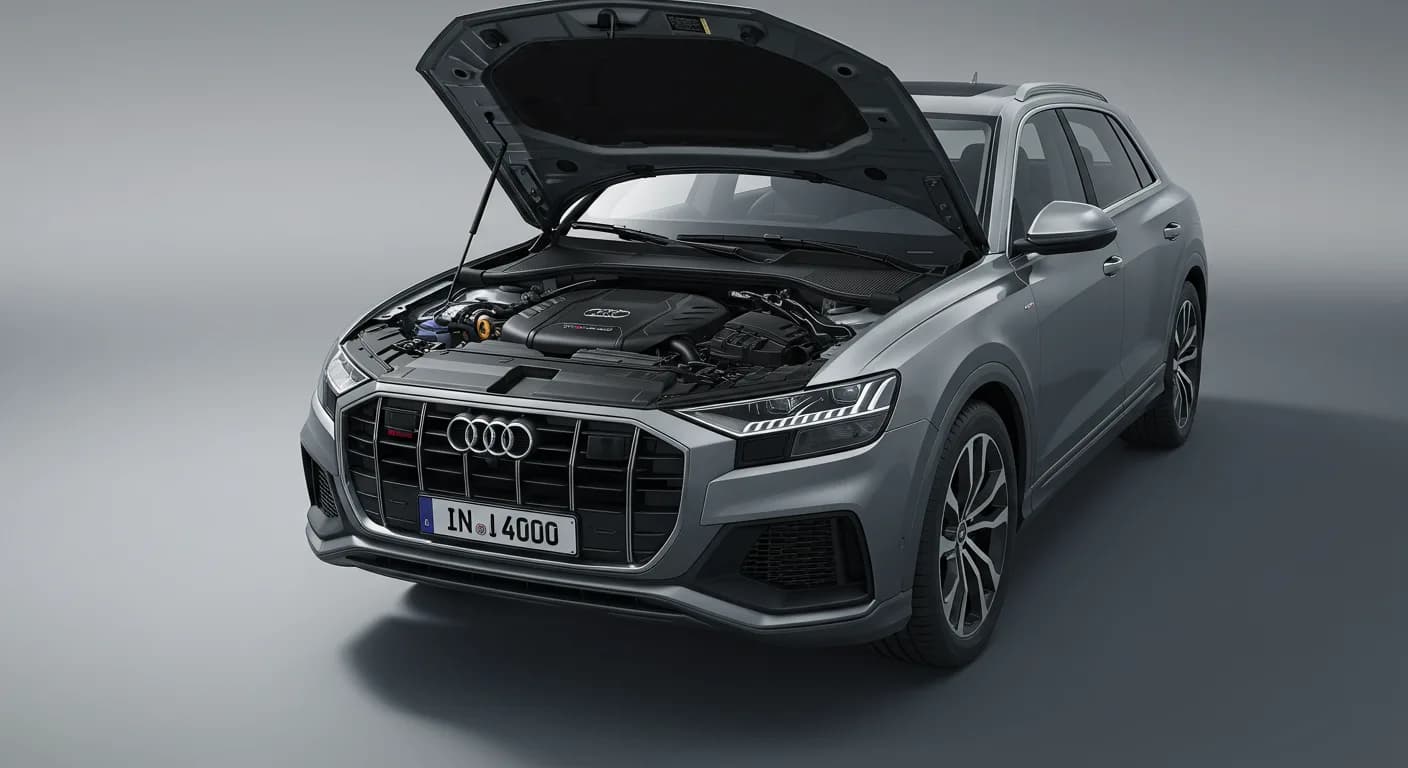
 Marcus Weber2021 Audi Q8
Si applica anche a
- Audi A4
- 2021–2022
- Audi A4 allroad
- 2021
- Audi A5
- 2021–2022
- Audi A6
- 2021–2023
- Audi A6 allroad
- 2021
- Audi A7
- 2021–2023
- Audi A7 e
- 2021–2022
- Audi A8 L e
- 2021
- Audi Q5
- 2021
- Audi Q7
- 2021–2023
- Audi Q8
- 2022–2023
- Audi RS 5
- 2021–2022
- Audi RS 6 Avant
- 2021–2023
- Audi RS 7
- 2021–2023
- Audi RS Q8
- 2021–2023
- Audi S5
- 2021–2022
- Audi S6
- 2021–2023
- Audi S7
- 2021–2023
- Audi S8
- 2021–2022
- Audi SQ5
- 2021–2023
- Audi SQ7
- 2021–2023
- Audi SQ8
- 2021–2023
▸ Mostra altri 16▾ Mostra meno
Symptoms
Owners of certain 2021-2023 Audi models may notice a "Yellow check engine lamp sporadically lights up in the instrument cluster" when starting the vehicle. This intermittent illumination of the check engine light is the primary symptom described in Audi Technical Service Bulletin PSS 97.
Fault Codes / DTCs
When this condition occurs, specific Diagnostic Trouble Codes (DTCs) are stored in the vehicle's control units. These codes indicate a communication issue or an active component protection state.
| Code | Description | Module / Diagnostic Address |
|---|---|---|
| U014000 | Vehicle Electrical System Control Module, no communication, sporadic, symptom 23755 | Engine electronics, J623 (0001) |
| U110100 | Component protection active, sporadic, symptom 15361024 | Vehicle Electronics, J519 (0009) |
Diagnosis / Trigger Conditions
The underlying cause of the "Audi check engine light U014000" and U110100 DTCs is the Vehicle Electronics control unit, J519 (diagnostic address 0009), intermittently entering component protection mode. This state then causes the engine electronics control unit, J623, to register a 'no communication' fault, leading to the illumination of the check engine lamp.
Important Warnings
Audi has provided crucial guidance for this specific issue under TSB PSS 97 (2067133/1):
- Do not replace any components for this condition since this will not resolve the customer's concern.
- Replacing the control unit will not solve the problem. A software update is being prepared.
This means that technicians should not attempt to replace the J519 or any other related control units, as a hardware replacement will not fix the intermittent component protection issue. A software update is anticipated to be the definitive solution.
Repair Procedure Summary
As of the TSB's publication date (June 3, 2022), a permanent solution in the form of a software update is under investigation and expected to be available by the end of the first quarter of 2023. No immediate repair is necessary for the "Audi check engine light U014000" issue.
In the interim, dealers are instructed to:
- Explain to the customer that a solution is expected soon and no repairs are needed at this time.
- Create a Pending Service Solutions (PSS) record for the vehicle through the PSS application.
- Perform the necessary component protection for the J519 control unit.
- Address any other component protection-related symptoms using the corresponding test plan in Guided Fault Finding.
- Clear all stored fault codes and ensure the vehicle's information is entered into the PSS database.
Warranty Information
For vehicles experiencing this condition, warranty claims can be submitted under specific guidelines:
- Claim Type: 110 (for vehicles up to 48 months or 50,000 miles) or G10 (for CPO Covered Vehicles, requiring owner verification).
- Service Number: 9710
- Damage Code: 0039
- Labor Operations: Not Applicable (NA) for direct repair, as no components are replaced.
- Diagnostic Time: GFF 0150 0000 (Maximum 100 Time Units).
- Road Test: No allowance (0 TU) for road tests before or after the service procedure, as no physical repair is performed.
- Claim Comment: As per TSB 2067133/1.
All warranty claims must adhere to the Audi Warranty Policies and Procedures Manual and are subject to review by Audi Warranty.
NHTSA ID: 10214780
Frequently Asked Questions
- What does the Audi Technical Service Bulletin PSS 97 address?
- Audi Technical Service Bulletin PSS 97 (2067133/1) addresses instances where a "Yellow check engine lamp sporadically lights up in the instrument cluster" in 2021-2023 Audi vehicles, accompanied by Diagnostic Trouble Codes U014000 and U110100.
- What are the specific fault codes associated with this check engine light issue?
- The primary fault codes are U014000, indicating 'Vehicle Electrical System Control Module, no communication' in the engine electronics (J623), and U110100, which signifies 'Component protection active' in the Vehicle Electronics (J519).
- Should I replace any parts if my Audi has this check engine light problem?
- No, Audi TSB PSS 97 explicitly states: 'Do not replace any components for this condition since this will not resolve the customer's concern.' A software update is being developed to fix the underlying issue, and replacing control units will not solve the problem.
- What is the expected solution for the Audi check engine light U014000 issue?
- Audi anticipates a software update will be available by the end of the first quarter of 2023 to resolve the intermittent component protection mode in the J519 control unit, which is causing the check engine light to illuminate.
- How should my dealer handle this issue if I bring my car in?
- Your dealer should explain that a software update is pending and no immediate repair is needed. They will create a Pending Service Solutions (PSS) record for your vehicle, perform any necessary component protection for the J519, and clear the fault codes, as outlined in TSB PSS 97.
Altre revisioni di questo TSB
- 2025 Audi A5/Q5 Driver Assist System Fault U110100 TSBU110100
- 2025 Audi Driver Assist System Fault U110100 TSBU110100
- 2025 Audi A5/S5 Driver Assist Fault U110100U110100
- 2023-2024 Audi Night Vision Assist Fault TSBU110100
- 2023-2024 Audi Night Vision Assist Fault DTC U110100 TSBU110100
- 2025 Audi A5 / S5 Driver Assist System Malfunctions TSB 2078209/1U110100
- 2023-2024 Audi Night Vision Assist Fault TSB U110100U110100
- 2023-2024 Audi Night Vision Assist Fault DTC U110100U110100
Related Articles
2021-2025 Audi Engine Control Module Software Update 53ZC
Audi has issued an update to its Engine Control Module (ECM) software campaign 53ZC / WARR EXT – U82, dated March 20, 2026. This dealer communication indicates that additional vehicles have been added to the affected chart for this important software update. Owners of 2021-2025 Audi Q8, A7, A6…
2021-2025 Audi Fuel System DTCs P014800 and P008700
Audi Technical Service Bulletin (TSB) 2079461/3 details diagnostic and repair procedures for 2021-2025 Audi vehicles experiencing a 'MIL light on' or 'limp-home function' due to fuel system DTCs P014800 or P008700. This bulletin guides technicians on diagnosing and potentially replacing the…
2021-2025 Audi Black Trim Discoloration TSB
Audi has issued Technical Service Bulletin 2078651/4 to address red, purple, gray, or metallic discoloration on black exterior trim strips in 2021-2025 Audi models. This TSB explains the cause (paint UV resistance issue) and outlines the replacement procedure for affected components.
2021 Audi Virtual Cockpit Display Fault TSB 2078439/2
Audi TSB 2078439/2 addresses issues with the virtual cockpit display in 2021 A6, A7, A8, Q7, Q8 models, including a black screen or "Instrument cluster: fault" message, often accompanied by DTC B200049.
2021-2026 Audi TFSI Engine Oil Leak TSB 2053278/10
Audi has released Technical Service Bulletin 2053278/10 to address oil leaks from the cylinder head on 2.9 and 3.0 TFSI engines in various 2021-2026 models. Learn about symptoms, diagnosis, and the recommended repair process.
Leave a comment
Comments are moderated and may take a moment to appear. Only your first name and the initial of your last name are shown publicly.
Comments
Be the first to comment.