2023-2026 Audi Models Loose Zirconium Brake Inserts TSB
Audi Technical Service Bulletin 2069078/3 details an issue where zirconium inserts in ceramic brake pistons may become loose. This TSB applies to 2023-2026 Audi models and provides guidance for technicians on how to refit these inserts during diagnostic work or brake service.
 Ahmet Topcu2023 Audi e-tron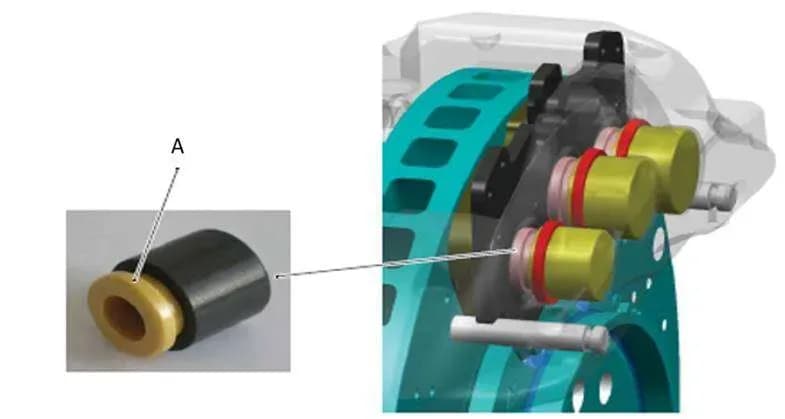
También aplica a
- Audi A3
- 2022–2026
- Audi A4
- 2021–2025
- Audi A4 allroad
- 2021–2025
- Audi A5
- 2021–2024
- Audi A6
- 2021–2025
- Audi A6 allroad
- 2021–2026
- Audi A7
- 2021–2025
- Audi A7 e
- 2021–2022
- Audi A8 L e
- 2021
- Audi e-tron
- 2021–2022
- Audi e-tron GT
- 2022–2026
- Audi e-tron Sportback
- 2021–2022
- Audi Q3
- 2021–2025
- Audi Q5
- 2021–2025
- Audi Q5 e
- 2021, 2023, 2024, 2025
- Audi Q7
- 2021–2026
- Audi Q8
- 2021–2026
- Audi R8
- 2021–2023
- Audi RS 3
- 2022–2026
- Audi RS 5
- 2021–2024
- Audi RS 6 Avant
- 2021–2026
- Audi RS 7
- 2021–2026
- Audi RS e-tron GT
- 2022, 2023, 2024, 2026
- Audi RS Q8
- 2021–2026
- Audi S e-tron GT
- 2026
- Audi S3
- 2022–2026
- Audi S4
- 2021–2025
- Audi S5
- 2021–2024
- Audi S6
- 2021–2025
- Audi S7
- 2021–2025
- Audi S8
- 2021–2026
- Audi SQ5
- 2021–2025
- Audi SQ7
- 2021–2026
- Audi SQ8
- 2021–2026
- Audi TT
- 2021–2023
- Audi TT RS
- 2021–2022
- Audi TTS
- 2021–2023
▸ Mostrar 31 más▾ Mostrar menos
Audi has released Technical Service Bulletin (TSB) 2069078/3 to address a specific condition observed in vehicles equipped with ceramic brake systems. This TSB, titled "46 Zirconium inserts in brake piston (ceramic brakes only)," provides guidance for technicians on how to handle loose zirconium inserts found within the brake pistons. The TSB applies to various 2023-2026 Audi models featuring ceramic brakes.
Understanding Audi Ceramic Brake Inserts and Their Purpose
Ceramic brake systems are a high-performance option known for their exceptional stopping power, reduced weight, and superior heat resistance compared to traditional steel brakes. Within these advanced systems, zirconium inserts play a crucial role. Their primary function, as detailed in TSB 2069078/3, is to act as insulators. These inserts prevent the high temperatures generated during braking from transferring directly to the brake piston, and subsequently, to the brake fluid and seals. Maintaining stable temperatures is vital for the longevity and consistent performance of the brake system components.
When these Audi ceramic brake inserts are not firmly attached or become loose, it could potentially compromise their insulating effectiveness over time. While the TSB explicitly states that the brake system's functions are not immediately affected, ensuring these components are correctly seated is part of maintaining the system's integrity and intended thermal management.
Symptoms and Discovery
Unlike many service bulletins that address owner-reported symptoms, TSB 2069078/3 notes that customers typically do not experience specific concerns directly related to loose zirconium inserts. Instead, this condition is usually discovered by technicians during routine diagnostic work or when performing other brake-related services, such as replacing brake pads. The TSB highlights that a technician might observe the zirconium inserts are not firmly attached or can be turned/moved when working on the brake calipers.
While the loose inserts themselves don't typically manifest as owner-perceptible symptoms, vehicles might come into the workshop for a range of general brake-related complaints. These could include various noises and vibrations emanating from the front of the vehicle, such as:
- Noises: Too loud, whistling, buzzing, crunching/groaning/crackling, pinging, humming, chattering, snapping, thumping, general noise, squeaking, or vibrating sounds.
- Appearance/Surface Issues: Observations like flawed coating on brake rotors or calipers, corrosion or rust, or material detaching from brake components.
- Contamination: Instances where brake rotors or pads appear dirty.
- Component Wear: In some cases, high wear of automotive fluids or brake components might be noted.
It's important to reiterate that these general complaints are not direct symptoms of the loose Audi ceramic brake inserts. Rather, they represent common reasons a vehicle might undergo a brake inspection, during which a technician could then identify the loose inserts as per the TSB's guidance.
Diagnosis and Trigger Conditions
Diagnosis for this condition is straightforward and technician-driven. As mentioned, the loose zirconium inserts are not a customer concern but are found during diagnostic work. When a technician is performing maintenance or repairs on the brake calipers, particularly when replacing brake pads, they may notice that the zirconium inserts are not firmly seated in the brake piston. The ability to easily turn or move these inserts indicates the condition described in TSB 2069078/3.
This TSB serves as an informational guide for workshop personnel, ensuring they are aware of this potential finding and the correct procedure to address it, even in the absence of a specific customer complaint regarding the inserts themselves.
Repair Procedure Summary
The repair procedure for loose Audi ceramic brake inserts is relatively simple and does not require extensive component replacement. According to TSB 2069078/3, the primary action is to refit the zirconium insert back into the brake piston. This involves carefully repositioning the insert to ensure it is firmly seated within its designated location. The TSB explicitly states that it is neither necessary nor justified to replace the entire brake caliper, as the loose insert does not impair the overall function of the brake system.
This focused approach ensures that technicians can efficiently resolve the condition without incurring unnecessary costs or replacing functional components. The repair aims to restore the intended secure fit of the zirconium insert, thereby maintaining its thermal insulating properties and contributing to the long-term reliability of the ceramic brake system.
Important Warnings for Owners and Technicians
Owners and technicians should be aware of specific advisories within TSB 2069078/3:
- Do Not Replace Brake Calipers: The TSB explicitly states, "It is neither necessary nor justified to replace the brake caliper." This is a crucial point, as the loose zirconium insert does not compromise the brake caliper's function, and replacing it would be an unnecessary expense.
- Brake System Functionality: The TSB clarifies that "The brake system's functions are not affected" by the loose inserts. This means that while the condition should be addressed, it does not pose an immediate safety risk or operational failure.
- Warranty Information: This TSB is informational only and is not applicable to any Audi Warranty. Owners should discuss any potential costs with their service center, though the repair itself is minimal.
TSB Details and Revisions
This Technical Service Bulletin is identified by Transaction No. 2069078/3. It was initially published on January 5, 2023 (Revision 1). Subsequent revisions include:
- Revision 2: Dated September 10, 2024, which revised the header to add model year information.
- Revision 3: Released on October 21, 2025, further revised the header to add model year information.
These revisions ensure the TSB remains current and accurately reflects the applicable vehicle models and diagnostic information for the Audi ceramic brake inserts issue. Technicians are advised to always refer to the latest version of the TSB and consult with their Parts Department and/or ETKA for the most up-to-date information on parts and procedures.
What Owners Should Do
If you own a 2023-2026 Audi model equipped with ceramic brakes, there's generally no need for immediate concern if you haven't experienced any brake-related issues. Since the loose Audi ceramic brake inserts are typically found during routine service rather than causing noticeable symptoms, the best course of action is to ensure your vehicle receives regular maintenance from an authorized Audi service center. During any brake inspection or service, technicians will be aware of TSB 2069078/3 and can check for this condition and address it if found.
Source: NHTSA ID: 11025333
Frequently Asked Questions
- What is Audi TSB 2069078/3 about?
- Audi Technical Service Bulletin 2069078/3 addresses the issue of zirconium inserts becoming loose within the brake pistons of Audi vehicles equipped with ceramic brake systems. It provides guidance to technicians on how to refit these inserts.
- What are zirconium inserts in Audi ceramic brakes?
- Zirconium inserts are components within Audi ceramic brake pistons that act as insulators. Their purpose is to prevent high braking temperatures from transferring to the brake piston, seals, and brake fluid, thus helping to maintain the integrity and performance of the brake system.
- Will I notice any symptoms if my Audi has loose ceramic brake inserts?
- According to TSB 2069078/3, owners typically do not experience specific symptoms directly caused by loose zirconium inserts. This condition is usually discovered by technicians during routine diagnostic work or other brake services, such as brake pad replacement.
- Which Audi models are affected by loose zirconium brake inserts?
- This TSB applies to various Audi models from model years 2023 to 2026 that are equipped with ceramic brake systems. It's important to note that the issue is specific to vehicles with ceramic brakes.
- What is the repair for loose Audi ceramic brake inserts?
- The repair procedure outlined in TSB 2069078/3 involves refitting the zirconium insert back into the brake piston. The TSB explicitly states that it is not necessary to replace the entire brake caliper, as the brake system's functions are not affected by this condition.
Related Articles
Should 2023 Audi e-tron Owners Worry? Recall & TSB Roundup
The 2023 Audi e-tron faces significant safety concerns, including recalls for potential brake pedal detachment and charging cable overheating. Owners have also reported serious issues like unintended acceleration and electrical system malfunctions. This guide covers all known problems and solutions.
2023 Audi e-tron Brake Pedal Recall
Audi has issued a recall (NHTSA ID: 26V240000, Audi Recall 46P7) for certain 2019-2024 E-Tron and 2020-2024 E-Tron Sportback vehicles, including the 2023 Audi e-tron. The recall addresses a potential issue where the brake pedal may detach from the brake booster, leading to a loss of brake function.
2015-2027 Audi Noise Diagnosis with Frequency Analysis App TSB
Audi has released Technical Service Bulletin 2051095/11 detailing the Audi Frequency Analysis app. This app helps technicians diagnose noise complaints more precisely across 2015-2027 Audi models. Learn how the app works, where to download it, and its features for effective vehicle noise analysis.
2023 Audi e-tron AC/DC Charging Not Possible TSB
This manufacturer communication (NHTSA ID 11031035) provides critical information for 2023 Audi e-tron owners facing issues with AC/DC charging. It specifically highlights problems linked to software version 00C6: 0093/3119, which can prevent the vehicle from charging.
2023-2025 Audi Rear Seat Reminder Message TSB 2074943/2
Audi Technical Service Bulletin 2074943/2 explains the instrument cluster message 'Please check rear seats and be aware of door safelock' in various 2023-2025 Audi models. This informational TSB details the rear occupant detection system designed to prevent children and pets from being left in…
Leave a comment
Comments are moderated and may take a moment to appear. Only your first name and the initial of your last name are shown publicly.
Comments
Be the first to comment.