2022-2026 Audi Ghost Faults in ODIS Test Plans
Audi has issued TSB 2071721/1 concerning 'unauthorized DTC memory entries' or 'ghost faults' that may appear in ODIS diagnostic test plans for 2022-2026 Audi vehicles. These DTCs do not affect vehicle operation and should not lead to parts replacement.
 Sarah Mitchell2022 Audi e-tron
También aplica a
- Audi A3
- 2022–2025
- Audi A4
- 2021–2025
- Audi A4 allroad
- 2021–2025
- Audi A5
- 2021–2025
- Audi A6
- 2021–2025
- Audi A6 allroad
- 2021–2024
- Audi A7
- 2021–2025
- Audi A7 e
- 2021–2022
- Audi A8 L e
- 2021
- Audi e-tron
- 2021, 2023
- Audi e-tron GT
- 2022–2025
- Audi Q3
- 2021–2024
- Audi Q5
- 2021–2025
- Audi Q5 e
- 2024–2025
- Audi Q7
- 2021–2025
- Audi Q8
- 2021–2024
- Audi R8
- 2021–2023
- Audi RS 3
- 2022–2025
- Audi RS 5
- 2021–2025
- Audi RS 6 Avant
- 2021–2025
- Audi RS 7
- 2021–2024
- Audi RS e-tron GT
- 2022–2024
- Audi RS Q8
- 2021–2025
- Audi S e-tron GT
- 2026
- Audi S3
- 2022–2025
- Audi S4
- 2021–2025
- Audi S5
- 2021–2025
- Audi S6
- 2021–2025
- Audi S7
- 2021–2025
- Audi S8
- 2021–2025
- Audi SQ5
- 2021–2025
- Audi SQ7
- 2021–2024
- Audi SQ8
- 2021–2025
- Audi TT
- 2021–2023
- Audi TT RS
- 2021–2022
- Audi TTS
- 2021–2023
▸ Mostrar 30 más▾ Mostrar menos
Audi has released Technical Service Bulletin (TSB) 00 23 76 2071721/1 to address instances of "unauthorized/unjustified DTC memory entries," commonly referred to as Audi ghost faults, that may appear during diagnostic procedures using the ODIS system. This TSB applies to all Audi vehicles from model years 2022-2026.
These ghost faults are diagnostic trouble codes (DTCs) that are erroneously stored in the vehicle's memory due to overly sensitive self-diagnostic checks. They do not indicate an actual problem with the vehicle's operation and typically do not cause any customer complaints.
Symptoms
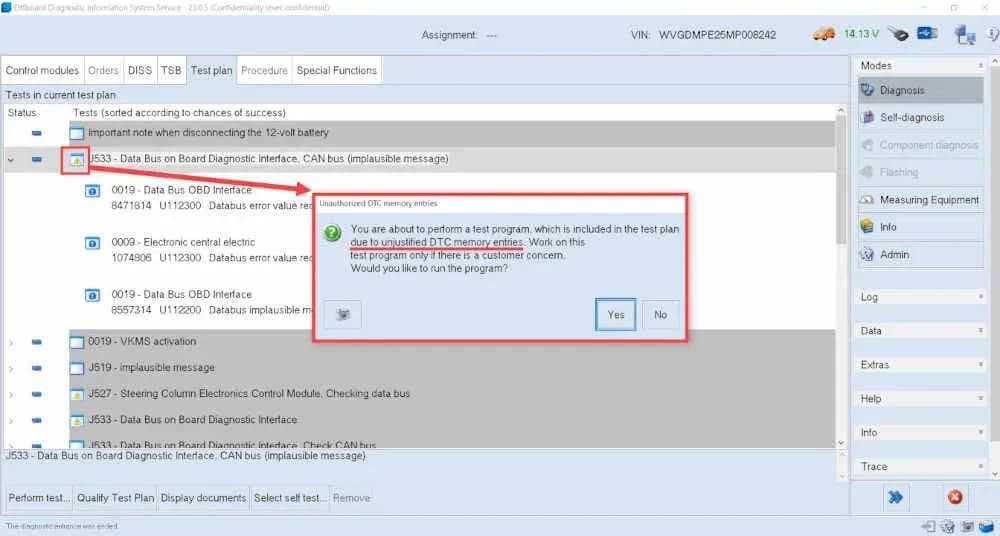
When a technician performs a diagnostic scan using ODIS, they may encounter a test plan marked with a warning symbol. If they attempt to execute this test plan, a message will appear stating:
"Unauthorized DTC memory entries. You are about to perform a test program, which is included in the test plan due to unjustified DTC memory entries. Work on this test program only if there is a customer concern. Would you like to run the program?"
Examples of DTCs that might be flagged as unauthorized or unjustified include U112300 (Databus error value red) and U112200 (Databus implausible), as seen in diagnostic screenshots.
What are "Ghost Faults"?
Audi ghost faults are DTCs that are generated by the vehicle's self-diagnostic system but do not correspond to a genuine operational issue. They are often the result of incorrect or oversensitive checks within the vehicle's electronic control units. The key characteristic of these faults is that they have no impact on how the vehicle performs and do not lead to any noticeable problems for the driver. They are simply erroneous entries in the diagnostic memory.
Important Warnings for Owners and Technicians
Audi has issued specific instructions to prevent unnecessary repairs and costs related to these Audi ghost faults:
- Do not continue executing said test plan: If the ODIS system displays the "Unauthorized DTC memory entries" message, technicians are advised not to proceed with the test program unless there is a clear, customer-reported concern that directly relates to the fault.
- Do not replace any parts for unauthorized/unjustified DTCs! Replacing components based solely on these ghost faults will not resolve any actual issues and is an unnecessary expense.
- Any unauthorized test plans run, as well as any repairs resulting from running such test plans may be debited by warranty. This means that if a technician performs work based on these ghost faults without a legitimate customer complaint, the warranty claim may be rejected.
- Running a test plan for an "Unauthorized" or "Unjustified" DTC will not resolve the customer complaint, as those DTCs are entered erroneously by the vehicle and have no effect on its operation.
What Owners Should Know
If you own a 2022-2026 Audi vehicle, including models like the Audi e-tron, and a technician mentions diagnostic trouble codes that seem to have no impact on your vehicle's performance, it's important to understand the nature of these Audi ghost faults. These codes are not indicative of a real problem and should not lead to costly part replacements. Always ensure that any recommended repairs are tied to a tangible symptom or performance issue you are experiencing.
This TSB is informational only and is not applicable to any Audi Warranty claims for repairs based on these ghost faults.
What Technicians Should Know
Technicians should be aware of TSB 00 23 76 2071721/1 and the guidance it provides. When ODIS presents the "Unauthorized DTC memory entries" warning, it is crucial to verify if a customer concern exists before proceeding with any diagnostic steps or repairs. Ignoring this warning and performing repairs based on these ghost faults can lead to warranty debiting. The presence of codes like U112300 or U112200 in the diagnostic memory, when identified as unauthorized, should not automatically trigger a repair action.
Source: NHTSA ID: 10244320
Galería
1 imagen
Frequently Asked Questions
- What are 'ghost faults' in Audi vehicles?
- Ghost faults, also known as 'unauthorized DTC memory entries,' are diagnostic trouble codes (DTCs) that appear in the vehicle's diagnostic system (ODIS) but do not indicate an actual problem with the vehicle's operation. They are often caused by oversensitive self-diagnostic checks.
- Does an 'Unauthorized DTC memory entries' warning mean my Audi needs repairs?
- Not necessarily. According to Audi TSB 2071721/1, these warnings, such as those related to `U112300` or `U112200`, are for 'ghost faults' that do not affect vehicle operation. Repairs or part replacements should only be considered if there is a genuine, customer-reported concern.
- Which Audi models are affected by this TSB regarding ghost faults?
- This Technical Service Bulletin applies to all Audi vehicles from model years 2022 through 2026, including the Audi e-tron and many other models.
- Can I be charged for repairs related to Audi ghost faults?
- Yes, if a technician performs repairs or runs test plans based solely on these 'unauthorized DTC memory entries' without a valid customer complaint, Audi states that such work may be debited by warranty. Owners should ensure repairs address actual symptoms.
Otras revisiones de este TSB
- 2021-2025 Audi Driver Assist Fault TSB 2061932/11U112300
- 2025-2026 Audi Adaptive Cruise Control Unavailable TSBU112200
- 2025 Audi A5/S5/A6/S6 Adaptive Cruise Control Unavailable TSBU112200
- 2025-2026 Audi A5, S5, A6 Adaptive Cruise Control Unavailable TSBU112200
- 2022-2026 Audi e-tron GT ABS DTCs B2F0100 U012700U112300, U112200
- 2022-2024 Audi e-tron GT Data Bus Error U112300 TSBU112300
- 2025 Audi S3 'Vehicle Electronics: Fault' TSB 2076134/3U112300
- 2022-2024 Audi e-tron GT U112300 Data Bus Error TSBU112300
Related Articles
2022 Audi e-tron Electrical System Problems: Complaints & TSBs
Owners of the 2022 Audi e-tron frequently report significant electrical system malfunctions, ranging from sudden power loss and charging hazards to software crashes. Braking issues and unexpected automatic emergency braking are also common concerns, alongside numerous technical service bulletins…
2022-2026 Audi Guided Fault Finding Reporting Obligation
Audi has issued Technical Service Bulletin TPI 2033392, also known as Transaction No. 2081531/1, regarding a reporting obligation for technicians when Guided Fault Finding produces an unexpected result. This TSB outlines the process for contacting Audi Product Support for diagnostic assistance.
2022-2026 Audi Infotainment System Complaints
Audi has released Technical Service Bulletin (TSB) 2081405/1 to address various customer complaints regarding infotainment systems in 2022-2026 Audi vehicles. This TSB helps technicians diagnose issues often caused by external media or mobile devices, rather than vehicle technology.
2018-2026 Audi Models Cracking Noise TSB 2061464/11
Audi Technical Service Bulletin 2061464/11 describes a cracking noise from the front or rear axle when changing direction in various 2018-2026 Audi models. The issue is due to stub axle movement and is resolved by bonding the stub axle to the wheel bearing with locking fluid.
2022-2026 Audi Parking Aid False Warnings TSB 2024323/13
Audi has released Technical Service Bulletin 2024323/13 to address customer complaints of false parking aid warnings. This bulletin details various environmental and vehicle-specific conditions that can cause the parking aid system to issue alerts even when no obstacles are present. It provides…
Leave a comment
Comments are moderated and may take a moment to appear. Only your first name and the initial of your last name are shown publicly.
Comments
Be the first to comment.