2018-2024 Audi Wiring Harness Repair Documentation TSB
Audi has released Technical Service Bulletin 2061976/3 to guide technicians on thoroughly documenting wiring harness repairs for 2018-2024 Audi models. This TSB emphasizes detailed reporting for warranty claims and product improvement.
 David Chen2023 Audi e-tron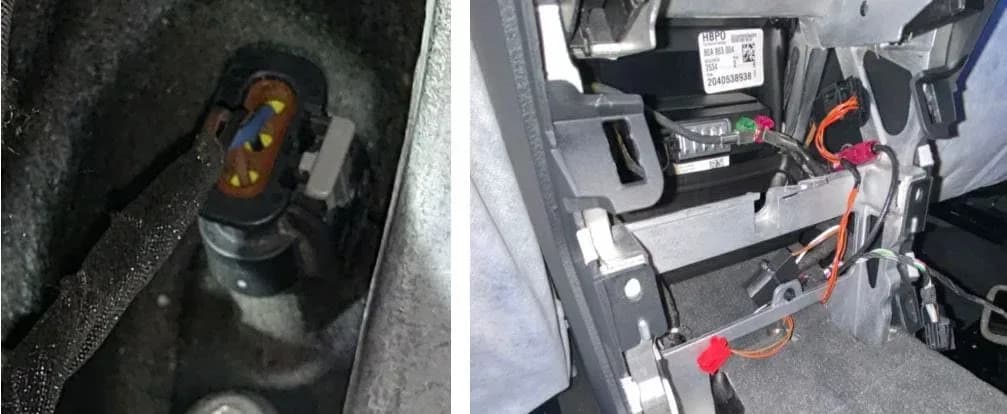
También aplica a
- Audi A3
- 2022–2024
- Audi A4
- 2021–2024
- Audi A4 allroad
- 2021–2022
- Audi A5
- 2021–2024
- Audi A6
- 2021–2024
- Audi A6 allroad
- 2021–2022
- Audi A7
- 2021–2024
- Audi A7 e
- 2021–2022
- Audi A8 L e
- 2021
- Audi e-tron
- 2021–2022
- Audi e-tron GT
- 2022–2024
- Audi Q3
- 2021–2024
- Audi Q5
- 2021, 2024
- Audi Q5 e
- 2024
- Audi Q7
- 2021–2024
- Audi Q8
- 2021–2024
- Audi R8
- 2021–2023
- Audi RS 3
- 2023–2024
- Audi RS 5
- 2021–2024
- Audi RS 6 Avant
- 2021–2024
- Audi RS 7
- 2021–2024
- Audi RS e-tron GT
- 2022–2024
- Audi RS Q8
- 2021–2024
- Audi S3
- 2022–2024
- Audi S4
- 2021–2024
- Audi S5
- 2021–2024
- Audi S6
- 2021–2024
- Audi S7
- 2021–2024
- Audi S8
- 2021–2024
- Audi SQ5
- 2021–2024
- Audi SQ7
- 2021–2024
- Audi SQ8
- 2021–2022
- Audi TT
- 2021–2023
- Audi TT RS
- 2021–2022
- Audi TTS
- 2021–2023
▸ Mostrar 29 más▾ Mostrar menos
Audi has issued Technical Service Bulletin (TSB) 2061976/3, superseding Group 97 number 21-82, to standardize and improve the documentation process for wiring harness repairs across its 2018-2024 vehicle lineup. This TSB is crucial for ensuring that critical information regarding wiring issues, symptoms, and repair details is clearly recorded. The goal is to enhance the accuracy of warranty claims and provide valuable data for future product design improvements.
Symptoms
Owners of affected Audi vehicles may experience various issues that lead to a wiring diagnosis. Common indicators include:
- "A warning or malfunction is present" on the instrument cluster or infotainment system.
- A wiring issue is identified as the root cause during vehicle diagnosis.
Technical Background
When a wiring issue is diagnosed as the root cause of a vehicle malfunction, technicians often find it challenging to provide clear and comprehensive information. Details describing the specific symptoms, findings, affected circuits, and exact location of damage are frequently unclear in warranty claims. This lack of detail can hinder effective analysis and product improvement efforts.
To address this, Audi is requesting technicians' assistance in meticulously identifying and documenting all wiring repairs. This improved Audi wiring issue documentation will help identify common repair scenarios and inform better product designs.
Repair Documentation Requirements
Proper Audi wiring issue documentation is crucial for accurate diagnosis and warranty claims. Technicians must provide specific details depending on the nature of the wiring issue:
For root causes related to pins or coaxial connector ends:
- Retain approximately 10-20 mm of the original wire, if space allows.
- Repair the connection using the specialized tool VAS1978B.
For root causes related to high resistance or a short circuit in the wiring:
- Overlays may be used during the diagnostic process.
- Retain the affected section of wire that was removed or found faulty.
- Repair faulty sections of the wire using the specialized tool VAS1978B.
Technician notes must include the following details:
- The specific circuit affected.
- Pin identification of the main circuit affected.
- Results of circuit checks, including any resistance and/or voltage values for the affected circuit.
- The precise location where the damaged pin or circuit was found.
- Any other relevant details that support and describe the findings.
Example of detailed documentation:
- "Flexray circuit measured .6 ohm to ground with no components connected to the circuit. Short circuit to ground present on the green FlexRay wire between J743 Dual Clutch T23/1 and J533 Data Bus on Board Diagnostic Interface T54/27. Located damaged wire section underneath the driver seat along the frame rail."
Required Photos for Documentation
To ensure accurate visual records, technicians must take specific photos of the damage and repair area. These photos are to be retained for at least one month after claim approval.
- 1 perspective view: Shows the general area and provides a reference of the surrounding area.
- 1 original routing: Taken before the area of concern is disturbed, showing how the harness was routed in its normal state.
- 1 close-up: Clearly focused and showing the damaged circuit.
All photos should include a date stamp and VIN reference, be in focus, and have sufficient lighting.
Warranty Claim Information
When submitting warranty claims for wire repairs, using the correct PID (Problem Identification) code is essential to differentiate which harness is affected. The following PIDs are provided as examples to help claim repairs in specific locations:
| PID | Description | Notes |
|---|---|---|
| 9709 | Central Wiring Harness | For main body harness only. Not for sub-harnesses that are replaceable separately (e.g., door, bumper, or engine harness). |
| 9713 | Engine compartment wiring harness | Any repair made to harness sections in the engine bay NOT connected to the main body harness. Claim notes should specify a location. |
| 9732 | Door harness | Use for any door. Claim notes should state which door. |
| 9757 | Seat harness | Use for any location. Claim notes should specify the location. |
| 9779 | Roof wiring harness | Any repairs made to harness sections in the roof. Claim notes should specify a location. |
| 9759 | Bumper harness | Use for front or rear. Claim notes should specify the location. |
| 9781 | Transmission wiring harness | Any repair made to the harness that is separate from the main body harness and connects to the transmission. |
Required Tools and Parts
Technicians will need specific tools to perform and document these wiring harness repairs:
- VAS 1978B: Wiring harness repair set.
- VAS 6160/VAS 6150: VAS tester with the current version of ODIS (Windows 10).
Additional Resources
For further information on circuit diagnosis, identifying circuits, and making repairs, technicians can refer to:
- Audi academy: Accessaudi >> App links >> Academy site CRC >> videos >> Technical >> Electrical, networking and vehicle lighting.
- Elsa: damage code catalog >> Electrical >> 97 Wiring.
- Self-Study Program (SSP) 973003: How to Read Wiring Diagrams, Symbols, Layout, and Navigation.
- Self-Study Program (SSP) 971003: Wiring Harness Inspection and Repair.
Galería
2 imágenes
Frequently Asked Questions
- What is the purpose of Audi TSB 2061976/3?
- Audi TSB 2061976/3 aims to improve the documentation of wiring harness repairs by technicians. This helps ensure accurate warranty claims and provides valuable data for Audi's product design and engineering teams to enhance vehicle reliability.
- What information must technicians include when documenting a wiring repair?
- Technicians are required to detail the affected circuit, pin identification, circuit check results (including resistance/voltage values), the exact location of the damage, and any other relevant findings. Specific photo documentation is also mandated.
- Which Audi models are covered by this wiring issue documentation TSB?
- This TSB applies to all Audi vehicles from model years 2018 through 2024. This includes a wide range of models such as the A3, A4, A5, A6, A7, A8, Q3, Q5, Q7, Q8, e-tron, and various S and RS performance models.
- Are there specific tools required for these wiring harness repairs?
- Yes, Audi specifies the use of the VAS 1978B wiring harness repair set. Additionally, a VAS tester, such as the VAS 6160 or VAS 6150, running the current version of ODIS (Windows 10) is required for diagnosis and documentation.
- What is PID 9709 and how is it used in warranty claims?
- PID 9709 refers to the 'Central Wiring Harness' and is used for warranty claims related to repairs on the main body harness. It's important to use the correct PID, like PID 9709, to accurately categorize the repair and ensure proper processing of the warranty claim.
Related Articles
Should 2023 Audi e-tron Owners Worry? Recall & TSB Roundup
The 2023 Audi e-tron faces significant safety concerns, including recalls for potential brake pedal detachment and charging cable overheating. Owners have also reported serious issues like unintended acceleration and electrical system malfunctions. This guide covers all known problems and solutions.
2023 Audi e-tron Brake Pedal Recall
Audi has issued a recall (NHTSA ID: 26V240000, Audi Recall 46P7) for certain 2019-2024 E-Tron and 2020-2024 E-Tron Sportback vehicles, including the 2023 Audi e-tron. The recall addresses a potential issue where the brake pedal may detach from the brake booster, leading to a loss of brake function.
2015-2027 Audi Noise Diagnosis with Frequency Analysis App TSB
Audi has released Technical Service Bulletin 2051095/11 detailing the Audi Frequency Analysis app. This app helps technicians diagnose noise complaints more precisely across 2015-2027 Audi models. Learn how the app works, where to download it, and its features for effective vehicle noise analysis.
2023 Audi e-tron AC/DC Charging Not Possible TSB
This manufacturer communication (NHTSA ID 11031035) provides critical information for 2023 Audi e-tron owners facing issues with AC/DC charging. It specifically highlights problems linked to software version 00C6: 0093/3119, which can prevent the vehicle from charging.
2023-2025 Audi Rear Seat Reminder Message TSB 2074943/2
Audi Technical Service Bulletin 2074943/2 explains the instrument cluster message 'Please check rear seats and be aware of door safelock' in various 2023-2025 Audi models. This informational TSB details the rear occupant detection system designed to prevent children and pets from being left in…
Leave a comment
Comments are moderated and may take a moment to appear. Only your first name and the initial of your last name are shown publicly.
Comments
Be the first to comment.