2021-2023 Hyundai Misfire DTC P030X TSB
Hyundai has issued Technical Service Bulletin 23-FL-002H-1 for 2021-2023 Sonata, Santa Fe, Santa Cruz, and Tucson models with 2.5L GDI engines experiencing P030X misfire DTCs due to internal GDI injector leaks. Learn about symptoms, diagnosis, and repair.
 David Chen2021 Hyundai Tucson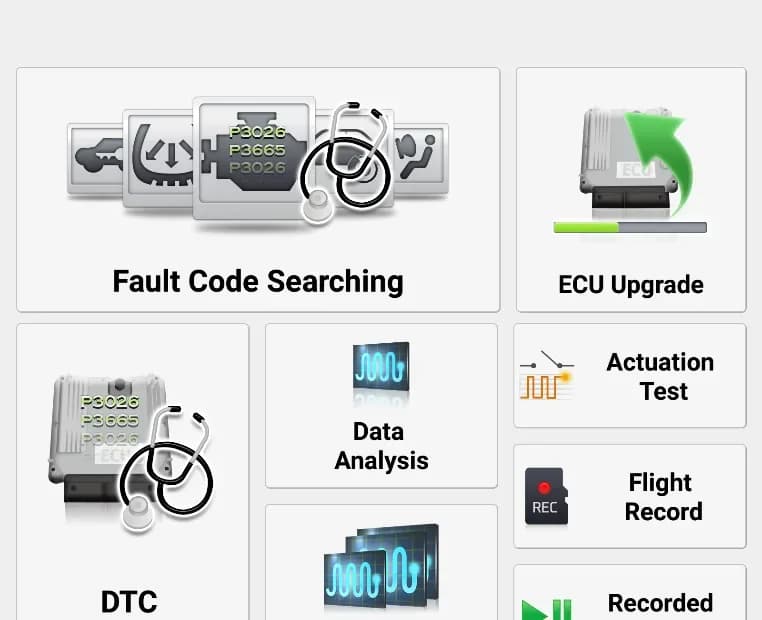
Gilt auch für
- Hyundai Santa Cruz
- 2022
- Hyundai Santa Fe
- 2021–2022
- Hyundai Sonata
- 2021–2023
- Hyundai Tucson
- 2022–2023
Hyundai has released Technical Service Bulletin (TSB) 23-FL-002H-1, which supersedes TSB 23-FL-002H, to address misfire diagnostic trouble codes (DTCs) in specific 2021-2023 Hyundai Sonata, Santa Fe, Santa Cruz, and Tucson models. This bulletin specifically targets vehicles equipped with 2.5L GDI (Gasoline Direct Injection) non-turbo engines that are experiencing one or more misfire DTCs, commonly referred to as a "Hyundai misfire P030X", due to internal leaks in the GDI injectors.
This TSB provides a detailed diagnostic and repair procedure for technicians to identify and resolve the root cause of the misfires, ensuring proper engine performance and preventing potential long-term issues.
Symptoms
Owners of affected 2021-2023 Hyundai vehicles may notice a few key indicators that point to this issue. The most common symptom is the illumination of the check engine light on the dashboard. This light is typically accompanied by the storage of a misfire diagnostic trouble code (DTC) in the vehicle's engine control module.
If your vehicle is experiencing a "Hyundai misfire P030X" code, it suggests that one or more cylinders are not firing correctly. While the TSB focuses on internal GDI injector leaks, a misfire can also manifest as rough idling, reduced engine power, or decreased fuel efficiency.
Fault Codes / DTCs
The primary fault code associated with this issue is the generic misfire DTC P030X. This code indicates a misfire condition in one or more cylinders. The 'X' in P030X is a placeholder for the cylinder number, meaning it could be:
- P0301: Cylinder 1 Misfire Detected
- P0302: Cylinder 2 Misfire Detected
- P0303: Cylinder 3 Misfire Detected
- P0304: Cylinder 4 Misfire Detected
When these codes are present, especially in conjunction with the symptoms described, technicians should follow the TSB's diagnostic steps to confirm if an internally leaking GDI fuel injector is the cause.
Diagnosis
Diagnosing the internal GDI injector leak involves a specific procedure using the Hyundai Global Diagnostic System (GDS). The steps are as follows:
- Connect to the GDS and navigate to the "DTC Analysis" and "ENGINE" menu. Record any stored DTCs, such as the "Hyundai misfire P030X", and the Freeze Frame Data. This data helps identify which cylinder(s) are affected. After recording, delete the DTCs.
- From the GDS home screen, select "Data Analysis" and then the "ENGINE" menu. This allows for real-time monitoring of engine parameters.
- Start the engine and monitor the fuel pressure readings displayed on the GDS. The system will show current fuel pressure and the set point value.
- Shut off the engine and continue to monitor the fuel pressure. If the fuel pressure does not drop significantly after the engine is turned off, this TSB may not apply, and further diagnostic steps for misfires should be pursued. However, if the fuel pressure drops, it indicates a leak, and the GDI fuel injector(s) on the affected cylinder(s) should be replaced.
Repair Procedure Summary
The repair procedure outlined in TSB 23-FL-002H-1 focuses on replacing the faulty GDI fuel injector(s) and associated components. Technicians are instructed to:
- Identify the specific GDI fuel injector(s) that are leaking based on the diagnostic results.
- Follow the detailed repair procedures found in the shop manual under "Engine Control / Fuel System → Engine Control System → Injector → Repair procedures → GDI Injector."
- During reinstallation, new combustion seals (part number 35312-04AA0) must be installed on all reused injectors. This ensures a proper seal and prevents future leaks.
- The high-pressure fuel pipe (part number 35305-2S000QQH) must be replaced with a new part during the reassembly of the fuel rail.
- If any injectors are replaced, new bolts (part number 11403-08556K) are required (1-4 depending on the number of injectors replaced).
- Crucially, technicians must use the STUI system to take photos of the replaced injectors, the new high-pressure fuel pipe, new bolts, and reused injectors with new combustion ring seals. These photos, along with the last 6 digits of the VIN and the repair date written on paper, must be uploaded to STUI for documentation.
- Upload the freeze frame data collected during diagnosis for future claim verification.
The primary replacement part for the injector itself is INJECTOR ASSY-FUEL (35310-2S000QQH). The warranty causal part is listed as 35310-2S000.
Required Parts
To perform this repair, the following parts may be required:
- INJECTOR ASSY-FUEL: Part Number 35310-2S000QQH (Must replace for any affected injector(s))
- PIPE-HIGH PRESSURE: Part Number 35305-2S000QQH (1 required for reassembly)
- COMBUSTION SEAL RING: Part Number 35312-04AA0 (Must replace for any reused injector(s))
- BOLT: Part Number 11403-08556K (1-4 required only for replaced injector(s))
Important Warnings
Hyundai has issued specific warnings regarding warranty claims related to this TSB:
- "All claims submitted that have incomplete, illegible, or missing documentation are subject to debit."
- "Claim is subject to debit if the part is requested and not returned."
These warnings emphasize the critical importance of following all documentation and parts return procedures precisely to ensure warranty claims are processed successfully.
Owner Action
If your 2021-2023 Hyundai Sonata, Santa Fe, Santa Cruz, or Tucson with a 2.5L GDI engine is displaying a check engine light and you suspect a "Hyundai misfire P030X" code, it is recommended to schedule an appointment with an authorized Hyundai dealership. The diagnostic and repair procedures outlined in TSB 23-FL-002H-1 should be performed by trained technicians.
This repair is typically covered under warranty for eligible vehicles. Ensure your dealership is aware of TSB 23-FL-002H-1 when you bring in your vehicle.
Source: NHTSA ID: 10238377
Galerie
4 Bilder
Frequently Asked Questions
- What does a P030X code mean in my Hyundai?
- A P030X code, such as P0301, P0302, P0303, or P0304, indicates a misfire detected in a specific cylinder of your Hyundai. For 2021-2023 Sonata, Santa Fe, Santa Cruz, and Tucson models with a 2.5L GDI engine, Hyundai TSB 23-FL-002H-1 identifies internal GDI injector leaks as a common cause for this 'Hyundai misfire P030X' issue.
- Which Hyundai models are affected by TSB 23-FL-002H-1?
- Hyundai Technical Service Bulletin 23-FL-002H-1 applies to certain 2021-2023 Hyundai Sonata, Santa Fe, Santa Cruz, and Tucson vehicles equipped with 2.5L GDI non-turbo engines that are experiencing misfire DTCs due to leaking GDI injectors.
- Will the repair for a GDI injector leak be covered under warranty?
- Yes, the repair for an internal GDI injector leak addressed by TSB 23-FL-002H-1 is typically covered under Hyundai's vehicle warranty for eligible models. However, it's important to note that all warranty claims require complete and accurate documentation, and parts requested for the repair must be returned to avoid debit.
- What parts are typically replaced for this misfire issue?
- According to TSB 23-FL-002H-1, the primary parts replaced include the INJECTOR ASSY-FUEL (part number 35310-2S000QQH), the high-pressure fuel pipe (part number 35305-2S000QQH), new combustion seal rings (part number 35312-04AA0), and potentially new bolts (part number 11403-08556K).
Related Articles
2021 Hyundai Tucson Health Check: Engine & Paint TSBs
For the 2021 Hyundai Tucson, there are no reported recalls, owner complaints, or federal investigations. However, owners should be aware of several manufacturer service bulletins (TSBs) addressing engine emissions, potential engine bearing issues, white paint peeling, and an anti-theft ignition…
2021 Hyundai Tucson Emissions Logic Update (9C2)
Hyundai Service Campaign 9C2 addresses elevated engine-out emissions in certain 2021 Hyundai Tucson models by updating the Engine Control Module (ECM) software. This update helps ensure compliance with emissions standards and prevents failed inspections.
2015 Hyundai Sonata GDS Event 1383 Campaign Suspended
Hyundai Motor America has temporarily suspended Service Campaign 9C2, related to software GDS event #1383, for the 2015 Hyundai Sonata (LFA) 2.4L. Vehicles will not show this campaign as open in WebDCS during the suspension period.
2021 Hyundai Tucson GDS Event #1383 Engine Investigation
Hyundai is actively investigating a software-related engine issue, identified as GDS event #1383. While primarily concerning 2015 Sonata 2.4L vehicles, this manufacturer communication is linked by NHTSA to the 2021 Hyundai Tucson, indicating an ongoing review for a resolution.
2010-2021 Hyundai Engine Bearing TSB 26-01-033H
Hyundai Technical Service Bulletin (TSB) 26-01-033H is a critical reference for Op codes and part numbers under Service Campaign T6G. This campaign addresses engine bearing inspection and replacement for various Hyundai models from 2010-2021, often triggered by DTC P1326 and "Abnormal Engine Noise."
Leave a comment
Comments are moderated and may take a moment to appear. Only your first name and the initial of your last name are shown publicly.
Comments
Be the first to comment.