2010-2021 Hyundai P1326 Engine Bearing Inspection TSB
Hyundai has issued Technical Service Bulletin 22-01-023H-1 (Service Campaign T6G) for various 2010-2021 models, addressing Diagnostic Trouble Code P1326 and engine bearing concerns. This bulletin outlines procedures for inspecting and potentially replacing the engine.
 Ahmet Topcu2021 Hyundai Tucson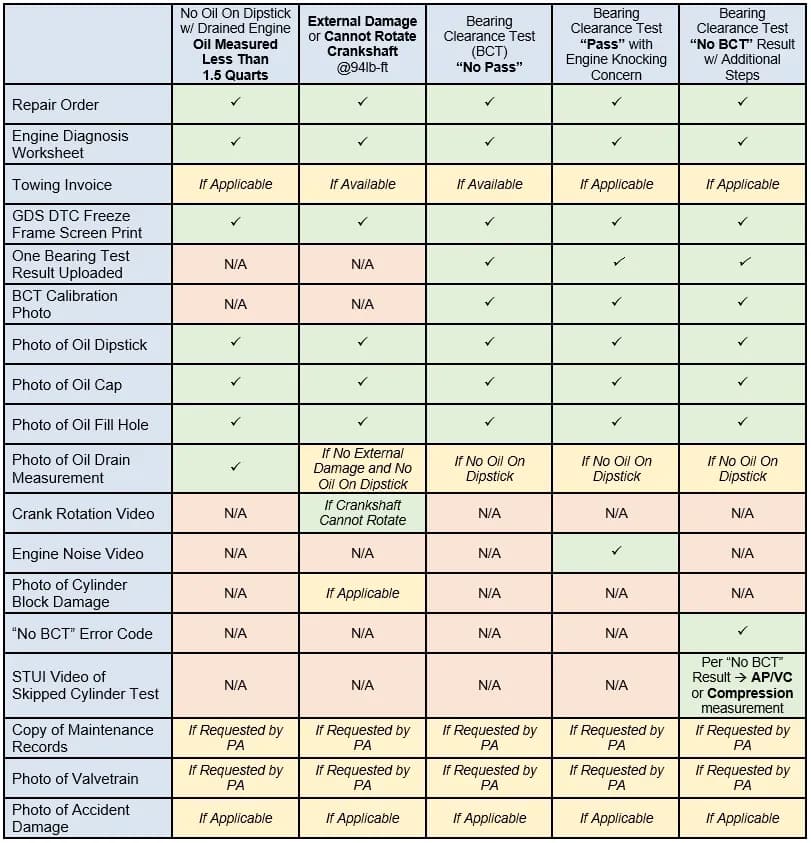
Hyundai has released Technical Service Bulletin (TSB) 22-01-023H-1, also known as Service Campaign T6G, to address specific engine concerns in various 2010-2021 models. This bulletin, issued in April 2022, supersedes TSB 22-01-023H and expands the list of applicable vehicles to include certain 2019-2021 MY Tucson (TL) and 2020MY Elantra GT (PD) models.
The primary issue involves the illumination of the "Check Engine" warning lamp with Diagnostic Trouble Code (DTC) P1326. This code is often accompanied by an "engine concern/noise related to connecting rod bearing wear or damage." The TSB provides a comprehensive procedure for inspecting the vehicle, and if necessary, replacing the engine and/or updating the engine's Electronic Control Unit (ECU) software (if new ROM is available) based on the inspection results. This TSB is crucial for addressing the Hyundai P1326 engine bearing issue.
Symptoms
Owners of affected 2010-2021 Hyundai vehicles may notice the following symptoms:
- The "Check Engine" warning lamp illuminates on the dashboard.
- Diagnostic Trouble Code P1326 is stored in the vehicle's computer system.
- The engine may exhibit unusual noises or other performance concerns, indicating potential connecting rod bearing wear or damage.
Fault Codes / DTCs
This service campaign specifically addresses the following Diagnostic Trouble Code:
- P1326: Engine Bearing Inspection / Engine Replacement
Diagnosis / Trigger Conditions
Diagnosis for the Hyundai P1326 engine bearing issue involves a multi-step process to determine the extent of engine damage and the appropriate repair. Technicians will perform the following:
- Initial Scan: Scan the vehicle for DTCs using a Global Diagnostic System (GDS). If DTC P1326 or any other code is present, a screenshot of the Freeze Frame data must be taken for Prior Approval (PA) submission.
- Visual Inspection: Take pictures of the dipstick, engine oil filler cap, and inside the valve cover oil filler opening. These pictures must be submitted using the STUI feature on the GDS, and the Vehicle Identification Number (VIN) must be legible in the photo (or on a copy of the Repair Order or last 6 digits of the VIN written on paper).
- External Damage Check: Inspect the cylinder block for any external lower end damage. If found, a picture of the damage with the VIN clearly visible is required for PA approval.
- Oil Drain Procedure: If no oil can be measured on the dipstick and no external lower end damage is found, the engine oil is drained and measured into a container. The 1.5-quart level should be clearly marked and visible on the container. A picture of the drained oil level with the VIN legible is required. If the measured drained oil is below the 1.5-quart line, PA approval is required.
- Engine Rotation Check: Attempt to rotate the crankshaft with a crank rotator Special Service Tool (SST). If the crankshaft cannot be turned with a moderate force, the force required to turn it must be measured with a torque wrench. If the force exceeds 94 lb-ft, video documentation is required for PA approval. If the crankshaft rotates up to 2 full turns (720°), proceed to the Bearing Inspection. If it does not rotate, proceed to Flow Chart B.
- Bearing Clearance Test: Perform a bearing clearance test using specialized tools and procedures outlined in TSB 21-EM-004H-1. The results of this test (Pass, No Pass, or No BCT) will guide the subsequent repair steps and PA submission. Technicians must confirm shop air pressure is at least 50 psi, and AP/VC pressures are within 0.1-0.11MPa and -0.073 to -0.083MPa respectively, calibrating per TSB 21-GI-009H if necessary.
Required Tools and Parts
To perform the inspection and repair for the Hyundai P1326 engine bearing issue, specific tools and parts are required:
- Torque Wrench Socket: Part Number 09314-3Q100-01. This is for GDI engines only and is required if engine replacement is needed. Refer to TSB 19-FL-001H for detailed usage instructions.
- Injector Combustion Seal Ring Installer: Part Number 09353-2B000. Replacements can be ordered through Bosch at 1-866-539-4248.
- 5 Quart Container: ULINE S-22984. Required to drain oil if necessary. It must have clear markings for 1-4 quarts for PA approval purposes. It can be ordered from ULINE at 800-295-5510 or ULINE.com.
- 17 mm 12-Point Metric Flank Drive® Reversible Ratcheting Box/Speed Open-End Combination Wrench: (Snap-on) SRXRM17. This is an optional tool for unfastening torque converter bolts if the engine cannot rotate.
- Bearing Clearance Tester Set (Bearing Tool): Includes KQ231-2T112QQH, KQ231-2T101QQH (Spark Plug Rod M12 for GD and Theta II MPI Hybrid engines, with a smooth upper body), and KQ231-2T107QQH (Spark Plug Rod M14 for MPI engines, with two machined identification grooves on the upper body). For complete details, refer to TSB 21-EM-004H-1.
- Thread-locking Sealants: For certain engine types with drill-through type drive plate mounting holes, sealants like ThreeBond 2403, LOCTITE 200, LOCTITE 204, or LOCTITE 243 (or equivalent) are recommended to prevent oil seepage.
- Drive Plate Bolts: For 2011-2012 MY Sonata Hybrid (YF HEV) vehicles, new drive plate bolts (P/N 23231-25200) must be used during engine replacement. The existing bolts (P/N 23231-2C010) are approximately 2mm too long due to crankshaft design changes and will result in improper fastening if reused.
- Service Kit Parts (for GDI engines): If following TSB 19-FL-001H, replace mounting flange O-ring (for High Pressure Pump), O-rings, backup rings, washer seals, combustion seal rings, and clips (for Fuel Injectors), and the fuel pipe (between High Pressure Pump and Fuel Rail).
- Service Kit Parts (for all engines): An exhaust pipe gasket is included and must be installed when attaching front and center muffler assemblies.
- Additional Replacement Parts: If a service kit is applicable, new parts such as the oil level rod & oil level guide assembly, intake manifold gasket(s), exhaust manifold gasket, and fuel pipe assembly should be replaced.
Important Warnings
Owners and technicians should be aware of several critical points outlined in this TSB:
- VIN Legibility: When submitting photos or videos for Prior Approval (PA), the Vehicle Identification Number (VIN) must be clearly visible in the image or on a copy of the Repair Order. For oil measurement photos, a Repair Order in the photo will suffice.
- PA Approval Required: Engine replacement requires Prior Approval from Hyundai. Technicians must submit all required documentation, including photos and videos, and await approval before proceeding with engine replacement. General engine replacement for conditions outside those contained in this TSB are "not covered by Campaign T6G."
- Engine Oil Maintenance: "Poor oil maintenance reduces the engine oil lubrication and cooling capacities." This can lead to piston ring deposits, oil sludge, and excessive wear. "Engine oil changes and engine oil level checks are required on a regular basis for all engines." Oil level checks and top-ups are recommended prior to the end of an oil change interval.
- Torque Converter Installation: For vehicles with automatic transmissions, if the torque converter has moved from the fully inserted position, it must be carefully pushed inward and rotated until it is recessed approximately 5/16" - 9/16" (8-14 mm) into the transaxle case during reinstallation. Failure to do so can damage the oil pump, "resulting in transmission failure."
- Knock Sensor Torque: When reinstalling the engine knock sensor, it must be torqued to 21 Nm (15.5 lb-ft). "Improper installation can result in DTC codes."
- Engine Accessory Belt: "If other engine accessory components are seized, remove the engine accessory belt prior to completing the engine rotation check."
- ECM Update Claim: The Campaign 966 Engine ECU Update, if new software is available, requires a separate campaign claim for the ECM update using specific Campaign op codes.
- DTC Clearing: "Clear DTC P1326 with engine ON. P1326 may reset if it's not cleared with the engine running." Also, "Reset engine adaptive values" after repairs.
Repair Procedure Summary
Once the diagnosis is complete and Prior Approval (if required) is obtained, the repair procedure for the Hyundai P1326 engine bearing issue involves several key steps:
- Engine Replacement: If deemed necessary and approved, the engine assembly is removed and replaced according to the applicable Shop Manual procedures (Engine Mechanical > Engine And Transaxle Assembly > Repair Procedures). Technicians must remember to record audio station presets before disconnecting the battery.
- Component Transfer: Certain components from the existing engine must be transferred to the new engine, taking special care of original parts required for reinstallation.
- Knock Sensor Reinstallation: The engine knock sensor is removed from the old engine (if not newly supplied) and reinstalled on the new engine, torqued to 21 Nm (15.5 lb-ft).
- GDI High Pressure Fuel System Components (GDI Engines Only): For GDI engines, the high-pressure fuel system components (GDI High Pressure Pump, Fuel Injectors, and Fuel Rail) are removed and reinstalled following TSB 19-FL-001H. Specific parts from the service kits, such as O-rings and fuel pipes, must be replaced.
- Oil Cooler Hoses and Harness: New oil cooler hoses are installed if applicable, and the engine front harness is reconnected and reinstalled.
- Sub Engine Assembly Reinstallation: The sub engine assembly is reinstalled following the Shop Manual.
- Cooling System: Cooling system components are reinstalled, and the system is filled with a 50/50 to 70/30 water/antifreeze coolant mixture.
- Engine Oil Fill: The engine crankcase is filled to the specified initial dry fill capacity. The engine is then cranked for several seconds with the fuel system temporarily disabled to prime the lubrication system. Recommended oil is 5W-30 Full Synthetic type with API SN/SN+/SP, ILSAC GF4/GF5 or higher service grade.
- Engine Warm-up and Fluid Level Adjustment: The engine is started and warmed up to normal operating temperature to bleed the cooling system. After a few minutes, the engine oil level is adjusted to the "F" mark.
- ECM Software Update: Refer to TSB 21-01-023H-4 (or later) to update the Engine ECM if new software is available.
- Final Checks: After all fluids are filled and work quality checks are completed, the customer's audio station presets are set, the Steering Angle Sensor is relearned using the GDS, DTC P1326 is cleared with the engine ON, other DTCs are checked and addressed, engine adaptive values are reset, and a short road test is performed to confirm normal vehicle drivability.
Prior Approval Submission Documentation
Hyundai requires specific documentation for Prior Approval (PA) for engine replacement. This includes various photos and videos depending on the diagnostic condition (e.g., no oil on dipstick, external damage, seized crankshaft, or Bearing Clearance Test results). Key requirements for all submissions include:
- VIN Visibility: The VIN must be clearly visible in all photos and videos, typically from the windshield or door jamb VIN plate. An exception is for oil measurement photos, where a Repair Order in the photo is sufficient.
- Clear Focus: All media must be clear and in focus, showing the item being presented.
- Specific Media: Depending on the condition, this may include photos of the oil dipstick, oil cap, oil fill hole, oil drain measurement, and videos of crankshaft rotation, engine noise, or skipped cylinder checks.
- Submission Method: All photos and videos must be submitted via the Single Technician User Interface (STUI).
NHTSA ID: 10220268
Galerie
19 Bilder
Frequently Asked Questions
- What does DTC P1326 mean for my Hyundai?
- DTC P1326 on your Hyundai indicates a potential issue with the engine's connecting rod bearings, which may lead to engine noise or damage. Hyundai Technical Service Bulletin 22-01-023H-1 outlines the inspection and repair process for this Hyundai P1326 engine bearing concern.
- Will Hyundai notify me about this engine bearing issue?
- This is a Technical Service Bulletin (TSB) and Service Campaign (T6G), not a recall. Hyundai typically does not send owner notifications for TSBs. If you experience symptoms like a "Check Engine" light with DTC P1326 or engine noise, you should contact your Hyundai dealer for diagnosis.
- Is the engine replacement covered under warranty for the Hyundai P1326 code?
- Yes, if your vehicle is covered by Service Campaign T6G and the inspection confirms the need for engine replacement, the repair is typically performed free of charge under warranty. Prior Approval (PA) from Hyundai is required before proceeding with engine replacement, and specific conditions must be met as outlined in TSB 22-01-023H-1.
- What specific tools or parts are needed for the P1326 engine repair?
- Special tools and parts may be required, including a Torque Wrench Socket (09314-3Q100-01), Injector Combustion Seal Ring Installer (09353-2B000), a 5-quart container (ULINE S-22984), and a Bearing Clearance Tester Set (KQ231-2T112QQH, KQ231-2T101QQH, KQ231-2T107QQH). Specific engine replacement parts like drive plate bolts (23231-2C010, 23231-25200) and thread-locking sealants (ThreeBond 2403, LOCTITE 200, LOCTITE 204, LOCTITE 243) are also mentioned in the TSB.
- What are the critical warnings for this Hyundai P1326 engine bearing issue?
- Key warnings include ensuring the VIN is legible in all documentation for Prior Approval, the necessity of PA before engine replacement, the importance of proper engine oil maintenance, correct torque converter installation to prevent transmission damage, and precise knock sensor torque to avoid new DTCs. Additionally, the TSB warns that "Improper installation can result in DTC codes."
Related Articles
2021 Hyundai Tucson Health Check: Engine & Paint TSBs
For the 2021 Hyundai Tucson, there are no reported recalls, owner complaints, or federal investigations. However, owners should be aware of several manufacturer service bulletins (TSBs) addressing engine emissions, potential engine bearing issues, white paint peeling, and an anti-theft ignition…
2021 Hyundai Tucson Emissions Logic Update (9C2)
Hyundai Service Campaign 9C2 addresses elevated engine-out emissions in certain 2021 Hyundai Tucson models by updating the Engine Control Module (ECM) software. This update helps ensure compliance with emissions standards and prevents failed inspections.
2015 Hyundai Sonata GDS Event 1383 Campaign Suspended
Hyundai Motor America has temporarily suspended Service Campaign 9C2, related to software GDS event #1383, for the 2015 Hyundai Sonata (LFA) 2.4L. Vehicles will not show this campaign as open in WebDCS during the suspension period.
2021 Hyundai Tucson GDS Event #1383 Engine Investigation
Hyundai is actively investigating a software-related engine issue, identified as GDS event #1383. While primarily concerning 2015 Sonata 2.4L vehicles, this manufacturer communication is linked by NHTSA to the 2021 Hyundai Tucson, indicating an ongoing review for a resolution.
2010-2021 Hyundai Engine Bearing TSB 26-01-033H
Hyundai Technical Service Bulletin (TSB) 26-01-033H is a critical reference for Op codes and part numbers under Service Campaign T6G. This campaign addresses engine bearing inspection and replacement for various Hyundai models from 2010-2021, often triggered by DTC P1326 and "Abnormal Engine Noise."
Leave a comment
Comments are moderated and may take a moment to appear. Only your first name and the initial of your last name are shown publicly.
Comments
Be the first to comment.