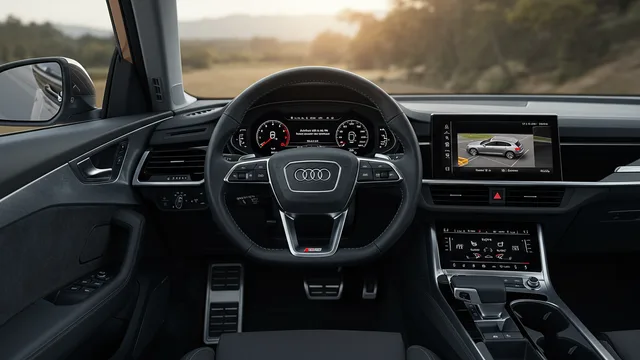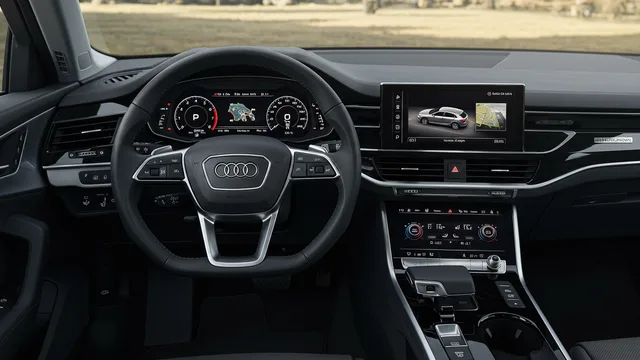
Volkswagen Group of America, Inc. (Audi) is recalling certain 2019-2026 vehicles. Please see the recall report for a complete list of models. A software error may prevent the rearview camera image from displaying as intended. As such, these vehicles fail to comply with the requirements of Federal Motor Vehicle Safety Standard number 111, "Rear Visibility."
Volkswagen Group of America, Inc. (Audi) is recalling certain 2022-2023 RS E-TRON GT and E-TRON GT vehicles. The passenger occupant detection system (PODS) may experience a fault in the wiring and deactivate the front passenger air bag when the seat is occupied.
Volkswagen Group of America, Inc. (Audi) is recalling certain 2022-2024 E-TRON GT, and RS E-TRON GT vehicles. The high-voltage battery may experience a short circuit within the battery module.
Volkswagen Group of America, Inc. (Audi) is recalling certain 2022-2024 Audi RS E-Tron GT and Audi E-Tron GT vehicles. The front axle brake hoses can develop tears, causing a leak and a brake circuit failure.
Volkswagen Group of America, Inc. (Volkswagen) is recalling certain 2022-2023 Audi RS E-Tron GT and E-Tron GT vehicles. The high-voltage battery may experience a short circuit within the battery modules.
While driving at highway speeds on the freeway, the vehicle experienced a sudden and catastrophic "Drivetrain Malfunction" / "Drive System Fault," resulting in an immediate and dangerous loss of propulsion and almost causing a high-speed collision. The vehicle was towed via roadside assistance to an authorized Audi dealership. Upon inspection, the dealer stated they could not immediately replicate the failure during a brief test drive and advised releasing an unrepaired vehicle, despite active sporadic fault codes stored in the vehicle gateway. The vehicle is currently impounded at the dealer due to ongoing safety concerns regarding an intermittent, unaddressed loss of propulsion at highway speeds. No prior warning lamps appeared before the initial sudden failure.
No injuries · No fire · No crash
Purchased a used 2022 Audi E-Tron GT with an open NHTSA safety recall for high-voltage battery fire risk (Recall 24V726 / Audi 931A). The recall remedy had not been performed at time of purchase. The selling dealer completed a pre-delivery inspection two weeks prior to sale with full knowledge of the open recall. Within 7 weeks of purchase, the vehicle entered limited performance mode (turtle mode) while driving and had to be towed. A high-voltage coolant pump was diagnosed faulty and replaced. Days later, the vehicle powered down completely while driving. Fault codes indicated an implausible signal from the HV battery controller. The battery management controller (J840) was replaced. After replacement, additional faults were found. The HV battery switch box (SX6) was also diagnosed faulty and replaced. The vehicle was out of service approximately 18 days for this event alone. Within 11 months of purchase, the vehicle developed water intrusion in the trunk area traced to a faulty spoiler motor sealing surface. This caused corrosion to the center tail lamp connector, electrical shorts to all three tail lamps, and required repair of six wiring harness connections. A body electrical wiring repair was also documented in service history prior to purchase, suggesting a pre-existing sealing defect. Total: 9 dealer visits and 50+ days out of service in under 14 months. All repairs performed under manufacturer warranty. The open safety recall was not completed until 8 months after purchase.
No injuries · No fire · No crash
The contact owns a 2022 Audi E-Tron GT. The contact received notification of NHTSA Campaign Number: 24V726000 (Electrical System); however, the part to do the recall repair was not yet available. The local dealer was contacted. The contact stated that the manufacturer had exceeded a reasonable amount of time for the recall repair. The manufacturer was made aware of the issue. The contact had not experienced a failure. VIN tool confirms parts not available.
No injuries · No fire · No crash
I was in Portland, Oregon, charging the car at a 350 fast station located in Fred Meyer and it was snowing and raining at the same time. I couldn't get the car to charge more the 90 % and got only 175 miles. Since it was wet, the car windshield will not defrost. The visibility in the car was not very good. I start driving back home to Eugene, around 100 miles. I was concern if i can make it home. When i arrive home, i had only 20 miles left on the charge. The car used to get 230 to 240 miles ranges. Now, even in mild weather, i get 199 miles maximum with 100% charge. I left the car to the dealer to check the battery and they didn't find anything wrong. Now, I will not drive the car in cold weather since i feel not safe driving more than a 100 miles and the charging station will not deliver the charge at more than 20 kw(it will take 2 days to charge the battery at 20 kw).
No injuries · No fire · No crash
The heater has failed. Dealer has diagnosed as high voltage heating unit failure. The issue is that this problem is occurring in many etron GTs and Porsche Taycans and there is no info from Audi as to when they will have replacement parts. No heat in the middle of winter, and the windows fog up, forcing you to drive with a window cracked open.
No injuries · No fire · No crash