2021-2023 Nissan Steering Wheel Off-Center and Vehicle Pull TSB
Learn about Nissan Technical Service Bulletin NTB08-097K, which provides comprehensive diagnostic and repair procedures for "vehicle pulls" and "steering wheel off-center" issues affecting 2021-2023 Nissan models.
 Sarah Mitchell2021 Nissan Sentra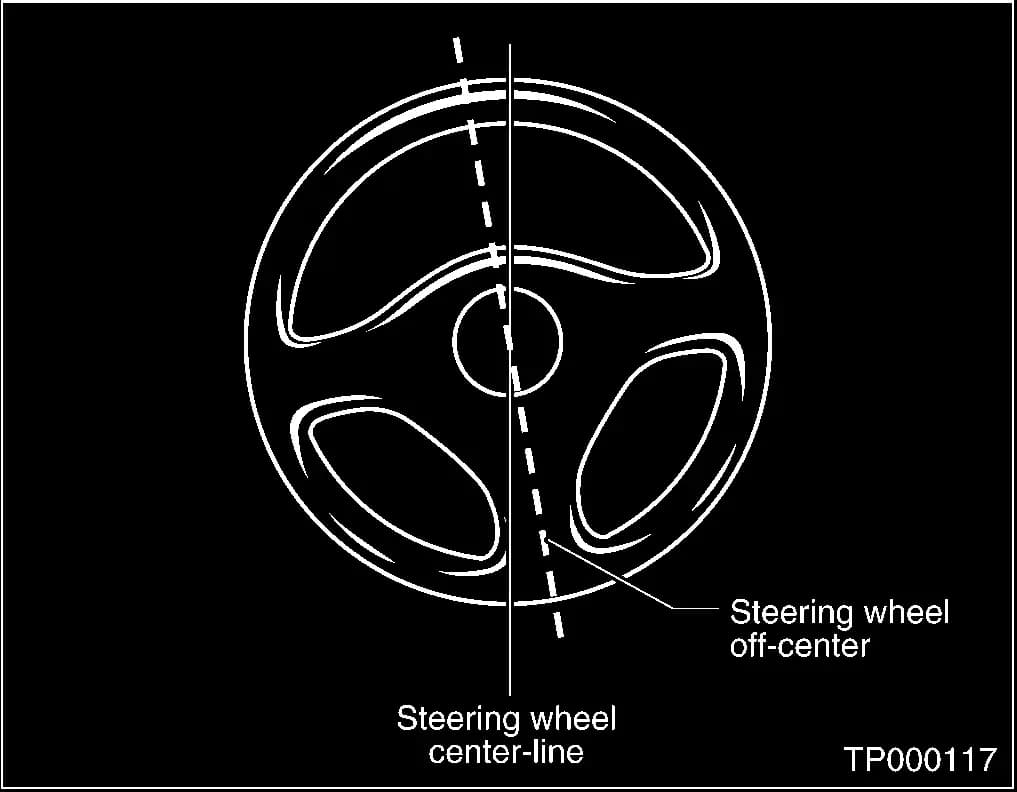
Also applies to
- Nissan Altima
- 2021–2023
- Nissan Armada
- 2021–2023
- Nissan Frontier
- 2021–2023
- Nissan Kicks
- 2021–2023
- Nissan Leaf
- 2021–2023
- Nissan Maxima
- 2021–2023
- Nissan Murano
- 2021–2023
- Nissan NV
- 2021
- Nissan NV200
- 2021
- Nissan Pathfinder
- 2021–2023
- Nissan Rogue
- 2021–2023
- Nissan Rogue Sport
- 2021–2022
- Nissan Sentra
- 2022–2023
- Nissan Titan
- 2021–2023
- Nissan Versa
- 2021–2023
▸ Show 9 more▾ Show fewer
Symptoms of Vehicle Pull or Steering Wheel Off-Center
Owners of 2021-2023 Nissan vehicles may experience their car consistently drifting to one side while driving straight, a condition referred to as "vehicle pulls." Another common complaint is a "steering wheel off-center," where the steering wheel spokes are tilted to the left or right even when the vehicle is moving in a straight line on a flat road.
A vehicle is considered to "pull" if it changes lanes in less than 7 seconds at 60 MPH without driver steering correction on a road with less than 1.5 degrees road crown slope. The "steering wheel off-center" condition is defined by the steering wheel spokes being tilted more than 2 mm (or 4 mm for NV1500, 2500, 3500, and Titan XD models) when driving straight on a flat road at 30 MPH.
Important Warnings for Owners
Nissan advises owners and technicians of specific conditions that may influence diagnosis:
- Road Crown: "This bulletin does not address road crown issues because they are not vehicle related." Many roads are built with a "crown" for drainage, which can cause a natural tendency for vehicles to drift. This is not a vehicle fault.
- Tire Pressure Monitoring System (TPMS): If the "TPMS warning light comes ON" during diagnostic procedures involving tire changes, "ignore it for now." The focus should remain on diagnosing the pull or off-center condition.
- Tire Condition: Before diagnosis, ensure tires are of the correct size, have no significant wear differences, and are free from damage. Tire pressures must be set correctly when cold.
Diagnostic Process
Diagnosing a "vehicle pulls" or "steering wheel off-center" condition involves a systematic approach, beginning with a road test and progressing through specific procedures.
Road Test
A crucial first step is a road test to confirm the customer's concern. This should be performed on a flat road at approximately 60 mph for vehicle pull and 30 mph for steering wheel off-center. Technicians use specialized tools like the Steering Wheel Offset Gauge (Centering Tape) and the Road Crown Gauge (Tilt Indicator) to measure the extent of the issue. During the road test, it's important to ensure the vehicle is pointing straight, regardless of the steering wheel position. Crosswinds can affect results, making diagnosis impossible under such conditions.
Diagnostic Flow Chart Summary
The TSB outlines a detailed Diagnostic Flow Chart (Figure 4 in the original document) to guide technicians:
- Initial Checks: Verify tire condition and air pressure.
- Road Test Results:
- Vehicle pulls: If a pull is present, especially if combined with an off-center steering wheel, the pull should be addressed first.
- Steering wheel is off-center: If the steering wheel is off-center more than allowable, repair any pull conditions first, as this may resolve the off-center issue.
- No pull and steering wheel not off-center: If neither condition is present, the diagnosis is complete after re-initializing the TPMS if necessary.
Procedure A: Determine if Tire Pull
This procedure focuses on identifying if a tire is causing the vehicle to pull. It involves:
- Torquing wheel lug nuts to specification.
- Setting correct tire pressure.
- Swapping front tires side-to-side, then rear tires side-to-side.
- Road testing the vehicle after each swap.
- For vehicles with "directional" tires or different front/rear tire sizes, all four tires may need to be swapped with known good tires from another vehicle.
Procedure B: Identify Which Tire is Causing the Pull
If Procedure A indicates a tire pull, Procedure B helps pinpoint the specific tire. This involves:
- Returning all tires to their original positions.
- For vehicles with different front/rear tire sizes or directional tires, individually swapping one tire at a time with a known good tire and road testing until the pull is reduced or eliminated.
- For other vehicles, specific tire rotation patterns (e.g., rotating tires 2 and 4 on the passenger side, then 1 and 3 on the driver side) are used, followed by road tests to determine which tire, if replaced, resolves the pull.
Procedure C: Check/Adjust Wheel Alignment
If tire-related issues are ruled out or corrected, the next step is to check and adjust the vehicle's four-wheel alignment.
- Alignment Check: Use calibrated computerized alignment equipment. Technicians must have a copy of the yearly alignment machine calibration certification on file.
- Inspection: If alignment measurements are out of specification, inspect the suspension and chassis for damage and repair as needed.
- Adjustment: Adjust any front and/or rear adjustable alignment components. Rear adjustments should always be performed first. The steering wheel must be straight when adjusting front wheel toe. The Steering Wheel Offset Gauge can assist in centering the steering wheel.
- Steering Angle Sensor: If necessary, use CONSULT software (C-III plus or C4) to adjust the Steering Angle Sensor.
Adjusting Steering Wheel Off-Center
If the primary issue is a "steering wheel off-center" condition, the following steps are taken:
- Front Toe Alignment Check: Verify the vehicle's front toe alignment using calibrated equipment.
- Inspection: Inspect suspension and chassis for damage if alignment is out of specification.
- Alignment Adjustment: Adjust alignment to correct the off-center condition, ensuring the steering wheel is straight.
- Road Test: Confirm the steering wheel is straight (not off-center by more than 2 mm).
- Steering Angle Sensor Adjustment: If required, use CONSULT software (C-III plus or C4) to adjust the Steering Angle Sensor.
Required Tools or Parts
Nissan technicians will utilize specialized tools for accurate diagnosis and repair:
- Steering Wheel Offset Gauge (Centering Tape): Tool # J-49286-3 (new part number NI-49286-3). This is a set of one-time use stickers attached to the steering wheel and column cover to measure steering wheel offset in millimeters.
- Road Crown Gauge (Tilt Indicator): Tool # J-49286-2 (new part number NI-49286-2). This gauge measures the amount of road crown in degrees and attaches to the dash with a suction cup.
- CONSULT Software: Specifically C-III plus or C4, used for adjusting the Steering Angle Sensor if necessary.
- Hunter GSP9700: For an alternative procedure (StraightTrack®) if available at the dealership.
Warranty Information
Vehicle alignment is covered under the adjustment Warranty for 12 months or 12,000 miles, whichever comes first, from the vehicle's in-service date. Warranty application is limited to correcting a problem reported by the customer. If an alignment adjustment is performed, the alignment data must be printed and stored by the dealer to support any warranty claims.
Claims Information
Technicians will use specific operation codes for warranty claims related to these procedures:
- Procedure A (Tire Swap): PX35AA
- Procedure B (Identify Pulling Tire): PX36AA (for general vehicles), or PX37AA, PX38AA, PX39AA, PX40AA depending on the number of tires swapped for vehicles with different sized or directional tires.
- Alternative Procedure A and B (Wheel Balance): WD52AA
- Procedure C (Adjust Wheel Alignment): Reference the WD-Chassis Adjustment section in the Nissan Warranty Flat Rate Manual.
- Steering Wheel Off-Center – Adjust: WD34AA
Gallery
7 images
Frequently Asked Questions
- What does "vehicle pulls" mean for my Nissan?
- "Vehicle pulls" means your Nissan consistently drifts to one side while driving straight, completing a lane change in less than 7 seconds at 60 MPH without steering correction. This TSB helps diagnose and fix this issue.
- Why is my Nissan Sentra steering off-center even when driving straight?
- A "steering wheel off-center" condition means the steering wheel spokes are tilted to the left or right by more than 2 mm (or 4 mm for some larger models) when driving straight on a flat road. This can be caused by tire issues, alignment problems, or tie rod adjustments.
- Will my Nissan dealer charge me to fix a steering wheel off-center or vehicle pull issue?
- Vehicle alignment and related adjustments are typically covered under Nissan's adjustment warranty for 12 months or 12,000 miles from the vehicle's in-service date, provided it's a customer-reported problem.
- What tools do technicians use to diagnose a Nissan Sentra steering off-center problem?
- Technicians use specialized tools like the Steering Wheel Offset Gauge (NI-49286-3) and the Road Crown Gauge (NI-49286-2) to accurately measure steering wheel position and road conditions during diagnosis.
- What should I do if my TPMS warning light comes on during diagnosis for a vehicle pull?
- Nissan's TSB NTB08-097K advises technicians to "ignore it for now" if the "TPMS warning light comes ON" during the diagnostic process for a vehicle pull or off-center steering, as the focus is on the steering issue.
Related Articles
2021-2024 Nissan Sentra CVT Removal Tool TSB
Nissan Technical Service Bulletin NTB24-045 introduces new engine support tools and a revised procedure for 2021-2024 Sentra models. This update allows technicians to remove the Continuously Variable Transmission (CVT) without also needing to remove the engine, streamlining complex transmission…
2020-2024 Nissan B2E01-96 Internal Battery DTC TSB
Nissan Technical Service Bulletin NTB22-027B provides a procedure to clear DTC B2E01-96, related to the internal battery of the Telematics Communication Unit (TCU), affecting various 2020-2024 Nissan models.
2021-2024 Nissan Sentra Front Rattle or Knock Noise TSB
Nissan has issued Technical Service Bulletin NTB22-045B for 2021-2024 Sentra models experiencing a rattle or knock noise from the front, especially when driving over bumps or turning. This bulletin identifies the passenger (RH) side Engine Mounting Insulator as the likely cause.
2021-2022 Nissan Sentra Inner Tie Rod Recall R23B3
Nissan is conducting a voluntary safety recall, R23B3, for certain 2021-2022 Sentra vehicles to replace both inner tie rods. This essential steering component replacement will be performed at no charge to the customer.
2021 Nissan Sentra False AEB/FCW Activation TSB
Owners of 2021 Nissan Sentra vehicles may experience false activation or unexpected braking from the Automatic Emergency Braking (AEB) or Forward Collision Warning (FCW) systems. Nissan Technical Service Bulletin NTB21-115A provides a software update to the ICC/ADAS 2 module to resolve this issue.
Leave a comment
Comments are moderated and may take a moment to appear. Only your first name and the initial of your last name are shown publicly.
Comments
Be the first to comment.