2021-2022 Nissan EVAP Leak DTC P0456 TSB
A common issue causing the check engine light and DTC P0456 in 2021-2022 Nissan vehicles is an EVAP leak due to a faulty vent control valve O-ring. This bulletin, NTB17-082E, details the necessary repair.
 Sarah Mitchell2021 Nissan Sentra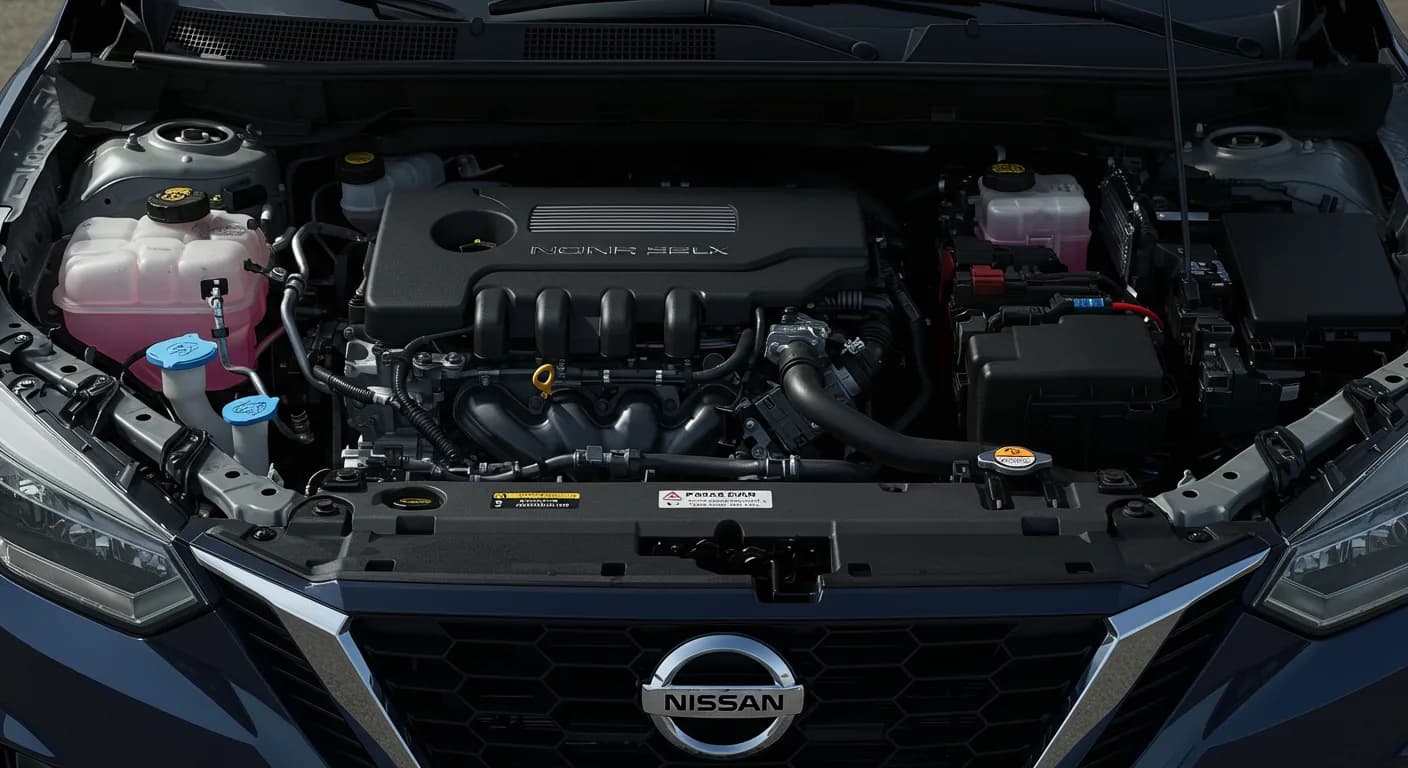
Also applies to
- Nissan Altima
- 2021–2022
- Nissan Armada
- 2021–2022
- Nissan Frontier
- 2021–2022
- Nissan GT-R
- 2021
- Nissan Kicks
- 2021
- Nissan Maxima
- 2021–2022
- Nissan Murano
- 2021–2022
- Nissan NV
- 2021
- Nissan NV200
- 2021
- Nissan Pathfinder
- 2021–2022
- Nissan Rogue
- 2021–2022
- Nissan Rogue Sport
- 2021
- Nissan Sentra
- 2022
- Nissan Titan
- 2021
- Nissan Versa
- 2021–2022
▸ Show 9 more▾ Show fewer
Nissan has issued Technical Bulletin NTB17-082E to address a common issue causing the check engine light to illuminate with Diagnostic Trouble Code (DTC) P0456. This bulletin, last amended on February 7, 2022, provides guidance for technicians on diagnosing and repairing an EVAP (Evaporative Emission Control System) leak specifically related to the vent control valve O-ring.
The EVAP system is crucial for preventing fuel vapors from escaping into the atmosphere. A leak in this system, even a very small one, can trigger the check engine light and indicate a potential environmental concern.
Symptoms
Owners of affected 2021-2022 Nissan vehicles may notice the following symptom:
- The Malfunction Indicator Lamp (MIL), commonly known as the check engine light, is illuminated on the dashboard.
Fault Codes / DTCs
When scanned, the vehicle's onboard diagnostic system will typically show:
- P0456: "EVAP VERY SML LEAK" (Evaporative Emission System Leak Detected - Very Small Leak)
Diagnosis / Trigger Conditions
To confirm the Nissan P0456 EVAP leak issue, technicians will perform a diagnostic procedure. It's important to first rule out other common causes for a P0456 code. Specifically, the bulletin states that the DTC P0456 should not be caused by a loose fuel fill cap. If a loose fuel cap is the cause, a different bulletin (NTB13-097) would apply.
Once a loose fuel cap is ruled out, the diagnosis focuses on the EVAP system. Technicians will look for an EVAP leak detected where the vent control valve mounts to the canister. If this specific leak point is identified, and the vent control valve O-ring seal is determined to be the root cause, then the repair outlined in this bulletin is applicable.
Important Warnings
Owners and technicians should be aware of a critical detail regarding this repair:
- The vent control valve O-ring seal (O-ring) is no longer available as a service part. This means that the O-ring cannot be purchased or replaced individually.
Repair Procedure Summary
The repair for a Nissan P0456 EVAP leak involves replacing the entire vent control valve assembly. Since the O-ring is not available separately, the complete valve assembly must be installed to resolve the leak. Technicians are instructed to refer to the applicable Electronic Service Manual (ESM) for the detailed replacement procedure, ensuring all steps are followed correctly for a successful repair.
Owner Action
If your 2021-2022 Nissan vehicle displays a check engine light and you suspect a Nissan P0456 EVAP leak, it is recommended to visit an authorized Nissan dealership or a qualified service center. They have the necessary diagnostic tools and access to the Electronic Service Manual to accurately diagnose the issue and perform the correct repair. Do not attempt to replace just the O-ring, as it is not available as a standalone part.
Source: NHTSA ID 10208953
Frequently Asked Questions
- What does DTC P0456 mean for my 2021-2022 Nissan?
- DTC P0456, or "EVAP VERY SML LEAK," indicates a very small leak in your Nissan's Evaporative Emission Control System. This system is designed to capture fuel vapors, and a leak can cause your check engine light to illuminate.
- Can I fix a Nissan P0456 EVAP leak myself?
- While some minor EVAP issues can be caused by a loose fuel cap, the specific Nissan P0456 EVAP leak addressed by TSB NTB17-082E requires replacing the entire vent control valve assembly. This repair should be performed by a qualified technician as the O-ring seal is not available separately.
- What is the repair for a Nissan P0456 EVAP leak?
- According to Nissan Technical Bulletin NTB17-082E, the repair for this specific Nissan P0456 EVAP leak involves replacing the entire vent control valve as an assembly. The faulty O-ring seal, which is the cause of the leak, cannot be replaced individually.
- Why can't the vent control valve O-ring be replaced separately?
- Nissan has specified in Technical Bulletin NTB17-082E that the vent control valve O-ring seal is no longer available as a separate service part. Therefore, to properly address the EVAP leak, the complete vent control valve assembly must be replaced.
Related Articles
2021-2024 Nissan Sentra CVT Removal Tool TSB
Nissan Technical Service Bulletin NTB24-045 introduces new engine support tools and a revised procedure for 2021-2024 Sentra models. This update allows technicians to remove the Continuously Variable Transmission (CVT) without also needing to remove the engine, streamlining complex transmission…
2020-2024 Nissan B2E01-96 Internal Battery DTC TSB
Nissan Technical Service Bulletin NTB22-027B provides a procedure to clear DTC B2E01-96, related to the internal battery of the Telematics Communication Unit (TCU), affecting various 2020-2024 Nissan models.
2021-2024 Nissan Sentra Front Rattle or Knock Noise TSB
Nissan has issued Technical Service Bulletin NTB22-045B for 2021-2024 Sentra models experiencing a rattle or knock noise from the front, especially when driving over bumps or turning. This bulletin identifies the passenger (RH) side Engine Mounting Insulator as the likely cause.
2021-2022 Nissan Sentra Inner Tie Rod Recall R23B3
Nissan is conducting a voluntary safety recall, R23B3, for certain 2021-2022 Sentra vehicles to replace both inner tie rods. This essential steering component replacement will be performed at no charge to the customer.
2021 Nissan Sentra False AEB/FCW Activation TSB
Owners of 2021 Nissan Sentra vehicles may experience false activation or unexpected braking from the Automatic Emergency Braking (AEB) or Forward Collision Warning (FCW) systems. Nissan Technical Service Bulletin NTB21-115A provides a software update to the ICC/ADAS 2 module to resolve this issue.
Leave a comment
Comments are moderated and may take a moment to appear. Only your first name and the initial of your last name are shown publicly.
Comments
Be the first to comment.