2021-2022 Nissan EVAP Leak DTC P0442, P0455, P0456
This Nissan Technical Bulletin NTB13-097J addresses diagnostic information for EVAP leak DTCs P0442, P0455, and P0456, often triggered by a loose fuel filler cap. Learn what to do if you see a 'LOOSE FUEL CAP' warning.
 Marcus Weber2022 Nissan Sentra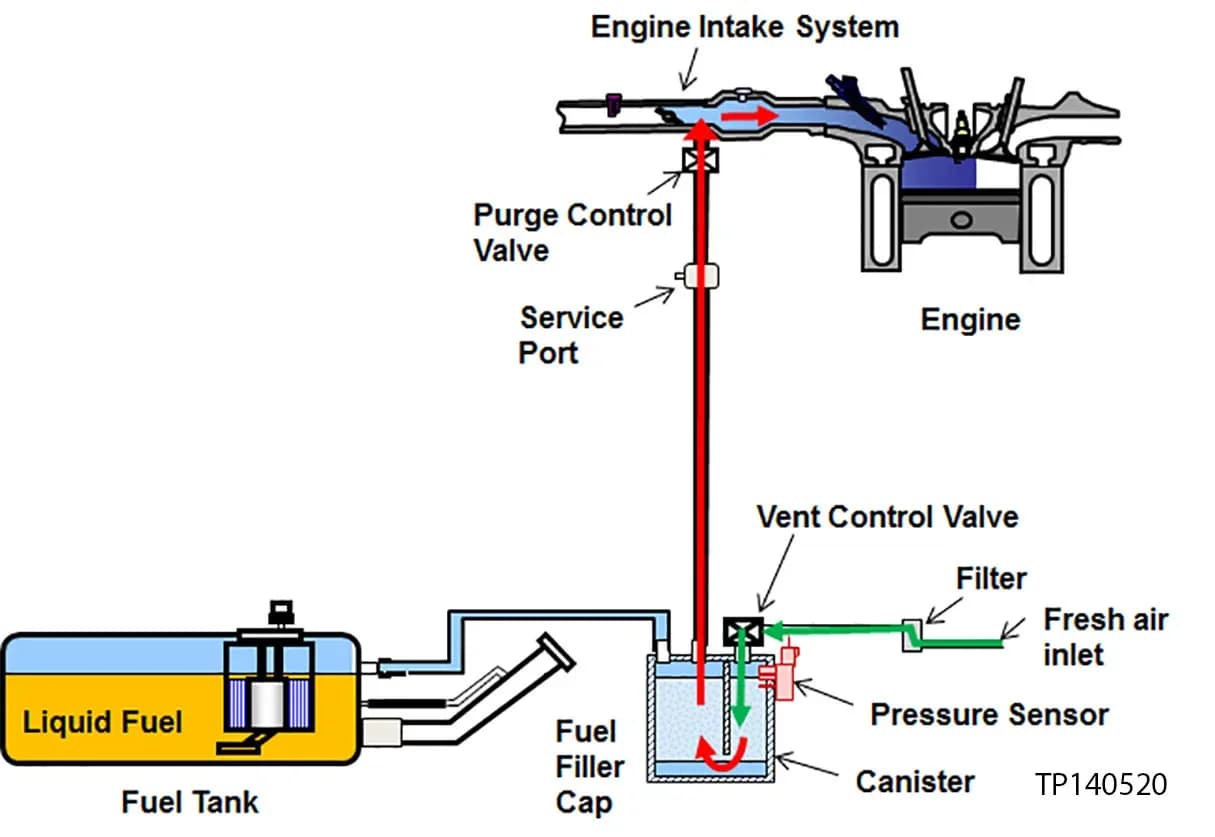
Also applies to
- Nissan Altima
- 2021–2022
- Nissan Armada
- 2021–2022
- Nissan Frontier
- 2021–2022
- Nissan GT-R
- 2021
- Nissan Kicks
- 2021
- Nissan Maxima
- 2021–2022
- Nissan Murano
- 2021–2022
- Nissan NV
- 2021
- Nissan NV200
- 2021
- Nissan Pathfinder
- 2021–2022
- Nissan Rogue
- 2021–2022
- Nissan Rogue Sport
- 2021
- Nissan Sentra
- 2021
- Nissan Titan
- 2021
- Nissan Versa
- 2021–2022
▸ Show 9 more▾ Show fewer
Nissan has issued Technical Bulletin NTB13-097J to provide diagnostic information for EVAP (Evaporative Emission Control System) leak Diagnostic Trouble Codes (DTCs) P0442, P0455, and P0456. These codes are frequently triggered by a simple issue: a loose fuel filler cap. This bulletin helps technicians properly diagnose the root cause to avoid unnecessary parts replacement.
Symptoms
Owners of affected 2021-2022 Nissan vehicles may notice a warning indicator in the instrument cluster alerting them to a loose fuel filler cap. This warning typically displays as a "LOOSE FUEL CAP" message or light. If the fuel filler cap remains loose for multiple trips, the Malfunction Indicator Lamp (MIL) will illuminate, and the EVAP leak DTCs P0442, P0455, or P0456 will be stored in the vehicle's computer system.
Fault Codes / DTCs
The following Diagnostic Trouble Codes (DTCs) are associated with EVAP system leaks, which can often be caused by a loose fuel filler cap:
- P0442: Evaporative Emission Control System Leak Detected (Small Leak)
- P0455: Evaporative Emission Control System Leak Detected (Gross Leak)
- P0456: Evaporative Emission Control System Leak Detected (Very Small Leak)
These codes indicate that the EVAP system is not maintaining the expected pressure, suggesting a leak somewhere in the system. The most common and easily rectifiable cause for a Nissan EVAP leak P0442, P0455, or P0456 is an improperly secured fuel cap.
Important Warnings for Owners
Nissan has provided crucial advisories for both owners and technicians regarding these EVAP leak DTCs:
- Immediate Action: If your vehicle displays a "LOOSE FUEL CAP" warning light or message, you should safely stop the vehicle and ensure the fuel filler cap is installed correctly. Refer to your vehicle's Owner's Manual for specific instructions on proper fuel filler cap installation and the warning system.
- Diagnosis is Key: For technicians, the bulletin explicitly states that a test drive is not part of the DTC confirmation or diagnostic procedures for these codes, and performing one will only waste time. The diagnostic procedure outlined in the bulletin must be used for an effective repair.
- Avoid Unnecessary Replacements: If diagnosis confirms that the MIL illuminated due to a loose fuel filler cap and no actual EVAP leak is detected, technicians are instructed to DO NOT REPLACE FUEL FILLER CAP OR ANY OTHER EVAP RELATED PARTS. Any parts replaced under warranty for these DTCs are subject to automatic return to Nissan for inspection, and functional parts will result in a charge-back to the dealer.
- Professional Service: Nissan Bulletins are intended for use by qualified technicians, not 'do-it-yourselfers'. If you suspect this condition applies to your vehicle, consult your Nissan dealer for diagnosis.
Diagnosis and Repair Procedure Summary
The diagnostic process for a Nissan EVAP leak P0442, P0455, or P0456 begins by checking for stored DTCs. If P0442, P0455, or P0456 are present, the technician will follow a specific flow chart:
- Confirm Fuel Filler Cap Security: The first step is to ensure the fuel filler cap is securely tightened.
- EVAP System Leak Check: Technicians will use the essential tool J-42909 to perform an EVAP system leak check. This involves connecting the tool, using an Active Test to close the vent control valve, applying pressure until a specific bar graph reading is achieved, and then monitoring the pressure for 10 minutes.
- For models with a service port (2017 and older), the tool connects directly to the service port (as shown in Figure 2 of the bulletin).
- For models without a service port (2018 and newer), the EVAP line is disconnected at the purge control valve, and the tool is connected there (as shown in Figure 3 of the bulletin). In this case, the tool is also used to check for a separate purge control valve leak.
- Evaluate Results: If the bar graph remains stable and no purge control valve leak is detected, it indicates that no EVAP leak is present at that time. The MIL was likely triggered by the fuel filler cap not being properly secured. In this scenario, the DTCs are erased, and the customer is advised to always ensure the fuel filler cap is properly secured.
- Actual EVAP Leak: If an EVAP leak is detected during the test, the bulletin states that it does not apply to this specific condition, and further diagnosis using ASIST and the applicable Electronic Service Manual is required.
This procedure is designed to quickly identify if the issue is a simple loose fuel cap or a more complex EVAP system problem, preventing unnecessary repairs.
Required Tools
For proper diagnosis of a Nissan EVAP leak P0442, P0455, or P0456, the following essential tool is required:
- J-42909: This specialized tool is used for EVAP system leak checks and pressure application.
Owner Action
If you experience a "LOOSE FUEL CAP" warning or your Malfunction Indicator Lamp (MIL) illuminates with DTCs P0442, P0455, or P0456, the first step is to ensure your fuel filler cap is securely tightened. If the warning persists or returns, or if the MIL remains illuminated, it is recommended to visit your authorized Nissan dealer. They have the necessary tools and diagnostic procedures outlined in Technical Bulletin NTB13-097J to accurately diagnose the problem and perform any required repairs, ensuring you avoid unnecessary parts replacement.
Gallery
2 images
Frequently Asked Questions
- What does a 'LOOSE FUEL CAP' warning mean in my Nissan?
- A 'LOOSE FUEL CAP' warning in your Nissan indicates that the fuel filler cap may not be properly secured. This can lead to EVAP system leaks, which can trigger Diagnostic Trouble Codes (DTCs) like P0442, P0455, or P0456 and illuminate your Malfunction Indicator Lamp (MIL).
- What are DTCs P0442, P0455, and P0456?
- DTCs P0442, P0455, and P0456 are codes related to the Evaporative Emission Control System (EVAP) detecting a leak. P0442 signifies a small leak, P0455 a gross leak, and P0456 a very small leak. These codes often appear together and can be caused by a simple loose fuel cap.
- Should I replace my fuel cap if I get a Nissan EVAP leak P0442 code?
- Not necessarily. According to Nissan Technical Bulletin NTB13-097J, if diagnostic tests confirm that the EVAP leak DTCs (like P0442) were triggered solely by a loose fuel filler cap, technicians are instructed not to replace the fuel cap or other EVAP-related parts. Always have a qualified technician diagnose the issue first.
- What should I do if I see a 'LOOSE FUEL CAP' warning or my MIL is on?
- If you see a 'LOOSE FUEL CAP' warning, safely stop your vehicle and ensure the fuel filler cap is securely tightened. If the warning persists or the Malfunction Indicator Lamp (MIL) remains illuminated, it's best to visit a Nissan dealer for proper diagnosis using the procedures outlined in Technical Bulletin NTB13-097J.
Related Articles
2020-2023 Nissan Altima, Frontier, Sentra False AEB Activation TSB
Nissan Technical Service Bulletin NTB21-115B details a solution for 2020-2023 Nissan Altima, Frontier, and Sentra vehicles experiencing false activation or unexpected braking from their Automatic Emergency Braking (AEB) or Forward Collision Warning (FCW) systems. The repair involves reprogramming…
2021-2022 Nissan Sentra Tie Rod Recall: Steering Loss Risk
Nissan has issued a safety recall (R23B3) for certain 2021-2022 Sentra models due to potentially weak tie rods. This condition can lead to impaired steering, wheel vibration, or even loss of vehicle control. Dealers will replace both tie rods free of charge. A stop-sale is in effect.
2021-2024 Nissan Models: C1A17-49 / C2580-49 Laser/Radar DTC
Nissan Technical Service Bulletin NTB21-106B provides guidance for diagnosing and resolving Diagnostic Trouble Codes C1A17-49 and C2580-49 related to the Laser/Radar system in various 2021-2024 Nissan models. It clarifies when to simply erase the code versus seeking further repair.
2021-2024 Nissan Intelligent Key Unit Service TSB
Nissan TSB NTB20-073C provides critical service information for replacing the Intelligent Key unit in 2021-2024 Ariya, Pathfinder, Rogue, and Sentra vehicles. It emphasizes correct module configuration and NATS initialization steps.
2021-2024 Nissan Sentra Remote Engine Start Inoperative TSB
Owners of 2021-2024 Nissan Sentra vehicles may experience inoperative A/T Shift Lock and Remote Engine Start after a Body Control Module (BCM) replacement. Nissan Technical Service Bulletin NTB20-055A explains that pressing the Intelligent Key UNLOCK button prematurely can permanently disable…
Leave a comment
Comments are moderated and may take a moment to appear. Only your first name and the initial of your last name are shown publicly.
Comments
Be the first to comment.