2021-2024 Stellantis Engine Coolant Leak TSB S2307000002
A Stellantis technical service bulletin, S2307000002 Rev. B, addresses suspected engine coolant leaks in 2021-2024 Jeep, Dodge, and Ram vehicles. It details comprehensive inspection steps, including UV light and pressure testing, to pinpoint leak sources like the water pump weep hole.
 Marcus Weber2021 Jeep Wrangler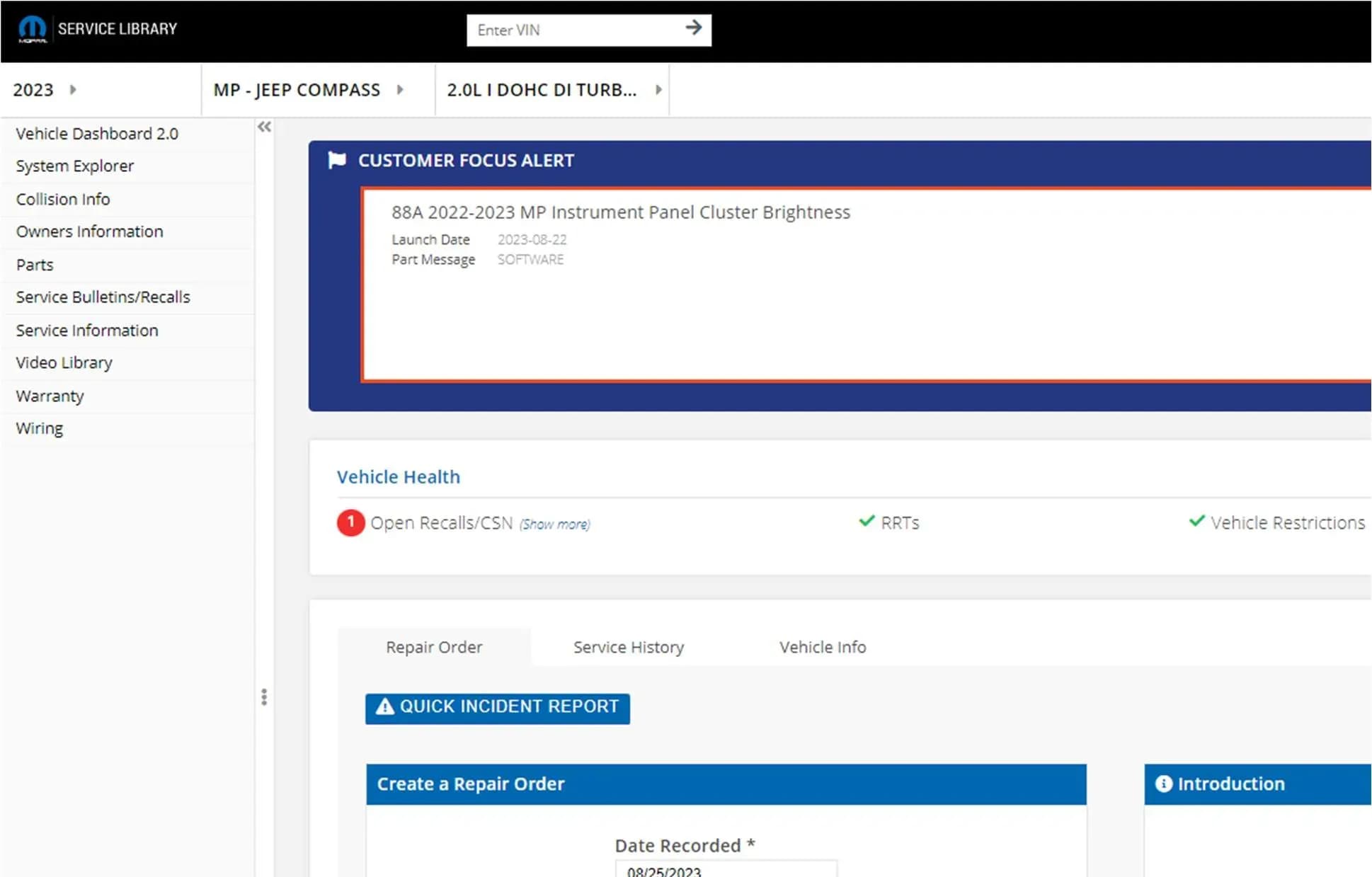
Also applies to
- Jeep Grand Cherokee
- 2021–2024
- Jeep Wagoneer
- 2022–2024
- Jeep Wrangler
- 2022–2024
- Dodge Durango
- 2021–2023
- Ram 1500
- 2021–2024
Owners of 2021-2024 Stellantis vehicles, including the Jeep Wrangler, may experience a Jeep Wrangler engine coolant leak. This issue typically manifests as a noticeable coolant odor or visible fluid leakage under the vehicle. Technical Service Bulletin (TSB) S2307000002 Rev. B provides detailed guidance for technicians to accurately diagnose and identify the source of these suspected engine coolant leaks.
Symptoms
The primary indicators of a Jeep Wrangler engine coolant leak are:
- A distinct coolant odor, often noticeable inside or around the vehicle.
- Visible fluid leakage or puddles under the vehicle, indicating a loss of coolant.
Diagnosis and Inspection Procedure
To effectively pinpoint the source of a suspected engine coolant leak, technicians are advised to conduct a comprehensive inspection. This process begins with a thorough review of all potential leak points within the engine compartment, as detailed in the Pressurized Coolant System Inspection process found in the Cooling Diagnosis and Testing Procedures in the Service Library.
A key step involves performing a visual inspection of the entire cooling system while it is under pressure, utilizing a UV light. If the vehicle contains MOPAR 10yr coolant (purple), it should glow orange under UV light. If the coolant's fluorescence has diminished or if the type of coolant is unknown, a Leak Detection Additive should be introduced into the cooling system as per the Cooling Diagnosis and Testing Procedures (Coolant Leaks) before the UV light inspection.
Technicians should meticulously inspect the following components for any signs of leakage:
- Radiator
- Hot bottle/coolant reservoir/expansion tank
- Front cover
- Water pump
- Thermostat
- Front cover coolant crossover
- Cylinder head gasket
- Cylinder block
- Cylinder head
- EGR cooler (if equipped)
- Oil filter adapter (OFA)
- HVAC heaters
- Trans oil cooler (TOC) coolant lines (if equipped)
- All cooling system hoses, gaskets, and connections
If coolant residue is observed in lower areas of the engine compartment, the inspection should focus on the cooling system parts located directly above to identify the precise leak source.
Identifying Water Pump Weep Hole Leaks
Special attention should be paid to the water pump weep hole plug area. It is important to note that some coolant residues in this area may be normal. However, liquid coolant should never be dripping from this location.
Trace amounts of coolant residue at the weep plug, described as "Trace coolant but not dripping from weep hole," do not necessarily indicate a faulty water pump. A system pressurization test is crucial to make an accurate determination. The presence of liquid coolant dripping from the weep hole, labeled as "Liquid coolant dripping from weep hole," is unacceptable at any time. If liquid coolant is observed at the weep plug or dripping from the weep hole during initial inspection or during the pressurization test, the water pump must be replaced.
Important Warnings for Owners
Owners should be aware that this TSB, S2307000002 Rev. B, is a communication for technicians and does not authorize warranty repairs directly. It provides diagnostic guidance based on past experiences, not definitive conclusions about specific vehicle issues. Technicians are responsible for determining the appropriate course of action.
It is crucial to understand that the presence of coolant residue in the water pump weep hole does not automatically mean the pump is bad. A proper system pressurization test is required to confirm any potential issue. Some coolant residues in the weep hole area can be normal, but any liquid coolant actively dripping from this location is not.
Reporting Identified Leaks
Once the source of a Jeep Wrangler engine coolant leak or any other Stellantis vehicle coolant leak is identified, technicians are instructed to submit a DID-I using the Quick Incident Report (QIR) button within the Service Library. This report should include pictures illustrating the leak's source. If a solution cannot be found through standard procedures, technicians are advised to contact the STAR Center or their Technical Assistance Center via TechCONNECT or an eCONTACT ticket.
Source: NHTSA Manufacturer Communication S2307000002 Rev. B
Gallery
2 images
Frequently Asked Questions
- What are the common signs of an engine coolant leak in 2021-2024 Stellantis vehicles?
- The most common signs of a suspected engine coolant leak in these vehicles, including the Jeep Wrangler, are a noticeable coolant odor and visible fluid leakage or puddles underneath the vehicle.
- How do technicians diagnose a coolant leak according to TSB S2307000002 Rev. B?
- Technicians perform a comprehensive inspection, including a pressurized coolant system test and a visual inspection using UV light. They may also add a Leak Detection Additive if the coolant's fluorescence is diminished or unknown. Various components, from the radiator to hoses, are thoroughly checked.
- Is trace coolant at the water pump weep hole always a problem?
- No, according to TSB S2307000002 Rev. B, some coolant residues at the water pump weep hole plug area may be normal. However, liquid coolant actively dripping from this location is not normal and indicates a problem. A system pressurization test is necessary to make a definitive determination.
- What happens if a liquid coolant leak is found at the water pump weep hole?
- If liquid coolant is observed dripping from the water pump weep hole during initial inspection or a pressurization test, the technical service bulletin advises that the water pump should be replaced.
Related Articles
2021 Jeep Wrangler Health Check: Recalls and Bulletins
The 2021 Jeep Wrangler has faced several significant issues, including recalls for potential engine stalls, high voltage battery fires in 4Xe models, and instrument panel failures. Owners should be aware of these safety concerns and numerous service bulletins addressing various electrical, engine…
2021-2026 Stellantis KeyFOB Low Battery DTCs B1A10-00
Stellantis TSB S2608000010 addresses diagnostic trouble codes B1A10-00 through B1A17-00 related to KeyFOB low battery conditions in 2021-2026 Chrysler, Dodge, Jeep, and RAM vehicles. Symptoms include inoperable remote keyless entry or passive start. Learn the recommended fix.
2021-2026 Jeep Wrangler/Gladiator Handle Release Parts
A Quality Inspection Request has been issued for specific 'HANDLE - INSIDE RELEASE' parts (68282334AD, 68282335AD, 68282336AD, 68282337AD, 68323950AD, 68323951AD) affecting 2021-2026 Jeep Wrangler and Gladiator vehicles. Parts built before August 7, 2025, are suspect and require return.
2021-2026 Jeep Wrangler/Gladiator Filiform Corrosion TSB
FCA Caribbean Warranty Bulletin ID-25-11 Rev. B provides updated procedures for diagnosing and repairing aluminum filiform corrosion on various body panels for 2021-2026 Jeep Wrangler and Gladiator vehicles, including specific labor operations and Vehicle Digital Imaging (VDI) pre-approval…
2021-2026 Jeep Wrangler/Gladiator Filiform Corrosion Warranty
Jeep Warranty Bulletin D-25-15 (Rev. B) addresses aluminum filiform corrosion on 2021-2026 Jeep Wrangler and Gladiator vehicles. This bulletin updates the repair process for inner door shells and clarifies the Vehicle Digital Imaging (VDI) pre-approval requirements for paint repairs and panel…
Leave a comment
Comments are moderated and may take a moment to appear. Only your first name and the initial of your last name are shown publicly.
Comments
Be the first to comment.