2020-2022 Hyundai Push-Button Shifter Diagnosis TSB
Hyundai Technical Service Bulletin (TSB) 22-AT-001H provides a comprehensive diagnostic procedure for push-button shifter operation issues across several 2020-2022 Hyundai models. This TSB addresses symptoms like 'Shifter System Malfunction' messages, inability to shift gears, or incorrect gear…
 Sarah Mitchell2022 Hyundai Tucson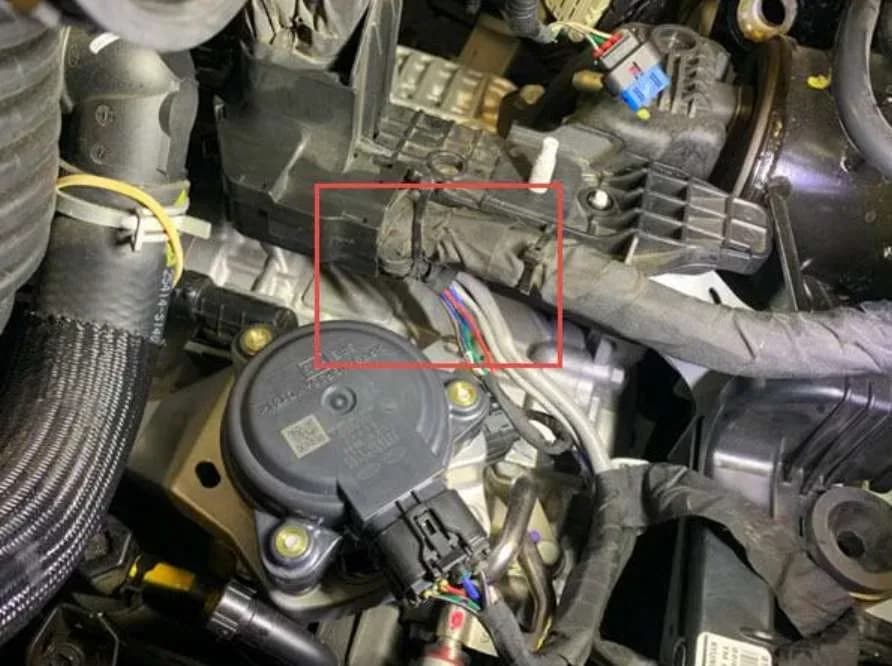
Also applies to
- Hyundai Palisade
- 2021–2022
- Hyundai Santa Fe
- 2021–2022
- Hyundai Sonata
- 2021–2022
Hyundai has released Technical Service Bulletin (TSB) 22-AT-001H to provide a detailed diagnostic procedure for issues related to the automatic transaxle push-button shifter. This TSB applies to various 2020-2022 Hyundai models, including the Palisade, Santa Fe, Sonata, and Tucson, covering both gasoline and hybrid variants. This bulletin supersedes TSB 21-AT-009H, adding more symptoms, Diagnostic Trouble Codes (DTCs), and specific repair steps.
Symptoms of a Faulty Push-Button Shifter
Owners of affected Hyundai vehicles may notice one or more of the following symptoms related to the push-button shifter:
- A warning message stating "Shifter System Malfunction” displayed in the instrument cluster.
- Difficulty or inability to shift into or out of gear.
- The vehicle may not shift out of Park.
- Incorrect gear display in the instrument cluster.
- The vehicle may not start.
If you experience any of these issues, it indicates a potential problem with the push-button shifter system, requiring a thorough Hyundai push-button shifter diagnosis.
Fault Codes (DTCs) Associated with Shifter Issues
Technicians may find the following Diagnostic Trouble Codes (DTCs) when diagnosing a push-button shifter malfunction. These codes help pinpoint the specific area of concern within the system:
| DTC | Description |
|---|---|
| P060148 | Functional Safety Level 2 SW failure |
| P065713 | SBW actuator power relay error |
| P07FF00 | SBW system Error - Abnormal power voltage |
| P0705** | Transmission range circuit |
| P106D00 | SBW actuator stuck |
| P106D13 | SBW actuator stuck - open/short |
| P106D14 | SBW system Error - UVW open/short |
| P106D71 | SBW actuator stuck |
| P28E214 | Shift motor UVW circuit - open |
| P28E577 | SBW actuator commanded position not reached - Short |
| P28E592 | SBW motor performance |
| P28EA71 | SBW actuator stuck |
| P28EA77 | SBW actuator commanded position not reached |
| U110382 | Lost communication with TGS lever |
| U110400 | Lost communication with TGS lever |
Diagnosis and Trigger Conditions
The diagnostic process for the Hyundai push-button shifter diagnosis involves using the Global Diagnostic System (GDS) to check for fault codes and analyze system data. Technicians will perform the following steps:
- Fault Code Search: Connect the GDS, search for all fault codes, record them, and then delete them.
- Data Analysis (Transmission): Start the engine and use the GDS to access the 'Data Analysis' and 'A/T' menus. Technicians will push the shift buttons to change gears (P, R, N, D) and observe if the correct gear is displayed in the cluster and on the GDS. If the gear display is incorrect, it indicates a potential fault in the SBW lever or its harness.
- Data Analysis (SCU): With the engine running, access the 'Data Analysis' and 'SCU' menus on the GDS. Technicians will again push the shift buttons and check the 'Target Lever Position' and 'Actual Lever Position'. Discrepancies here suggest an issue with the SBW Control Unit (SCU), SBW actuator, or related harness. The 'Motor Feedback Current' should also be checked when a shift button is pressed.
- Actuation Test: Turn the engine off, turn the ignition ON (without starting), and press the brake pedal. From the GDS 'Actuation Test' and 'SCU' menus, technicians will test the target positions for P, R, N, and D. If the GDS and cluster do not show the correct target position, it indicates a fault in the SCU, SBW actuator, or related harness.
Repair Procedure Summary
After diagnosing the issue, the repair procedure outlined in TSB 22-AT-001H may involve several steps, depending on the findings:
- Wiring Harness Inspection: If no faults are found during GDS tests, technicians will visually inspect the wiring harness between the PCM or TCU and the transmission for any damage, open/short circuits, or improperly inserted pins. Any damage found will be repaired or replaced.
- Santa Fe (TMA) Specific Check: For 2021 Santa Fe (TMA) models, if the customer reports "Shifter System Malfunction" or DTC P28E214 (Shift motor phase UVW circuit open), technicians will check for harness contact with the battery tray. This involves removing the air cleaner, battery, and battery tray.
- Harness Rerouting/Repair: If the harness to the SBW actuator is found to be in contact with the battery tray, the harness protector will be carefully unwrapped. The insulation on the wires will be inspected for damage. If damage is present, the control harness will be repaired or replaced.
This TSB also references other bulletins for specific component replacements: TSB 21-AT-007H for position sensor or SBW actuator replacement, and TSB 21-AT-008H-1 for certain DTCs like P060148, P106D00, P106D71, and U110382.
Required Tools or Parts
For this diagnosis and repair, technicians will utilize the Global Diagnostic System (GDS). Depending on the specific fault, replacement parts may include:
- SBW Lever (PNC 46700)
- SBW Control Unit (SCU) (PNCs 42950, 42951)
- SBW Actuator (PNC 42910)
- Position sensor (PNC 42700)
- ECU (Unified ECU/TCU) (PNC 39110)
- TCU (PNC 95440)
Owner Action
If your 2020-2022 Hyundai vehicle exhibits any of the symptoms described, such as a "Shifter System Malfunction" message or issues with shifting gears, it is recommended to schedule a service appointment with your authorized Hyundai dealer. Provide them with a clear description of the symptoms you are experiencing. The dealer will use TSB 22-AT-001H to diagnose and resolve the push-button shifter issue under warranty, if applicable.
Source: NHTSA ID: 10207809
Gallery
7 images
Frequently Asked Questions
- What does the 'Shifter System Malfunction' message mean in my Hyundai?
- The 'Shifter System Malfunction' message indicates a problem with your vehicle's push-button shifter system. This could lead to issues like being unable to shift gears, getting stuck in Park, or an incorrect gear display. Hyundai TSB 22-AT-001H provides diagnostic steps for technicians to identify and fix the underlying cause.
- Which Hyundai models are affected by TSB 22-AT-001H?
- TSB 22-AT-001H applies to various 2020-2022 Hyundai models, including the Palisade (LX2), Santa Fe (TMA, TM HEV), Sonata (DN8/DN8A, DN8 HEV), and Tucson (NX4/NX4A, NX4 HEV). If you own one of these models and experience shifter issues, your dealer will refer to this bulletin.
- What are some common fault codes related to the Hyundai push-button shifter diagnosis?
- Common fault codes (DTCs) associated with push-button shifter problems include P060148 (Functional Safety Level 2 SW failure), P065713 (SBW actuator power relay error), P106D00 (SBW actuator stuck), and U110382 (Lost communication with TGS lever). These codes help technicians diagnose the specific component or circuit that is malfunctioning.
- Is the repair for the push-button shifter covered under warranty?
- Generally, issues addressed by Technical Service Bulletins like 22-AT-001H are covered under the vehicle's factory warranty. It's best to consult your Hyundai dealer to confirm warranty coverage based on your vehicle's specific warranty terms and mileage.
- What should I do if my Hyundai won't shift out of Park?
- If your Hyundai won't shift out of Park, it could be a symptom of the push-button shifter malfunction addressed by TSB 22-AT-001H. You should contact your Hyundai dealer or a qualified service center immediately for diagnosis and repair. Avoid forcing the shifter, as this could cause further damage.
Other revisions of this TSB
- 2021-2024 Hyundai Shifter Malfunction TSB 23-AT-006H-2P060148, P07FF00, P106D00
- 2020-2023 Hyundai Push-Button Shifter Malfunction TSBP060148
- 2020-2022 Hyundai Push-Button Shifter Diagnosis TSBP106D00, P106D71
Related Articles
2021-2024 Hyundai Santa Fe / Tucson DTC U028700 EOP
Hyundai has issued Technical Service Bulletin (TSB) 26-AT-002H for certain 2021-2024 Santa Fe and Tucson vehicles. This TSB addresses diagnostic trouble code U028700, indicating a "Lost Communication With Trans Fluid Pump Module," which can cause the Idle Stop & Go (ISG) system to become…
2022 Hyundai Tucson Inoperable Horn Warranty Extension
Hyundai has issued a warranty extension for certain 2022 Tucson (NX4A) vehicles experiencing an inoperable horn. This issue, detailed in TSB 26-BE-004H, is caused by foreign substances oxidizing internal horn parts. Coverage is extended to 10 years/120,000 miles.
2022 Hyundai Tucson Inoperative Horn TSB 26-BE-004H
Hyundai has issued Technical Service Bulletin 26-BE-004H for certain 2022 Tucson (NX4A) vehicles experiencing an inoperative horn. This TSB extends warranty coverage to 10 years/120,000 miles for horn replacement due to internal oxidation from foreign substances.
2021-2022 Hyundai Anti-Theft Ignition Cylinder Protector TSB
Hyundai has issued Technical Service Bulletin 25-01-089H (Customer Satisfaction Campaign P33) to address vehicle theft concerns by installing an anti-theft ignition cylinder protector and anti-theft decals on various 2021-2022 models.
2021-2022 Hyundai Anti-Theft Ignition Cylinder Protector Campaign P33
Hyundai has launched Customer Satisfaction Campaign P33 for 2021-2022 models, offering a free anti-theft ignition cylinder protector and decals. This hardware upgrade, detailed in TSB 25-01-089H, is available upon customer request to counter social media theft methods.
Leave a comment
Comments are moderated and may take a moment to appear. Only your first name and the initial of your last name are shown publicly.
Comments
Be the first to comment.