2024-2025 BMW X-Series / Sedans Driveline Jerking SIB 27 02 20
BMW Service Information Bulletin SIB 27 02 20 addresses jerking or shuddering from the driveline in 2024-2025 BMW X-Series and Sedans. This issue can be caused by unevenly worn or incorrect tires, or transfer case oil not meeting specifications.
 Ahmet Topcu2025 BMW X5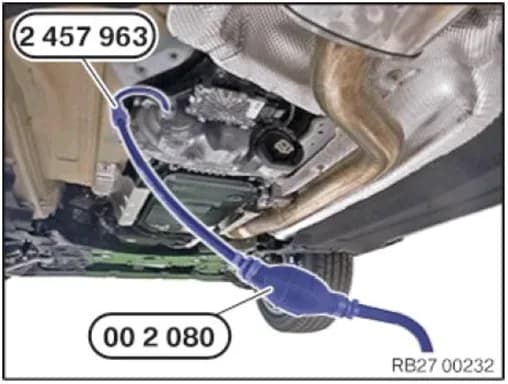
Also applies to
- BMW 330i
- 2025
- BMW 430i
- 2025
- BMW 530i
- 2025
- BMW 740i
- 2025
- BMW 840i
- 2025
- BMW X3
- 2025
- BMW X4
- 2025
- BMW X6
- 2025
- BMW X7
- 2025
- BMW XM
- 2024
▸ Show 4 more▾ Show fewer
BMW has released Service Information Bulletin SIB 27 02 20, Revision 5, dated June 6, 2025, to address customer complaints of jerking or shuddering from the driveline in various 2024-2025 BMW models. This bulletin supersedes the previous version, SIB 27 02 20 dated March 2025. Owners experiencing a "JERKING OR SHUDDERING FROM THE DRIVELINE" should be aware of the potential causes and recommended diagnostic steps.
The bulletin outlines that this 2024-2025 BMW driveline jerking can occur during cornering or acceleration from low speeds, or when driving with low to medium loads. Importantly, these symptoms typically appear without any warning lights or Check Control messages on the instrument cluster.
Symptoms of Driveline Jerking or Shuddering
Owners may notice a distinct jerking or shuddering sensation from the vehicle's driveline. This behavior is typically observed under specific conditions:
- When cornering or accelerating from low speeds.
- During driving with low to medium loads.
Crucially, these symptoms are not accompanied by any warning lights or Check Control messages, making diagnosis challenging without specific guidance.
Underlying Causes
BMW has identified two primary causes for the "JERKING OR SHUDDERING FROM THE DRIVELINE" issue:
- Tire-related problems: This includes unevenly worn tires or tires that do not meet the correct fitment specifications for the vehicle.
- Transfer case oil issues: The factory-filled transfer case oil may not meet current BMW specifications.
Important Warnings for Owners
Owners should be aware of specific conditions related to the repair and post-repair driving:
- xDrive System Warning: During certain diagnostic procedures, a warning message related to the "xDrive system" may appear in the control display. This warning is expected and should be ignored during the procedure. Cycling the ignition will reactivate the xDrive system.
- Post-Repair Driving: After a transfer case oil change, a minimum drive time of 125 miles of normal driving is required for the new oil to fully saturate the clutch plates inside the transfer case. The 2024-2025 BMW driveline jerking or shuddering should gradually diminish during this run-in period until it completely smooths out.
Tire Inspection and Specifications
A thorough tire inspection is the first step in diagnosing the 2024-2025 BMW driveline jerking. Technicians will check for the following:
- Size and Brand: Verify that the tires match the correct size and brand specified on the driver's B-pillar placard for factory-fitted tires.
- Tire Wear: Extreme tire wear on one or more tires can cause the xDrive system to remain engaged, contributing to the issue. If new tires were recently installed, the problem might have originated with the old tires.
- Staggered Sizes: For vehicles with staggered tire sizes, ensure that tires are not mismatched between axles (e.g., front tires moved to the rear).
- Rolling Circumference: It is highly recommended to check the rolling circumference of all four tires to detect variances not visible by tread depth alone.
Tire Technical Specifications (from Repair Instruction 3612...)
To ensure proper vehicle operation and prevent driveline issues, the following tire specifications must be met:
- The tire size, manufacturer, and tread must be identical on each axle.
- For optimal BMW standards, all four wheels should have tires from the same manufacturer and with the same tread pattern (BMW-approved tires).
- The difference in tire tread depth on any single axle must not exceed 2 mm.
- Tires with deeper tread depths should always be mounted on the rear axle.
- The DOT age difference between tires should not exceed 4 years.
- Tire pressure must be adjusted when tires are exchanged.
Wheel Exchange Considerations
While wheel exchanges between axles can promote even wear, BMW does not recommend swapping front wheels to the rear or vice-versa. Such exchanges may lead to:
- Complaints regarding acoustics.
- Increased lane groove sensitivity.
If wheel exchanges are performed, the following requirements are critical:
- Identical tire size and rim size on both front and rear axles.
- A thorough assessment of the wear pattern.
- The tread difference between the front and rear wheels must not exceed 2-3 mm.
- Wheels should be exchanged every 3000 miles (5000 km).
- For all-wheel drive vehicles, tire size, manufacturer, and tread must be the same at all wheel positions, unless mixed tire sizes are specifically permitted between the front and rear axles. The tire tread difference across all wheel positions must not exceed 2 mm.
Diagnosis Procedure
If tire issues are not found or if the driveline shuddering persists after addressing tire concerns, technicians will proceed with further diagnosis:
- Powertrain Control Unit Check: Diagnose any faults present in the powertrain control units.
- Transfer Case Diagnosis:
- It is no longer necessary to unplug the transfer case (VTG) module to diagnose related concerns.
- The VTG can be temporarily deactivated using the ISTA test plan "Temporary deactivation of all-wheel-drive system – (ABL-DIT-AW2710_TDEAKAWD11)". This is accessed via the path: Vehicle Management/Troubleshooting/Function structure/Drive/Transfer box/[!] Current fault patterns/Temporary deactivation of all-wheel-drive system.
- After deactivating the transfer case clutch, the vehicle will be test-driven to determine if the complaint is resolved.
Repair Procedure Summary
If the complaint of 2024-2025 BMW driveline jerking is eliminated when the transfer case is disconnected, the following repair is performed under Repair Code 2710003800:
- Transfer Case Oil Change: The oil in the transfer case is changed. This follows Repair Instruction "27 00 270 Oil change in transfer box including used oil disposal". If this instruction is not available in ISTA for a specific vehicle, technicians will use the test plan "Oil change (ABL-DIT-AS2710_OILCHNG_VTGG11)" via Service functions/Drive/Transfer box VTG/Oil change.
- Cross-Member Removal: The transmission cross-member is removed as part of the oil change process, following Repair Instruction "22 32 050 'Replacing the cross member for the transmission bearing'".
- Oil Extraction and Filling: Special tools 0 493 337 (also known as 00 2 080) and 2 457 963 are used to extract the old transmission oil. New DTF-1 transmission oil (approximately 0.7 liters) is then added using special tool 0 493 337 until it reaches the lower edge of the filler plug opening.
- Filler Plug Replacement: The oil filler plug is replaced with a new one, part number 33 11 7 525 064, and tightened to 60 Nm.
- Cross-Member Reinstallation: The transmission cross-member is reinstalled according to Repair Instruction 22 32 050.
- VTG Recalibration: The VTG is recalibrated using the ISTA test plan "Calibration (ABL-DIT-AS2710_KALIB_VTGG11)", accessible via Service functions/Drive/Transfer box VTG/Transfer box (VTG): Calibration.
Required Tools or Parts
To perform the transfer case oil change, specific parts and special tools are required:
- Transfer Case Oil: DTF-1 Transfer case oil (1000 ml/1 liter), Part Number 83 22 5 A4F 016.
- Screw Plug: Screw plug with O-ring (M22 x 1.5-ZNS3), Part Number 33 11 7 525 064.
- Special Tools: 0 493 337 (00 2 080) and 2 457 963 for oil extraction and filling.
What Owners Should Do
If your 2024-2025 BMW exhibits jerking or shuddering from the driveline, especially during cornering, acceleration, or under light loads, contact your authorized BMW service center. Describe the symptoms in detail, noting that no warning lights are present. Referencing Service Information Bulletin SIB 27 02 20 may help the technician quickly identify the appropriate diagnostic and repair procedures.
NHTSA ID: 11019579
Gallery
3 images
Frequently Asked Questions
- What does BMW Service Information Bulletin SIB 27 02 20 address?
- BMW SIB 27 02 20 addresses the issue of jerking or shuddering from the driveline in certain 2024-2025 BMW models. This can occur during cornering, acceleration from low speeds, or driving with low to medium loads, without any warning lights.
- What causes the 'JERKING OR SHUDDERING FROM THE DRIVELINE' in affected BMWs?
- The primary causes identified by BMW are unevenly worn or incorrectly fitted tires, or transfer case oil that does not meet BMW's specifications. A thorough tire inspection and potentially a transfer case oil change are the recommended solutions.
- Are there any special instructions after the transfer case oil is changed?
- Yes, after a transfer case oil change, a minimum of 125 miles of normal driving is required. This allows the new oil to fully saturate the clutch plates. The jerking or shuddering should gradually disappear during this run-in period.
- What parts are involved in the repair for this driveline issue?
- The repair typically involves DTF-1 Transfer case oil (Part Number 83 22 5 A4F 016) and a new screw plug with O-ring (Part Number 33 11 7 525 064). Special tools 0 493 337 and 2 457 963 are also used for the oil change procedure.
Related Articles
2025 BMW X5/X6/X7 Brake Booster Service Action Reminder
BMW has issued a service action reminder for certain 2025 X5, X6, and X7 models concerning a potentially faulty brake booster. Affected vehicles may exhibit a modified pedal feel or a 'red Check Control message' and require a free brake booster replacement.
2025 BMW Automate My Habits Settings Lost SIB 65 08 26
A BMW Service Information Bulletin (SIB 65 08 26) addresses an issue where 'Automate My Habits' settings are lost after a software update to version 25-07-5XX. This affects various 2025 BMW models, including X-series, 4-series, and 7-series vehicles.
2025 BMW Door Seal Detachment SIB 51 22 24
BMW has released Service Information Bulletin SIB 51 22 24 (Revision 3) to address instances of main door seal detachment at the sealing joint in various 2025 models. This bulletin outlines the symptoms, cause, and a partial replacement procedure for the affected door seals.
2025 BMW Secure Element Failure During Engine Start SIB 61 01 26
This BMW Service Information Bulletin (SIB 61 01 26) details a software issue causing "Secure Element Failure During Engine Start" in 2025 BMW models, leading to the "Drive carefully. Driving stabilisation." message and specific fault codes. A software update is the prescribed fix.
2025 BMW Infotainment Software Issues SIB 65 27 25
BMW has released Service Information Bulletin SIB 65 27 25 to address various software-related issues affecting the infotainment head units (HU-H4, HU-H5, HU-H6) in certain 2025 BMW models, including the X5 and X3. Symptoms range from head unit resets and delayed startup to problems with…
Leave a comment
Comments are moderated and may take a moment to appear. Only your first name and the initial of your last name are shown publicly.
Comments
Be the first to comment.