2022-2024 BMW i4, i5, i7, iX DC Charging Complaint SIB 61 25 23
BMW has released Service Information Bulletin SIB 61 25 23 addressing customer complaints of 'DC Not charging' or 'DC charging too slow' on 2022-2024 i4, i5, i7, and iX models. Learn about the common causes and diagnostic tips.
 Marcus Weber2024 BMW i5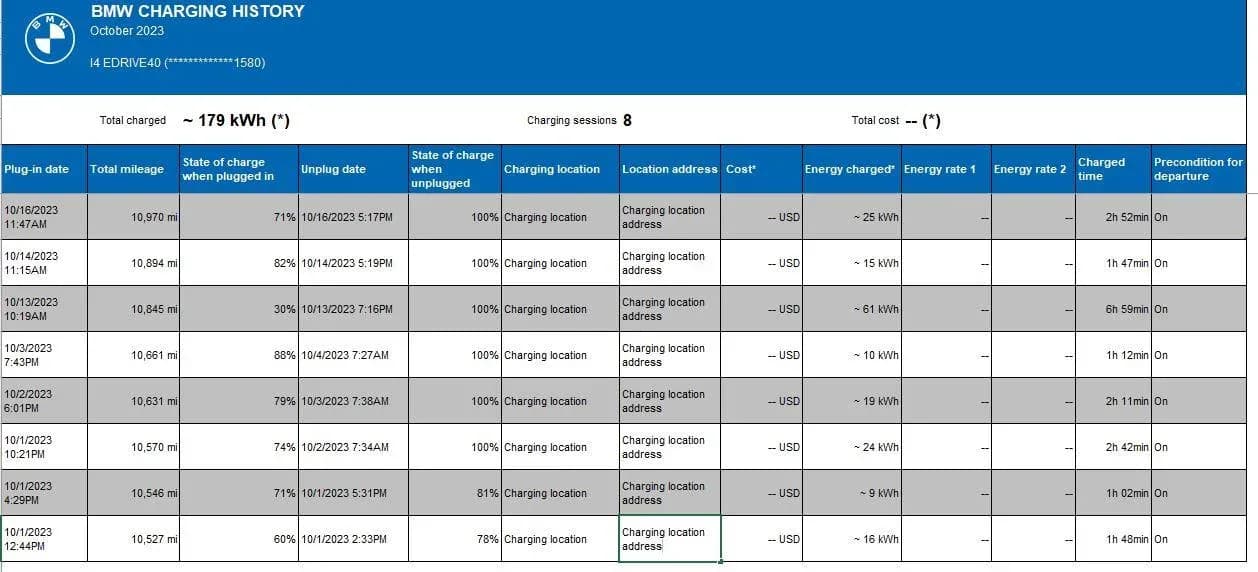
Also applies to
- BMW i4
- 2022–2024
- BMW i7
- 2023–2024
- BMW iX
- 2022–2024
BMW has issued Service Information Bulletin SIB 61 25 23 to address common customer complaints regarding direct current (DC) charging on its Generation 5 Battery Electric Vehicles (BEV). Owners of 2022-2024 BMW i4, i5, i7, and iX models may experience issues such as "DC Not charging" or "DC charging too slow." This bulletin aims to help technicians and owners distinguish between normal system operation and actual faults, providing comprehensive guidance for diagnosing and understanding these conditions.
The SIB 61 25 23 highlights that these charging complaints are often due to several possible causes, many of which relate to external factors or the protective functions of the vehicle's high-voltage battery system. Understanding these conditions can prevent unnecessary service visits and ensure optimal charging performance for your BMW i5 DC charging complaint.
Symptoms and Potential Causes
Owners typically report two main symptoms: "DC Not charging" or "DC charging too slow." BMW has identified five primary reasons for these occurrences:
- Limitation of charging power by the charging station or charging app configuration: The charging station itself might have power limitations, internal faults, or current restrictions. Additionally, issues with mobile charging app configurations, such as incomplete sign-ups or incorrect payment information, can prevent or slow charging.
- Decreasing charging power at a very high state of charge (SoC): As the high-voltage battery approaches full capacity, the charging power naturally decreases. This is a designed protective function to prolong battery life.
- Too frequent DC charging attempts within a short period of time: Repeated DC fast charging sessions without sufficient stationary time can lead to a temporary reduction in charging power. This is a protective measure to prevent rapid aging of the high-voltage battery.
- The high-voltage battery is not at the ideal temperature: Extreme temperatures, whether too cold or too hot, can limit the battery's ability to accept maximum charging power. The vehicle may reduce charging speed to protect the battery.
- Ageing of the high-voltage battery: Over time and use, the battery's State of Health (SOH) naturally decreases, which can lead to a reduction in the maximum charge current it can accept.
Important Warnings and Owner Information
BMW provides several critical advisories for both technicians and owners:
- Charging History Preservation: "Do not to attempt to plug in a charger before the charging history is read out or the events that the customer has experienced and is complaining about will be erased." This emphasizes the importance of diagnostic steps before attempting further charging.
- Indicator Lights are Not Diagnostic Tools: "The charging indicator LED display at the HV charge plug should not be used as a diagnostic tool in service. This is designed as a quick indicator of charging state to the user (customer)." While helpful for a quick check, these lights are not sufficient for detailed diagnosis.
- Slower Charging May Be Normal: "Slower charging speeds may not indicate a vehicle malfunction. If the vehicle does not indicate a malfunction please advise the customers to try different modes of charging." Owners should try different charging stations or types (AC vs. DC) if they suspect an issue without a fault message.
- Guide's Purpose: This Service Bulletin and its attachments are "for informational and customer consultation purposes and DOES NOT replace diagnosis by qualified Service Personnel." They are also "IS NOT intended for distribution to customers or to be used as marketing material" and "DOES NOT serve as a substitute for any manuals or guides provided by BMW through official communication channels."
Understanding DC Charging Limitations in Detail
Charging Station and App Configuration
When your BMW i5 DC charging complaint arises from external factors, it's often related to the charging infrastructure. Public DC charging stations can have varying maximum power outputs, and their internal systems or grid connections might limit the power delivered. Issues with mobile charging apps are also common. These apps often require specific configurations, valid email addresses, and payment methods. Inconsistencies in account information can prevent charging. BMW suggests verifying charging functionality by trying a "known good" DC charger outside the problematic app network or by having a dealer verify charging.
High State of Charge (SoC) and Frequent Charging
It is normal for DC charging power to decrease as the battery's State of Charge (SoC) increases, especially above 80%. This is a built-in protective function to safeguard the high-voltage battery. Similarly, "too frequent DC charging events without stationary period" can trigger a temporary power reduction. If you perform four DC charging processes in quick succession, the vehicle may reduce power after the fifth. This protective function ensures the longevity of the HV battery by allowing cells to balance. Full charging power typically returns within 48 hours after the last DC charging process. A Check Control Message (CCM) will alert the driver when this function is active, available from I level 23-07-5xx onwards. If this occurs, it's recommended to deplete the battery further (e.g., to 40% SoC) and use an AC charger for the next session if possible.
Battery Temperature and Pre-conditioning
The high-voltage battery performs optimally within a specific temperature range. If the battery is too cold or too hot, the vehicle will limit charging power to protect it. This can happen in excessively low or high ambient temperatures, or if the battery hasn't had time to precondition. Inadequate cooling due to faults in the HV battery cooling system, insufficient coolant, or refrigerant issues can also contribute. BMW recommends setting pre-conditioning before charging in extreme temperatures. Using BMW Navigation eRoutes and setting the charging station as a destination can automatically precondition the battery. Manual pre-conditioning is also available via the vehicle's head unit or the My BMW App from November 2022 production onwards. An instrument cluster indicator, a blue car with a temperature symbol, will appear when temperature-related charging limitation is active (from July 2022 production onwards).
Battery Aging
Like all batteries, the high-voltage battery in your BMW EV will experience a natural reduction in capacity and State of Health (SOH) over time and use. This aging process can lead to a decrease in the maximum charge current the battery can accept. The vehicle's system will reduce the maximum current as needed to maintain battery health. Technicians can assess the battery's condition (SOH) by testing its capacity using the ISTA service function, following the path: Vehicle management > Troubleshooting > Function structure > Electric drive > High-voltage battery unit > High-voltage battery: Evaluate battery condition.
Diagnosis and Troubleshooting
My BMW App Charging History
Owners can access their recent charging history through the My BMW App. This information includes details about past charging events, such as State of Charge (SoC) at plug-in/unplug, charging location, energy charged, and charging time. This data can be valuable for diagnosing a BMW i5 DC charging complaint and can be shared with a BMW Service Center. To access, navigate to Open My BMW app > Charging > Charging history > Share.
ISTA Diagnostics
For technicians, the BMW Service Center can generate a detailed "Charging Check report" from the ISTA charging system test plan. The ISTA diagnostic system also allows reading the charging history via: Service functions > Electric drive > Charging > Read the history of the last charging processes. Note that only the last five charging processes are stored.
Charging Indicator Lights
The charging port features an indicator light that changes color to show the current charging status:
- White: Ready to accept charger.
- Yellow (pulsing): Communication between charger and vehicle is established.
- Blue (permanent): Ready to charge in future (Charging in Timeslot).
- Blue (pulsing): Charging.
- Green (permanent): Charging completed or target SoC reached.
- Red (pulsing): Fault detected. A red pulsing light may not always indicate a vehicle error.
BMW Flexible Fast Charger (FFC) 2.0 Indicators
The BMW FFC 2.0 also provides error mode detections using status lights:
- Charging status bar: Pulse Orange for Booting, Pulse Blue for Charging, Permanent Blue for Ready.
- Infrastructure: Permanent Red indicates a power supply issue.
- Flexible Fast Charger: Permanent Red indicates a Charger Error.
- Vehicle: Permanent Red indicates a Vehicle Error.
- Temperature: Permanent Red indicates Overtemperature detected.
Any combination of these lights can indicate different modes or errors. Restarting the charger manually may resolve some issues. Consult the charger manual for more information.
Owner Actions
If you experience a BMW i5 DC charging complaint, consider these steps:
- Check Charging App: Ensure your mobile charging app is correctly configured and your account information is up-to-date.
- Try Different Chargers: Test charging at a different DC fast charger or consider using an AC charger if available.
- Pre-condition Battery: Utilize the vehicle's pre-conditioning function, especially in extreme weather, or use navigation to a charging station to allow the vehicle to prepare the battery.
- Monitor Charging History: Access your charging history via the My BMW App to gather information that can assist your service center.
- Consult Your Dealer: If the issue persists or you receive a Check Control Message, contact your authorized BMW service center for diagnosis using ISTA.
NHTSA ID: 10244504
Gallery
15 images
Frequently Asked Questions
- What does 'DC Not charging' or 'DC charging too slow' mean for my BMW EV?
- These messages on your 2022-2024 BMW i4, i5, i7, or iX typically indicate that the vehicle is not receiving power from a DC fast charger or is charging at a reduced rate. BMW Service Information Bulletin SIB 61 25 23 explains that this can be due to external factors like the charging station, your charging app, or internal vehicle protections related to battery temperature, state of charge, or frequent charging.
- Why is my 2022-2024 BMW i5 charging slowly even if the station is fast?
- Slow charging on your BMW i5 DC charging complaint can be caused by several factors. These include the charging station's actual power output being lower than advertised, your battery being at a very high State of Charge (SoC) (typically above 80%), the high-voltage battery not being at its ideal temperature, or the vehicle's system temporarily reducing power due to too frequent DC charging attempts.
- What is 'too frequent DC charging events without stationary period' and how do I fix it?
- This is a Check Control Message (CCM) indicating that your BMW EV has undergone several DC fast charging sessions in quick succession without sufficient rest time. This triggers a protective function to prevent rapid battery aging. To resolve this, BMW SIB 61 25 23 recommends driving the vehicle to deplete the battery's State of Charge further (e.g., to 40%) and using an AC charger for the next session if possible. Full DC charging power should return within 48 hours.
- How does battery temperature affect my BMW EV's DC charging speed?
- The high-voltage battery in your BMW EV charges most efficiently within a specific temperature range. If the battery is too cold or too hot, the vehicle's system will automatically limit the charging power to protect the battery from damage. Using battery pre-conditioning, either manually or by setting a charging station as a navigation destination, can help bring the battery to an optimal temperature for faster charging.
- Can I check my BMW EV's charging history myself?
- Yes, you can access your recent charging history through the My BMW App. This history provides details about past charging events, including the State of Charge at plug-in and unplug, charging location, and energy transferred. This information can be helpful for understanding a BMW i5 DC charging complaint and can be shared with your BMW Service Center for diagnosis.
Related Articles
2022-2024 BMW i Series Drivetrain Malfunction TSB
BMW has issued Service Information Bulletin SIB 12 05 23 to address a 'Drivetrain Malfunction' message and related isolation fault codes (0317F1, 0317F2) in 2022-2024 BMW i Series vehicles. The issue stems from metal debris in the eDrive motor's brush module, requiring a specialized cleaning…
2022-2025 BMW i4, i5, i7, iX Coolant Leak from Changeover Valve
BMW has issued Service Information Bulletin SIB 17 01 24 to address coolant leaks originating from the changeover valve(s) in certain 2022-2025 i4, i5, i7, and iX electric vehicles. This issue can lead to low heater output, a visible coolant leak, and specific fault codes.
2024 BMW iX, i5, i4, i7 High Voltage Parts Return
BMW has issued Parts Bulletin TEC837, requesting the return of specific high voltage connection part numbers for 2024 iX, i5, i4, and i7 electric vehicles. This bulletin instructs dealers to return affected inventory and previously shipped parts to the Regional Distribution Center.
2024-2025 BMW i5 Sunroof Water Drain Hose Delivery Stop
BMW has issued a delivery stop, SIB 54 06 25, for certain 2024-2025 BMW 5 Series Sedan and i5 Sedan models. The issue involves a disconnected front left sunroof water drain hose, which can lead to water ingress and damage to the vehicle's interior. Vehicles cannot be delivered until repaired.
2024-2025 BMW 5 Series / i5 Sunroof Drain Hose Delivery Stop
BMW has issued a delivery stop, SIB 54 06 25, for certain 2024-2025 BMW 5 Series and i5 vehicles due to a potential issue with the sunroof water drain hose. This means affected vehicles cannot be sold or delivered until the necessary repair is completed.
Leave a comment
Comments are moderated and may take a moment to appear. Only your first name and the initial of your last name are shown publicly.
Comments
Be the first to comment.