2022-2023 Audi e-tron GT HV Heater Malfunction Service Action 82C9
Audi has issued Service Action 82C9 for 2022-2023 e-tron GT and RS e-tron GT models due to potential high-voltage heater malfunctions, leading to loss of cabin heating. This action involves inspection and, if necessary, replacement of the HV heater, performed free of charge until December 1, 2028.
 Marcus Weber2023 Audi RS e-tron GT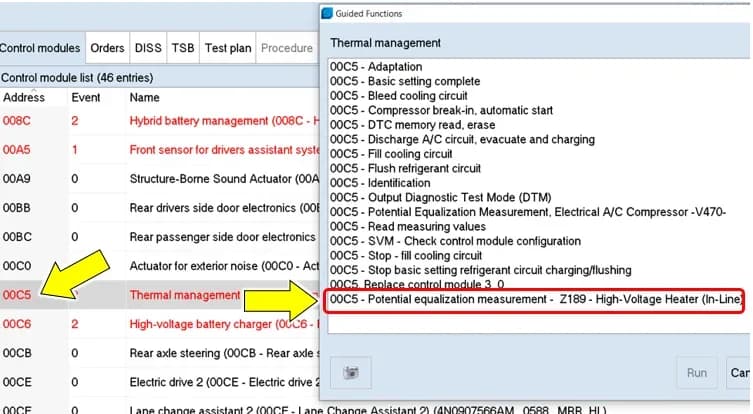
Also applies to
- Audi e-tron GT
- 2022–2023
- Audi RS e-tron GT
- 2022
Audi has launched Service Action 82C9 to address a potential issue with the electric passenger compartment high-voltage (HV) heater in certain 2022-2023 Audi e-tron GT and RS e-tron GT vehicles. This service action aims to resolve instances where the HV heater may stop working, leading to a loss of cabin heating.
This Service Action 82C9 was originally published on October 26, 2023, with an update on January 24, 2024, providing revised parts information and work procedures. Owners of affected vehicles will be notified in waves, starting in November 2023.
Symptoms
Owners of affected 2022-2023 Audi e-tron GT and RS e-tron GT vehicles may notice that the electric passenger compartment high-voltage heater has stopped functioning. This issue primarily manifests as a complete loss of heating in the vehicle's interior. The problem is more likely to occur if the heater is used frequently for prolonged periods on high settings or if the vehicle battery is frequently charged in low ambient temperatures. Despite the HV heater malfunction, the waste heat scavenging heat pump will continue to operate normally.
Fault Codes / DTCs
If the electric passenger compartment high-voltage heater malfunctions, technicians may find one or more of the following Diagnostic Trouble Codes (DTCs) stored in the vehicle's system. These codes are specifically related to the HV heater 2 control module:
| Code | Description |
|---|---|
| B182C04 | HV heater 2 control module faulty |
| B182C29 | HV heater 2 control module Range/Performance |
| B182CF3 | HV heater 2 control module High voltage power supply – error |
| B182CF4 | HV heater 2 control module High-voltage interlock, open circuit |
| B182DF0 | HV heater 2 Heater circuit 1 faulty |
Important Warnings
Audi has issued several critical warnings and advisories related to Service Action 82C9, particularly concerning the high-voltage system:
- Dealer Inventory Advisory: "Dealers must ensure that every affected inventory vehicle has this campaign completed before delivery to consumers." This means vehicles currently on dealer lots cannot be sold until this service action is performed.
- High-Voltage System DANGER: Working on the high-voltage system is extremely dangerous. "The high-voltage system is under heavy voltage. Severe bodily injury or death by electrocution or electric arcs is possible." It is crucial that only trained high-voltage technicians or experts de-energize and work on this system.
- Electric and Magnetic Fields DANGER: "There are electric and magnetic fields on the high-voltage system. Death or serious injury are possible due to malfunction of active implants (for example cardiac pacemakers, insulin pumps)." Persons with active implants are advised not to perform procedures on the high-voltage system.
- Unexpected Motor Start WARNING: "Risk of injury - motor may start unexpectedly." It can be difficult to determine if an electric or hybrid vehicle's drive system is active, and moving parts can cause injury.
- High-Voltage Wiring CAUTION: "Risk of damage to high-voltage wiring." Incorrect handling can damage insulation. Technicians are warned not to support themselves or prop tools against high-voltage cables or connectors, nor to bend or kink high-voltage wiring.
- Scalding CAUTION: When draining the cooling system, there is a "Risk of scalding by hot steam and hot coolant." Technicians must wear safety gloves and protective eyewear and carefully reduce system pressure.
- Campaign Expiration: This service action is available free of charge only until December 01, 2028. If the work is performed after this date, normal dealership costs will apply to the owner.
What's Being Addressed
The core of Service Action 82C9 is to address the potential failure of the Z189 high-voltage in-line heater, which is responsible for providing cabin heat in the 2022-2023 Audi e-tron GT and RS e-tron GT. The problem description indicates that the heater may stop working, especially under conditions that stress the heating system, such as prolonged use at high settings or charging the vehicle's battery in cold weather environments. When this component fails, the vehicle's interior will no longer receive heat, impacting occupant comfort.
Diagnosis and Repair Procedure Summary
The repair process for the Audi e-tron GT HV heater malfunction under Service Action 82C9 involves a multi-step procedure performed by authorized Audi technicians. This ensures proper diagnosis, safe handling of the high-voltage system, and correct replacement of the component if necessary.
Initial Assessment
- Campaign Verification: Technicians first check the Campaigns/Actions screen in ELSA (Audi's electronic service information system) to confirm that the vehicle's VIN qualifies for Service Action 82C9 and that the campaign status is "open." Any other open service actions should be noted and completed simultaneously if possible.
- Safety Recall Pre-requisite: It is a critical repair step that all outstanding Safety Recalls for the vehicle must be completed before proceeding with this campaign.
High-Voltage System De-energization (Initial)
Before any work begins on the high-voltage system, it must be safely de-energized to prevent electrocution. This involves:
- Battery Maintainer: Attaching a 12V battery maintainer/charger capable of a minimum 90 Amp continuous supply.
- ODIS Procedure: Using the ODIS diagnostic system, technicians navigate to the special functions tab and select the test plan for "Establish high-voltage de-energization." They follow all steps outlined in the test plan.
- ELSA Reference: Consulting the ELSA repair manual under "Motor > Electric Drive Motor OEG > 93 Electric drive > High-Voltage System, De-Energizing" for detailed instructions.
Accessing the Z189 High-Voltage In-Line Heater
To reach the Z189 high-voltage in-line heater, several components must be carefully removed:
- Front Plenum Chamber Removal: The front plenum chamber cover is loosened from its retainers and removed from the luggage compartment seal. Any remaining clips are removed using an Omega Clip Tool (T40280).
- Front Lock Carrier Cover Removal: A Removal Wedge (T40233) is used to release retainers for the lock carrier at the bumper cover and fender. The lock carrier cover is then disengaged from the luggage compartment seal and removed.
- Fender Cover Removal: The fender covers are loosened using a scraper from the Scraper Set (VAS6845) and disengaged from their catches and the luggage compartment seal.
- Luggage Compartment Lamp and Emergency Release Button Removal: The driver's side storage compartment, luggage compartment lamp, and emergency release button are carefully removed by disconnecting their connectors and bolts.
- Front Luggage Compartment Liner Removal: Bolts securing the front luggage compartment liner are removed, the liner is lifted, and a rubber grommet is detached before the liner itself is removed from the vehicle.
Z189 High-Voltage Heater Inspection
Once the Z189 high-voltage in-line heater is accessible, technicians inspect it to determine if replacement is necessary:
- Locate Z189: The Z189 high-voltage heater is located and identified.
- Production Date Check: The production date, found on a label on the heater (in DD/MM/YYYY format), is checked. If the production date is BEFORE February 14, 2023, the heater requires replacement. If the production date is ON or AFTER February 14, 2023, replacement is not required, and the vehicle can be reassembled.
High-Voltage System Re-energization (Interim - if no replacement needed)
If the heater does not require replacement, the high-voltage system is re-energized by following the same safety protocols as de-energization, using ODIS special functions and ELSA manual references. Fault memory is cleared, and the repair log is sent to GFF Paperless.
Z189 High-Voltage In-Line Heater Replacement (if required)
If the heater's production date necessitates replacement, the procedure continues:
- Re-De-energization: The high-voltage system is de-energized again, following the strict safety protocols.
- Cooling System Drain: The cooling system is drained according to ELSA manual instructions ("Repair manual > Motor > 19 Cooling System > Cooling System/Coolant > Coolant, Draining"). This step includes critical cautions regarding scalding from hot coolant and steam, requiring protective gear and careful pressure reduction.
- Coolant Valve Opening: Using ODIS, technicians access Diagnostic Address 00C5 (Thermal Management) to open the coolant valves, facilitating complete draining.
- Under Hood E-box Loosening: The under hood E-box connector housing is removed, and associated connectors (1, 2, and 4) are disconnected. The wiring harness is loosened by releasing its retaining clips.
- E-box Removal: The High-Voltage System Maintenance Connector housing is released, and the harness is moved aside. A nut is removed, and retaining tabs under the E-box are released (often requiring a 90º pick tool) to remove the E-box from its bracket.
- HV Heater Disconnection: High-voltage connections (connector 4 and cable 3) are disconnected and secured. Coolant hoses are detached after loosening hose clamps (1 and 5). The nut (2) and potential equalization cable are removed.
- Old Heater Removal: Nuts (3) securing the coolant expansion tank are removed, and the tank is moved aside to access another nut (2). Finally, the Z189 High-Voltage In-Line Heater (1) with its bracket (2) is removed.
- New Heater Installation: Screws from the old heater's bracket are removed, and the bracket is transferred to the new Z189 High-Voltage In-Line Heater (part number 9J1-963-507-F). The new heater assembly is then installed, and nuts are tightened to 8 Nm.
- Potential Equalization: The potential equalization cable is reconnected, and its nut is tightened to 8 Nm. A potential equalization measurement is performed using ODIS, following the test plan under "Diagnosis > Select DA 00C5 (Thermal Management) > Guided functions > Potential Equalization Measurement Z189 – High-Voltage Heater (In-Line)."
Cooling System Refill and Bleed
- Reassembly (Partial): Components are reinstalled in reverse order, but the luggage compartment liner and underbody panels are left off temporarily to allow for leak checks.
- Cooling System Fill: The cooling system is refilled according to the ELSA manual ("Repair manual > Motor > 19 Cooling System > Cooling System/Coolant > Cooling System, Filling").
- Coolant Valve Closing: ODIS is used to close the coolant valves after filling, following the test plan under Diagnostic Address 00C5.
- Cooling System Bleed: The cooling system is bled as per the ELSA manual ("Repair manual > Motor > 19 Cooling System > Cooling System/Coolant > Cooling System, Bleeding").
Final Reassembly and System Re-energization
- Final Reassembly: All remaining components, including the luggage compartment liner, lamp cover, wheel well liner, and underbody trim panel, are reassembled and tightened to specified torque values.
- High-Voltage System Re-energization: The high-voltage system is safely re-energized using ODIS special functions and ELSA manual references. Fault memory is cleared, and the repair log is sent to GFF Paperless.
Required Tools or Parts
To perform Service Action 82C9, technicians will utilize specific parts and specialized tools:
Required Parts
- HEATER: Part Number 9J1-963-507-F (Quantity: 1)
- COOLANT Concentrate: Part Number G-12E-100-1G CON (Quantity: Up to 8.5L)
- NUT: Part Number N-107-370-01 (Quantity: 4)
Required Tools
- Battery Tester/Charger: Capable of minimum 90 Amp continuous supply (e.g., VAS 5908)
- Diagnostic Tester: VAS6150X/6160X (or equivalent)
- Omega Clip Tool: T40280 (or equivalent)
- Padlock: T40262/1 (from Service Disconnect Lock -T40262-)
- Cooling System Service Machine: VAS531011
- Hose Clamps: Up To 25mm (e.g., 3094)
- Spring-Type Clip Pliers: VAS6891 (or equivalent)
- Removal Wedge: T40233 (or equivalent)
- Scraper Set: VAS6845 (or equivalent)
- Warning Sign - "Do Not Switch On": VAS6650A
- Warning Sign - High Voltage: VAS6649
- Safety Gloves and Safety Goggles
Owner Action
If you own a 2022-2023 Audi e-tron GT or RS e-tron GT and experience an Audi e-tron GT HV heater malfunction, or simply wish to have your vehicle inspected under Service Action 82C9, you should contact an authorized Audi dealer as soon as possible. The inspection and any necessary replacement of the high-voltage heater will be performed free of charge. Please note that this service action expires on December 01, 2028. Work performed after this date will be subject to normal dealership costs. You can visit www.audiusa.com to locate a dealer near you or check your vehicle's eligibility for this and other campaigns using the Recall/Service Campaign Lookup tool with your VIN.
NHTSA ID: 10249234
Gallery
33 images
Frequently Asked Questions
- What is Service Action 82C9 for Audi e-tron GT models?
- Service Action 82C9 is an Audi campaign addressing a potential malfunction of the electric passenger compartment high-voltage (HV) heater in 2022-2023 Audi e-tron GT and RS e-tron GT vehicles. This issue can lead to a loss of cabin heating, especially under specific operating conditions.
- What are the symptoms of the Audi e-tron GT HV heater malfunction?
- The primary symptom is that the vehicle's interior heater may stop working, resulting in no cabin heating. This is more likely to occur with frequent use of the heater on high settings or when charging the vehicle's battery in cold ambient temperatures. Diagnostic Trouble Codes (DTCs) such as B182C04, B182C29, B182CF3, B182CF4, or B182DF0 may be stored.
- Is the repair for the HV heater malfunction free of charge?
- Yes, the inspection and, if necessary, replacement of the Z189 high-voltage in-line heater under Service Action 82C9 will be performed free of charge by authorized Audi dealers. However, this free service is only available until December 01, 2028. After this date, standard dealership labor and parts costs will apply.
- What safety precautions are involved in this repair?
- Due to the high-voltage nature of the component, strict safety precautions are mandated. Only trained high-voltage technicians should perform the repair, which involves de-energizing and re-energizing the high-voltage system. Warnings include risks of electrocution, unexpected motor start, damage to high-voltage wiring, and scalding from hot coolant.
- How do I know if my Audi e-tron GT is affected by Service Action 82C9?
- If you own a 2022-2023 Audi e-tron GT or RS e-tron GT, your vehicle may be affected. Audi will notify owners in waves, but you can also contact an authorized Audi dealer or use the Recall/Service Campaign Lookup tool on www.audiusa.com with your Vehicle Identification Number (VIN) to check your vehicle's eligibility.
Other revisions of this TSB
- 2022-2023 Audi e-tron GT / RS e-tron GT HV Heater Service Action 82C9B182C04, B182C29, B182CF3
- 2022-2023 Audi e-tron GT HV Heater Malfunction TSB 82C9B182C04, B182C29, B182CF3
Related Articles
2022-2024 Audi e-tron GT / RS e-tron GT Door Paint Damage TSB
If your 2022-2024 Audi e-tron GT or RS e-tron GT has paint damage on the front door, it may be due to the door colliding with the wing panel trim. Technical Service Bulletin 2072290/2 describes the cause and repair procedure for this issue.
2022-2024 Audi e-tron GT Radiator Fan Stuck DTC P2B3000
Audi Technical Service Bulletin 2073599/4 details issues with radiator fans getting stuck (DTCs P2B3000, P2B3200) in 2022-2024 Audi e-tron GT and RS e-tron GT vehicles. This can lead to reduced heating, cooling, drive power, and charging capacity due to foreign objects.
2023 Audi e-tron GT Charging Port Door Not Opening TSB
Audi Technical Service Bulletin (TSB) 2070578/3 provides diagnostic and repair information for 2023 Audi e-tron GT and RS e-tron GT vehicles where the charging port door fails to open or close, or displays incorrect status messages. The issue is typically linked to a faulty charging port door…
2022-2024 Audi e-tron GT High-Voltage Charger Conversion TSB
Audi has issued Technical Service Bulletin (TSB) 11022683 for 2022-2024 e-tron GT and RS e-tron GT models. This bulletin provides information on converting the high-voltage battery charger from a 22kW to an 11kW configuration.
2023-2024 Audi e-tron GT High-Voltage Battery Software Update
Audi has released Technical Service Bulletin 931D, an update for the high-voltage battery diagnostic software in 2023-2024 e-tron GT and RS e-tron GT models. This update addresses potential irregularities indicated by a warning lamp in the instrument cluster.
Leave a comment
Comments are moderated and may take a moment to appear. Only your first name and the initial of your last name are shown publicly.
Comments
Be the first to comment.