2022-2023 Audi e-tron GT Door Hinge Corrosion TSB
Audi has released Technical Service Bulletin (TSB) 57 22 90 2066621/1 for 2022-2023 e-tron GT and RS e-tron GT models addressing corrosion on door hinges. This TSB details the cleaning and lubrication procedure to resolve the issue caused by insufficient corrosion protection during production.
 Ahmet Topcu2022 Audi RS e-tron GT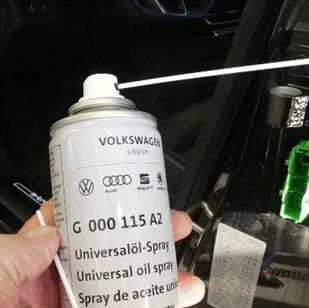
Also applies to
- Audi e-tron GT
- 2022–2023
- Audi RS e-tron GT
- 2023
Owners of 2022-2023 Audi e-tron GT and RS e-tron GT vehicles may notice visible corrosion on their vehicle's door hinges. This condition is detailed in Audi Technical Service Bulletin (TSB) 57 22 90 2066621/1, issued on March 23, 2022. The TSB outlines the cause of the corrosion and the recommended repair procedure.
Symptoms
The primary symptom reported by customers is the presence of "Corrosion on the door hinge." Workshop findings confirm "Visible traces of corrosion can be seen on the front and/or rear door hinge components."
Technical Background
Audi has identified that the Audi e-tron GT door hinge corrosion stems from an insufficient amount of corrosion protection applied to the door hinge components during the vehicle's production. To address this, the production process has since been improved to ensure adequate corrosion protection is applied during door assembly.
Diagnosis and Trigger Conditions
Diagnosis for this issue is straightforward: a visual inspection revealing corrosion on the door hinge components is sufficient. Technicians are instructed to take photos clearly depicting the condition, including scale and location, and upload them for documentation.
Repair Procedure Summary
The repair for the Audi e-tron GT door hinge corrosion involves a multi-step cleaning and lubrication process. This procedure is outlined in TSB 57 22 90 2066621/1:
- Documentation: Technicians must first photograph the visible corrosion on the door hinge components, ensuring the images clearly show the condition, scale, and location of the issue.
- Door Removal: The affected door must be removed from the vehicle following the specific instructions in the repair manual.
- Hinge Cleaning: Both the door hinge body and the hinge pin are thoroughly cleaned using an all-purpose cleaner, specifically Audi part number D 00940104, or an equivalent cleaner like isopropanol alcohol that will not damage painted surfaces.
- Lubrication Application: After cleaning, both the hinge bodies and hinge pins are coated with universal oil, Audi part number G 000115A2. Care is taken to protect surrounding areas from overspray with a cloth towel.
- Thorough Coating: Technicians ensure the universal oil is thoroughly applied, particularly into the barrel of the hinge bodies and onto the hinge pins.
- Reinstallation: The door is then reinstalled. A small amount of visible universal oil on the assembled hinge indicates proper application.
Required Tools or Parts
To perform this repair, specific materials are required:
- All-purpose cleaner: Audi part number D 00940104 (or isopropanol alcohol). This is considered a shop supply.
- Universal oil: Audi part number G 000115A2. Approximately 0.1 units are needed.
Warranty Information
This repair is covered under Audi's warranty program. The claim types applicable are:
- 110: For vehicles up to 48 months or 50,000 miles.
- G10: For Certified Pre-Owned (CPO) vehicles, requiring owner verification.
Important Warning: If your vehicle is outside of its warranty period, this Technical Service Bulletin is for informational purposes only. Audi will not be notifying consumers about this TSB, so owners should be proactive in checking their vehicles.
The service numbers associated with this TSB are:
- 5753: When servicing either a front door.
- 5853: When servicing either a rear door.
Damage Code: 0033
Labor operations and their estimated time units (TU) include:
- Front door remove and reinstall (5751 1900): See SRT for associated operations.
- Both front doors remove and reinstall (5751 2099): 40 TU.
- Clean and lubricate one or both front door hinges (5753 5099): 15 TU.
- Rear door remove and reinstall (5851 1900): See SRT for associated operations.
- Both rear doors remove and reinstall (5851 2099): 40 TU.
- Clean and lubricate one or both rear door hinges (5853 5099): 15 TU.
Diagnostic time for general fault finding (GFF) and road tests (prior to and after service) are listed as having no allowance (0 TU).
All warranty claims must adhere to the Audi Warranty Policies and Procedures Manual and are subject to review or audit by Audi Warranty. The claim comment should reference "As per TSB 2066621/1."
Owner Action
If you observe corrosion on the door hinges of your 2022-2023 Audi e-tron GT or RS e-tron GT, it is recommended to contact your authorized Audi dealership. They can inspect the vehicle, confirm the presence of the Audi e-tron GT door hinge corrosion, and perform the necessary cleaning and lubrication procedure as outlined in TSB 57 22 90 2066621/1.
Source: NHTSA ID: 10209273
Gallery
12 images
Frequently Asked Questions
- What is TSB 57 22 90 2066621/1 about?
- TSB 57 22 90 2066621/1 addresses the issue of corrosion on the door hinges of 2022-2023 Audi e-tron GT and RS e-tron GT vehicles, providing a repair procedure to clean and lubricate the affected components.
- What causes the Audi e-tron GT door hinge corrosion?
- The corrosion is caused by an insufficient amount of corrosion protection applied to the door hinge components during the manufacturing process. Audi has since improved its production process to prevent this.
- Will Audi notify me about this door hinge corrosion issue?
- No, Audi is not notifying consumers about this Technical Service Bulletin. Owners should proactively inspect their vehicles for signs of corrosion and contact their dealership if the issue is present.
- What parts are used to fix the door hinge corrosion?
- The repair involves using Audi all-purpose cleaner D 00940104 (or isopropanol alcohol) and Audi universal oil G 000115A2 to clean and lubricate the door hinges.
Related Articles
2022-2024 Audi e-tron GT High-Voltage Battery TSB
Audi TSB 2077772/2 addresses the replacement of the high-voltage battery assembly in 2022-2024 e-tron GT and RS e-tron GT vehicles, detailing required parts and procedures for technicians.
2022-2024 Audi e-tron GT Radiator Fan Stuck DTC P2B3000 P2B3200
Audi has issued Technical Service Bulletin 2073599/3 for 2022-2024 e-tron GT and RS e-tron GT models. This TSB addresses issues with the thermal management system, specifically radiator fan 1 and/or 2 getting stuck, which can lead to DTCs P2B3000 or P2B3200, reduced heating/cooling, and lower…
2022-2024 Audi e-tron GT Charging Issue TSB 2078782/3
Audi has released Technical Service Bulletin (TSB) 2078782/3 for 2022-2024 e-tron GT and RS e-tron GT models experiencing charging complaints or diagnostic trouble codes (DTCs). Due to a temporary shortage of 22 kW high-voltage battery chargers, this TSB outlines a procedure to replace it with an…
2022 Audi e-tron GT Charging Flap Status TSB 2079475/2
This Technical Service Bulletin (TSB) 2079475/2 addresses an issue in 2022 Audi e-tron GT and RS e-tron GT vehicles where the virtual cockpit incorrectly displays the charging flap as open, even when it is closed. This software update resolves the misleading warning messages.
2022 Audi e-tron GT Charging Flap Status Warning TSB
Audi Technical Service Bulletin 2079475/1 addresses an issue in 2022 Audi e-tron GT and RS e-tron GT vehicles where the virtual cockpit incorrectly displays the charging flap as open, even when it's closed. This software update resolves the misleading warning messages.
Leave a comment
Comments are moderated and may take a moment to appear. Only your first name and the initial of your last name are shown publicly.
Comments
Be the first to comment.