2022-2024 Audi e-tron GT Charging Issue TSB 2078782/3
Audi has released Technical Service Bulletin (TSB) 2078782/3 for 2022-2024 e-tron GT and RS e-tron GT models experiencing charging complaints or diagnostic trouble codes (DTCs). Due to a temporary shortage of 22 kW high-voltage battery chargers, this TSB outlines a procedure to replace it with an…
 Ahmet Topcu2022 Audi RS e-tron GT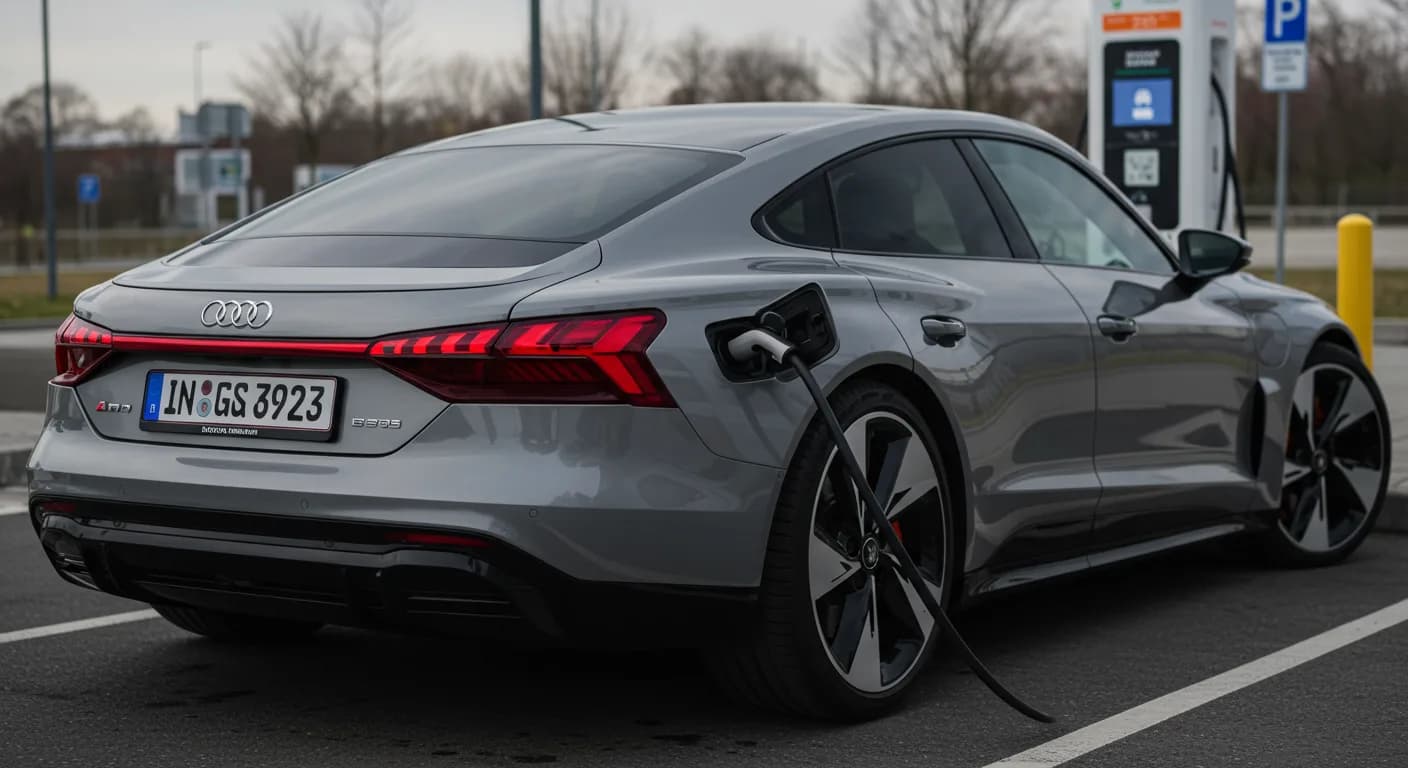
Şu araçlar için de geçerli
- Audi e-tron GT
- 2022–2024
- Audi RS e-tron GT
- 2023–2024
Owners of 2022-2024 Audi e-tron GT and RS e-tron GT vehicles may encounter an Audi e-tron GT charging issue or related diagnostic trouble codes (DTCs). Audi has issued Technical Service Bulletin (TSB) 2078782/3, released on January 9, 2026, to address these concerns, particularly when a replacement high-voltage battery charger is required. This TSB applies to all VIN ranges for these models equipped with PR Code KB4.
This TSB outlines a procedure to replace the original 22 kW high-voltage battery charger with an 11 kW unit. This measure is a temporary solution due to a current shortage of the 22 kW chargers, which are not available in the electronic parts catalog (ETKA).
Revision History
Technical Service Bulletin 2078782/3 has undergone several revisions:
- Revision 3 (Current): Revised Additional Information, specifically updating availability information.
- Revision 2 (September 23, 2025): Revised Technical Background with updated verbiage.
- Revision 1 (August 19, 2025): Initial publication of the bulletin.
Symptoms
Owners might report general "Complaints on charging" or the presence of Diagnostic Trouble Codes (DTCs) related to the charging system. These symptoms typically indicate a problem with the high-voltage battery charger.
Diagnosis and Trigger Conditions
According to workshop findings, if guided fault finding or other diagnostic procedures indicate that the high-voltage battery charger needs replacement, this bulletin applies. The primary trigger for this specific procedure is the unavailability of the 22 kW high-voltage battery charger in the electronic parts catalog (ETKA). Technicians are instructed to reproduce the customer complaint to ensure the issue is clearly assigned to this TSB.
Important Warnings and Owner Information
Audi has provided several critical advisories for this service action, TSB 2078782/3:
- Warranty Claims: The repair described in this TSB must only be carried out if all specified criteria (model/type, chassis number, engine/motor and gearbox code, PR number(s), part number, software version, code etc.) apply exactly. Otherwise, this solution will not eliminate the problem, and repeat repairs may be necessary. In such a case, Audi may reject the warranty claim and charge back the cost of the parts.
- Charging Capability Change: Once the 11 kW high-voltage battery charger is installed, AC charging will be limited to 11 kW. It is not possible to convert the vehicle back to a 22 kW charging capability.
- Software Update Precautions: To prevent the high-voltage battery from charging during the software update, the high-voltage charging cable on vehicles with high-voltage components must be unplugged BEFORE the SVM code is entered. Charging the high-voltage battery during a software update can cause damage to the high-voltage components.
- Parts Availability: Due to a shortfall in the supply of replacement 22 kW battery chargers, only an 11 kW battery charger can be fitted if a replacement is needed. The supply of 22 kW replacement parts is expected to return to normal in the medium term.
Repair Procedure Summary
The repair involves replacing the existing 22 kW high-voltage battery charger with an 11 kW unit and performing necessary adaptations. The general steps are as follows:
- Remove the 22 kW High-Voltage Battery Charger: Technicians will remove the existing charging unit for the high-voltage battery. This process follows instructions in the Workshop Manual under "Electric drive motor 0EG," "Rep.Gr. 93," and "Charging unit for high-voltage battery; Removing and installing charging unit 1 for high-voltage battery AX4." Both brackets of the 22 kW high-voltage battery charger are removed.
- Install the New 11 kW High-Voltage Battery Charger: The new 11 kW high-voltage battery charger is installed. This requires modifying the existing bracket from the 22 kW charger to properly fit the 11 kW unit.
- Modify Bracket: One of the two previously removed brackets is fitted to the new 11 kW high-voltage battery charger using new, shorter M6x18 bolts. The tightening torque for these bolts is 8 Nm.
- Secure New Bracket: A second new bracket is fitted to the side facing away from the connector, also using new, shorter M6x18 bolts. The tightening torque for these bolts is 8 Nm.
- Install 11 kW High-Voltage Battery Charger: The charging unit for the high-voltage battery is then installed into the vehicle, following Workshop Manual instructions for "Electric drive motor 0EG," "Rep.Gr. 93," and "Charging unit for high-voltage battery; Removing and installing charging unit 1 for high-voltage battery AX4."
- Adapt and Flash SVM Code: After installation, the new 11 kW high-voltage battery charger must be adapted, and SVM code C6A018 must be flashed. This step is crucial for the vehicle's systems to recognize and correctly operate with the new charger. It is recommended to charge the vehicle using AC after completing the diagnostic session. If this charging process completes without any further complaints, the vehicle can be returned to the customer.
For assistance with the diagnostic tester, technicians are advised to refer to TSB 2011732, which also contains procedures for contacting product support.
Required Parts and Tools
To perform this repair, the following parts are specified. Technicians should always adhere to the specifications in ETKA for current part numbers, as the numbers listed here represent versions available at the time of the TSB's publication.
- 1x 11 kW high-voltage battery charger, part number 5QE 915 684 DA
- 1x bracket for battery charger, part number 9J1 915 543 Y
- 4x bolts, part number N 107 148 01 (M6x18 bolts are mentioned for installation)
Warranty Information
This Technical Service Bulletin (TSB) 2078782/3 is informational only if the vehicle is outside of any warranty. For in-warranty repairs, the following codes and labor operations apply:
- Claim Type: Warranty (if applicable)
- Service Number: 9352
- Damage Code: 0040
- Labor Operations:
- Replace high-voltage charging unit: Labor operation code 9352 5550. Refer to Standard Repair Time (SRT) with associated operations.
- Software update: Labor operation code 0151 0060. Time stated on the diagnostic protocol.
- Charge battery: Labor operation code 2706 8950. Refer to Standard Repair Time (SRT) with associated operations.
- Claim Comment: "As per TSB 2078782/3"
All warranty claims must comply with the Audi Warranty Policies and Procedures Manual and are subject to review or audit by Audi Warranty.
Owner Action
If your 2022-2024 Audi e-tron GT or RS e-tron GT is experiencing an Audi e-tron GT charging issue or displaying related DTCs, contact your authorized Audi dealership. Inform them about the symptoms you are observing. The dealership will diagnose the issue and, if applicable, perform the necessary repair as outlined in TSB 2078782/3.
Source: NHTSA ID: 11028414
Frequently Asked Questions
- What is TSB 2078782/3 about for the Audi e-tron GT?
- TSB 2078782/3 addresses charging complaints and DTCs in 2022-2024 Audi e-tron GT and RS e-tron GT models. Due to a temporary shortage of 22 kW high-voltage battery chargers, it provides a procedure to replace the unit with an 11 kW high-voltage battery charger.
- Will my Audi e-tron GT's charging speed change after this repair?
- Yes, if the 22 kW high-voltage battery charger is replaced with an 11 kW unit as per TSB 2078782/3, your vehicle's AC charging capability will be limited to 11 kW. It is not possible to revert to 22 kW charging once this conversion is made.
- What is SVM code C6A018 and why is it important?
- SVM code C6A018 is a specific code used during the software adaptation process after installing the new 11 kW high-voltage battery charger. It's crucial for the vehicle's systems to correctly recognize and operate with the new charger. Technicians must unplug the charging cable before entering this code to prevent damage.
- Are there any specific parts required for this high-voltage battery charger replacement?
- Yes, the TSB specifies the use of a 1x 11 kW high-voltage battery charger (part number 5QE 915 684 DA), 1x bracket (part number 9J1 915 543 Y), and 4x bolts (part number N 107 148 01). Technicians should always verify current part numbers using ETKA.
Related Articles
2022-2024 Audi e-tron GT High-Voltage Battery TSB
Audi TSB 2077772/2 addresses the replacement of the high-voltage battery assembly in 2022-2024 e-tron GT and RS e-tron GT vehicles, detailing required parts and procedures for technicians.
2022-2024 Audi e-tron GT Radiator Fan Stuck DTC P2B3000 P2B3200
Audi has issued Technical Service Bulletin 2073599/3 for 2022-2024 e-tron GT and RS e-tron GT models. This TSB addresses issues with the thermal management system, specifically radiator fan 1 and/or 2 getting stuck, which can lead to DTCs P2B3000 or P2B3200, reduced heating/cooling, and lower…
2022 Audi e-tron GT Charging Flap Status TSB 2079475/2
This Technical Service Bulletin (TSB) 2079475/2 addresses an issue in 2022 Audi e-tron GT and RS e-tron GT vehicles where the virtual cockpit incorrectly displays the charging flap as open, even when it is closed. This software update resolves the misleading warning messages.
2022 Audi e-tron GT Charging Flap Status Warning TSB
Audi Technical Service Bulletin 2079475/1 addresses an issue in 2022 Audi e-tron GT and RS e-tron GT vehicles where the virtual cockpit incorrectly displays the charging flap as open, even when it's closed. This software update resolves the misleading warning messages.
2022-2024 Audi e-tron GT 22kW to 11kW Charger Conversion TSB
Audi has issued Technical Service Bulletin 2078782/2 for 2022-2024 e-tron GT models concerning the high-voltage battery charger. Due to the temporary unavailability of the 22 kW charger, a conversion to an 11 kW unit is required, involving specific part replacements and an SVM code C6A018 flash.
Yorum bırakın
Yorumlar moderasyondan geçer ve görünmesi biraz zaman alabilir. Sadece adınız ve soyadınızın baş harfi herkese açık olarak gösterilir.
Yorumlar
İlk yorum sizden olsun.