2021-2024 Audi V6 TFSI Coolant Pump Leak TSB 2070349/4
Audi Technical Service Bulletin 2070349/4 details diagnosis and repair for coolant loss from the V6 TFSI engine's coolant pump in 2021-2024 models. Symptoms include coolant leaks, warning lamps, and DTC P0299.
 Sarah Mitchell2022 Audi Q8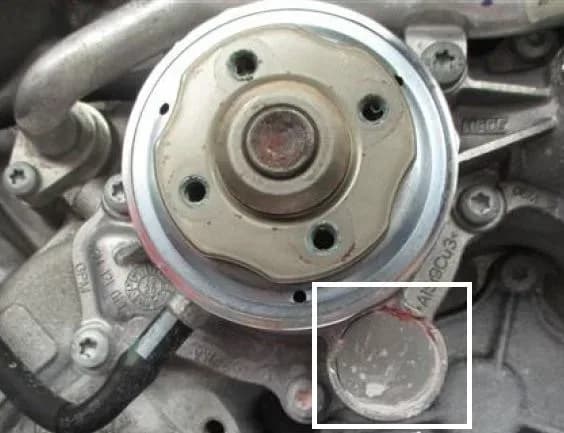
Also applies to
- Audi A6
- 2021–2024
- Audi A6 allroad
- 2021–2024
- Audi A7
- 2021–2024
- Audi A8 L e
- 2021
- Audi Q7
- 2021–2024
- Audi Q8
- 2021, 2023, 2024
- Audi RS 5
- 2021–2024
- Audi S4
- 2021–2024
- Audi S5
- 2021–2024
- Audi S6
- 2021–2024
- Audi S7
- 2021–2024
- Audi SQ5
- 2021–2024
▸ Show 6 more▾ Show fewer
Audi has issued Technical Service Bulletin (TSB) 2070349/4 to address instances of coolant loss originating from the coolant pump in vehicles equipped with the V6 TFSI engine. This bulletin, dated August 30, 2024, supersedes previous bulletin 23-46 from December 12, 2023, and provides updated instructions for diagnosing and repairing this issue. Owners of affected 2021-2024 Audi models experiencing an Audi Q8 coolant pump leak or similar symptoms should be aware of this guidance.
Symptoms of a Coolant Pump Leak
Owners may observe several indicators pointing to a potential coolant pump issue. The most common complaints include:
- Coolant loss/leak: Visible signs of coolant leaking from the vehicle.
- Coolant warning lamp: Illumination of the coolant level warning light on the instrument cluster.
- Engine warning lamp on: The check engine light may illuminate, indicating a related engine issue.
Fault Codes / DTCs
In some cases, a specific diagnostic trouble code (DTC) may be stored in the vehicle's event memory:
| Code | Description |
|---|---|
| P0299 | Turbo/Super Charger Underboost |
This P0299 code is often a secondary symptom, caused by contamination of the N649 switch valve with coolant from the leaking pump.
Diagnosis and Trigger Conditions
When investigating a potential coolant leak, technicians will focus on precisely locating the source. The coolant pump is frequently identified as the origin of the leak. It's crucial to differentiate between an actual leak and normal operational characteristics. For example, traces of coolant (up to 3 ml) found on the drip cup over 100 hours of operation due to lubrication and cooling of the seal are considered normal and do not warrant a complaint. Similarly, dried deposits on a vacuum connection are not a definitive sign of a leak.
The diagnostic process involves a thorough visual inspection, checking for leaks at both idle and higher engine speeds (up to 2500 rpm), and performing cooling system checks according to the Workshop Manual.
Important Warnings for Owners
Owners should be aware of specific conditions that do not necessarily indicate a fault:
- Normal coolant escape: Up to 3 ml of coolant escaping over 100 hours of operation due to lubrication/cooling of the seal is normal and does not constitute a reason for a complaint.
- Dried deposits: Dried deposits on the vacuum connection are not a clear indication of a leak.
- Unnecessary replacements: If, after initial cleaning and observation, no further coolant leak is detected, components should not be replaced. Continued observation is the correct procedure in such cases.
Repair Procedure Summary
The repair procedure outlined in TSB 2070349/4 focuses on accurate diagnosis and targeted replacement if a leak is confirmed. The steps include:
- Locate the leak: Precisely identify the source of the coolant leak.
- Clean and dry: Thoroughly clean and dry the area around the leak and any traces of coolant.
- Fill cooling system: Ensure the cooling system is filled to the maximum level.
- Visual check: Perform a visual inspection to assess for leaks at idle and engine speeds up to approximately 2500 rpm.
- Cooling system check: Check the cooling system for leaks as per the Audi Workshop Manual.
- Reassess:
- If no further leak is detected, continue to observe the vehicle without replacing any parts.
- If a coolant leak is detected again, replace the component(s) causing the leaks. Technicians are instructed to document the leaks with photos/video. If the coolant pump is found to be leaking, its production date must also be photographed (as shown in Figure 3 of the TSB).
Warranty Information
For vehicles still under warranty, claims should be submitted in accordance with the Audi Warranty policies and Procedures Manual. The TSB specifies the following details for warranty claims related to this Audi Q8 coolant pump leak:
- Claim Type: Informational only if the vehicle is outside of warranty.
- Service Number: 1950
- Damage Code: 0050
- Claim Comment: As per TSB 2070349/4
Specific labor operations and their associated time units (TU) or SRT references are provided for various tasks, including checking and topping up coolant (1938 3599, 30 TU), checking the cooling system for leaks (1901 0150), and removing/installing the coolant pump if faulty (1950 19XX).
All part and service references in this TSB are subject to change. Technicians are advised to consult the Parts Department and ETKA for the latest information.
Source: NHTSA ID: 11007223
Gallery
2 images
Frequently Asked Questions
- What are the common signs of a coolant pump leak in Audi V6 TFSI engines?
- Common signs include visible coolant loss or leaks, the illumination of the coolant warning lamp on your dashboard, and potentially the engine warning lamp turning on. You might also notice an "Audi Q8 coolant pump leak" if you drive that specific model.
- Can a coolant pump leak cause other engine problems or fault codes?
- Yes, a leaking coolant pump can lead to secondary issues. For instance, coolant contamination of the N649 switch valve can trigger the diagnostic trouble code (DTC) P0299, indicating a "Turbo/Super Charger Underboost" condition.
- Is a small amount of coolant around the pump always a sign of a leak?
- Not necessarily. Audi Technical Service Bulletin 2070349/4 clarifies that up to 3 ml of coolant escaping over 100 hours of operation due to lubrication and cooling of the seal is considered normal and does not constitute a reason for a complaint. Dried deposits on a vacuum connection are also not a clear indication of a leak.
- How do technicians diagnose an Audi Q8 coolant pump leak?
- Technicians will precisely locate the leak, clean and dry the area, fill the cooling system, and perform visual checks at idle and higher engine speeds. They also check the cooling system for leaks according to the Workshop Manual. If no leak is detected after these steps, no parts are replaced; otherwise, the faulty component, often the coolant pump, is replaced.
Related Articles
2021-2024 Audi Coolant Pump Leak & DTC P0299 TSB
This Audi Technical Service Bulletin 2070349/6 addresses coolant loss, warning lights, and DTC P0299 related to the mechanical coolant pump in 2021-2024 Audi models with 2.9L or 3.0L V6 TFSI engines. Learn about symptoms, diagnosis, and repair procedures.
2021-2026 Audi Q8 Rear Compartment Noise TSB 2067759/4
Audi has issued Technical Service Bulletin (TSB) 2067759/4 for 2021-2026 Audi Q8 vehicles experiencing a ticking or thumping noise in the rear passenger compartment, especially at idle. The noise is caused by vibrations from the activated charcoal filter solenoid valve (N80) against the EVAP line.
2021-2026 Audi Tensioner Part Number Update SM 63-2025
Audi Special Notice SM 63-2025 informs dealers about an updated tensioner part number. Old part 059-109-467-BB must be returned by December 16, 2025, and replaced with new part 059-109-467-BD to ensure proper inventory.
2022-2024 Audi MLBevo Emergency Call System Warning TSB
Audi Technical Service Bulletin 2079649/1 details a software issue causing an 'Emergency call function: fault' warning in the instrument cluster of 2022-2024 MLBevo vehicles. This TSB provides a software update solution for intermittent communication errors.
2022-2025 Audi Q7/Q8 Third Row Seat Malfunction TSB
Owners of 2022-2025 Audi Q7, SQ7, Q8, SQ8, and RS Q8 vehicles may experience a third row seat malfunction where seats do not fold or lock. Audi TSB 2079211/1 explains this is often due to external blockages and is not covered under warranty.
Leave a comment
Comments are moderated and may take a moment to appear. Only your first name and the initial of your last name are shown publicly.
Comments
Be the first to comment.