2021 Audi Q8 Coolant Identification and Mixing TSB
This Audi Technical Service Bulletin (TSB 2025303/11) provides crucial information on identifying factory-fill coolants and outlines proper mixing procedures to prevent engine damage and corrosion for various Audi models from 1994-2021, including the 2021 Audi Q8.
 Sarah Mitchell2021 Audi Q8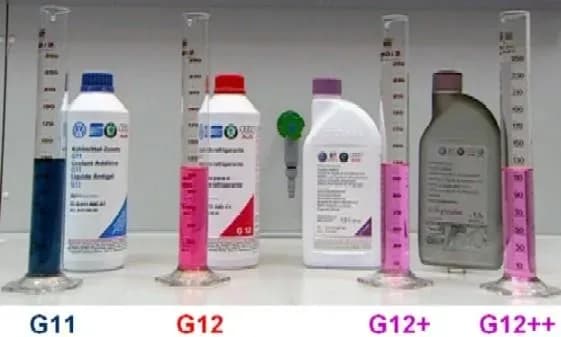
Also applies to
- Audi A4
- 2021
- Audi A5
- 2021
- Audi A6
- 2021
- Audi A7
- 2021
- Audi Q3
- 2021
- Audi Q5
- 2021
- Audi Q7
- 2021
- Audi R8
- 2021
- Audi RS 5
- 2021
- Audi RS 7
- 2021
- Audi RS Q8
- 2021
- Audi S4
- 2021
- Audi S5
- 2021
- Audi S6
- 2021
- Audi S7
- 2021
- Audi S8
- 2021
- Audi SQ5
- 2021
- Audi TT
- 2021
- Audi TT RS
- 2021
- Audi TTS
- 2021
▸ Show 14 more▾ Show fewer
Audi has issued Technical Service Bulletin (TSB) 19 20 04 2025303/11, superseding previous bulletin 19-98, to provide updated guidelines on identifying and mixing engine coolants. This TSB, revised on June 25, 2020, addresses the discontinuation and mixing of Audi-approved engine coolants across a wide range of models from 1994 to 2021, including the 2021 Audi Q8. Proper coolant management is crucial for engine health and longevity.
Understanding Audi Engine Coolants
Modern combustion engines place higher demands on engine coolants, leading to continuous development and specific requirements for each type. Audi has introduced several coolant types over the years, each designed for optimal performance in specific engine generations.
Key coolant types and their introduction years include:
- G11, G12, G12+: These older coolants have been replaced by improved versions.
- G12++: Introduced in Model Year 2005 for all engines, this coolant is still available for service.
- G13: Introduced in Model Year 2008 as the initial factory fill and service coolant.
- G12evo: Introduced in Model Year 2019 as initial factory fill and service coolant.
For model year 2019 and newer vehicles, including the 2021 Audi Q8, the recommended coolant is G12evo, with part number G -12E-050-1G-DSP. For model year 2018 and older vehicles, G13 coolant, part number G -A13-774-1G-DSP, is specified. Notably, only G12evo can be used in the Audi e-tron.
Identifying Your Coolant
To determine the type of coolant currently in your vehicle, you should first identify its color. Figure 1 in the TSB illustrates the colors associated with each coolant type: G11 (green-blue), G12 (red), G12+ (purple), G12++ (purple), G13 (purple), and G12evo (purple). This visual identification is a critical first step before any mixing or servicing.
Coolant Mixing Guidelines
Audi provides a detailed chart (Figure 2 in the TSB) outlining which coolants can be mixed. This chart uses a color-coded system:
- Green: Indicates that coolants can be mixed in any ratio.
- Yellow: Indicates that mixing is possible, but it will result in a reduction of corrosion protection.
- Red: Indicates that coolants cannot be mixed.
While some coolants are compatible, it is always best practice to perform a complete coolant change rather than mixing, especially if reduced corrosion protection is a concern. An exception is G12++ and G13, which are fully compatible.
Important Warnings and Best Practices
To ensure optimal engine performance and prevent damage, Audi outlines several critical guidelines:
- Audi Q8 coolant mixing should always follow the guidelines in TSB 2025303/11.
- Only G12evo can be used in the Audi e-tron.
- Only mix distilled water with coolant additives per ElsaPro procedures.
- Deionized water must not be used.
- Drained coolant must not be reused.
- If G11 is mixed with G12+, G12++, G13, or G12evo, the coolant may turn brown, which is considered normal.
Repair Procedure Summary
If your vehicle is found to have incorrect coolant or if a coolant change is necessary due to mixing issues, the following steps should be followed:
- Drain the system: Completely drain the coolant system using the repair manual procedures outlined in ElsaPro.
- Rinse with water: Refill the system with water and run the engine for 15 minutes with the heater on to remove any residual coolant.
- Final drain and refill: Drain the system again and refill it with the correct coolant to the freeze protection ratio specified in ElsaPro.
Required Tools and Parts
For accurate coolant concentration measurement, specialized refractors are needed:
- Refractor T10007B: Used to read freeze protection for G12evo coolant.
- Refractor T10007A/B: Used to read freeze protection for G13 coolant if it's unclear whether the system contains G12, G13, or a mixture.
Specific coolant part numbers are:
- G12evo: G -12E-050-1G-DSP (for MY 2019 and newer vehicles)
- G13: G -A13-774-1G-DSP (for MY 2018 and older vehicles)
Warranty Information
Audi Technical Service Bulletin 19 20 04 2025303/11 is for informational purposes only. Cooling system drain and fill procedures performed due to incorrect coolant or coolant mixing are not covered by Audi Warranty.
Gallery
1 image
Frequently Asked Questions
- Can I mix different types of Audi engine coolants?
- While some Audi coolants can be mixed, Technical Service Bulletin 2025303/11 advises that it's best practice to completely change the coolant to avoid reduced corrosion protection. Only G12++ and G13 are fully compatible. Improper Audi Q8 coolant mixing can lead to issues.
- Which coolant should I use for my 2021 Audi Q8?
- For model year 2019 and newer vehicles, including the 2021 Audi Q8, G12evo coolant (part number G -12E-050-1G-DSP) is recommended. For 2018 and older vehicles, G13 coolant (part number G -A13-774-1G-DSP) is specified.
- What are the risks of using the wrong coolant or mixing them incorrectly?
- Using incorrect coolant or mixing incompatible types can lead to reduced corrosion protection and potential engine damage. Audi TSB 2025303/11 states that issues arising from incorrect coolant mixing are not covered under warranty.
- Can I use deionized water with my Audi coolant?
- No, Audi Technical Service Bulletin 2025303/11 explicitly states that deionized water must not be used. Only distilled water should be mixed with coolant additives as per ElsaPro procedures.
Related Articles
2021-2025 Audi Engine Control Module Software Update 53ZC
Audi has issued an update to its Engine Control Module (ECM) software campaign 53ZC / WARR EXT – U82, dated March 20, 2026. This dealer communication indicates that additional vehicles have been added to the affected chart for this important software update. Owners of 2021-2025 Audi Q8, A7, A6…
2021-2025 Audi Fuel System DTCs P014800 and P008700
Audi Technical Service Bulletin (TSB) 2079461/3 details diagnostic and repair procedures for 2021-2025 Audi vehicles experiencing a 'MIL light on' or 'limp-home function' due to fuel system DTCs P014800 or P008700. This bulletin guides technicians on diagnosing and potentially replacing the…
2021-2025 Audi Black Trim Discoloration TSB
Audi has issued Technical Service Bulletin 2078651/4 to address red, purple, gray, or metallic discoloration on black exterior trim strips in 2021-2025 Audi models. This TSB explains the cause (paint UV resistance issue) and outlines the replacement procedure for affected components.
2021 Audi Virtual Cockpit Display Fault TSB 2078439/2
Audi TSB 2078439/2 addresses issues with the virtual cockpit display in 2021 A6, A7, A8, Q7, Q8 models, including a black screen or "Instrument cluster: fault" message, often accompanied by DTC B200049.
2021-2026 Audi TFSI Engine Oil Leak TSB 2053278/10
Audi has released Technical Service Bulletin 2053278/10 to address oil leaks from the cylinder head on 2.9 and 3.0 TFSI engines in various 2021-2026 models. Learn about symptoms, diagnosis, and the recommended repair process.
Leave a comment
Comments are moderated and may take a moment to appear. Only your first name and the initial of your last name are shown publicly.
Comments
Be the first to comment.