2015-2026 Audi Starter Battery Discharged or Malfunctioning TSB
Audi Technical Service Bulletin (TSB) 2080517/2 addresses common causes and diagnostic procedures for a discharged or malfunctioning 12V starter battery in 2015-2026 Audi vehicles. This TSB helps technicians accurately identify the root cause, distinguishing between actual battery faults, customer…
 Ahmet Topcu2023 Audi e-tron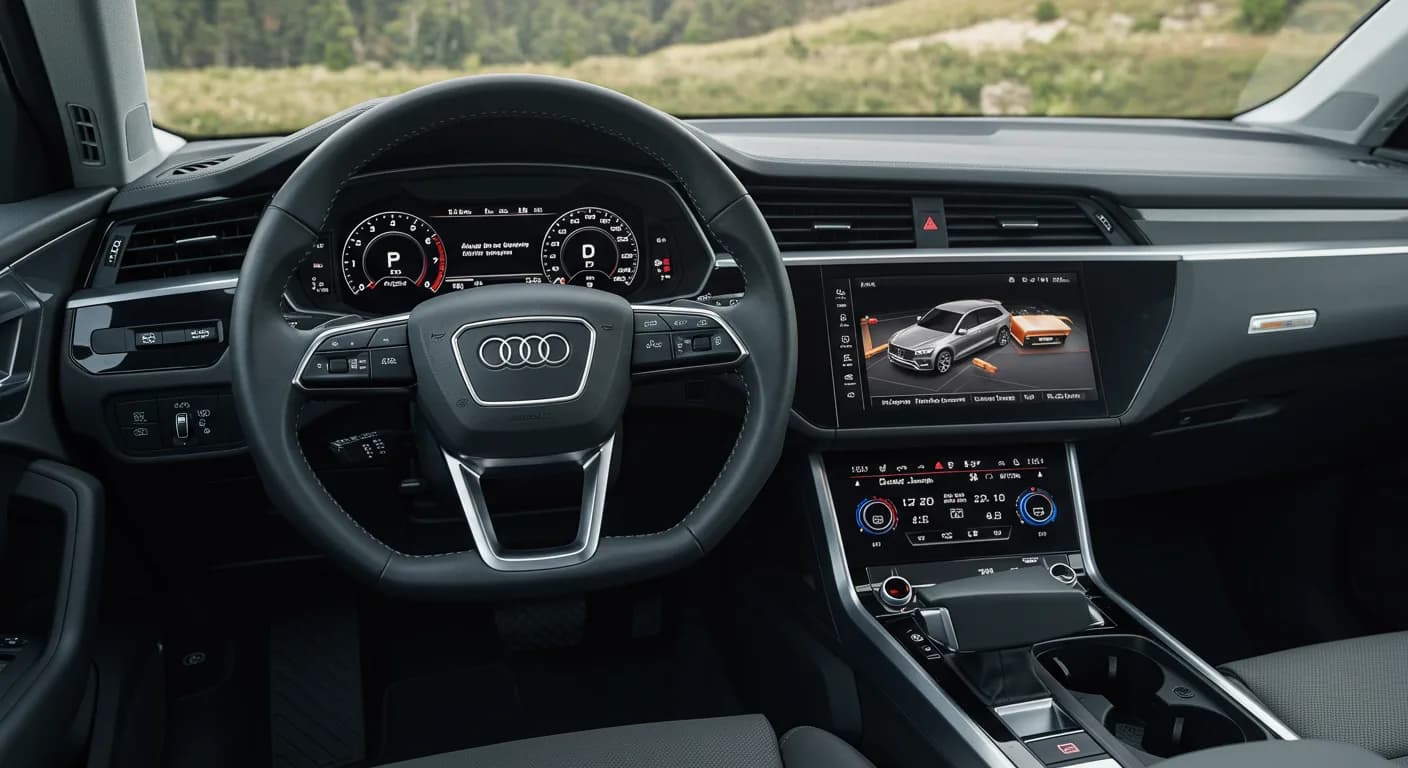
También aplica a
- Audi A3
- 2022–2026
- Audi A4
- 2021–2025
- Audi A4 allroad
- 2021–2025
- Audi A5
- 2021, 2022, 2023, 2024, 2026
- Audi A6
- 2021–2026
- Audi A6 allroad
- 2021–2026
- Audi A7
- 2021–2025
- Audi A7 e
- 2021–2022
- Audi A8 L e
- 2021
- Audi e-tron
- 2021–2022
- Audi e-tron GT
- 2022–2025
- Audi e-tron Sportback
- 2021–2022
- Audi Q3
- 2021–2025
- Audi Q5
- 2021–2026
- Audi Q5 e
- 2021, 2023, 2024, 2025
- Audi Q7
- 2021–2026
- Audi Q8
- 2021–2026
- Audi R8
- 2021–2023
- Audi RS 3
- 2022–2026
- Audi RS 5
- 2021–2024
- Audi RS 6 Avant
- 2021–2026
- Audi RS 7
- 2021–2026
- Audi RS e-tron GT
- 2022–2026
- Audi RS Q8
- 2021–2026
- Audi S e-tron GT
- 2026
- Audi S3
- 2022–2026
- Audi S4
- 2021–2025
- Audi S5
- 2021, 2022, 2023, 2024, 2026
- Audi S6
- 2021–2025
- Audi S7
- 2021–2025
- Audi S8
- 2021–2026
- Audi SQ5
- 2021–2026
- Audi SQ7
- 2021–2026
- Audi SQ8
- 2021–2026
- Audi TT
- 2021–2023
- Audi TT RS
- 2021–2022
- Audi TTS
- 2021–2023
▸ Mostrar 31 más▾ Mostrar menos
Audi has issued Technical Service Bulletin (TSB) 2080517/2 to provide comprehensive guidance for diagnosing and resolving issues related to a discharged or malfunctioning 12V starter battery across various 2015-2026 Audi models. This bulletin aims to prevent unnecessary battery replacements by ensuring accurate fault identification and proper maintenance procedures are followed. The Audi starter battery discharged condition can stem from a variety of factors, ranging from vehicle usage patterns to specific technical faults within the electrical system.
This TSB, identified as 2080517/2, emphasizes the importance of thorough diagnostic steps to pinpoint the exact cause of battery problems. It covers different vehicle technologies, including conventional, 12V Mild Hybrid Electric Vehicle (MHEV), 48V MHEV, Plug-in Hybrid Electric Vehicle (PHEV), and Battery Electric Vehicle (BEV) systems, each with specific diagnostic considerations.
Revision History
This Technical Service Bulletin has undergone revisions to improve its clarity and scope:
- Revision 2: The header was revised to include Canada, expanding the applicability of the bulletin.
- Revision 1: Initial publication on December 19, 2025.
The transaction number for this bulletin is 2080517/2, with a release date of February 17, 2026.
Symptoms of a Discharged or Malfunctioning Battery
Owners of affected Audi vehicles may experience their 12V starter battery being discharged, leading to starting difficulties or electrical system malfunctions. In some cases, the battery might be deemed faulty and replaced prematurely, even if it is still in good condition. The TSB highlights that batteries can reach their wear limit ahead of schedule if proper maintenance, such as a battery maintenance program, is not consistently carried out.
Technical Background: Why Batteries Malfunction
Audi's analysis indicates that a Audi starter battery discharged condition can arise from several factors, which are categorized to aid in diagnosis:
Customer Influence
Certain owner behaviors can contribute to battery discharge. These include leaving the ignition or lights on for extended periods, driving extremely short distances, or allowing the vehicle to remain stationary for long durations. These conditions prevent the battery from adequately recharging and can lead to a discharged state.
No-Load Currents and Bus Issues
Unintended electrical draws, known as no-load currents, can drain the battery even when the vehicle is off. This can be exacerbated by bus sleep inhibitors or bus alarms, which prevent vehicle systems from entering a low-power state, continuously drawing current from the battery.
Maintenance and Charging Deficiencies
Insufficient or incorrect battery charging during routine stock vehicle maintenance can lead to premature battery wear. Furthermore, showroom vehicles not connected to a permanent external power supply (requiring at least 30 A charging current) can also experience battery discharge. Incorrect battery checks performed by technicians can also lead to misdiagnosis and unnecessary replacements.
Production Solutions
Audi has implemented several measures to address these issues at the production level:
- Evaluation of historical battery data to improve fault finding accuracy.
- Various measures to fix no-load current and bus issues, with specific solutions detailed in respective TSBs.
- Established requirements for performing stock vehicle maintenance to ensure proper battery care.
- Defined requirements for handling showroom vehicles, including continuous charging protocols.
Diagnostic Procedure
Diagnosing a discharged or malfunctioning 12V battery involves a systematic approach:
Battery Test with Guided Fault Finding (GFF): Technicians should check the 12V battery using the test plan titled "A – Battery (12V), test" within the Guided Fault Finding system. This test is applicable for new vehicles during pre-delivery inspection and for all used vehicles after their first delivery.
Advanced Battery Testing: If GFF cannot be performed, or if the battery is evaluated as
Frequently Asked Questions
- What does Audi TSB 2080517/2 address?
- Audi Technical Service Bulletin (TSB) 2080517/2 provides detailed information and diagnostic procedures for 2015-2026 Audi vehicles experiencing a discharged or malfunctioning 12V starter battery. It aims to help technicians accurately identify the root cause, preventing unnecessary battery replacements.
- Why might my Audi's 12V starter battery be discharged?
- A discharged 12V starter battery in your Audi can be caused by several factors, including customer influence (e.g., leaving lights on, short drives), excessive no-load currents, bus sleep inhibitors, or insufficient charging during vehicle maintenance. TSB 2080517/2 outlines these potential causes.
- What are the diagnostic steps for an Audi starter battery discharged issue?
- Diagnosis typically begins with a battery test using Guided Fault Finding, specifically the "A – Battery (12V), test" plan. If this is inconclusive, further testing with tools like VAS 6161 or VAS 5097A is recommended, along with analyzing decrypted history data to identify issues like excessive no-load current or charging system faults.
- Are there specific diagnostic addresses related to Audi battery charging problems?
- Yes, for 48V MHEV systems, issues with a "Belt-driven starter-alternator not working" can be found in diagnostic addresses such as 0001 (engine/motor control unit), 00CC (belt-driven starter-alternator), 0019 (gateway), 0021 (48V battery), 00C4 (voltage converter), and 0051 (powertrain generator). PHEV and BEV systems also have specific diagnostic addresses like 0051 and 00C6, respectively.
- What should I know about warranty coverage for a discharged Audi battery?
- Audi TSB 2080517/2 clarifies that if a battery is replaced due to incorrect handling, such as failure to perform stock vehicle maintenance or not keeping showroom vehicles connected to a charger, it may not be invoiced under warranty. Additionally, if customer behavior is determined to be the cause of discharge, invoicing under warranty is not permitted for damage code 2706/0040.
Related Articles
Should 2023 Audi e-tron Owners Worry? Recall & TSB Roundup
The 2023 Audi e-tron faces significant safety concerns, including recalls for potential brake pedal detachment and charging cable overheating. Owners have also reported serious issues like unintended acceleration and electrical system malfunctions. This guide covers all known problems and solutions.
2023 Audi e-tron Brake Pedal Recall
Audi has issued a recall (NHTSA ID: 26V240000, Audi Recall 46P7) for certain 2019-2024 E-Tron and 2020-2024 E-Tron Sportback vehicles, including the 2023 Audi e-tron. The recall addresses a potential issue where the brake pedal may detach from the brake booster, leading to a loss of brake function.
2015-2027 Audi Noise Diagnosis with Frequency Analysis App TSB
Audi has released Technical Service Bulletin 2051095/11 detailing the Audi Frequency Analysis app. This app helps technicians diagnose noise complaints more precisely across 2015-2027 Audi models. Learn how the app works, where to download it, and its features for effective vehicle noise analysis.
2023 Audi e-tron AC/DC Charging Not Possible TSB
This manufacturer communication (NHTSA ID 11031035) provides critical information for 2023 Audi e-tron owners facing issues with AC/DC charging. It specifically highlights problems linked to software version 00C6: 0093/3119, which can prevent the vehicle from charging.
2023-2025 Audi Rear Seat Reminder Message TSB 2074943/2
Audi Technical Service Bulletin 2074943/2 explains the instrument cluster message 'Please check rear seats and be aware of door safelock' in various 2023-2025 Audi models. This informational TSB details the rear occupant detection system designed to prevent children and pets from being left in…
Leave a comment
Comments are moderated and may take a moment to appear. Only your first name and the initial of your last name are shown publicly.
Comments
Be the first to comment.