2020-2026 Audi Whining Noise at High Speeds TSB 2079696/1
Audi has issued Technical Service Bulletin 2079696/1 to address customer complaints of whining noises in the vehicle interior at high speeds. This TSB applies to 2020-2026 Audi models and details the diagnosis and labor operations for issues related to toroidal resonance.
 Marcus Weber2022 Audi e-tron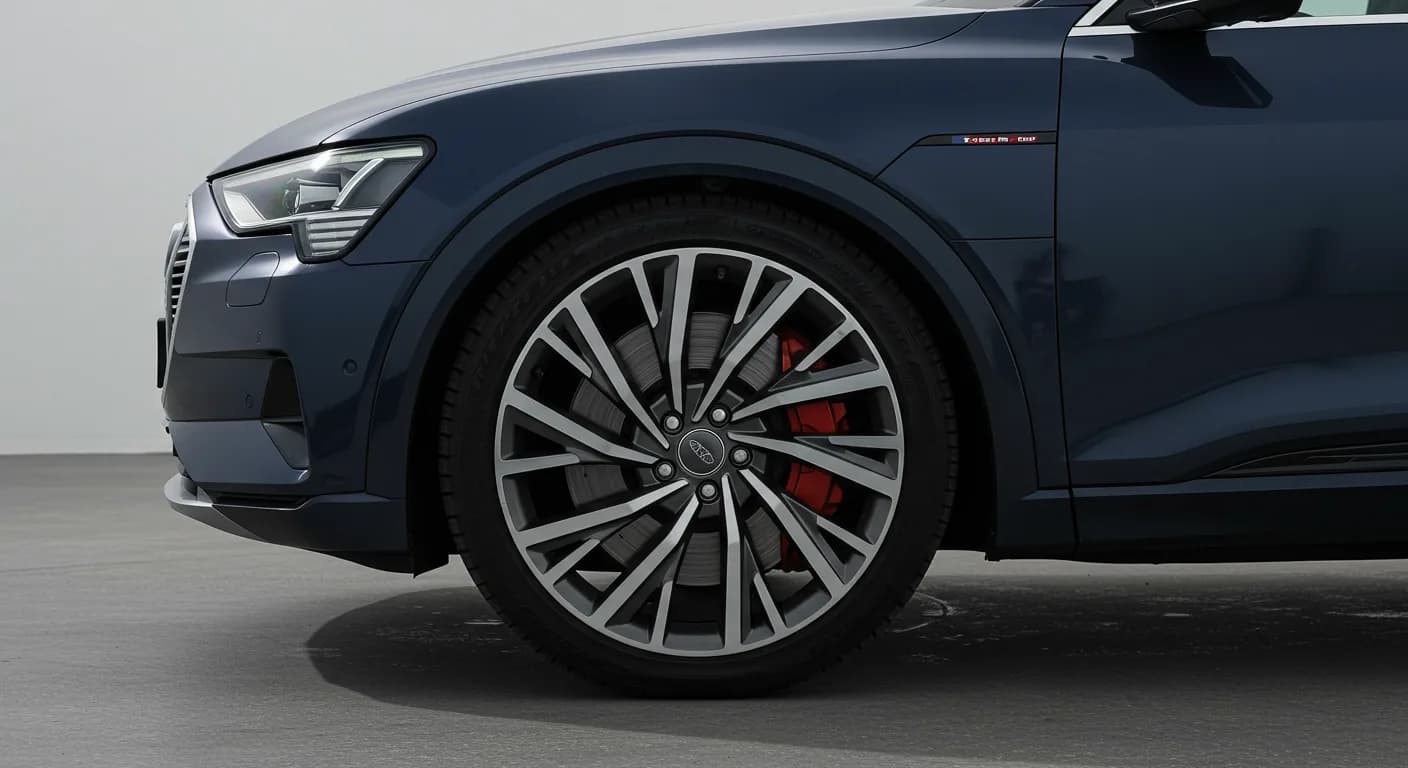
Also applies to
- Audi A3
- 2022–2026
- Audi A4
- 2021–2025
- Audi A4 allroad
- 2021–2025
- Audi A5
- 2021–2024
- Audi A6
- 2021–2025
- Audi A6 allroad
- 2021–2026
- Audi A7
- 2021–2025
- Audi A7 e
- 2021–2022
- Audi A8 L e
- 2021
- Audi e-tron
- 2021, 2023
- Audi e-tron GT
- 2022–2026
- Audi e-tron Sportback
- 2021–2022
- Audi Q3
- 2021–2025
- Audi Q5
- 2021–2025
- Audi Q5 e
- 2021, 2023, 2024, 2025
- Audi Q7
- 2021–2026
- Audi Q8
- 2021–2026
- Audi R8
- 2021–2023
- Audi RS 3
- 2022–2026
- Audi RS 5
- 2021–2024
- Audi RS 6 Avant
- 2021–2026
- Audi RS 7
- 2021–2026
- Audi RS e-tron GT
- 2022, 2023, 2024, 2026
- Audi RS Q8
- 2021–2026
- Audi S e-tron GT
- 2026
- Audi S3
- 2022–2026
- Audi S4
- 2021–2025
- Audi S5
- 2021–2024
- Audi S6
- 2021–2025
- Audi S7
- 2021–2025
- Audi S8
- 2021–2026
- Audi SQ5
- 2021–2025
- Audi SQ7
- 2021–2026
- Audi SQ8
- 2021–2026
- Audi TT
- 2021–2023
- Audi TT RS
- 2021–2022
- Audi TTS
- 2021–2023
▸ Show 31 more▾ Show fewer
Owners of various 2020-2026 Audi models may experience a distinct Audi whining noise high speeds within the vehicle interior. This issue, described as a "whining noise in the vehicle interior at high speeds," can manifest as various sounds, including general noise, buzzing, droning, or even singing, depending on the specific conditions and the vehicle's equipment. Audi Technical Service Bulletin (TSB) 2079696/1, released for publishing on October 17, 2025, provides guidance for technicians to diagnose and address this customer complaint.
Symptoms
Customers typically report a whining noise high speeds that is noticeable within the passenger compartment. This noise is often described with terms such as:
- "noises, vibrations -> too loud" (affecting the passenger compartment, vehicle front, or vehicle rear)
- "noises, vibrations -> noise" (in the vehicle front, passenger compartment, vehicle rear, or general vehicle areas)
- "noises, vibrations -> buzzing" (in the passenger compartment, vehicle front, or vehicle rear)
- "noises, vibrations -> droning" (specifically noted in the passenger compartment)
- "noises, vibrations -> singing" (often related to the tires or tire tread)
These sounds are perceived at high speeds and can vary in intensity and character based on individual perception, vehicle equipment, and specific vehicle versions. The complaint can originate from various vehicle areas, including the entire vehicle, specific vehicle areas (front, rear, passenger compartment), or chassis components like wheels and tires.
Technical Background
The root cause of the Audi whining noise high speeds is identified as toroidal resonance. This phenomenon occurs when the air column inside a tire vibrates. When a tire starts to vibrate due to road contact, it can lead to cavity resonances within the tire itself. These resonances are then transmitted through the wheel rim and the vehicle's running gear into the interior, where they become audible.
Toroidal resonance typically produces a frequency noticeable between 180 Hz and 250 Hz, irrespective of the vehicle's speed. The specific design of the vehicle and the unique properties of different wheel and tire combinations contribute to how and why this particular whining noise occurs at high speeds.
Diagnosis and Service
To accurately diagnose the Audi whining noise high speeds and link it to TSB 2079696/1, technicians are instructed to use specialized equipment. The preferred tool for analysis is the VAS tool 611015, which is a Pico NVH (Noise, Vibration, and Harshness) tool. When using VAS tool 611015, technicians should also consult TSB 2070568, which provides a detailed measurement description and frequency analysis guidelines.
It is crucial for technicians to explain the technical background of toroidal resonance to the customer. If the observed noise falls outside the specified frequency range of 180-250 Hz, further diagnostic analyses are required to identify other potential sources of the noise.
Repair Procedure Summary
The TSB 2079696/1 outlines a detailed diagnostic procedure rather than a direct repair, as the issue is related to inherent tire and wheel characteristics. The process focuses on precise measurement and documentation:
1. Initial Setup and Noise Analysis Tool Configuration
This initial step involves setting up the noise analysis tool, specifically the VAS tool 611015. All work performed during this setup must be thoroughly documented. This includes attaching photos of the sensor positions used during the measurement, with at least one photo clearly showing the Vehicle Identification Number (VIN) to the billing TAC case. Each photo must be labeled descriptively, for example, "sensor A measurement setup 01." This operation is designated as labor operation 0161 0000 and is allotted 50 Technical Units (TU).
2. Measurement and Test Drive
Following the setup, a measurement drive is conducted to collect data related to the noise and vibrations. It is mandatory to record the vehicle's mileage both before and after the test drive. This step falls under labor operation XXXX 0199, and the billing for this will be based on the time required, with all work needing clear documentation.
3. Analysis and Evaluation of Measurements
After the test drive, the collected data is analyzed and evaluated. Technicians must document this analysis by attaching screenshots of the measurement report from the analyzed case to the billing TAC (Technical Assistance Center) case. This is also part of labor operation XXXX 0199, billed according to the time required.
4. Repositioning Measuring Technology
In some cases, it may be necessary to reposition the noise analysis tool for further measurements or analysis. If repositioning is required, the reason for doing so must be documented. Additionally, photos of the new sensor positions, with appropriate labeling (e.g., "sensor A measurement setup 02"), must be taken. This repositioning is covered under labor operation 0161 3199, with an allowance of 25 TU.
Required Tools
To perform the diagnostic procedures described in TSB 2079696/1, the following specialized tool is required:
- VAS tool 611015 (Pico NVH tool)
Important Warnings
Audi emphasizes the importance of adhering to the prescribed procedures. Technicians are advised to:
- "Please observe the information in the repair operations list on which repair operations must be carried out beforehand, which are included, and which must be carried out afterwards if necessary."
This ensures that all diagnostic and documentation steps are followed correctly, leading to an accurate assessment of the Audi whining noise high speeds.
Warranty Information
For vehicles that are no longer under warranty, this Technical Service Bulletin serves as informational guidance only. All warranty claims submitted for payment must strictly comply with the Audi Warranty Policies and Procedures Manual. Claims are subject to review and audit by Audi Warranty.
The specific Service Number for this issue is 4440, and the Damage Code is 0055. All claims should include the comment "As per TSB 2079696/1" for proper processing. The labor operations and their associated time units are detailed above, including 0161 0000 (50 TU), XXXX 0199 (time required), and 0161 3199 (25 TU).
Additional Information
All part and service references provided in this TSB (2079696/1) are subject to change and/or removal. Technicians should always check with their Parts Department and/or ETKA for the latest information and parts bulletins. It is also recommended to check the Repair Manual for fasteners, bolts, nuts, and screws that require replacement during the repair. This document is copyrighted by Audi of America, Inc. ©2025.
Source: NHTSA ID 11025355, TSB 2079696/1
Frequently Asked Questions
- What does Audi Technical Service Bulletin 2079696/1 address?
- Audi TSB 2079696/1 addresses customer complaints regarding a "whining noise in the vehicle interior at high speeds" in various 2020-2026 Audi models, which is attributed to toroidal resonance.
- What is toroidal resonance and how does it cause the Audi whining noise high speeds?
- Toroidal resonance is a phenomenon where the air column inside a tire vibrates due to road contact. These vibrations create cavity resonances within the tire, which are then transmitted through the wheel and running gear into the vehicle's interior, resulting in the audible whining noise at high speeds. This noise typically occurs at frequencies between 180-250 Hz.
- What tools are used to diagnose this whining noise?
- Diagnosis of the Audi whining noise high speeds primarily involves the use of the VAS tool 611015, also known as a Pico NVH tool, for noise and vibration analysis. Technicians are also advised to consult TSB 2070568 for detailed measurement procedures.
- Is there a specific repair for the toroidal resonance noise?
- TSB 2079696/1 outlines a detailed diagnostic and measurement procedure rather than a direct repair involving part replacement. The focus is on accurately identifying and documenting the presence and characteristics of the whining noise through specialized testing and analysis, involving labor operations like 0161 0000 and XXXX 0199.
- Will I be charged for the diagnosis if my Audi is out of warranty?
- If your vehicle is outside of its warranty period, this Technical Service Bulletin is informational only, meaning that diagnostic services related to this issue may incur charges. All warranty claims must adhere to the Audi Warranty Policies and Procedures Manual, and the Service Number for this issue is 4440 with Damage Code 0055.
Related Articles
2022 Audi e-tron Problems: Electrical System & Braking Concerns
The 2022 Audi e-tron has faced significant owner complaints regarding its electrical system, including sudden power loss and charging hazards, as well as various braking malfunctions. This profile details these issues and relevant service bulletins.
2022-2026 Audi Guided Fault Finding Reporting Obligation
Audi has issued Technical Service Bulletin TPI 2033392, also known as Transaction No. 2081531/1, regarding a reporting obligation for technicians when Guided Fault Finding produces an unexpected result. This TSB outlines the process for contacting Audi Product Support for diagnostic assistance.
2022-2026 Audi Infotainment System Complaints
Audi has released Technical Service Bulletin (TSB) 2081405/1 to address various customer complaints regarding infotainment systems in 2022-2026 Audi vehicles. This TSB helps technicians diagnose issues often caused by external media or mobile devices, rather than vehicle technology.
2018-2026 Audi Models Cracking Noise TSB 2061464/11
Audi Technical Service Bulletin 2061464/11 describes a cracking noise from the front or rear axle when changing direction in various 2018-2026 Audi models. The issue is due to stub axle movement and is resolved by bonding the stub axle to the wheel bearing with locking fluid.
2022-2026 Audi Parking Aid False Warnings TSB 2024323/13
Audi has released Technical Service Bulletin 2024323/13 to address customer complaints of false parking aid warnings. This bulletin details various environmental and vehicle-specific conditions that can cause the parking aid system to issue alerts even when no obstacles are present. It provides…
Leave a comment
Comments are moderated and may take a moment to appear. Only your first name and the initial of your last name are shown publicly.
Comments
Be the first to comment.