2023-2026 Audi Wheel Alignment TSB 2056386/11
Audi has issued Technical Service Bulletin (TSB) 2056386/11 to address customer complaints regarding steering wheel alignment and vehicles pulling to one side. This TSB covers various 2023-2026 Audi models, detailing diagnostic steps and repair procedures.
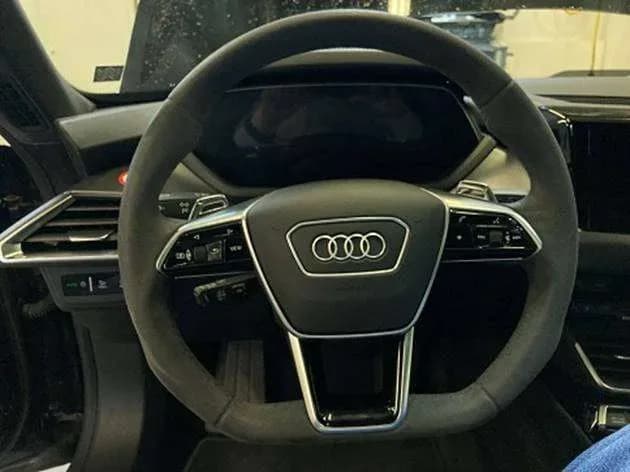
 Ahmet Topcu2023 Audi e-tron
Also applies to
- Audi A3
- 2022–2026
- Audi A4
- 2021–2025
- Audi A4 allroad
- 2021–2025
- Audi A5
- 2021–2024
- Audi A6
- 2021–2025
- Audi A6 allroad
- 2021–2026
- Audi A7
- 2021–2025
- Audi A7 e
- 2021–2022
- Audi A8 L e
- 2021
- Audi e-tron
- 2021–2022
- Audi e-tron GT
- 2022–2026
- Audi e-tron Sportback
- 2021–2022
- Audi Q3
- 2021–2025
- Audi Q5
- 2021–2025
- Audi Q5 e
- 2021, 2023, 2024, 2025
- Audi Q7
- 2021–2026
- Audi Q8
- 2021–2026
- Audi R8
- 2021–2023
- Audi RS 3
- 2022–2026
- Audi RS 5
- 2021–2024
- Audi RS 6 Avant
- 2021–2026
- Audi RS 7
- 2021–2026
- Audi RS e-tron GT
- 2022, 2023, 2024, 2026
- Audi RS Q8
- 2021–2026
- Audi S e-tron GT
- 2026
- Audi S3
- 2022–2026
- Audi S4
- 2021–2025
- Audi S5
- 2021–2024
- Audi S6
- 2021–2025
- Audi S7
- 2021–2025
- Audi S8
- 2021–2026
- Audi SQ5
- 2021–2025
- Audi SQ7
- 2021–2026
- Audi SQ8
- 2021–2026
- Audi TT
- 2021–2023
- Audi TT RS
- 2021–2022
- Audi TTS
- 2021–2023
▸ Show 31 more▾ Show fewer
Symptoms
Owners of 2023-2026 Audi vehicles may experience several symptoms related to wheel alignment issues. These include:
- The steering wheel is not straight, even when driving in a straight line.
- The vehicle pulls to the left or right while driving straight ahead.
- The steering wheel zero position appears adjusted incorrectly.
- Issues with directional stability, where the vehicle functions on one side (left or right).
- Concerns with camber, caster, or toe adjustment being incorrect.
Diagnosis / Trigger Conditions
Audi outlines a specific diagnostic process for technicians to identify and address wheel alignment concerns:
- Initial Assessment: Technicians should perform a test drive with the customer to reproduce the reported symptoms. During this test, it's crucial to observe the vehicle's behavior, paying attention to road camber, which can significantly influence handling.
- Driver Assist Systems: Temporarily switch off lane departure warning and other driver assist systems that might affect straight-line driving. This helps isolate the steering issue.
- Steering Wheel Handling: Emphasize that both hands must remain on the steering wheel during the road test. Assessing straight-line travel by removing hands from the steering wheel is not reliable due to low friction in axle components and steering rack design.
- External Factors: Before concluding a wheel alignment issue, technicians should check tire pressures and inspect tire profiles for irregularities. Also, consider if the vehicle pulling to one side during acceleration or braking is caused by the tires.
- Tolerance for Misalignment: A steering wheel deviation of up to ±2° is considered within permitted tolerances for individual toe settings and does not necessarily indicate a fault. When assessing, ensure the steering column is in its top position and pushed fully towards the dash panel.
- Warranty Considerations: Wheel alignment can only be billed under warranty if specific conditions are met. If the total toe is within specification but individual toe settings on the rear axles are not, this is not a valid reason for a warranty-covered alignment.
Repair Procedure Summary
Audi outlines a detailed procedure for technicians to address wheel alignment concerns, ensuring a thorough diagnosis and correction:
- Reproduce Complaint: Conduct a road test with the customer to confirm the issue and observe the vehicle's behavior.
- Observe Road Camber: Note how road surface camber influences vehicle handling during the test, as this can give the impression of a steering issue.
- Proper Steering Wheel Handling: Instruct technicians to keep both hands on the steering wheel during the road test for accurate assessment of straight-line driving.
- Check for Tire Issues: Investigate if the vehicle pulling to one side during acceleration or braking is caused by the tires, as this is a common non-alignment factor.
- Consult Repair Manual: Refer to the Elsa Repair Manual section: Chassis >> Suspension, Wheels, Steering >> 44 Wheels, Tires, Wheel Alignment for detailed guidance.
- Use Specialized Tools: Utilize the steering wheel scale VAS 6826, if available, for precise measurements of steering wheel position.
- Software Update: Check and update the wheel alignment computer's software version before proceeding with any alignment to ensure the latest calibration data.
- Exclude Other Factors: Perform a wheel alignment only after ruling out all other potential causes for the symptoms, ensuring the repair addresses the root cause.
- Initial Measurement: Conduct an initial measurement during which the individual toe settings of the front wheels are aligned by turning the steering wheel.
- Document Misalignment: Take a photo of any steering wheel misalignment with the steering wheel scales attached for documentation.
- Save Initial Data: Record and save these initial measurements, labeling them with the Vehicle Identification Number (VIN) and a description like "Initial measurements."
- Straighten Steering Wheel: Straighten the steering wheel and then measure the individual toe values again.
- Save Final Data: Record and save these final measurements, also labeled with the VIN and a description like "Final measurements."
- Upload Documentation: Upload all collected documents and measurements related to the VIN to the DOC-IT system for record-keeping.
Required Tools or Parts
To properly diagnose and perform the necessary adjustments for an Audi e-tron wheel alignment issue, technicians will use specific tools:
- VAS 6458: Steering Wheel scale
- VAS 6826: Steering Wheel Scale
- VAS 61XX: Vehicle Diagnostic Tester
Owner Action
If your 2023-2026 Audi is experiencing a steering wheel that isn't straight or is pulling to one side, it's recommended to contact an authorized Audi service center. Clearly describe the symptoms to the technician. Be aware that minor steering wheel deviations (up to ±2°) are considered within normal operating tolerances. The service center will perform a thorough diagnosis, including a test drive, to determine if a wheel alignment or other repairs are necessary. This TSB is informational and not directly covered by all Audi warranties unless specific conditions are met.
NHTSA ID: 11025326
Gallery
4 images
Frequently Asked Questions
- What does Audi TSB 2056386/11 address?
- Audi TSB 2056386/11 provides diagnostic and repair guidance for technicians addressing customer complaints about steering wheel alignment issues and vehicles pulling to one side for various 2023-2026 Audi models.
- What are the common symptoms of an Audi e-tron wheel alignment issue?
- Common symptoms include the steering wheel not being straight when driving, the vehicle pulling to the left or right, or the steering wheel zero position appearing incorrectly adjusted. These issues fall under the general category of an Audi e-tron wheel alignment problem.
- Is a slightly crooked steering wheel always a fault on my Audi?
- No, according to TSB 2056386/11, deviations of up to ±2° in the steering wheel position are considered within permitted tolerances for individual toe settings and do not necessarily constitute a fault.
- What tools do technicians use to diagnose Audi wheel alignment problems?
- Technicians use specialized tools such as the VAS 6458 and VAS 6826 Steering Wheel Scales, along with a VAS 61XX Vehicle Diagnostic Tester, to accurately diagnose and measure wheel alignment issues.
Related Articles
2023 Audi e-tron Problems: Recalls, Complaints & TSBs
The 2023 Audi e-tron has faced several significant safety concerns, including recalls for potential charging cable overheating and brake pedal detachment. Owners have also reported serious issues like sudden unintended acceleration and electrical system malfunctions. This profile details these…
2023 Audi e-tron Brake Pedal Recall
Audi has issued a recall (NHTSA ID: 26V240000, Audi Recall 46P7) for certain 2019-2024 E-Tron and 2020-2024 E-Tron Sportback vehicles, including the 2023 Audi e-tron. The recall addresses a potential issue where the brake pedal may detach from the brake booster, leading to a loss of brake function.
2015-2027 Audi Noise Diagnosis with Frequency Analysis App TSB
Audi has released Technical Service Bulletin 2051095/11 detailing the Audi Frequency Analysis app. This app helps technicians diagnose noise complaints more precisely across 2015-2027 Audi models. Learn how the app works, where to download it, and its features for effective vehicle noise analysis.
2023 Audi e-tron AC/DC Charging Not Possible TSB
This manufacturer communication (NHTSA ID 11031035) provides critical information for 2023 Audi e-tron owners facing issues with AC/DC charging. It specifically highlights problems linked to software version 00C6: 0093/3119, which can prevent the vehicle from charging.
2023-2025 Audi Rear Seat Reminder Message TSB 2074943/2
Audi Technical Service Bulletin 2074943/2 explains the instrument cluster message 'Please check rear seats and be aware of door safelock' in various 2023-2025 Audi models. This informational TSB details the rear occupant detection system designed to prevent children and pets from being left in…
Leave a comment
Comments are moderated and may take a moment to appear. Only your first name and the initial of your last name are shown publicly.
Comments
Be the first to comment.