2008-2025 Audi Leather Seat Care and Repair TSB
Audi has released Technical Service Bulletin 2076945/1 providing comprehensive information on assessing and repairing common leather and leatherette seat issues like stains, dirt, damage, and wrinkles for 2008-2025 Audi models.
 Ahmet Topcu2022 Audi e-tron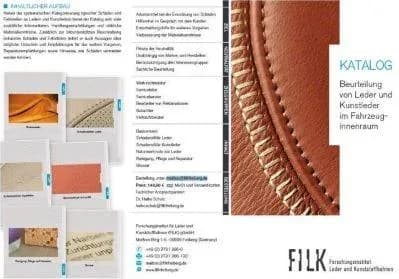
Also applies to
- Audi A3
- 2022–2025
- Audi A4
- 2021–2025
- Audi A4 allroad
- 2021–2025
- Audi A5
- 2021–2024
- Audi A6
- 2021–2025
- Audi A6 allroad
- 2021–2025
- Audi A7
- 2021–2025
- Audi A7 e
- 2021–2022
- Audi e-tron
- 2021, 2023
- Audi e-tron GT
- 2022–2025
- Audi e-tron Sportback
- 2021–2022
- Audi Q3
- 2021–2025
- Audi Q5
- 2021–2025
- Audi Q5 e
- 2021, 2023, 2024, 2025
- Audi Q7
- 2021–2025
- Audi Q8
- 2021–2025
- Audi R8
- 2021–2023
- Audi RS 3
- 2022–2024
- Audi RS 5
- 2021–2024
- Audi RS 6 Avant
- 2021–2025
- Audi RS 7
- 2021–2025
- Audi RS e-tron GT
- 2022–2024
- Audi RS Q8
- 2021–2025
- Audi S e-tron GT
- 2026
- Audi S3
- 2022–2025
- Audi S4
- 2021, 2022, 2024, 2025
- Audi S5
- 2021–2024
- Audi S6
- 2022, 2025
- Audi S7
- 2021–2025
- Audi S8
- 2021–2025
- Audi SQ5
- 2021–2025
- Audi SQ7
- 2021–2025
- Audi SQ8
- 2021–2025
- Audi TT
- 2021–2023
- Audi TT RS
- 2021–2022
- Audi TTS
- 2021–2023
▸ Show 30 more▾ Show fewer
Audi has issued Technical Service Bulletin (TSB) 2076945/1 to address various Audi leather seat appearance issues across its 2008-2025 model lineup. This bulletin provides detailed information for technicians on how to properly assess, care for, and repair leather and leatherette seat covers. The TSB aims to help dealerships effectively manage customer complaints regarding the visual condition of their vehicle's interior seating, ensuring consistent repair standards.
Symptoms
Owners of 2008-2025 Audi vehicles may notice a range of visual issues affecting their leather or leatherette seats. These complaints can manifest in different forms and locations throughout the vehicle's interior. Common symptoms include:
- "appearance, surface -> stains" on seat backrest covers, seat surface covers, and armrests in the first, second, and third rows. This can affect the right, left, or center positions.
- "contamination -> dirty" on various seat components, including backrest covers and seat surface covers, also observed in different seating rows and positions.
- "component, automotive fluids -> damaged" on seat backrest covers, seat surface covers, and armrests, indicating potential spills or material degradation.
- "appearance, surface -> wrinkled" on seat surface covers, backrest covers, headrest covers, and center armrest covers across all rows. These wrinkles can appear in left, right, center, or front positions.
- General "appearance, surface" complaints affecting the overall look of the seats, encompassing a broad range of cosmetic imperfections.
These issues can affect any part of the seat, including the seat bench, armrests, backrest covers, seat surface covers, headrest covers, and center armrest covers in all rows of seating.
Diagnosis and Assessment
To accurately assess the nature and cause of Audi leather seat appearance issues, technicians are advised to use a specialized catalogue titled "Assessment of leather and coated textiles in automotive interior." This comprehensive resource helps differentiate between issues caused by insufficient care, mechanical damage, or potential manufacturing defects in the leather or assembly.
The catalogue provides essential knowledge on leather and leatherette properties, an overview of potential damage scenarios, and practical tips for cleaning, care, and repair. It serves as a crucial aid for technicians in discussing findings with customers and determining the appropriate repair strategy. This tool also enhances service employees' understanding of the material, ensuring a more informed diagnostic process.
Repair Procedure Summary
The TSB emphasizes that repairing affected seat covers is generally preferred over replacing them, whenever feasible. For proper care, cleaning, and repair work, Audi recommends using the specific repair kit VAS 894 001. This kit is designed to address many of the common visual complaints detailed in the bulletin.
The repair process involves a thorough assessment using the aforementioned catalogue. Technicians must document the complaint with photos, clearly showing the issue, to determine if a warranty-covered fault is involved or if the customer is at fault. If in-dealership repairs using the VAS 894 001 kit are not possible, the work may be outsourced to a specialized service provider in exceptional cases. In such instances, the repair must be billed as "leather work."
Required Tools and Parts
- Repair Kit: VAS 894 001 (Order number ASE 89400190000) – This kit contains the necessary materials for cleaning, caring for, and repairing leather and leatherette surfaces.
- Assessment Catalogue: "Assessment of leather and coated textiles in automotive interior" – This catalogue is a critical reference tool for diagnosis and understanding various leather and textile issues. It can be ordered via email at [email protected] or through www.filkfreiberg.de.
Important Warnings for Owners
Owners should be aware of specific conditions outlined in this Technical Service Bulletin:
- Warranty Coverage: This TSB is informational only and is explicitly stated as "not applicable to any Audi Warranty." This means that repairs performed under the guidance of this bulletin may not be covered by your vehicle's warranty, depending on the assessment of fault.
- Fault Assessment: Technicians are required to assess "whether a fault covered by the warranty is involved or whether the customer is at fault." This assessment will determine the financial responsibility for the repair.
- Documentation: All complaints "must always be documented with photos clearly showing the issue." This documentation is crucial for the diagnostic and billing process.
Additional Information
All part and service references provided in this TSB (2076945) are subject to change and/or removal. Technicians are advised to always check with their Parts Department and/or ETKA for the latest information and parts bulletins. They should also consult the Repair Manual for fasteners, bolts, nuts, and screws that require replacement during the repair.
NHTSA ID: 2076945/1
Gallery
1 image
Frequently Asked Questions
- What kind of seat issues does Audi TSB 2076945/1 cover?
- Audi TSB 2076945/1 addresses various visual complaints related to leather and leatherette seats, including stains, dirt, damage from automotive fluids, and wrinkles on seat covers, backrests, armrests, and headrests.
- Does this TSB apply to my Audi's warranty?
- No, Audi Technical Service Bulletin 2076945/1 is informational only and does not apply to any Audi Warranty. Owners should be aware that repairs under this TSB may not be covered by their vehicle's warranty, especially if the customer is determined to be at fault.
- How are Audi leather seat appearance issues diagnosed and repaired?
- Diagnosis involves using the "Assessment of leather and coated textiles in automotive interior" catalogue to evaluate the fault. Repairs are primarily performed using the VAS 894 001 repair kit, with a preference for repair over replacement. Technicians must document all complaints with photos.
- What is the VAS 894 001 repair kit?
- The VAS 894 001 repair kit (order number ASE 89400190000) is a specialized tool recommended by Audi for the proper care, cleaning, and repair of leather and leatherette seat covers as outlined in TSB 2076945/1. It is used by technicians to address common visual complaints.
- What should I do if my Audi has a seat appearance issue?
- If your 2008-2025 Audi has **Audi leather seat appearance issues** like stains, damage, or wrinkles, you should contact your authorized Audi dealership. They will use the TSB guidance and specialized tools to assess the issue and recommend a repair.
Related Articles
2022 Audi e-tron Problems: Electrical System & Braking Concerns
The 2022 Audi e-tron has faced significant owner complaints regarding its electrical system, including sudden power loss and charging hazards, as well as various braking malfunctions. This profile details these issues and relevant service bulletins.
2022-2026 Audi Guided Fault Finding Reporting Obligation
Audi has issued Technical Service Bulletin TPI 2033392, also known as Transaction No. 2081531/1, regarding a reporting obligation for technicians when Guided Fault Finding produces an unexpected result. This TSB outlines the process for contacting Audi Product Support for diagnostic assistance.
2022-2026 Audi Infotainment System Complaints
Audi has released Technical Service Bulletin (TSB) 2081405/1 to address various customer complaints regarding infotainment systems in 2022-2026 Audi vehicles. This TSB helps technicians diagnose issues often caused by external media or mobile devices, rather than vehicle technology.
2018-2026 Audi Models Cracking Noise TSB 2061464/11
Audi Technical Service Bulletin 2061464/11 describes a cracking noise from the front or rear axle when changing direction in various 2018-2026 Audi models. The issue is due to stub axle movement and is resolved by bonding the stub axle to the wheel bearing with locking fluid.
2022-2026 Audi Parking Aid False Warnings TSB 2024323/13
Audi has released Technical Service Bulletin 2024323/13 to address customer complaints of false parking aid warnings. This bulletin details various environmental and vehicle-specific conditions that can cause the parking aid system to issue alerts even when no obstacles are present. It provides…
Leave a comment
Comments are moderated and may take a moment to appear. Only your first name and the initial of your last name are shown publicly.
Comments
Be the first to comment.