2023-2026 Audi Suspension Noise Diagnostic TSB
This Audi Technical Service Bulletin (TSB 2076604/1) offers comprehensive guidance for diagnosing various suspension noises in 2023-2026 Audi models. Learn how technicians pinpoint the source of creaks, rattles, and other sounds.
 David Chen2023 Audi e-tron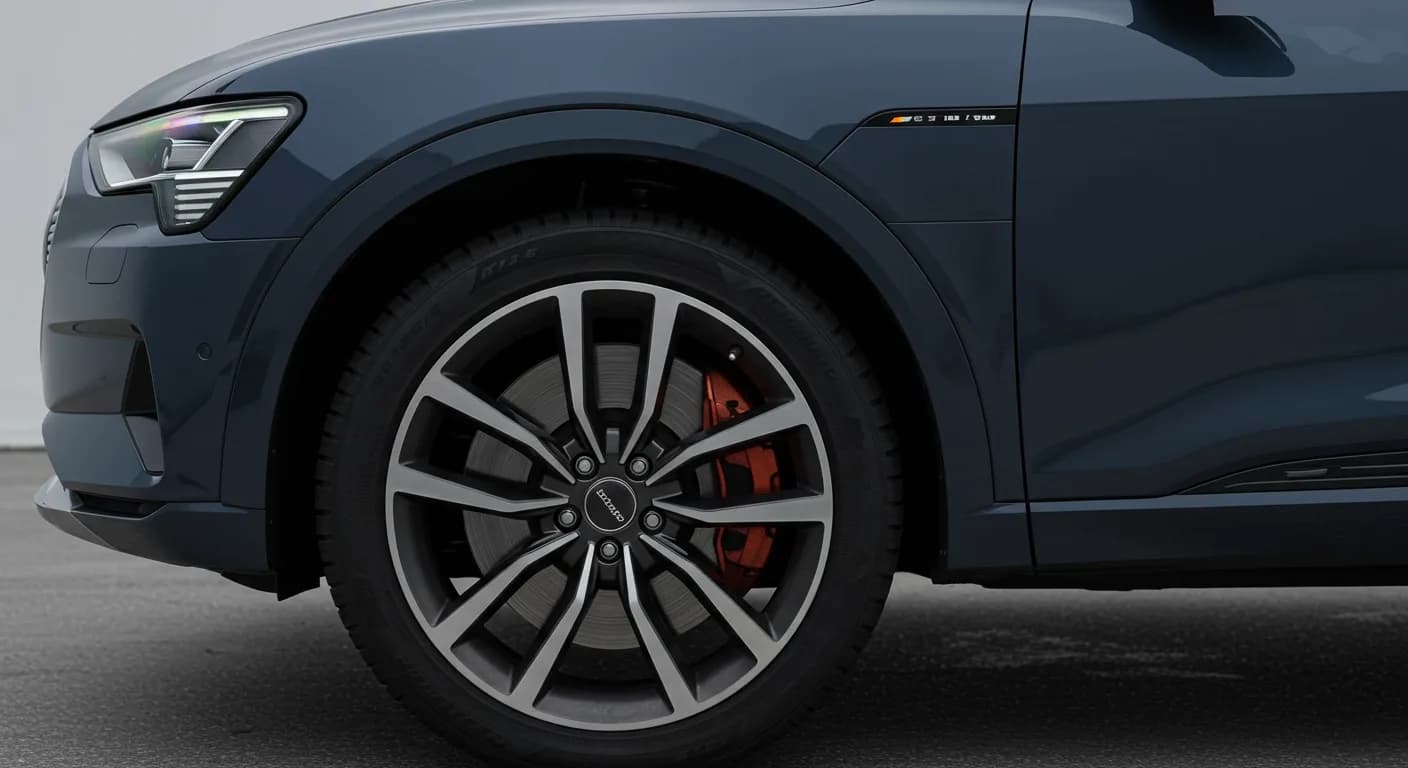
Also applies to
- Audi A3
- 2022–2025
- Audi A4
- 2021–2025
- Audi A4 allroad
- 2021–2025
- Audi A5
- 2021–2025
- Audi A6
- 2021–2025
- Audi A6 allroad
- 2021–2025
- Audi A7
- 2021–2025
- Audi A7 e
- 2021–2022
- Audi A8 L e
- 2021
- Audi e-tron
- 2021–2022
- Audi e-tron GT
- 2022–2025
- Audi e-tron Sportback
- 2021–2022
- Audi Q3
- 2021–2025
- Audi Q5
- 2021–2025
- Audi Q5 e
- 2021, 2023, 2024, 2025
- Audi Q7
- 2021–2025
- Audi Q8
- 2021–2025
- Audi R8
- 2021–2023
- Audi RS 3
- 2022–2024
- Audi RS 5
- 2021–2024
- Audi RS 6 Avant
- 2021–2025
- Audi RS 7
- 2021–2025
- Audi RS e-tron GT
- 2022–2024
- Audi RS Q8
- 2021–2025
- Audi S e-tron GT
- 2026
- Audi S3
- 2022–2025
- Audi S4
- 2021–2025
- Audi S5
- 2021–2025
- Audi S6
- 2021–2025
- Audi S7
- 2021–2025
- Audi S8
- 2021–2025
- Audi SQ5
- 2021–2025
- Audi SQ7
- 2021–2025
- Audi SQ8
- 2021–2025
- Audi TT
- 2021–2023
- Audi TT RS
- 2021–2022
- Audi TTS
- 2021–2023
▸ Show 31 more▾ Show fewer
Noises emanating from a vehicle's suspension system can be challenging to diagnose, as their source may not always be immediately apparent. This Technical Service Bulletin (TSB) 40 25 92 2076604/1, issued by Audi, serves as a comprehensive guide for technicians to effectively pinpoint the origin of various Audi suspension noise complaints across 2023-2026 Audi models.
This TSB is not specific to a single complaint but offers general assistance in identifying and resolving suspension-related sounds. It emphasizes a systematic approach to diagnosis, ensuring that all potential factors contributing to the noise are considered.
Symptoms of Suspension Noise
Owners may experience a range of sounds indicating an Audi suspension noise issue. These can include metallic sounds, hollow sounds, creaking, rattling, or clunking noises. The noise might occur consistently, sporadically, only when the vehicle starts, or only during short or long trips.
Comprehensive Diagnostic Process
To accurately diagnose the source of an Audi suspension noise, technicians are advised to follow a detailed process, often beginning with a road test alongside the customer to reliably reproduce the complaint. Key diagnostic questions and steps include:
- Noise Location: Determine if the noise is heard more clearly inside or outside the vehicle, its specific location (front, rear, side), and if its audibility changes based on seating position.
- External Conditions and Driving Situations: Investigate the conditions under which the noise occurs. This includes temperature, precipitation, road surface quality (unevenness), vehicle speed (acceleration, overrun), steering wheel angle, driving direction (forwards/backwards), selected gear, engine speed range, operation of pedals or switches, Drive Select mode, and the vehicle's load condition.
- Noise Characteristics: Characterize the noise's manifestation (e.g., metallic, hollow sound) and frequency (always, sporadically, only at start-up, short/long trips).
- Documentation: Record video or audio files to document the noise for further analysis.
- Correlating Phenomena: Check if the noise coincides with other issues such as a tilted vehicle, worn parts, warning lamps, or event memory entries.
- Lifting Platform Reproduction: Attempt to reproduce the noise on a lifting platform by manually moving components or creating vibrations.
- Electronic Component Activation/Deactivation: Determine if activating an electronic component (e.g., during final control diagnosis or basic setting) reproduces the noise, or if deactivating/disconnecting running gear components (assembly mountings, anti-roll bar) or control units eliminates it.
- Component Interaction: Identify other components that might cause vibrations and check if temporarily decoupling direct or adjacent components eliminates the noise.
- Component Swapping: Observe if the noise changes or moves with a component when parts are swapped.
Required Tools for Diagnosis
To precisely locate the source of Audi suspension noise, the TSB recommends using specialized acoustic measuring devices and noise location tools. These include:
- PICO tool VAS 611015: Refer to TSB 2070568 / Audi Knowledge Tank for more information on this tool.
- Chassis Ear
- V.A.G 1842
Technicians should perform measurements at various points on the vehicle (different sides, inner/outer sections) and move towards the perceived noise source. It is crucial to ensure that the tools themselves do not introduce additional noises. The actual source of the noise should be confirmed through multiple measurements, both with the vehicle stationary and during a road test.
Important Warnings for Technicians and Owners
Audi emphasizes that technicians must thoroughly work through these diagnostic recommendations before submitting a technical repair query. A qualified initial analysis performed by the workshop, with all findings from the completed TSB, forms the basis for processing any query. Without this detailed information, the situation cannot be assessed remotely.
Additionally, technicians are instructed to attach photos to the DOC-IT and/or TAC case, clearly showing how and where noise measurements were taken with the specified tools.
This TSB is informational only and not applicable to any Audi Warranty. This means that while it provides crucial diagnostic guidance, the bulletin itself does not authorize warranty claims for the diagnostic process or subsequent repairs unless otherwise specified by Audi's warranty policies for the specific repair.
Owner Action
If you are experiencing Audi suspension noise in your 2023-2026 Audi, it is important to provide your service technician with as much detail as possible. Note when the noise occurs, its characteristics (e.g., metallic, hollow, creaking), its location, and any specific driving conditions that trigger it. This information will greatly assist the technician in utilizing the diagnostic steps outlined in TSB 40 25 92 2076604/1 to accurately identify and resolve the issue.
Source: NHTSA ID: 11013718
Frequently Asked Questions
- What kind of noises can this TSB help diagnose?
- This TSB provides general guidance for diagnosing various types of Audi suspension noise, including metallic sounds, hollow sounds, creaking, rattling, or clunking, rather than focusing on a single specific complaint.
- What information should I provide to my Audi technician about suspension noise?
- You should provide detailed information about when and where the Audi suspension noise occurs, its characteristics (e.g., metallic, hollow), and any specific driving conditions (speed, road type, steering input) that trigger or change the sound. This helps technicians follow the TSB's diagnostic steps.
- Are there any special tools used to find Audi suspension noise?
- Yes, the TSB recommends specialized acoustic measuring devices and noise location tools such as the PICO tool VAS 611015, Chassis Ear, and V.A.G 1842 to accurately pinpoint the source of suspension noises.
- Does this TSB cover specific repairs for suspension noise?
- This TSB (40 25 92 2076604/1) is primarily a diagnostic aid, providing steps and questions to help technicians locate the source of suspension noises. It does not outline specific repair procedures for particular issues, but rather the methodology to identify the problem.
- Is the diagnosis of Audi suspension noise covered under warranty?
- According to the TSB, it is informational only and not applicable to any Audi Warranty. This means that while the bulletin guides diagnosis, any warranty coverage for the diagnostic work or subsequent repairs would depend on Audi's standard warranty policies for the specific issue found.
Related Articles
Should 2023 Audi e-tron Owners Worry? Recall & TSB Roundup
The 2023 Audi e-tron faces significant safety concerns, including recalls for potential brake pedal detachment and charging cable overheating. Owners have also reported serious issues like unintended acceleration and electrical system malfunctions. This guide covers all known problems and solutions.
2023 Audi e-tron Brake Pedal Recall
Audi has issued a recall (NHTSA ID: 26V240000, Audi Recall 46P7) for certain 2019-2024 E-Tron and 2020-2024 E-Tron Sportback vehicles, including the 2023 Audi e-tron. The recall addresses a potential issue where the brake pedal may detach from the brake booster, leading to a loss of brake function.
2015-2027 Audi Noise Diagnosis with Frequency Analysis App TSB
Audi has released Technical Service Bulletin 2051095/11 detailing the Audi Frequency Analysis app. This app helps technicians diagnose noise complaints more precisely across 2015-2027 Audi models. Learn how the app works, where to download it, and its features for effective vehicle noise analysis.
2023 Audi e-tron AC/DC Charging Not Possible TSB
This manufacturer communication (NHTSA ID 11031035) provides critical information for 2023 Audi e-tron owners facing issues with AC/DC charging. It specifically highlights problems linked to software version 00C6: 0093/3119, which can prevent the vehicle from charging.
2023-2025 Audi Rear Seat Reminder Message TSB 2074943/2
Audi Technical Service Bulletin 2074943/2 explains the instrument cluster message 'Please check rear seats and be aware of door safelock' in various 2023-2025 Audi models. This informational TSB details the rear occupant detection system designed to prevent children and pets from being left in…
Leave a comment
Comments are moderated and may take a moment to appear. Only your first name and the initial of your last name are shown publicly.
Comments
Be the first to comment.