2023-2026 Audi Front End and Dash Panel Noises TSB
Audi has issued Technical Service Bulletin 2047920/11 for 2023-2026 models experiencing various noises from the front end or dash panel, including buzzing, humming, or whistling. This TSB outlines diagnostic steps and repair procedures for potential front wheel bearing issues.
 David Chen2023 Audi e-tron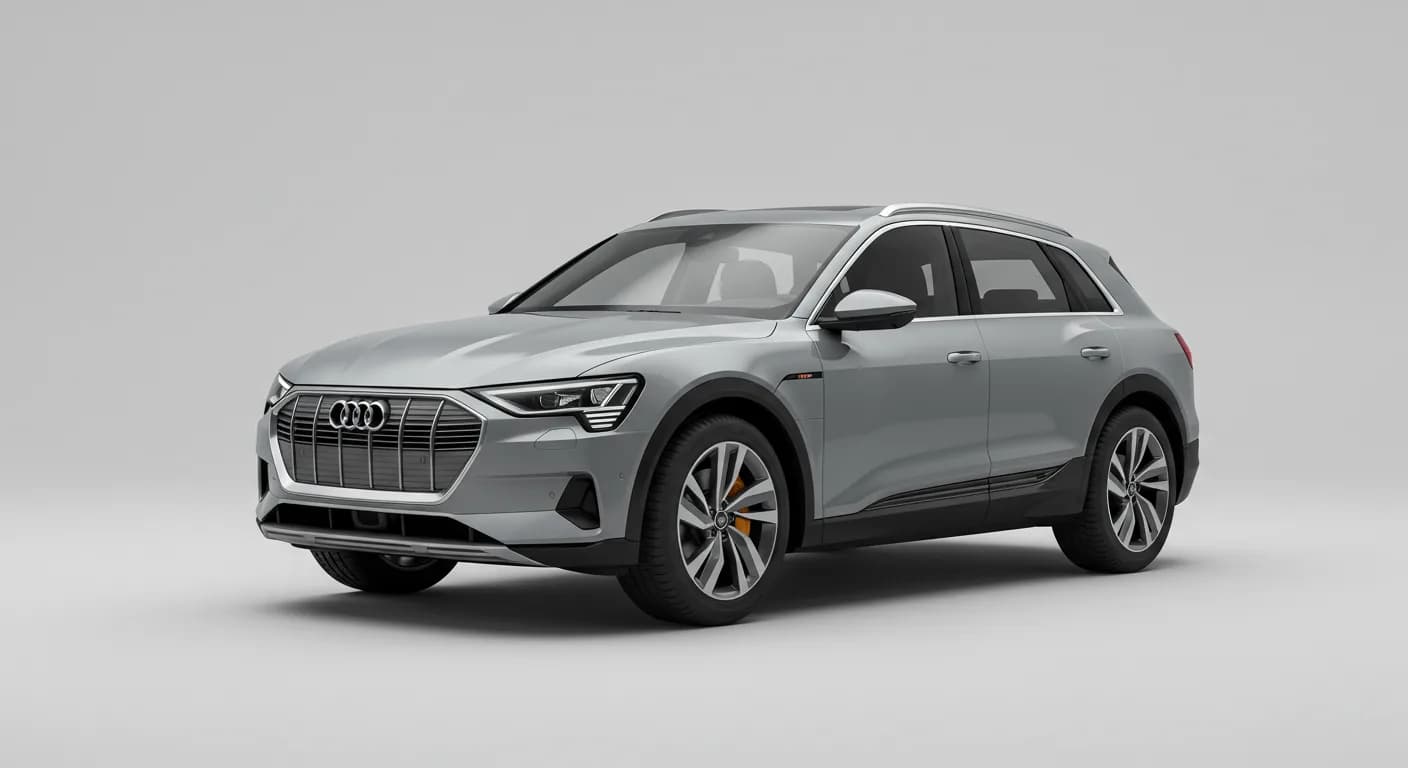
Also applies to
- Audi A3
- 2022–2025
- Audi A4
- 2021–2025
- Audi A4 allroad
- 2021–2025
- Audi A5
- 2021–2025
- Audi A6
- 2021–2025
- Audi A6 allroad
- 2021–2025
- Audi A7
- 2021–2025
- Audi A7 e
- 2021–2022
- Audi A8 L e
- 2021
- Audi e-tron
- 2021–2022
- Audi e-tron GT
- 2022–2025
- Audi e-tron Sportback
- 2021–2022
- Audi Q3
- 2021–2025
- Audi Q5
- 2021–2025
- Audi Q5 e
- 2021, 2023, 2024, 2025
- Audi Q7
- 2021–2025
- Audi Q8
- 2021–2025
- Audi R8
- 2021–2023
- Audi RS 3
- 2022–2024
- Audi RS 5
- 2021–2024
- Audi RS 6 Avant
- 2021–2025
- Audi RS 7
- 2021–2025
- Audi RS e-tron GT
- 2022–2024
- Audi RS Q8
- 2021–2025
- Audi S e-tron GT
- 2026
- Audi S3
- 2022–2025
- Audi S4
- 2021–2025
- Audi S5
- 2021–2025
- Audi S6
- 2021–2025
- Audi S7
- 2021–2025
- Audi S8
- 2021–2025
- Audi SQ5
- 2021–2025
- Audi SQ7
- 2021–2025
- Audi SQ8
- 2021–2025
- Audi TT
- 2021–2023
- Audi TT RS
- 2021–2022
- Audi TTS
- 2021–2023
▸ Show 31 more▾ Show fewer
Audi has released Technical Service Bulletin (TSB) 40 25 87 2047920/11 to address various noises originating from the front end and dash panel of certain 2023-2026 Audi vehicles. This bulletin, which supersedes TSB Group 40 number 24-76 dated May 9, 2024, provides detailed diagnostic and repair information for technicians. Owners of a 2023 Audi e-tron front end noise issue, or similar models, may find this information helpful.
The TSB, last revised on January 9, 2025, specifically targets "rolling noises" that customers might perceive as coming from the front of their vehicle or behind the dash panel.
Symptoms
Owners may report a range of noises from the front of their vehicle, including "buzzing, booming, humming, whistling, or a similar noise from the front end of the vehicle." These sounds might be heard specifically "from the area around the steering wheel or behind the dash panel." It is also common for these noises to be mistakenly identified as "tire rolling noises."
Technical Background
Audi indicates that the root cause of these noises is often mechanical damage to the wheel bearing on the front axle. The design of the vehicle can transmit these wheel bearing noises through the steering system into the cabin, making them difficult to distinguish from other types of road noise.
Diagnosis
To accurately diagnose the source of the 2023 Audi e-tron front end noise, technicians are advised to perform a test drive to reproduce the sounds. Several diagnostic questions can help pinpoint the issue:
- Does the noise frequency increase as vehicle speed rises?
- Does the noise become louder when steering?
- Does the noise persist when the vehicle is rolling to a stop in Neutral (N)?
- Is the noise amplified through the steering wheel or airbag well?
- Can vibrations be felt on the coil spring when the wheel is turning with the suspension extended?
- Does the noise shift to the other side if the wheel bearings are swapped?
Audi recommends using specialized acoustic testers, such as a PICO tool, Chassis ear, or VAG 1842, to precisely locate the noise source. Measurements should be taken at various points around the vehicle to identify the exact origin.
Repair Procedure Summary
Once a front wheel bearing is identified as the source of the noise, the repair involves replacing the affected wheel hub with the bearing. For specific models like the A3, Q3, Q4 e-tron, and TT, the labor operation code for removing and installing the wheel hub with bearing is 4067 19XX, or 4067 20XX for two wheel hubs. For all other models, replacing a single wheel bearing uses labor operation code 4057 55XX, and replacing two wheel bearings uses 4057 56XX.
Diagnostic time for noise analysis using a PICO tool is covered under labor operation 0161 00XX. Road tests before and after the service procedure are also covered under labor operations 0121 0002 and 0121 0004, respectively.
Required Tools or Parts
When a wheel bearing is replaced, the part number of the removed wheel bearing must be billed through SAGA, not ETKA.
Important Warnings
- Do Not Replace in Pairs: The front wheel bearings should not be replaced in pairs unless both are confirmed to be faulty. If the noise cannot be traced to a wheel bearing, further analysis on other components is necessary.
- Warranty Claims: All warranty claims submitted for payment must adhere to the Audi Warranty Policies and Procedures Manual. Claims are subject to review or audit by Audi Warranty. The Service Number for this issue is 4057, and the Damage Code is 0020.
What Owners Should Do
If you experience a 2023 Audi e-tron front end noise, or similar symptoms in an affected Audi model, it is recommended to schedule an appointment with an authorized Audi service center. Technicians will follow the diagnostic steps outlined in TSB 40 25 87 2047920/11 to identify and resolve the issue.
Source: NHTSA ID: 11013694
Frequently Asked Questions
- What kind of noises does Audi TSB 2047920/11 address?
- TSB 2047920/11 addresses various noises such as "buzzing, booming, humming, whistling, or a similar noise from the front end of the vehicle" or "noises may be heard from the area around the steering wheel or behind the dash panel." These can sometimes be mistaken for "tire rolling noises."
- What is the common cause of front end noises in 2023-2026 Audi models?
- The Technical Service Bulletin indicates that these front end noises are frequently caused by mechanical damage to the front axle wheel bearings. The noise can be transmitted through the steering system into the vehicle's interior.
- Should both front wheel bearings be replaced if one is faulty?
- No, Audi explicitly states in TSB 2047920/11 that "The front wheel bearings should not be replaced in pairs." Only the affected wheel bearing should be replaced.
- What tools do technicians use to diagnose these noises?
- Technicians use specialized acoustic testers like a PICO tool, Chassis ear, or VAG 1842 to precisely locate the source of the noise. This helps distinguish wheel bearing noise from other potential issues.
Related Articles
Should 2023 Audi e-tron Owners Worry? Recall & TSB Roundup
The 2023 Audi e-tron faces significant safety concerns, including recalls for potential brake pedal detachment and charging cable overheating. Owners have also reported serious issues like unintended acceleration and electrical system malfunctions. This guide covers all known problems and solutions.
2023 Audi e-tron Brake Pedal Recall
Audi has issued a recall (NHTSA ID: 26V240000, Audi Recall 46P7) for certain 2019-2024 E-Tron and 2020-2024 E-Tron Sportback vehicles, including the 2023 Audi e-tron. The recall addresses a potential issue where the brake pedal may detach from the brake booster, leading to a loss of brake function.
2015-2027 Audi Noise Diagnosis with Frequency Analysis App TSB
Audi has released Technical Service Bulletin 2051095/11 detailing the Audi Frequency Analysis app. This app helps technicians diagnose noise complaints more precisely across 2015-2027 Audi models. Learn how the app works, where to download it, and its features for effective vehicle noise analysis.
2023 Audi e-tron AC/DC Charging Not Possible TSB
This manufacturer communication (NHTSA ID 11031035) provides critical information for 2023 Audi e-tron owners facing issues with AC/DC charging. It specifically highlights problems linked to software version 00C6: 0093/3119, which can prevent the vehicle from charging.
2023-2025 Audi Rear Seat Reminder Message TSB 2074943/2
Audi Technical Service Bulletin 2074943/2 explains the instrument cluster message 'Please check rear seats and be aware of door safelock' in various 2023-2025 Audi models. This informational TSB details the rear occupant detection system designed to prevent children and pets from being left in…
Leave a comment
Comments are moderated and may take a moment to appear. Only your first name and the initial of your last name are shown publicly.
Comments
Be the first to comment.