2005-2024 Audi TFSI Engine Rough Idle TSB
Audi has issued Technical Service Bulletin (TSB) 15 24 53 2075530/1 to address instances where TFSI engines exhibit a rough idle, especially after a cold start. This condition is often accompanied by sporadic misfiring logged in the engine control unit and is typically caused by carbon deposits on…
 Marcus Weber2023 Audi e-tron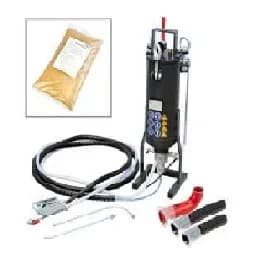
Also applies to
- Audi A3
- 2022–2024
- Audi A4
- 2021–2024
- Audi A4 allroad
- 2021–2024
- Audi A5
- 2021–2024
- Audi A6
- 2021–2024
- Audi A6 allroad
- 2021–2024
- Audi A7
- 2021–2024
- Audi A7 e
- 2021–2022
- Audi A8 L e
- 2021
- Audi e-tron
- 2021–2022
- Audi e-tron GT
- 2022–2024
- Audi e-tron Sportback
- 2021–2022
- Audi Q3
- 2021–2024
- Audi Q5
- 2021–2024
- Audi Q5 e
- 2021, 2023, 2024
- Audi Q7
- 2021–2024
- Audi Q8
- 2021–2024
- Audi R8
- 2021–2023
- Audi RS 3
- 2022–2024
- Audi RS 5
- 2021–2024
- Audi RS 6 Avant
- 2021–2024
- Audi RS 7
- 2021–2024
- Audi RS e-tron GT
- 2022–2024
- Audi RS Q8
- 2021–2024
- Audi S3
- 2022–2024
- Audi S4
- 2021–2024
- Audi S5
- 2021–2024
- Audi S6
- 2021–2024
- Audi S7
- 2021–2024
- Audi S8
- 2021–2024
- Audi SQ5
- 2021–2024
- Audi SQ7
- 2021–2024
- Audi SQ8
- 2021–2024
- Audi TT
- 2021–2023
- Audi TT RS
- 2021–2022
- Audi TTS
- 2021–2023
▸ Show 30 more▾ Show fewer
Symptoms and Diagnosis
Owners of 2005-2024 Audi vehicles with TFSI engines may notice that the "Engine does not run smoothly at idling speed after cold start." This issue is particularly common in vehicles primarily used for short drives. Technicians investigating this concern may find "sporadic misfiring logged in event memory of engine control unit."
Technical Background
The primary cause of the Audi TFSI rough idle and misfiring is identified as deposits accumulating in the inlet ports and on the inlet valves. These carbon deposits can interfere with proper airflow and fuel mixture, leading to the observed engine performance issues.
Repair Procedure: Walnut Blasting
To resolve the Audi TFSI rough idle condition, Technical Service Bulletin 15 24 53 2075530/1 recommends cleaning the inlet valves and ports through a process known as walnut blasting. This method effectively removes carbon deposits without requiring the removal of the cylinder head. Technicians will only need to remove the intake manifold and/or compressor to access the affected areas and perform the cleaning according to specific repair instructions.
Required Tools and Materials
Performing this repair requires specialized tools to ensure effective cleaning and proper diagnosis. These include:
- Granulate blasting unit: VAS 294 011 (an image of this unit is provided in the TSB)
- Granulate or Granulate ASE: VAS 294 011/8 or VAS 294 012 70 H00
- VAS tester with ODIS: VAS 6160/VAS 6150, running the current version of ODIS (Windows 10)
Warranty and Labor Operations
This Technical Service Bulletin, identified as TSB 15 24 53 2075530/1, outlines specific procedures for warranty claims. The Service Number for this issue is 1570, and the Damage Code is 0055. The claim comment specifies, "As per TSB 2075530/1."
Labor operations and their associated time units (TU) for this repair are as follows:
| Labor Operation | Code | Time Units (TU) |
|---|---|---|
| Remove and install intake manifold | 2447 19XX | See SRT with associated operations |
| Remove and install compressor | 2114 19XX | See SRT with associated operations |
| Clean cylinder head 4 cyl. | 1570 2999 | 90 TU |
| Clean cylinder head 5 cyl. | 1570 2999 | 110 TU |
| Clean cylinder head 6 cyl. | 1570 2999 | 130 TU |
| Clean cylinder head 8 cyl. | 1570 2999 | 160 TU |
| Clean cylinder head 10 cyl. | 1570 2999 | 190 TU |
| Clean cylinder head 12 cyl. | 1570 2999 | 230 TU |
| GFF (Guided Fault Finding) | N/A | 0 TU |
| Road test prior to service | N/A | 0 TU |
| Road test after service | N/A | 0 TU |
All warranty claims submitted for payment must adhere to the Audi Warranty Policies and Procedures Manual and are subject to review or audit by Audi Warranty.
Important Owner Information
Owners should be aware that "If the vehicle is outside of any warranty, this Technical Service Bulletin is informational only." In such cases, the repair costs may not be covered by Audi. It is always recommended to consult with an authorized Audi service center to determine the applicability of this TSB to your specific vehicle and its warranty status.
NHTSA ID: 11009928
Frequently Asked Questions
- What are the common symptoms of the Audi TFSI rough idle issue?
- Owners typically report that the "Engine does not run smoothly at idling speed after cold start." Technicians often find "sporadic misfiring logged in event memory of engine control unit."
- What causes the Audi TFSI rough idle?
- The primary cause of the Audi TFSI rough idle is the accumulation of carbon deposits in the engine's inlet ports and on the inlet valves. These deposits disrupt proper engine function, leading to a rough idle and misfires.
- How is the Audi TFSI rough idle problem fixed?
- The recommended repair involves cleaning the inlet valves and ports using a process called walnut blasting. This procedure removes carbon deposits without requiring the removal of the cylinder head, only the intake manifold or compressor.
- Does TSB 15 24 53 2075530/1 apply to my Audi?
- This TSB applies to all Audi vehicles with TFSI engines manufactured between 2005 and 2024. If your vehicle is experiencing a rough idle or misfires, it is advisable to consult with an authorized Audi service center to determine if your specific vehicle is covered and eligible for the repair.
- Will this repair be covered under warranty?
- If your vehicle is still under warranty, the repair should typically be covered. However, if the vehicle is outside of its warranty period, the Technical Service Bulletin is informational only, and repair costs may not be covered by Audi. All warranty claims are subject to Audi's policies and audit.
Related Articles
Should 2023 Audi e-tron Owners Worry? Recall & TSB Roundup
The 2023 Audi e-tron faces significant safety concerns, including recalls for potential brake pedal detachment and charging cable overheating. Owners have also reported serious issues like unintended acceleration and electrical system malfunctions. This guide covers all known problems and solutions.
2023 Audi e-tron Brake Pedal Recall
Audi has issued a recall (NHTSA ID: 26V240000, Audi Recall 46P7) for certain 2019-2024 E-Tron and 2020-2024 E-Tron Sportback vehicles, including the 2023 Audi e-tron. The recall addresses a potential issue where the brake pedal may detach from the brake booster, leading to a loss of brake function.
2015-2027 Audi Noise Diagnosis with Frequency Analysis App TSB
Audi has released Technical Service Bulletin 2051095/11 detailing the Audi Frequency Analysis app. This app helps technicians diagnose noise complaints more precisely across 2015-2027 Audi models. Learn how the app works, where to download it, and its features for effective vehicle noise analysis.
2023 Audi e-tron AC/DC Charging Not Possible TSB
This manufacturer communication (NHTSA ID 11031035) provides critical information for 2023 Audi e-tron owners facing issues with AC/DC charging. It specifically highlights problems linked to software version 00C6: 0093/3119, which can prevent the vehicle from charging.
2023-2025 Audi Rear Seat Reminder Message TSB 2074943/2
Audi Technical Service Bulletin 2074943/2 explains the instrument cluster message 'Please check rear seats and be aware of door safelock' in various 2023-2025 Audi models. This informational TSB details the rear occupant detection system designed to prevent children and pets from being left in…
Leave a comment
Comments are moderated and may take a moment to appear. Only your first name and the initial of your last name are shown publicly.
Comments
Be the first to comment.