2022-2026 Audi Q5 Hybrid MIL with B200000 Fault
Audi has identified that 2024 Audi Q5 Plug-in Hybrid vehicles may illuminate the Malfunction Indicator Light (MIL) and store fault code B200000 when charged at 110V with 100% power. This communication outlines recommended charging procedures and next steps for owners.
 David Chen2022 Audi e-tron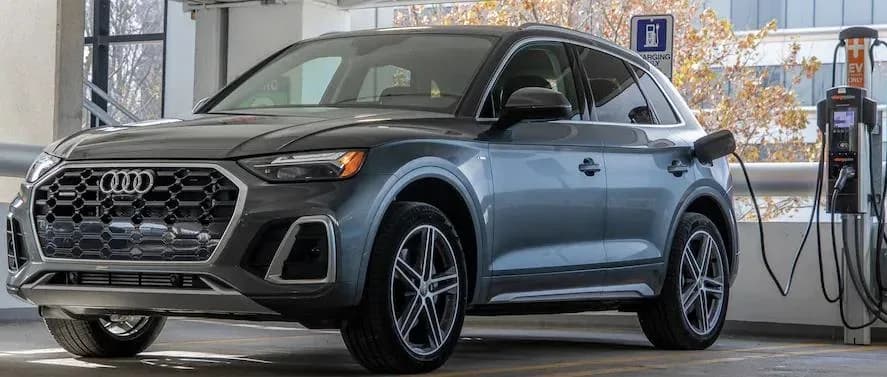
Şu araçlar için de geçerli
- Audi A3
- 2022–2025
- Audi A4
- 2021–2025
- Audi A4 allroad
- 2021–2025
- Audi A5
- 2021–2025
- Audi A6
- 2021–2025
- Audi A6 allroad
- 2021–2025
- Audi A7
- 2021–2025
- Audi A7 e
- 2021–2022
- Audi A8 L e
- 2021
- Audi e-tron
- 2021, 2023
- Audi e-tron GT
- 2022–2025
- Audi e-tron Sportback
- 2021–2022
- Audi Q3
- 2021–2025
- Audi Q5
- 2021–2025
- Audi Q5 e
- 2021, 2023, 2024, 2025
- Audi Q7
- 2021–2025
- Audi Q8
- 2021–2025
- Audi R8
- 2021–2023
- Audi RS 3
- 2022–2025
- Audi RS 5
- 2021–2025
- Audi RS 6 Avant
- 2021–2025
- Audi RS 7
- 2021–2025
- Audi RS e-tron GT
- 2022–2024
- Audi RS Q8
- 2021–2025
- Audi S e-tron GT
- 2026
- Audi S3
- 2022–2025
- Audi S4
- 2021–2025
- Audi S5
- 2021–2025
- Audi S6
- 2021–2025
- Audi S7
- 2021–2025
- Audi S8
- 2021–2025
- Audi SQ5
- 2021–2025
- Audi SQ7
- 2021–2025
- Audi SQ8
- 2021–2025
- Audi TT
- 2021–2023
- Audi TT RS
- 2021–2022
- Audi TTS
- 2021–2023
▸ 31 tane daha göster▾ Daha az göster
Audi has released a dealer communication, NHTSA ID 11002951, regarding a specific issue affecting certain 2022-2026 Audi Q5 Hybrid models, particularly the 2024 Audi Q5 Plug-in Hybrid. This communication addresses instances where the Malfunction Indicator Light (MIL) illuminates due to an Audi B200000 fault code related to the high voltage charger. While the root cause is still under investigation, Audi has provided interim charging recommendations and anticipates a technical service bulletin (TSB) with reference ETA CW26.
Symptoms
Owners of certain 2022-2026 Audi Q5 Hybrid models, specifically the 2024 Audi Q5 Plug-in Hybrid, may observe the Malfunction Indicator Light (MIL) illuminating on the dashboard. This symptom is typically linked to charging the hybrid battery at 110V with 100% charging power. The underlying issue is a control module fault stored in the J1050 high voltage charger, resulting in the Audi B200000 fault code.
Fault Codes / DTCs
The primary diagnostic trouble code (DTC) associated with this issue is:
| Code | Description | Module |
|---|---|---|
| B200000 | Control module faulty stored in J1050 high voltage charger | J1050 high voltage charger |
Diagnosis / Trigger Conditions
The Audi B200000 fault is specifically triggered when affected 2022-2026 Audi Q5 Hybrid vehicles, particularly the 2024 Audi Q5 Plug-in Hybrid, are charged using a 110V power source at 100% charging power. This condition leads to the illumination of the Malfunction Indicator Light (MIL) and the storage of the B200000 fault code within the J1050 high voltage charger control module.
Important Warnings and Owner Actions
Audi has provided specific guidance for owners of 2022-2026 Audi Q5 Hybrid models to manage this condition while a permanent solution is being developed. It is crucial for owners to follow these recommendations to avoid triggering the fault.
- Do NOT charge at 110V/100% power: Owners of the 2024 Audi Q5 Plug-in Hybrid "should not use 110v at 100% power" to charge their vehicle's hybrid battery. This is the primary condition that leads to the Malfunction Indicator Light (MIL) and the Audi B200000 fault.
- Recommended Charging: Owners "can charge their Q5e at 220v at 100% charging power or 110v at 50% charging power." These methods are approved and will not trigger the fault.
- Public Charging: "Public level 2 charging infostructure is not affected as public is 220v." Owners can confidently use public 220V charging stations.
- Delivery Refusal: If a customer "refuses to take delivery of the vehicle until the final solution is implemented," dealers are instructed to contact their Area After Sales Manager (AASM) for guidance.
- No Immediate Recall Notification: Audi is currently investigating the root cause and will communicate updates as needed. Owners will not receive a direct recall letter for this specific issue at this time, as it is a manufacturer communication preceding a formal TSB.
Repair Procedure Summary
As of this communication, the root cause of the B200000 fault code is still under investigation by Audi AG. Therefore, a definitive repair procedure has not yet been issued. Audi is actively working on a solution, and further information will be provided in a forthcoming technical service bulletin (TSB), identified as ETA CW26. Dealers are instructed to track affected vehicles by entering their VINs into the PSS system for follow-up once a solution is released.
What Owners Should Know
While Audi works towards a permanent solution for the B200000 fault, owners should adhere to the recommended charging practices. Charging at 110V with 50% power will prolong the charging process, and owners should adjust their expectations accordingly. Audi emphasizes its commitment to resolving this issue and encourages owners to refer to the Audi USA EV portal at https://www.audiusa.com/us/web/en/ev-hub/charging.html for general charging information. Dealers are also advised to provide empathetic customer handling and follow up to ensure customer satisfaction.
Source: NHTSA Manufacturer Communication 11002951
Frequently Asked Questions
- What is the Audi B200000 fault?
- The Audi B200000 fault is a diagnostic trouble code indicating a control module fault within the J1050 high voltage charger of certain 2024 Audi Q5 Plug-in Hybrid vehicles. It typically causes the Malfunction Indicator Light (MIL) to illuminate.
- How can I avoid the MIL light on my Audi Q5 Hybrid?
- To avoid the Malfunction Indicator Light (MIL) and the B200000 fault, Audi recommends that owners of the 2024 Audi Q5 Plug-in Hybrid do not charge their vehicle at 110V with 100% charging power. Instead, charge at 220V with 100% power or 110V with 50% power.
- Can I use public charging stations for my Audi Q5e?
- Yes, you can use public Level 2 charging stations for your Audi Q5e. These stations typically provide 220V power, which is approved for 100% charging power and is not affected by this issue.
- Will Audi fix the 110V/100% charging issue for the Audi Q5 Hybrid?
- Yes, Audi AG is actively investigating the root cause of the B200000 fault and is working on a permanent solution. A technical service bulletin (TSB) with reference ETA CW26 is anticipated to provide further details and a repair procedure once available.
Bu TSB'nin diğer revizyonları
- 2021-2025 Audi Emergency Call System Fault TSBB200000
- 2022-2025 Audi e-tron Emergency Call System Fault TSBB200000
- 2023-2026 Audi Emergency Call System Fault B200000 TSBB200000
- 2020-2026 Audi Emergency Call Fault B200000B200000
- 2022-2026 Audi Emergency Call System Fault TSBB200000
- 2021-2026 Audi Emergency Call System Fault TSB 2059528/14B200000
- 2021-2026 Audi Emergency Call System Fault B200000B200000
- 2024-2025 Audi A5 Steering Warning Lamp TSBB200000
Related Articles
2022 Audi e-tron Problems: Electrical System & Braking Concerns
The 2022 Audi e-tron has faced significant owner complaints regarding its electrical system, including sudden power loss and charging hazards, as well as various braking malfunctions. This profile details these issues and relevant service bulletins.
2022-2026 Audi Guided Fault Finding Reporting Obligation
Audi has issued Technical Service Bulletin TPI 2033392, also known as Transaction No. 2081531/1, regarding a reporting obligation for technicians when Guided Fault Finding produces an unexpected result. This TSB outlines the process for contacting Audi Product Support for diagnostic assistance.
2022-2026 Audi Infotainment System Complaints
Audi has released Technical Service Bulletin (TSB) 2081405/1 to address various customer complaints regarding infotainment systems in 2022-2026 Audi vehicles. This TSB helps technicians diagnose issues often caused by external media or mobile devices, rather than vehicle technology.
2018-2026 Audi Models Cracking Noise TSB 2061464/11
Audi Technical Service Bulletin 2061464/11 describes a cracking noise from the front or rear axle when changing direction in various 2018-2026 Audi models. The issue is due to stub axle movement and is resolved by bonding the stub axle to the wheel bearing with locking fluid.
2022-2026 Audi Parking Aid False Warnings TSB 2024323/13
Audi has released Technical Service Bulletin 2024323/13 to address customer complaints of false parking aid warnings. This bulletin details various environmental and vehicle-specific conditions that can cause the parking aid system to issue alerts even when no obstacles are present. It provides…
Yorum bırakın
Yorumlar moderasyondan geçer ve görünmesi biraz zaman alabilir. Sadece adınız ve soyadınızın baş harfi herkese açık olarak gösterilir.
Yorumlar
İlk yorum sizden olsun.