2021-2022 Audi e-tron Slow Charging DTC P31C500
Learn about the Audi e-tron slow charging issue, identified by DTC P31C500, which can cause excessively long charging times. This TSB outlines the technical background and repair procedure involving coolant valve replacement.
 Ahmet Topcu2021 Audi e-tron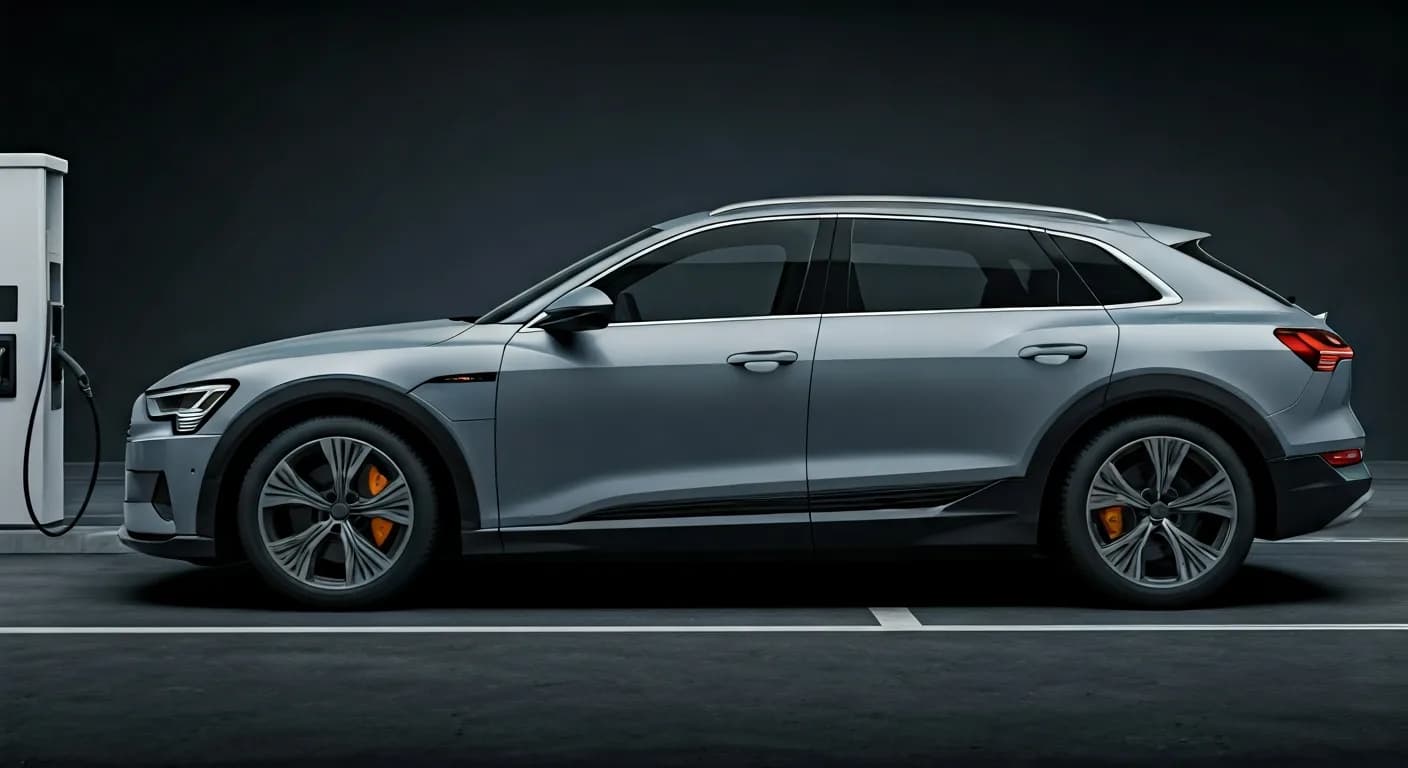
Also applies to
- Audi e-tron
- 2022
Symptoms of Slow Charging
Owners of 2021-2022 Audi e-tron models may experience issues with their vehicle's charging system. The primary symptom is that "The battery charging is very slow."
Another indicator is that "After charging for 30 minutes or more the estimated charging time display changes from a normal time to an excessively long time (for example 36 hours or more when connected to a level 2 charger or DC fast charger)." These long charging times can be frustrating and indicate an underlying problem.
Fault Codes / DTCs
When diagnosing the Audi e-tron slow charging P31C500 problem, technicians may find a specific Diagnostic Trouble Code (DTC) stored in the vehicle's system. This DTC points to the high-voltage battery charger, J1050 (address word 00C6).
| DTC | Description | Module |
|---|---|---|
| P31C500 | Temperature sensor coolant inlet excessive | High-voltage battery charger, J1050 (00C6) |
Technical Background
The root cause of the Audi e-tron slow charging P31C500 issue is an incorrect calibration of the cooling system control valve during vehicle production. This calibration error can lead to an excessive temperature within the cooling system.
Such elevated temperatures directly impact the charging speed of the high-voltage battery. Audi has implemented improved tolerances and quality checks at the supplier level as a production solution to prevent this issue in newer vehicles.
Diagnosis and Repair Procedure Summary
If you experience an Audi e-tron slow charging P31C500, a technician will follow a specific diagnostic and repair process:
- Check Vehicle History: The technician will first review the vehicle's history to determine if any DTCs related to coolant valves were previously stored in the thermal management control module, J1024 (address word 00C5).
- If Prior DTCs Exist: If previous DTCs were stored, an output diagnosis will be performed for the specific valve that triggered the code. If the valve's values do not change during this test, the corresponding valve will be replaced, and the cooling system will be bled according to the Elsa Repair Manual.
- If No Prior DTCs Exist: If no coolant valve-related DTCs are found in the history, an output diagnosis test will be performed starting with coolant valve 2 (N633). If necessary, this test will continue with coolant valve 4 (N635) and coolant valve 3 (N634).
- Valve Replacement: Should any of these valves fail the output diagnosis test by not changing values, the defective valve will be replaced. The cooling system will then be bled as per the Elsa Repair Manual instructions.
- Verification: After the repair is completed, the high-voltage battery will be rechecked to ensure it charges at a normal rate. The technician will also verify that the DTC P31C500 is no longer present.
Required Parts
Specific coolant valves may need to be replaced, depending on diagnostic findings. It is crucial to only replace the actual valve that is defective.
| Part Number | Part Description | Quantity |
|---|---|---|
| 4KE963375J | Coolant valve 2 (N633) (Only replace if the valve fails testing) | 01 |
| 4KE963375N | Coolant valve 4 (N635) (Only replace if the valve fails testing) | 01 |
| 4KE963375H | Coolant valve 3 (N634) (Only replace if the valve fails testing) | 01 |
| See ETKA | Coolant, Fasteners, Bolts, Nuts, and Screws as needed | See ETKA/ELSA |
Warranty Information
This repair for the Audi e-tron slow charging P31C500 issue may be covered under warranty. The claim types are 110 (up to 48 Months/50,000 Miles) or G10 for CPO (Certified Pre-Owned) Covered Vehicles, requiring owner verification. If the vehicle is outside of any applicable warranty, this Technical Service Bulletin is for informational purposes only.
The service number for this bulletin is 1985, with a damage code of 0040. Labor operations include replacing the coolant valve (9384 19XX) and inspecting/adding coolant (1938 3550). Diagnostic time is GFF 0150 0000, and road tests before and after service are listed as 'No allowance' (0 TU).
All warranty claims must adhere to the Audi Warranty Policies and Procedures Manual and are subject to review or audit by Audi Warranty.
Source: NHTSA ID: 10232090
Frequently Asked Questions
- What does DTC P31C500 mean for my Audi e-tron?
- DTC P31C500 indicates an 'Temperature sensor coolant inlet excessive' condition, specifically related to the high-voltage battery charger (J1050). This code is associated with slow battery charging and excessively long estimated charging times in your Audi e-tron.
- What are the symptoms of the Audi e-tron slow charging P31C500 issue?
- The main symptoms include the battery charging very slowly and the estimated charging time display showing excessively long durations, such as 36 hours or more, even when connected to a Level 2 or DC fast charger.
- How is the Audi e-tron slow charging P31C500 problem fixed?
- The repair involves diagnosing specific coolant valves within the thermal management system. Depending on the diagnostic results, a faulty coolant valve (such as N633, N634, or N635) will be replaced, followed by bleeding the cooling system and verifying normal charging operation.
- Is the repair for the Audi e-tron slow charging P31C500 covered under warranty?
- The repair may be covered under Audi's new vehicle limited warranty (up to 48 months/50,000 miles) or for Certified Pre-Owned vehicles. If your vehicle is outside of these warranty periods, the Technical Service Bulletin serves as informational guidance, and the repair costs would typically be out-of-pocket.
Other revisions of this TSB
Related Articles
2021 Audi e-tron Electrical Malfunction and Power Loss
A 2021 Audi e-tron owner reported a severe 'Electrical Malfunction' resulting in complete loss of power on the highway. The issue has persisted despite dealer attempts to fix it over five months, posing significant safety risks.
2021-2026 Audi UTR Troubleshooting & FAQs TSB 2081409/1
This Audi Technical Service Bulletin (TSB 2081409/1) provides comprehensive answers to frequently asked questions and troubleshooting steps for the Audi Universal Traffic Recorder (UTR) accessory, covering topics like SD card compatibility, video playback, Wi-Fi issues, and more.
2021-2025 Audi Emergency Call System Fault TSB
Audi has released Technical Service Bulletin 2059528/18 to address an "Emergency call function: malfunction! Function unavailable. Please contact service" warning, often accompanied by a red SOS LED and DTC B200000. This issue affects various 2021-2025 Audi models and is due to a software problem…
2021-2026 Audi Adaptive Light System Fault C12B3FA TSB
Audi has released Technical Service Bulletin 2054202/7 to address an intermittent 'Audi adaptive light: system fault' message and DTC C12B3FA in various 2021-2026 models. This TSB outlines diagnosis and resolution for driver assistance system malfunctions.
2021-2026 Audi Parking Aid False Warnings TSB 2024323/12
This Technical Service Bulletin (TSB 2024323/12) details diagnostic and repair procedures for 2021-2026 Audi vehicles experiencing false parking aid warnings. Learn about environmental factors, sensor checks, and proper installation to resolve issues like 'Parking aid does not work / warning is…
Leave a comment
Comments are moderated and may take a moment to appear. Only your first name and the initial of your last name are shown publicly.
Comments
Be the first to comment.