2021-2022 Audi e-tron Slow Charging P31C500 TSB
Audi has released Technical Service Bulletin (TSB) 2064025/3 for 2021-2022 e-tron models experiencing slow battery charging and diagnostic trouble code P31C500. The issue stems from an incorrectly calibrated cooling system control valve, which can lead to excessive temperatures and reduced…
 Sarah Mitchell2022 Audi e-tron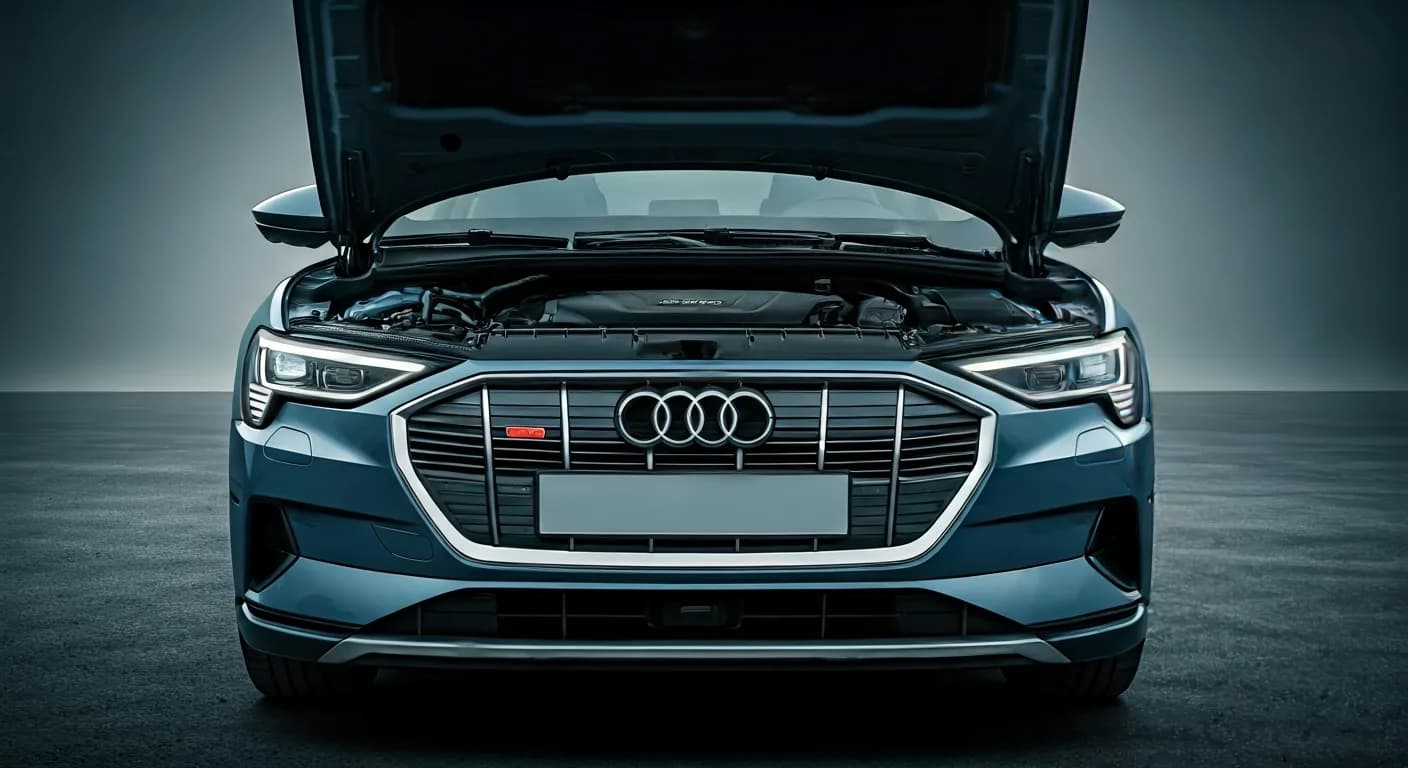
Also applies to
- Audi e-tron
- 2021
Symptoms
Owners of 2021-2022 Audi e-tron models may experience the following issues related to this TSB:
- The battery charging is very slow.
- After charging for 30 minutes or more, the estimated charging time display changes from a normal time to an "excessively long time" (for example, 36 hours or more when connected to a Level 2 charger or DC fast charger).
Fault Codes / DTCs
When these symptoms occur, a diagnostic scan may reveal the following Diagnostic Trouble Code (DTC) stored in the High-voltage battery charger, J1050 (address word 00C6):
| Code | Description | Module |
|---|---|---|
| P31C500 | Temperature sensor coolant inlet excessive | High-voltage battery charger, J1050 |
Diagnosis / Trigger Conditions
The Audi e-tron slow charging P31C500 issue is primarily caused by an incorrect calibration of the cooling system control valve during vehicle production. This calibration error can lead to an excessive temperature within the cooling system, which directly impacts the battery's charging speed.
Audi has implemented improved tolerances and quality checks at the supplier level to address this production issue in newer vehicles.
Repair Procedure Summary
If your 2021-2022 Audi e-tron exhibits the Audi e-tron slow charging P31C500 symptom, technicians will follow a specific diagnostic and repair process:
- Check Vehicle History: The technician will first review the vehicle's history for any previously stored DTCs related to coolant valves within the thermal management control module, J1024 (address word 00C5).
- Output Diagnosis:
- If a history of coolant valve DTCs exists, an output diagnosis will be performed on the specific valve that previously stored a code. If the values do not change during this test, the corresponding coolant valve will be replaced according to the Elsa Repair Manual, including bleeding the cooling system.
- If no history of coolant valve DTCs is found, the technician will perform an output diagnosis starting with coolant valve 2 (N633), then coolant valve 4 (N635), and finally coolant valve 3 (N634). If any of these valves show no change in values during the test, the defective valve will be replaced following the Elsa Repair Manual procedures, including cooling system bleeding.
- Verification: After the repair, the high-voltage battery charging rate will be rechecked to ensure it charges at a normal speed and that the DTC P31C500 is no longer present.
Required Tools or Parts
Technicians will need to consult ETKA for specific part numbers for coolant and fasteners. The following coolant valves may be required, depending on diagnostic findings:
- 4KE963375J: Coolant valve 2 (N633)
- 4KE963375N: Coolant valve 4 (N635)
- 4KE963375H: Coolant valve 3 (N634)
Important Warnings
- Only replace the actual valve that is defective. This prevents unnecessary part replacements and ensures the correct component is addressed.
Warranty Information
This repair is covered under warranty for:
- Vehicles up to 48 months or 50,000 miles.
- Certified Pre-Owned (CPO) vehicles under the G10 claim type, after owner verification.
If the vehicle is outside of any applicable warranty, this Technical Service Bulletin serves as informational guidance for diagnosis and repair.
This TSB, reference number 2064025/3, dated October 19, 2021, supersedes Technical Service Bulletin Group 19 number 21-23, dated September 22, 2021.
Source: NHTSA ID 10202582
Frequently Asked Questions
- What causes my 2021-2022 Audi e-tron to charge slowly?
- Slow charging in your 2021-2022 Audi e-tron, often accompanied by DTC P31C500, is typically caused by an incorrectly calibrated cooling system control valve from the factory. This leads to excessive temperatures in the cooling system, which then reduces charging efficiency.
- What does DTC P31C500 mean for my Audi e-tron?
- DTC P31C500, stored in the High-voltage battery charger (J1050), indicates an "excessive temperature sensor coolant inlet" condition. This code points to a problem with the cooling system's ability to regulate temperature, directly impacting your Audi e-tron's charging performance.
- How is the Audi e-tron slow charging P31C500 issue repaired?
- The repair involves diagnosing specific coolant valves (N633, N635, N634) in the thermal management control module (J1024). Technicians perform an output diagnosis, and if a valve is found to be defective, it is replaced according to Audi's repair manual, including bleeding the cooling system.
- Is the repair for the Audi e-tron slow charging P31C500 covered under warranty?
- Yes, this repair is generally covered under Audi's new vehicle limited warranty for up to 48 months or 50,000 miles, whichever comes first. It may also be covered for Certified Pre-Owned (CPO) vehicles under specific conditions. If your vehicle is outside of warranty, the TSB serves as an informational guide.
Other revisions of this TSB
Related Articles
2022 Audi e-tron Problems: Electrical System & Braking Concerns
The 2022 Audi e-tron has faced significant owner complaints regarding its electrical system, including sudden power loss and charging hazards, as well as various braking malfunctions. This profile details these issues and relevant service bulletins.
2022-2026 Audi Guided Fault Finding Reporting Obligation
Audi has issued Technical Service Bulletin TPI 2033392, also known as Transaction No. 2081531/1, regarding a reporting obligation for technicians when Guided Fault Finding produces an unexpected result. This TSB outlines the process for contacting Audi Product Support for diagnostic assistance.
2022-2026 Audi Infotainment System Complaints
Audi has released Technical Service Bulletin (TSB) 2081405/1 to address various customer complaints regarding infotainment systems in 2022-2026 Audi vehicles. This TSB helps technicians diagnose issues often caused by external media or mobile devices, rather than vehicle technology.
2018-2026 Audi Models Cracking Noise TSB 2061464/11
Audi Technical Service Bulletin 2061464/11 describes a cracking noise from the front or rear axle when changing direction in various 2018-2026 Audi models. The issue is due to stub axle movement and is resolved by bonding the stub axle to the wheel bearing with locking fluid.
2022-2026 Audi Parking Aid False Warnings TSB 2024323/13
Audi has released Technical Service Bulletin 2024323/13 to address customer complaints of false parking aid warnings. This bulletin details various environmental and vehicle-specific conditions that can cause the parking aid system to issue alerts even when no obstacles are present. It provides…
Leave a comment
Comments are moderated and may take a moment to appear. Only your first name and the initial of your last name are shown publicly.
Comments
Be the first to comment.