2022-2023 Audi Models Brake Noise TSB
Audi has released TSB 2034181/22 for 2022-2023 models addressing various brake noises like squealing, grinding, and creaking. It provides diagnostic steps and cleaning procedures to resolve these common issues.
 Sarah Mitchell2023 Audi e-tron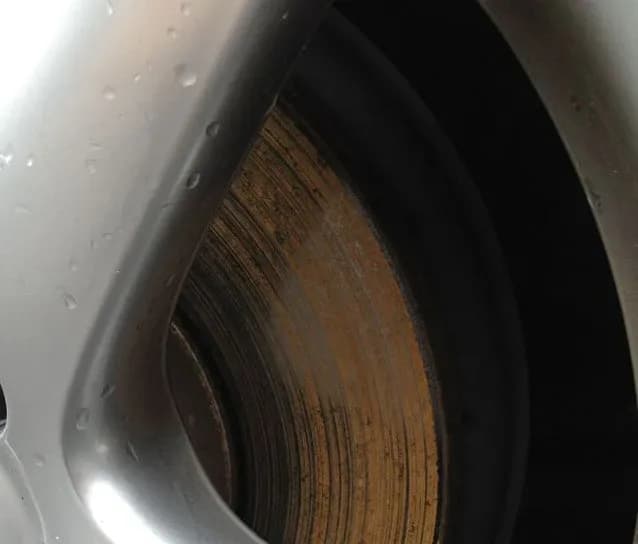
Also applies to
- Audi A3
- 2022–2023
- Audi A4
- 2021–2023
- Audi A4 allroad
- 2021
- Audi A5
- 2021–2023
- Audi A6
- 2021–2023
- Audi A6 allroad
- 2021
- Audi A7
- 2021–2023
- Audi A7 e
- 2021–2022
- Audi A8 L e
- 2021
- Audi e-tron
- 2021–2022
- Audi e-tron GT
- 2022–2023
- Audi Q3
- 2021–2023
- Audi Q5
- 2021
- Audi Q7
- 2021–2023
- Audi Q8
- 2021–2023
- Audi R8
- 2021–2023
- Audi RS 3
- 2023
- Audi RS 5
- 2021–2023
- Audi RS 6 Avant
- 2021–2023
- Audi RS 7
- 2021–2023
- Audi RS e-tron GT
- 2022–2023
- Audi RS Q8
- 2021–2023
- Audi S3
- 2022–2023
- Audi S4
- 2021–2023
- Audi S5
- 2021–2023
- Audi S6
- 2021–2023
- Audi S7
- 2021–2023
- Audi S8
- 2021, 2023
- Audi SQ5
- 2021–2023
- Audi SQ7
- 2021–2023
- Audi SQ8
- 2021–2022
- Audi TT
- 2021–2023
- Audi TT RS
- 2021–2022
- Audi TTS
- 2021–2023
▸ Show 28 more▾ Show fewer
Owners of 2022-2023 Audi models, including the Audi e-tron, may experience various types of brake noise. Audi Technical Service Bulletin (TSB) 2034181/22, issued on August 11, 2022, provides comprehensive guidance for diagnosing and addressing these concerns. This bulletin supersedes an earlier version, Group 46 number 22-32, dated June 3, 2022.
Symptoms
Customers may report hearing brake noise from either the front or rear brakes. This Audi e-tron brake noise can manifest in several ways:
- "squealing"
- "squeaking"
- "grinding"
- "groaning"
- "thumping"
- "creaking"
Important Warnings
Audi advises technicians and owners of critical information regarding this TSB:
- DO NOT use this TSB if there is another brake noise TSB specifically applicable to your vehicle's VIN. Always refer to the Audi Brake systems brochure for additional information.
- DO NOT alter the brake pads when performing the cleaning procedure outlined in this bulletin.
Technical Background: Causes of Brake Noise
Brake noise, including the Audi e-tron brake noise, can stem from several common issues. The TSB identifies the following primary causes:
- Wear Limit: Brake discs or pads are nearing or have reached their wear limit.
- Improper Embedding: New brake pads and/or discs were not properly embedded after installation.
- Aftermarket Parts: Installation of non-OEM aftermarket pads or discs.
- Debris: Presence of debris, such as small stones, grit, road salt, or sand, between the brake disc and brake pad.
- Rust on Discs: Discs are covered with rust, which can form if the vehicle has been parked for an extended period, especially in wet conditions (as shown in Figure 1 of the TSB).
- Grooved Discs: The brake discs have developed grooves (illustrated in Figure 2 of the TSB).
- Chemical Contamination: Chemical contamination on the braking surface, often from wheel or tire cleaner being sprayed directly onto the brake disc (Figures 3 and 4 of the TSB).
- Pad Marks: "Pad marks" on the brake disc due to brake pad material transferring to the discs. This can occur when the vehicle is parked for long periods in wet or snowy environments (Figure 5 of the TSB).
Diagnosis and Repair Procedure Summary
To address the Audi e-tron brake noise, technicians should follow a structured diagnostic and repair process:
- Check Brake Condition: First, assess the overall condition of the brakes to determine if the noise is caused by one of the issues listed in the technical background. If the noise is not attributed to these causes, proceed to the next steps.
- Locate Noise: Pinpoint the exact location of the brake noise (e.g., left front, front axle, rear axle). An assistant listening from inside or outside the vehicle may be necessary for accurate identification.
- Record Sound and Questionnaire: Obtain a sound or video recording of the noise. Sound recordings should ideally be made using the Audi analysis app (refer to TSB 2051095: 46 Audi frequency analysis). Recordings submitted by customers are also acceptable. Fill out the accompanying questionnaire with as much detail as possible.
- Clean Brake Pads and Discs: This is a multi-step process:
- ABS Stops: Perform up to 5 ABS stops from speeds above 50 mph, allowing brake components to cool for over a minute at speeds greater than 50 mph between each stop.
- Cool Down: Allow the vehicle to sit for two hours to cool down completely.
- Manual Cleaning: Manually clean all brake components, removing dust from springs, retaining clips, pistons, calipers, and pins. Clean all contact points between pads/clips/caliper and apply the correct lubrication paste (refer to ELSA for specific application details).
- Test Drive: Test drive the vehicle again. If the noise persists, open a Technical Assistance Center (TAC) ticket, including the completed Brakes Acoustic Questionnaire, sound/video recordings, and a frequency analysis screenshot (Figure 6 of the TSB).
Known Brake Noise Frequencies and Repair Suggestions
The TSB also provides specific repair suggestions based on the brake system type and the frequency of the noise. This information serves as a reference, and technicians should always consult the ELSA Repair Manual for vehicle-specific repair details.
- Brake system ATE-TEVES (PR codes: 1LF, 1LG, 1LL, 1ZK, 1LJ, 1LP):
- 1.6 KHz from front brakes: Inspect front pads.
- 3.2 KHz/11 KHz from front brakes: Inspect front discs and pads.
- Brake system TRW (PR codes: 1LA, 1LB, 1LD, 1LT, 1ZT, 1LJ):
- 1.6 KHz to 1.7 KHz from front brakes: Inspect front discs.
- 3.2 KHz from front brakes: Inspect, clean, and lubricate guide pins in the caliper carrier using anti-seize paste G052560A2.
- 7.8 KHz from front brakes: Inspect front pads.
Required Tools or Parts
For specific repair steps, the TSB mentions:
- Anti-seize paste G052560A2 for lubricating guide pins in TRW brake systems.
Warranty Information
This TSB outlines warranty claim procedures for addressing Audi e-tron brake noise:
- Claim Type: Applicable for vehicles up to 12 months/12,000 miles. If the vehicle is outside warranty, this TSB is for informational purposes only.
- Service Number: 4617
- Damage Code: 0020
- Labor Operations: Cleaning brake pads and discs (4617 8099, 50 TU). This includes road tests, audio file submission, and questionnaire completion.
- Diagnostic Time: GFF (No allowance, 0 TU), Road test prior to service (No allowance, 0 TU), Road test after service (No allowance, 0 TU).
- Claim Comment: As per TSB 2034181/22.
All warranty claims must adhere to the Audi Warranty Policies and Procedures Manual and are subject to review.
Additional Information
Two other Technical Service Bulletins may be necessary to complete this procedure:
- TSB 2022584: 46 Brake pulsation diagnostic guidelines.
- TSB 2051095: 46 Audi frequency analysis.
Gallery
9 images
Frequently Asked Questions
- What types of brake noise does Audi TSB 2034181/22 address?
- Audi TSB 2034181/22 addresses various brake noises such as squealing, squeaking, grinding, groaning, thumping, and creaking, particularly for 2022-2023 Audi models including the Audi e-tron.
- What are the common causes of Audi brake noise according to this TSB?
- Common causes include brake discs or pads being near their wear limit, improper embedding of new pads/discs, aftermarket parts, debris, rust on discs, grooved discs, chemical contamination, and 'pad marks' from material transfer.
- Is there a specific repair for my Audi e-tron brake noise if it's a high-frequency sound?
- Yes, for specific brake system types like ATE-TEVES or TRW, the TSB provides repair suggestions based on noise frequency. For example, a 3.2 KHz noise from TRW front brakes might require cleaning and lubricating guide pins with anti-seize paste G052560A2.
- Can I perform the brake noise diagnosis myself?
- While the TSB outlines diagnostic steps, it is intended for trained technicians. It involves specific procedures like ABS stops, manual cleaning, and using specialized tools like the Audi analysis app for sound recording. It's recommended to visit an authorized Audi service center.
- What should I do if my Audi's brakes are making noise?
- If your 2022-2023 Audi is experiencing brake noise, it's best to contact an authorized Audi service center. They can diagnose the issue using TSB 2034181/22 and perform the appropriate cleaning or repair procedures to resolve the Audi e-tron brake noise.
Related Articles
Should 2023 Audi e-tron Owners Worry? Recall & TSB Roundup
The 2023 Audi e-tron faces significant safety concerns, including recalls for potential brake pedal detachment and charging cable overheating. Owners have also reported serious issues like unintended acceleration and electrical system malfunctions. This guide covers all known problems and solutions.
2023 Audi e-tron Brake Pedal Recall
Audi has issued a recall (NHTSA ID: 26V240000, Audi Recall 46P7) for certain 2019-2024 E-Tron and 2020-2024 E-Tron Sportback vehicles, including the 2023 Audi e-tron. The recall addresses a potential issue where the brake pedal may detach from the brake booster, leading to a loss of brake function.
2015-2027 Audi Noise Diagnosis with Frequency Analysis App TSB
Audi has released Technical Service Bulletin 2051095/11 detailing the Audi Frequency Analysis app. This app helps technicians diagnose noise complaints more precisely across 2015-2027 Audi models. Learn how the app works, where to download it, and its features for effective vehicle noise analysis.
2023 Audi e-tron AC/DC Charging Not Possible TSB
This manufacturer communication (NHTSA ID 11031035) provides critical information for 2023 Audi e-tron owners facing issues with AC/DC charging. It specifically highlights problems linked to software version 00C6: 0093/3119, which can prevent the vehicle from charging.
2023-2025 Audi Rear Seat Reminder Message TSB 2074943/2
Audi Technical Service Bulletin 2074943/2 explains the instrument cluster message 'Please check rear seats and be aware of door safelock' in various 2023-2025 Audi models. This informational TSB details the rear occupant detection system designed to prevent children and pets from being left in…
Leave a comment
Comments are moderated and may take a moment to appear. Only your first name and the initial of your last name are shown publicly.
Comments
Be the first to comment.