2022-2023 Audi Vehicles Instrument Cluster Noise TSB
Audi has released TSB 2059335/3 to address noises originating from the instrument cluster area in 2022-2023 models. This bulletin details how technicians should diagnose and resolve vibrations from dash components that cause perceived noise.
 Ahmet Topcu2022 Audi e-tron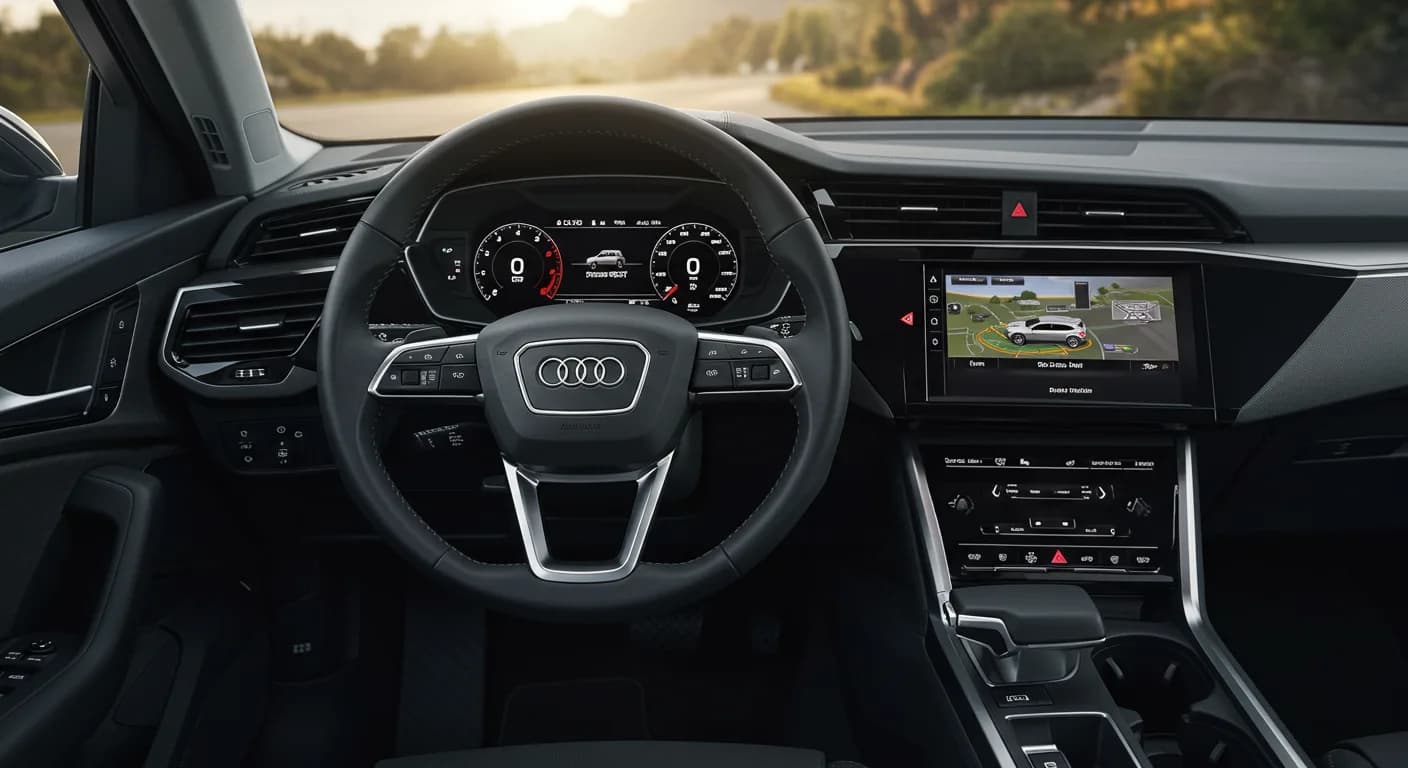
Also applies to
- Audi A3
- 2022–2023
- Audi A4
- 2021–2023
- Audi A4 allroad
- 2021
- Audi A5
- 2021–2023
- Audi A6
- 2021–2023
- Audi A6 allroad
- 2021
- Audi A7
- 2021–2023
- Audi A7 e
- 2021–2022
- Audi A8 L e
- 2021
- Audi e-tron
- 2021, 2023
- Audi e-tron GT
- 2022–2023
- Audi Q3
- 2021–2023
- Audi Q5
- 2021
- Audi Q7
- 2021–2023
- Audi Q8
- 2021–2023
- Audi R8
- 2021–2023
- Audi RS 3
- 2023
- Audi RS 5
- 2021–2023
- Audi RS 6 Avant
- 2021–2023
- Audi RS 7
- 2021–2023
- Audi RS e-tron GT
- 2022–2023
- Audi RS Q8
- 2021–2023
- Audi S3
- 2022–2023
- Audi S4
- 2021–2023
- Audi S5
- 2021–2023
- Audi S6
- 2021–2023
- Audi S7
- 2021–2023
- Audi S8
- 2021, 2023
- Audi SQ5
- 2021–2023
- Audi SQ7
- 2021–2023
- Audi SQ8
- 2021–2022
- Audi TT
- 2021–2023
- Audi TT RS
- 2021–2022
- Audi TTS
- 2021–2023
▸ Show 28 more▾ Show fewer
Symptoms
Owners of 2022-2023 Audi vehicles may experience a specific symptom: "Noises from the installation area of the instrument cluster." This typically manifests as rattling, buzzing, or other unwanted sounds that seem to originate from the dashboard area directly around the instrument cluster.
Diagnosis and Trigger Conditions
According to Audi Technical Service Bulletin 90 22 58 2059335/3, the perceived Audi instrument cluster noise is often not due to the instrument cluster itself. Instead, various components within the dash panel can resonate with vibrations from the engine or road surface. These components include air ducts, vents, control module holders, MMI screen, interior trims, covers, wiring harnesses, and cable guides. When these parts have relative movement or are loose, they can create sounds that appear to come from the instrument cluster.
Repair Procedure Summary
To address the Audi instrument cluster noise, technicians should follow a specific diagnostic and repair process:
- Initial Assessment: The first step is to determine if the noise genuinely originates from the instrument cluster itself. This is crucial to avoid unnecessary parts replacement.
- Instrument Cluster Inspection: The technician will remove the instrument cluster and gently shake it in all directions. During this process, they will listen carefully for any unusual noises. If no abnormal sounds are detected from the removed cluster, it should not be replaced.
- Dash Panel Inspection and Repair: If the instrument cluster itself is not the source of the noise, the focus shifts to the surrounding dash panel area. Technicians will thoroughly inspect for any loose bolts, brackets, cables, or other components that may be vibrating. Any identified loose parts must be secured, fastened, felt-taped, or replaced as necessary to eliminate the source of the Audi instrument cluster noise.
Important Warnings
Owners and technicians should note the following critical points from the TSB:
- "If you cannot hear any unusual noise, the instrument cluster must not be replaced." This prevents unnecessary part costs and ensures the correct problem is addressed.
- "Claims for replaced parts will be subject to review." This emphasizes the importance of accurate diagnosis before replacing components.
Warranty Information
This Technical Service Bulletin outlines specific warranty claim procedures. The applicable Claim Type is 110, covering vehicles up to 48 months or 50,000 miles. If a vehicle is outside this warranty period, the TSB serves as informational guidance only.
For service, technicians should use the service number of the casual part. The instrument cluster's service number should only be used if it is confirmed to be the casual part. The Damage Code associated with this issue is 0020.
Labor operations involved include:
- Removing and installing the instrument cluster (9025 19XX).
- Checking the instrument cluster (9025 0199, 10 TU).
- Checking the dash panel (7018 0199, 10 TU).
- Diagnostic Time (GFF, 0150 0000).
- Road tests before (0121 0002, 10 TU) and after (0121 0004, 10 TU) the service procedure.
All claims should include the comment "As per TSB 2059335/3."
Owner Action
If you are experiencing an Audi instrument cluster noise in your 2022-2023 Audi vehicle, it is recommended to schedule an appointment with an authorized Audi service center. Describe the noise to your technician, mentioning that it seems to come from the instrument cluster area. Referencing Technical Service Bulletin 90 22 58 2059335/3 (which supersedes 21-98) can help ensure your service center is aware of the latest diagnostic and repair procedures for this specific issue.
Source: NHTSA ID: 10210527
Frequently Asked Questions
- What is Audi TSB 2059335/3 about?
- Audi Technical Service Bulletin 2059335/3 addresses customer complaints of "Noises from the installation area of the instrument cluster" in 2022-2023 Audi vehicles. It provides diagnostic and repair steps for technicians.
- What causes the Audi instrument cluster noise?
- The noise is typically caused by vibrations from various dash panel components, such as air ducts, MMI screens, or wiring harnesses, which resonate with engine or road vibrations. The instrument cluster itself is often not the source of the noise.
- Will my Audi instrument cluster be replaced to fix the noise?
- Not necessarily. The TSB explicitly states that if the instrument cluster does not make unusual noise when removed and shaken, it should not be replaced. The repair focuses on identifying and securing loose or vibrating components within the surrounding dash panel.
- What is Damage Code 0020 related to in this TSB?
- Damage Code 0020 is the specific code used for warranty claims related to the "Noises from the installation area of the instrument cluster" issue described in TSB 2059335/3.
Related Articles
2022 Audi e-tron Problems: Electrical System & Braking Concerns
The 2022 Audi e-tron has faced significant owner complaints regarding its electrical system, including sudden power loss and charging hazards, as well as various braking malfunctions. This profile details these issues and relevant service bulletins.
2022-2026 Audi Guided Fault Finding Reporting Obligation
Audi has issued Technical Service Bulletin TPI 2033392, also known as Transaction No. 2081531/1, regarding a reporting obligation for technicians when Guided Fault Finding produces an unexpected result. This TSB outlines the process for contacting Audi Product Support for diagnostic assistance.
2022-2026 Audi Infotainment System Complaints
Audi has released Technical Service Bulletin (TSB) 2081405/1 to address various customer complaints regarding infotainment systems in 2022-2026 Audi vehicles. This TSB helps technicians diagnose issues often caused by external media or mobile devices, rather than vehicle technology.
2018-2026 Audi Models Cracking Noise TSB 2061464/11
Audi Technical Service Bulletin 2061464/11 describes a cracking noise from the front or rear axle when changing direction in various 2018-2026 Audi models. The issue is due to stub axle movement and is resolved by bonding the stub axle to the wheel bearing with locking fluid.
2022-2026 Audi Parking Aid False Warnings TSB 2024323/13
Audi has released Technical Service Bulletin 2024323/13 to address customer complaints of false parking aid warnings. This bulletin details various environmental and vehicle-specific conditions that can cause the parking aid system to issue alerts even when no obstacles are present. It provides…
Leave a comment
Comments are moderated and may take a moment to appear. Only your first name and the initial of your last name are shown publicly.
Comments
Be the first to comment.