2021-2023 Audi Models Creaking Brakes at Standstill TSB
Audi Technical Service Bulletin 46 21 25 2054385/2 addresses creaking noises from brakes at low speeds or when coming to a standstill in 2021-2023 Audi models. The TSB explains this is due to a 'stick-slip effect' and is considered a normal operating characteristic.
 Ahmet Topcu2023 Audi e-tron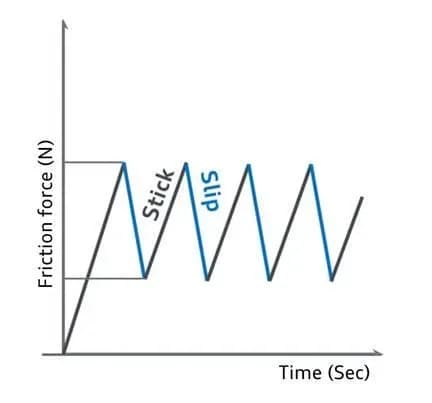
Also applies to
- Audi A4
- 2021–2023
- Audi A5
- 2021–2023
- Audi A6
- 2021–2023
- Audi A7
- 2021
- Audi e-tron
- 2021–2022
- Audi Q3
- 2021–2022
- Audi Q5
- 2021
- Audi Q7
- 2021–2022
- Audi Q8
- 2021–2022
- Audi RS 5
- 2021
- Audi RS 7
- 2021–2022
- Audi RS Q8
- 2021–2022
- Audi S4
- 2021–2022
- Audi S5
- 2021–2022
- Audi S6
- 2021–2022
- Audi S7
- 2021–2022
- Audi S8
- 2021–2022
- Audi SQ5
- 2021–2022
- Audi SQ7
- 2021–2022
- Audi SQ8
- 2021–2022
- Audi TT
- 2021
- Audi TT RS
- 2021–2022
- Audi TTS
- 2021
▸ Show 17 more▾ Show fewer
Symptoms
Owners of 2021-2023 Audi models may notice specific brake noises under certain conditions. The primary symptom described in the Technical Service Bulletin (TSB) is:
- "Creaking noises when braking at almost standstill"
- These noises can also occur when "crawling when pulling away" or "briefly before standstill."
If you experience an Audi creaking brakes standstill issue, this TSB provides an explanation.
Diagnosis and Trigger Conditions
This TSB, identified as 46 21 25 2054385/2, describes the cause of the creaking noise as the "stick-slip effect." This effect is a physical phenomenon that occurs when two objects move against each other, characterized by an undesired, jerky, and pulsating slip.
Specifically, the stick-slip effect happens when the static friction between the brake components is significantly greater than the dynamic friction. This leads to a cycle where the brake pads momentarily stick to the rotor, then slip, creating vibrations. These vibrations are then transmitted through the suspension to the vehicle's body, where they are perceived as creaking noises.
The Audi creaking brakes standstill condition is particularly common when braking very slowly, especially in vehicles equipped with an automatic gearbox, just before the vehicle comes to a complete stop or when moving slowly from a standstill. While it can affect any Audi vehicle, it may be more noticeable in models with high-performance brakes, such as the SQ5, S4, S5, S6, S7, and e-tron.
What Owners Should Know
It is important for owners to understand that this creaking noise, resulting from the stick-slip effect, is considered a normal operating characteristic by Audi. The TSB clarifies that this phenomenon does not indicate a defect and does not reduce the vehicle's braking performance.
This Technical Service Bulletin is informational only. It serves to explain the cause of the noise and is not a directive for a repair or a warranty claim. Therefore, if you experience Audi creaking brakes standstill, it is generally not a cause for concern regarding safety or brake function.
Important Warnings
Audi explicitly states that this TSB is for informational purposes only:
- "This TSB is informational only and not applicable to any Audi Warranty."
This means that the creaking noise, while explained, is not considered a warrantable condition for repair. Owners should not expect a free repair under warranty for this specific noise.
Superseded Bulletin
This bulletin, 46 21 25 2054385/2, supersedes Technical Service Bulletin Group 46 number 19-09 dated March 21, 2019. The update includes revised header information and added model years to the scope.
NHTSA ID
10187575
Frequently Asked Questions
- What causes the creaking noise when my Audi brakes at a standstill?
- The creaking noise is caused by a physical phenomenon known as the "stick-slip effect." This occurs when static friction is significantly higher than dynamic friction, leading to vibrations that are perceived as noise during slow braking or when pulling away from a standstill.
- Is the Audi creaking brakes standstill noise a sign of a problem with my brakes?
- No, according to Audi Technical Service Bulletin 46 21 25 2054385/2, this creaking noise is considered a normal operating characteristic and does not indicate a defect or reduce the braking performance of your vehicle.
- Will Audi cover the repair for creaking brakes under warranty?
- Audi states that this TSB is informational only and not applicable to any Audi Warranty. This means that the creaking noise due to the stick-slip effect is not considered a warrantable condition for repair.
- Which Audi models are affected by the creaking brakes at standstill issue?
- This informational TSB applies to various 2021-2023 Audi models, including the e-tron, SQ5, S4, S5, S6, and S7, among others. While more noticeable in high-performance brakes, it can be present in all vehicles.
Related Articles
Should 2023 Audi e-tron Owners Worry? Recall & TSB Roundup
The 2023 Audi e-tron faces significant safety concerns, including recalls for potential brake pedal detachment and charging cable overheating. Owners have also reported serious issues like unintended acceleration and electrical system malfunctions. This guide covers all known problems and solutions.
2023 Audi e-tron Brake Pedal Recall
Audi has issued a recall (NHTSA ID: 26V240000, Audi Recall 46P7) for certain 2019-2024 E-Tron and 2020-2024 E-Tron Sportback vehicles, including the 2023 Audi e-tron. The recall addresses a potential issue where the brake pedal may detach from the brake booster, leading to a loss of brake function.
2015-2027 Audi Noise Diagnosis with Frequency Analysis App TSB
Audi has released Technical Service Bulletin 2051095/11 detailing the Audi Frequency Analysis app. This app helps technicians diagnose noise complaints more precisely across 2015-2027 Audi models. Learn how the app works, where to download it, and its features for effective vehicle noise analysis.
2023 Audi e-tron AC/DC Charging Not Possible TSB
This manufacturer communication (NHTSA ID 11031035) provides critical information for 2023 Audi e-tron owners facing issues with AC/DC charging. It specifically highlights problems linked to software version 00C6: 0093/3119, which can prevent the vehicle from charging.
2023-2025 Audi Rear Seat Reminder Message TSB 2074943/2
Audi Technical Service Bulletin 2074943/2 explains the instrument cluster message 'Please check rear seats and be aware of door safelock' in various 2023-2025 Audi models. This informational TSB details the rear occupant detection system designed to prevent children and pets from being left in…
Leave a comment
Comments are moderated and may take a moment to appear. Only your first name and the initial of your last name are shown publicly.
Comments
Be the first to comment.