2025-2026 Audi Rear Lid Malfunction TSB 2080913/3
Audi has issued Technical Service Bulletin 2080913/3 for 2025-2026 A5, S5, Q5, SQ5, A6, S6, Q6, and SQ6 models experiencing issues with the rear lid not opening or closing fully due to software version 0231.
 Ahmet Topcu2026 Audi A6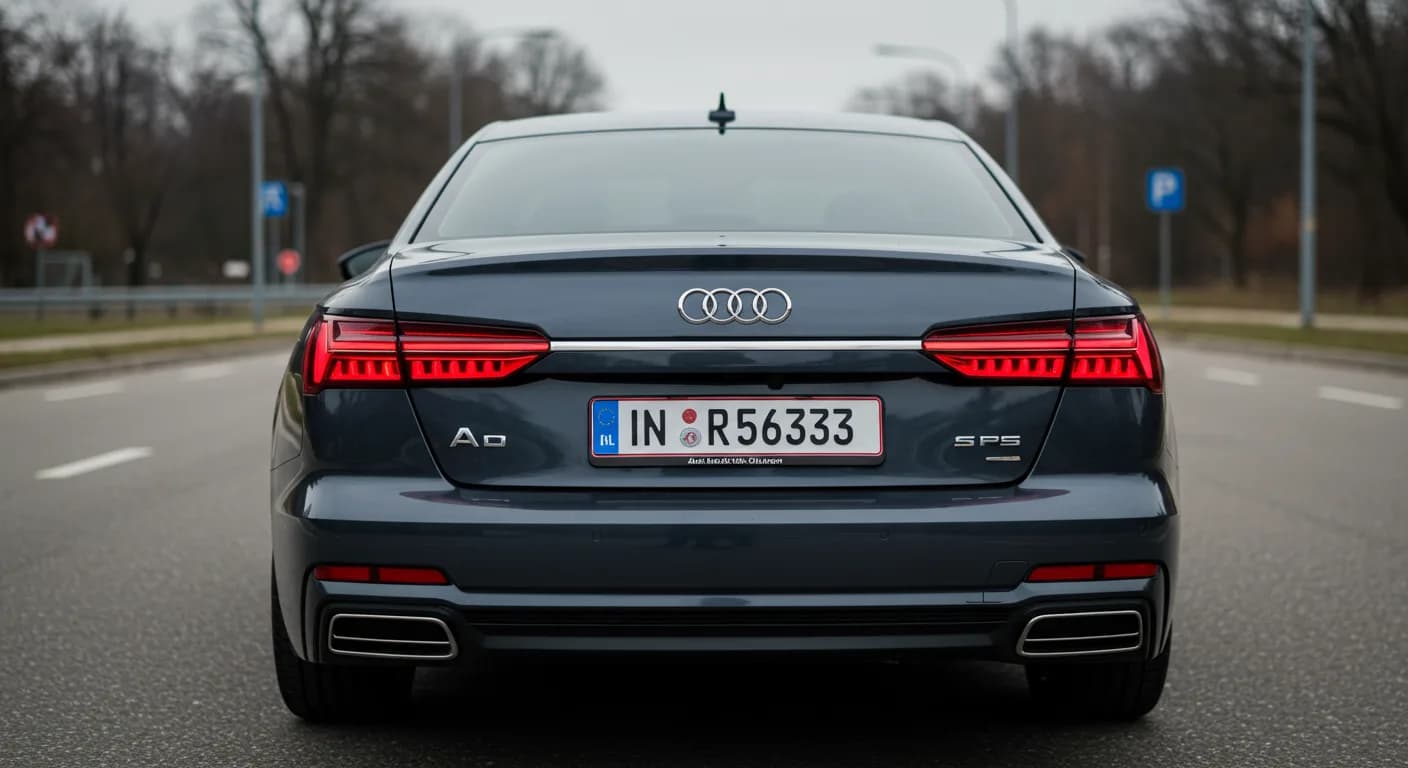
Also applies to
- Audi A5
- 2025–2026
- Audi Q5
- 2025–2026
- Audi S5
- 2025–2026
- Audi SQ5
- 2025–2026
Owners of certain 2025-2026 Audi models may experience an Audi rear lid malfunction, where the power tailgate fails to operate correctly. This issue is detailed in Technical Service Bulletin (TSB) 2080913/3, which identifies software version 0231 in the convenience system central module (diagnostic address 0046) as a contributing factor. The TSB outlines specific steps for diagnosis and repair to ensure the rear lid functions as intended.
Symptoms of an Audi Rear Lid Malfunction
Owners typically notice the following issues with their vehicle's rear lid:
- "The rear lid does not open as normal - it does not open fully."
- "It closes into the lock at full speed without the power latching system activating."
- "The rear lid does not close as normal and opens again."
These symptoms suggest an Audi rear lid malfunction that can be inconvenient and potentially impact the security of the vehicle's cargo area.
Diagnosis and Trigger Conditions
Workshop technicians have found that the complaint occurs occasionally and often without any specific event memory entries or fault codes stored in the system. A key finding is the presence of software version 0231 at diagnostic address 0046, which corresponds to the convenience system central module. This module is responsible for controlling various comfort functions, including the operation of the rear lid.
According to the TSB, the control unit may detect excessive force and stop the rear lid's movement, or in some cases, it might lose track of the rear lid's exact position. This can lead to the erratic behavior observed by owners.
Important Warnings for Owners
Audi has issued several critical notices regarding the repair procedure for this Audi rear lid malfunction:
- NOTICE: "It is imperative to reset initialization of the rear lid and then adapt it again. If this is not performed, the parameters logged in the control unit no longer match the preload of the rear lid and a repeat repair may be required."
- NOTICE: "It is essential not to hinder or stop the movement of the rear lid under any circumstances. This would interrupt the initialization process."
- CAUTION: "Anti-trapping protection is NOT active for the entire duration of the initialization process. Make sure that there is no risk of trapping you or other people at any time."
These warnings highlight the importance of professional service and caution during the repair process, particularly regarding safety during initialization.
Repair Procedure Summary
The repair for the Audi rear lid malfunction involves a two-step process that must be performed by a qualified technician:
- Check Mechanical Setting of Rear Lid: Technicians must first verify the precise fit of the rear lid and ensure the permissible buffer forces (40N - 60N) are met. This involves consulting the workshop manual for
Frequently Asked Questions
- What is the Audi TSB 2080913/3 about?
- Audi Technical Service Bulletin 2080913/3 addresses issues where the rear lid on certain 2025-2026 Audi models does not open or close fully, often due to software version 0231 in the convenience system central module.
- What are the common symptoms of this Audi rear lid malfunction?
- Owners may experience the rear lid not opening fully, closing too fast without latching, or failing to close properly and opening again. These are all indicators of an Audi rear lid malfunction.
- Is there a specific software version related to the Audi rear lid malfunction?
- Yes, workshop findings indicate that software version 0231 at diagnostic address 0046 (convenience system central module) is often associated with this issue.
- What should I do if my Audi's rear lid is not working correctly?
- You should take your vehicle to an authorized Audi dealership. They will perform a mechanical check and a software initialization using the "0046 - Rear lid electronics - basic setting" function, as outlined in TSB 2080913/3.
- Is this repair covered under warranty?
- The TSB states that if the vehicle is outside of any warranty, this information is for informational purposes only, implying it would typically be covered under warranty if applicable. It's best to confirm with your Audi dealer.
Related Articles
2025-2026 Audi Drive System Fault DTC P119A00 P119B00
Audi has issued Technical Service Bulletin 2081542/1 for 2025-2026 A6, S5, and SQ5 models experiencing a 'Drive system fault' and storing DTCs P119A00 or P119B00. This is a known software issue, and a solution is anticipated by Q2 2026. Owners are advised against component replacement.
2025-2026 Audi Rear Lid Malfunction TSB 2081508/1
Audi has released Technical Service Bulletin (TSB) 2081508/1, a Pending Service Solution (PSS 55), concerning a rear lid malfunction in certain 2025-2026 Audi A5, S5, Q5, SQ5, and A6 models. Owners may experience the rear lid not opening or closing fully, or closing too quickly. This TSB outlines…
2025-2026 Audi Software Update 03.11.00/C Overview
Audi TSB 2081477/1 details the planned introduction dates for the combined software update 03.11.00/C PPE/PPC KD2 for various 2025-2026 Audi models. This informational bulletin outlines new software versions and affected platforms.
2025-2026 Audi Radiator Fan Fault P1A7B00 TSB
Audi has released Technical Service Bulletin 2081427/1 to address a check engine light (MIL) and unusual radiator fan behavior, often accompanied by DTC P1A7B00, in certain 2025-2026 A5, S5, Q5, SQ5, and 2026 A6 models. The fix involves configuring the HCP4 control unit.
2025-2026 Audi Time Changes Automatically While Driving
Audi has issued Technical Service Bulletin 2081404/1 addressing a software issue in 2025-2026 A5, Q5, and A6 models where the vehicle's clock automatically changes by an hour while driving. This TSB explains that a permanent fix is expected by late 2026, and no component replacement is needed.
Leave a comment
Comments are moderated and may take a moment to appear. Only your first name and the initial of your last name are shown publicly.
Comments
Be the first to comment.