2024 Audi Q5 e Warning Message TSB for DTC B200000
If your 2024 Audi Q5 e displays a warning message on the instrument cluster and logs DTC B200000, Audi Technical Service Bulletin 2074344/1 provides a temporary workaround and advises against component replacement while a permanent software solution is developed.
 Marcus Weber2024 Audi Q5 e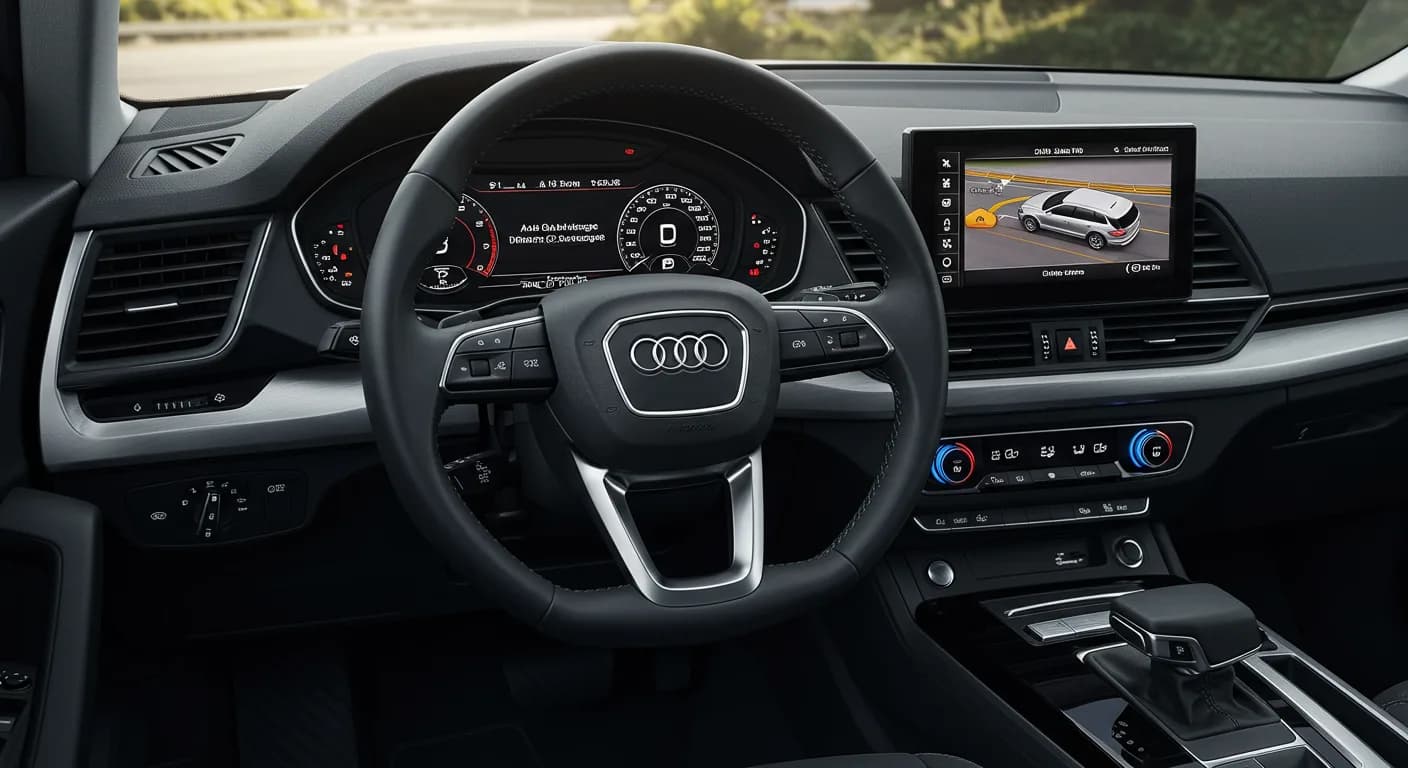
Owners of the 2024 Audi Q5 e quattro may encounter a 2024 Audi Q5 e warning message displayed on their instrument cluster. This issue is addressed by Audi Technical Service Bulletin (TSB) 01 24 26 2074344/1, also referred to as 93 PSS HV Charger. The TSB confirms that a solution is actively being developed to resolve this concern.
This bulletin, dated June 21, 2024, provides guidance for dealerships on how to manage customer inquiries regarding this specific warning message. It outlines an interim workaround and emphasizes that no physical repairs or component replacements are needed at this time.
Symptoms
The primary symptom reported by owners is a warning message on the instrument cluster. This message indicates a potential issue within the vehicle's system. If you see a 2024 Audi Q5 e warning message, it is important to have your vehicle diagnosed by an authorized Audi service center.
Fault Codes / DTCs
When a technician investigates the instrument cluster warning, they will typically find a specific Diagnostic Trouble Code (DTC) logged. The TSB identifies the following:
- DTC B200000: Control module faulty (symptom 1049088) active/static. This DTC is found in the High Voltage Battery Charger control module -J1050-, specifically at address word 006C.
This fault code points to an internal issue within the battery charger control unit, which triggers the 2024 Audi Q5 e warning message.
Important Warnings for Owners
Audi has issued critical advisories regarding this condition:
- "No repairs are necessary at this point. Do not replace any components for this condition since this will not resolve the customer's concern."
- "Replacing parts or performing other procedures then specified in this PSS will not fix this complaint. Replaced parts and associated labor cost will be debited!"
These warnings mean that owners should not authorize any component replacements, such as the High Voltage Battery Charger control module, to address this specific warning message. Such actions will not fix the problem and may result in unnecessary costs. Audi is actively working on a software-based solution, expected to be available by Calendar Week 31/24.
Interim Solution and Workaround
Until the permanent software update is released, Audi has provided a temporary workaround for the 2024 Audi Q5 e warning message. If the TSB 2074344/1 applies to your vehicle, technicians are instructed to:
- Delete the DTC: The diagnostic trouble code B200000 in the High Voltage Battery Charger control module -J1050- should be deleted. Specific instructions for this procedure are provided in an attachment titled "q5instructions.pdf" for technicians.
- Adjust Charging Procedure: Owners must be informed to use a specific procedure when charging their vehicle with the Universal Charging Cable (ULK) until the new software is available. This involves:
- When charging on 110V, set the ULK to charge at 50% power. This can be done by long-pressing the button above the Audi rings on the ULK.
- When charging on 220V, 100% charge power can be selected.
- Public Level 2 charging infrastructure is not affected by this workaround, as these systems will always charge at 220V.
Dealerships are also required to create a PSS record in the PSS application via AccessAudi to track instances of this issue.
Warranty Information
Warranty claims related to this TSB should be processed under specific guidelines. The Service Number for this issue is 9352, and the Damage Code is 039. Diagnostic time for GFF procedures includes codes 0150 0010 and 0150 0060. Road tests prior to service procedures are not allowed any labor time (0 TU). Warranty coverage applies to vehicles up to 48 months or 50,000 miles, and for CPO (Certified Pre-Owned) vehicles under G10. If the vehicle is outside of warranty, this Technical Service Bulletin serves as informational guidance only.
Source: NHTSA ID 11002995
Bu TSB'nin diğer revizyonları
- 2021-2025 Audi Emergency Call System Fault TSBB200000
- 2022-2025 Audi e-tron Emergency Call System Fault TSBB200000
- 2023-2026 Audi Emergency Call System Fault B200000 TSBB200000
- 2022-2026 Audi Emergency Call System Fault TSBB200000
- 2020-2026 Audi Emergency Call Fault B200000B200000
- 2021-2026 Audi Emergency Call System Fault TSB 2059528/14B200000
- 2021-2026 Audi Emergency Call System Fault B200000B200000
- 2024-2025 Audi A5 Steering Warning Lamp TSBB200000
Related Articles
2024-2025 Audi Q5 e 12V Battery Discharge TSB 2074126/5
Audi has issued Technical Service Bulletin 2074126/5 for 2024-2025 Q5 e models, addressing 12V battery discharge caused by high-voltage charging unit bus wake-ups. This bulletin describes symptoms and a temporary workaround while a permanent solution is developed.
2024-2025 Audi Q5 e Engine Warning Lamp TSB 2080142/1
Audi has issued Technical Service Bulletin 2080142/1 for 2024-2025 Audi Q5 e PHEV vehicles, addressing an engine warning lamp (MIL) illumination caused by a software issue affecting the refrigerant pressure sensor. This can lead to various diagnostic trouble codes (DTCs), including P2CD400…
2021-2025 Audi Q5/A7 e Gearbox Malfunction TSB 2070965/5
Owners of 2021-2025 Audi Q5 e and A7 e vehicles may experience a "Gearbox malfunction message" and DTC P288200. Audi Technical Service Bulletin 2070965/5 outlines a software update for the transmission control module to resolve excessive engine disconnect clutch slippage.
2024-2025 Audi Q5 e 12V Battery Discharge TSB 2074126/4
Audi has released Technical Service Bulletin (TSB) 2074126/4 for 2024-2025 Q5 e models addressing a 12V battery discharge issue. This occurs due to bus wake-ups by the high-voltage charging unit. Owners may experience a discharged battery after the vehicle has been stationary or during…
2021-2025 Audi PHEV Exhaust Emissions Warning Lamp TSB
Audi TSB 2079117/1 addresses the exhaust emissions warning lamp (MIL) activating in 2021-2025 Audi A7, A8, and Q5 PHEV models. This can be triggered by specific refrigerant pressure sensor fault codes (P053100, P0EBF00, P251600, P0EC400, P1C5E00) due to a software issue, often without an actual…
Yorum bırakın
Yorumlar moderasyondan geçer ve görünmesi biraz zaman alabilir. Sadece adınız ve soyadınızın baş harfi herkese açık olarak gösterilir.
Yorumlar
İlk yorum sizden olsun.