2021-2022 Hyundai Transaxle Solenoid DTCs P074100-P270900
Hyundai TSB 22-AT-005H provides diagnostic and repair procedures for automatic transaxle solenoid DTCs including P074100, P074300, P074800, P075300, P075800, P076300, P076800, P077300, and P270900. These codes typically trigger a 'Check Engine' light and require solenoid and valve body harness…
 David Chen2022 Hyundai Tucson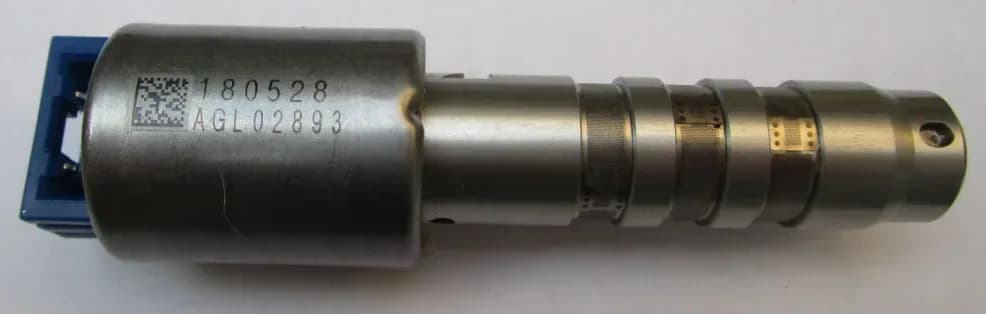
Também se aplica a
- Hyundai Palisade
- 2021–2022
- Hyundai Santa Cruz
- 2022
- Hyundai Santa Fe
- 2021–2022
- Hyundai Sonata
- 2021–2022
Hyundai has issued Technical Service Bulletin (TSB) 22-AT-005H to address issues with automatic transaxle solenoid diagnostic trouble codes (DTCs) that can illuminate the "Check Engine" light. This bulletin, which supersedes TSB 20-AT-005H-1, provides a comprehensive repair procedure for various Hyundai models from 2021-2022 experiencing these specific transmission-related faults. If you own a 2021-2022 Hyundai Tucson experiencing a transaxle solenoid DTC, this information is crucial.
Symptoms of Automatic Transaxle Solenoid DTCs
Owners of affected vehicles will typically notice a "Check Engine" light illuminated on their dashboard. This warning light indicates that the vehicle's powertrain control module (PCM) or transmission control unit (TCU) has detected a fault within the automatic transaxle system, specifically related to the solenoids.
Affected Fault Codes (DTCs)
TSB 22-AT-005H specifically covers a range of automatic transaxle solenoid DTCs. These codes indicate various issues with the torque converter clutch and shift solenoids within the transmission.
| DTC | Part / Description |
|---|---|
| P074100 | Torque converter clutch system |
| P074300 | Torque converter clutch circuit |
| P074800 | Pressure control solenoid (PC) |
| P075300 | Shift solenoid A (UD) |
| P075800 | Shift solenoid B (46) |
| P076300 | Shift solenoid C (37R) |
| P076800 | Shift solenoid D (OD&LR) |
| P077300 | Shift solenoid E (28) |
| P270900 | Shift solenoid F (SSA) |
Diagnosis and Trigger Conditions
When a "Check Engine" light appears with one of the listed DTCs, technicians will use a Global Diagnostic System (GDS) tool. The diagnostic process involves:
- DTC Analysis: Recording and deleting the DTCs to see if they reappear.
- Data Analysis: Monitoring solenoid parameters via the GDS. If solenoids show continuous and changing output while driving, the wiring is likely fine, and the issue points to the solenoid itself. If there's no continuous output, a wiring inspection is necessary.
- Wiring Inspection: A visual check of the wiring harness between the PCM/TCU and the transmission for any damage, open/short circuits, or improperly seated pins. If damage is found, the harness is repaired or replaced.
Repair Procedure Summary
The repair procedure outlined in TSB 22-AT-005H involves replacing the faulty transaxle solenoid and potentially the valve body internal harness. This is a multi-step process that requires specialized tools and expertise.
- Preparation: Disconnect the battery and remove the battery tray.
- Access Transmission: Lift the vehicle, remove the undercover, and drain the Automatic Transmission Fluid (ATF).
- Disassembly: Remove the transmission oil pan (using a rubber hammer if needed) and disconnect the internal harness and detent spring.
- Valve Body Removal: Remove the valve body, ensuring it is placed on a clean surface to prevent contamination.
- Solenoid and Harness Replacement:
- Disconnect the old harness from the input speed sensor and install a new valve body internal harness (Part Number 46307-4G***).
- Record the 8-digit code from the solenoid being replaced.
- Replace the specific solenoid corresponding to the diagnosed DTC. Different solenoids (e.g., 28, 46, 37R, UD, OD&LR vs. SSA, TC, PC) have slightly different removal and installation steps involving supports and bolts.
- Reassembly:
- Install the valve body, aligning the manual shaft. Torque bolts to 7-9 lb.ft (1.0-1.2 kgf.m/10-12 N.m).
- Reinstall the detent spring, torquing to 8-11 lb.ft (1.2-1.5 kgf.m/10-13 N.m).
- Reconnect the harness to the solenoids and install the temperature sensor, torquing bolts to 7-9 lb.ft (1.0-1.2 kgf.m/10-12 N.m).
- Install a new plastic oil pan gasket (Part Number 45283-4G***) and reinstall the oil pan, torquing bolts to 8-10 lb.ft (1.2-1.4 kgf.m/12-13 N.m).
- Reinstall the lower radiator hose and refill the radiator with ethylene glycol engine coolant.
- Fluid Refill: Add 5-6 quarts of SP4-M ATF through the transaxle fill plug. Check the fluid level with the engine running and the shift lever in "P" when the ATF temperature is 122-140°F (50-60°C).
- GDS Programming: For specific solenoids (UD, 37R, OD&LR, 28, and 46), perform the "Solenoid Oil Pressure Data Characteristics Input" procedure using the GDS. This involves inputting the 8-digit code from the new solenoid.
- Final Test: Clear DTCs and test drive the vehicle for two key-on/key-off driving cycles, including various upshifts and downshifts, to confirm proper transmission operation and ensure no DTCs return. This confirms the repair for the Hyundai Tucson transaxle solenoid DTC.
Required Parts
The TSB specifies various parts depending on the specific DTC. Technicians should refer to the Parts Information table and the PNC (Part Number Code) in the parts catalog to order the correct solenoid part number.
| Model | DTC | Part | PNC | Part Number |
|---|---|---|---|---|
| 2018~19 Sonata (LFa) 2.0T | P074100 | Torque converter clutch system | 46202A | 46313-3B*** |
| P074300 | Torque converter clutch circuit | 46202A | 46313-3B*** | |
| 2020~Sonata (DN8) 1.6T/2.5L | P074800 | Pressure control solenoid (PC) | 46313A | 46313-3B*** |
| 2019~ Santa Fe (TMa) 2.0T/2.4L | P075300 | Shift solenoid A (UD) | 46313B | 46313-4G*** |
| 2020~ Palisade (LX2) 3.8L | P075800 | Shift solenoid B (46) | 46313C | 46313-4G*** |
| 2022~ Santa Cruz (NXT) 2.5L | P076300 | Shift solenoid C (37R) | 46313C | 46313-4G*** |
| 2022~ Tucson (NX4/NX4a) 2.5L | P076800 | Shift solenoid D (OD&LR) | 46313B | 46313-3B*** |
| P077300 | Shift solenoid E (28) | 46313C | 46313-4G*** | |
| P270900 | Shift control solenoid valve F (SSA) | 46313D | 46313-3B*** | |
| ALL | Valve body internal harness | 46307 | 46307-4G*** | |
| Plastic oil pan gasket | 45282E | 45283-4G*** |
Warranty Information
This repair is typically covered under Hyundai's normal warranty. The specific operation codes for warranty claims are 45775R00, 45775R8M, 45775R8L, and 45775RQ0. The causal part is identified as 13A, with cause code ZZ3.
Important Warnings
- Valve Body Handling: When removing the valve body, place it on a clean paper towel. Placing it on a rag may introduce lint, which can contaminate the valve body.
- Solenoid Oil Pressure Data Characteristics Input: This specific GDS procedure is only required for UD, 37R, OD&LR, 28, and 46 solenoids after replacement.
Source: NHTSA ID: 10211671, TSB #: 22-AT-005H
Galeria
17 imagens
Frequently Asked Questions
- What does Hyundai TSB 22-AT-005H address?
- Hyundai TSB 22-AT-005H provides diagnostic and repair instructions for automatic transaxle solenoid diagnostic trouble codes (DTCs) that cause the 'Check Engine' light to illuminate in certain 2021-2022 Hyundai vehicles.
- What are the common symptoms of these transaxle solenoid DTCs?
- The primary symptom is the illumination of the 'Check Engine' light on the dashboard, indicating a fault within the automatic transaxle system related to its solenoids.
- Which specific DTCs are covered by this TSB?
- This TSB covers a range of DTCs including P074100 (Torque converter clutch system), P074300 (Torque converter clutch circuit), P074800 (Pressure control solenoid), P075300 (Shift solenoid A), P075800 (Shift solenoid B), P076300 (Shift solenoid C), P076800 (Shift solenoid D), P077300 (Shift solenoid E), and P270900 (Shift solenoid F).
- What is the repair for a Hyundai Tucson transaxle solenoid DTC?
- The repair involves diagnosing the specific faulty solenoid using a GDS tool, then replacing the affected transaxle solenoid and potentially the valve body internal harness. After replacement, a 'Solenoid Oil Pressure Data Characteristics Input' procedure is performed using the GDS, followed by a test drive.
- Is this transaxle solenoid repair covered under warranty?
- Yes, this repair is typically covered under Hyundai's normal warranty, with specific operation codes (e.g., 45775R8M) designated for warranty claims.
Outras revisões deste TSB
- 2018-2024 Hyundai Tucson Transaxle Solenoid DTCsP074100, P074300, P074800
- 2021-2023 Hyundai Automatic Transaxle Solenoid DTC TSBP074100, P074300, P074800
Related Articles
2021-2024 Hyundai Santa Fe / Tucson DTC U028700 EOP
Hyundai has issued Technical Service Bulletin (TSB) 26-AT-002H for certain 2021-2024 Santa Fe and Tucson vehicles. This TSB addresses diagnostic trouble code U028700, indicating a "Lost Communication With Trans Fluid Pump Module," which can cause the Idle Stop & Go (ISG) system to become…
2022 Hyundai Tucson Inoperable Horn Warranty Extension
Hyundai has issued a warranty extension for certain 2022 Tucson (NX4A) vehicles experiencing an inoperable horn. This issue, detailed in TSB 26-BE-004H, is caused by foreign substances oxidizing internal horn parts. Coverage is extended to 10 years/120,000 miles.
2022 Hyundai Tucson Inoperative Horn TSB 26-BE-004H
Hyundai has issued Technical Service Bulletin 26-BE-004H for certain 2022 Tucson (NX4A) vehicles experiencing an inoperative horn. This TSB extends warranty coverage to 10 years/120,000 miles for horn replacement due to internal oxidation from foreign substances.
2021-2022 Hyundai Anti-Theft Ignition Cylinder Protector TSB
Hyundai has issued Technical Service Bulletin 25-01-089H (Customer Satisfaction Campaign P33) to address vehicle theft concerns by installing an anti-theft ignition cylinder protector and anti-theft decals on various 2021-2022 models.
2021-2022 Hyundai Anti-Theft Ignition Cylinder Protector Campaign P33
Hyundai has launched Customer Satisfaction Campaign P33 for 2021-2022 models, offering a free anti-theft ignition cylinder protector and decals. This hardware upgrade, detailed in TSB 25-01-089H, is available upon customer request to counter social media theft methods.
Leave a comment
Comments are moderated and may take a moment to appear. Only your first name and the initial of your last name are shown publicly.
Comments
Be the first to comment.