2021-2023 Hyundai Automatic Transaxle Solenoid DTC TSB
Hyundai Technical Service Bulletin 23-AT-003H details the diagnosis and repair for automatic transaxle solenoid Diagnostic Trouble Codes (DTCs) such as P074100, P074300, P074800, P075300, P075800, P076300, P076800, P077300, and P270900. This TSB applies to various 2021-2023 Hyundai models equipped…
 David Chen2023 Hyundai Tucson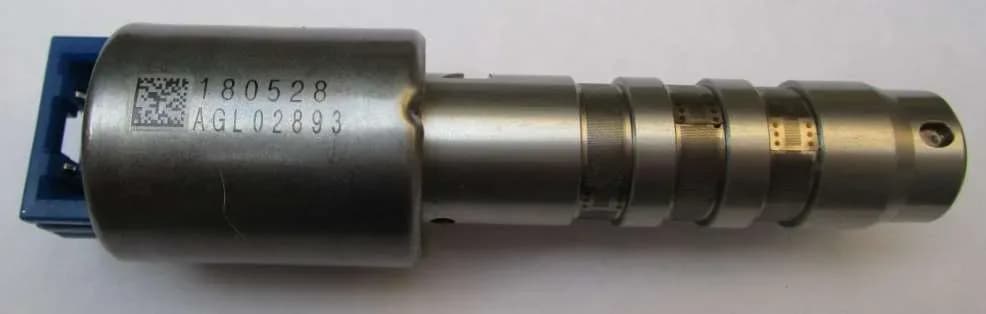
Also applies to
- Hyundai Palisade
- 2021–2023
- Hyundai Santa Cruz
- 2022–2023
- Hyundai Santa Fe
- 2021–2023
- Hyundai Sonata
- 2021–2023
- Hyundai Tucson
- 2022
Owners of certain 2021-2023 Hyundai vehicles equipped with an 8-speed automatic transaxle may experience a "Check Engine" light illuminating on the dashboard. This condition is often accompanied by specific Diagnostic Trouble Codes (DTCs) related to the automatic transaxle solenoids. Hyundai has issued TSB 23-AT-003H to address this issue, providing a detailed procedure for diagnosis and repair.
This TSB supersedes TSB 22-AT-005H, adding specific operation codes for the Santa Fe (TMa) 2.5L and revising codes for the Santa Fe (TMa) 2.0T/2.4L models. The primary action for resolving the Hyundai Tucson automatic transaxle solenoid DTC is to replace the faulty solenoid and its associated harness.
Symptoms
The most common symptom indicating this issue is the illumination of the "Check Engine" light on the instrument cluster. This light signals that the vehicle's engine control unit (ECU) or powertrain control module (PCM) has detected a fault within the automatic transaxle system.
Fault Codes / DTCs
Technicians may find one or more of the following DTCs stored in the vehicle's system, indicating a Hyundai Tucson automatic transaxle solenoid DTC or similar issue in other models:
| DTC | Description | Component |
|---|---|---|
| P074100 | Torque converter clutch system | Torque converter clutch |
| P074300 | Torque converter clutch circuit | Torque converter clutch |
| P074800 | Pressure control solenoid (PC) | Pressure control solenoid |
| P075300 | Shift solenoid A (UD) | Shift solenoid A (UD) |
| P075800 | Shift solenoid B (46) | Shift solenoid B (46) |
| P076300 | Shift solenoid C (37R) | Shift solenoid C (37R) |
| P076800 | Shift solenoid D (OD&LR) | Shift solenoid D (OD&LR) |
| P077300 | Shift solenoid E (28) | Shift solenoid E (28) |
| P270900 | Shift control solenoid valve F (SSA) | Shift control solenoid valve F (SSA) |
Diagnosis and Trigger Conditions
Diagnosis begins by connecting a GDS (Global Diagnostic System) tool to the vehicle to retrieve and record any stored DTCs. After clearing the DTCs, technicians will use the GDS to perform a Data Analysis on the automatic transaxle solenoid parameters. If the solenoids do not show continuous and changing output while driving, it indicates a potential internal fault requiring further investigation.
A visual inspection of the wiring harness between the PCM/TCU and the transmission is crucial. Technicians will check for any damaged wires, open/short circuits, or improperly seated pins in the connectors. If wiring damage is found, it must be repaired before proceeding.
Repair Procedure Summary
The repair procedure outlined in TSB 23-AT-003H involves several steps, focusing on replacing the faulty solenoid and the valve body internal harness. The process can be summarized as follows:
Initial Preparation and Disassembly
- Record radio station presets and disconnect the vehicle's battery.
- Remove the undercover from beneath the transmission and lift the vehicle.
- If necessary for access, drain the radiator and automatic transmission fluid (ATF), then remove the lower radiator hose.
- Disconnect the main harness from the transmission and remove the oil pan vent hose.
- Remove the 14 oil pan bolts and carefully detach the oil pan, using a rubber hammer if needed to loosen it.
- Remove the bolts securing the internal harness and the oil temperature sensor, then move the harness aside.
- Remove the bolt and spring for the detent mechanism.
Valve Body and Solenoid Replacement
- Remove the 9 valve body bolts, working from the outermost to the innermost, and carefully remove the valve body. Important Warning: Place the valve body on a clean paper towel to prevent lint from entering the delicate components.
- Disconnect the old internal harness from the input speed sensor, remove it, and install the new valve body internal harness (Part Number 46307-4G***).
- Identify the specific solenoid(s) corresponding to the recorded DTCs.
- Replace the identified solenoid(s). For solenoids 28, 46, 37R, UD, and OD&LR, remove two support bolts, use a magnet to remove the pin, replace the solenoid, and reinstall. For SSA, TC, and PC solenoids, use a 5mm hex socket to remove three Allen bolts securing the support, replace the solenoid, and reinstall.
- Confirm that the O-rings are correctly installed.
Reassembly, Fluid Fill, and Programming
- Align the manual shaft and reinstall the valve body, securing it with the 9 bolts (innermost to outermost).
- Reinstall the detent spring and its bolt.
- Reconnect the new internal harness to the solenoids and the oil temperature sensor, securing them with bolts.
- Install a new oil pan gasket (Part Number 45283-4G***) and reinstall the oil pan, securing it with 14 bolts.
- Reinstall the lower radiator hose and refill the radiator with ethylene glycol engine coolant.
- Refill the transaxle with approximately 5-6 quarts of SP4-M ATF through the fill plug. Use the GDS to monitor the ATF temperature, ensuring it reaches 122-140°F (50-60°C) before checking the fluid level at the level checking plug.
- Reconnect the battery and input the radio stations previously recorded.
Final Steps and Verification
- Clear all DTCs from the system.
- Perform a test drive involving two key-on/key-off driving cycles, including a full range of upshifts and downshifts, to confirm proper transmission operation.
- If any DTCs return after the test drive, further action is required:
- For P074100 or P074300, the transmission may need to be replaced.
- For other solenoid DTCs (P074800, P075300, P075800, P076300, P076800, P077300, P270900), if the new harness does not resolve the issue, the PCM or TCU may need replacement.
- Perform the Solenoid Oil Pressure Data Characteristics Input procedure using the GDS, selecting the appropriate solenoid type and inputting the 8-digit code recorded from the new solenoid.
- Conduct another test drive to confirm correct shifting and the absence of any new DTCs.
Required Tools or Parts
- GDS (Global Diagnostic System) Tool: Essential for diagnosis, DTC clearing, data analysis, and solenoid programming.
- Valve Body Internal Harness: Part Number 46307-4G***
- Oil Pan Gasket: Part Number 45282E (or 45283-4G***)
- Automatic Transmission Fluid (ATF): SP4-M type, approximately 5-6 quarts.
- Specific Solenoids: Part numbers vary depending on the DTC:
- Torque converter clutch solenoids (P074100, P074300): PNC 46202A, Part Number 46313-3B***
- Pressure control solenoid (P074800): PNC 46313A, Part Number 46313-3B***
- Shift solenoid A (UD) (P075300): PNC 46313B, Part Number 46313-4G***
- Shift solenoid B (46) (P075800): PNC 46313C, Part Number 46313-4G***
- Shift solenoid C (37R) (P076300): PNC 46313C, Part Number 46313-4G***
- Shift solenoid D (OD&LR) (P076800): PNC 46313B, Part Number 46313-3B***
- Shift solenoid E (28) (P077300): PNC 46313C, Part Number 46313-4G***
- Shift control solenoid valve F (SSA) (P270900): PNC 46313D, Part Number 46313-3B***
Important Warnings
- When handling the valve body, always place it on a clean paper towel. Do not use a rag, as lint could contaminate the sensitive components.
- Note that all listed vehicles have a PCM (integrated ECU/TCU) except the Sonata (DN8a), which features separate ECU and TCU units.
Owner Action
If your 2021-2023 Hyundai vehicle displays a "Check Engine" light and you suspect a Hyundai Tucson automatic transaxle solenoid DTC or similar issue, it is recommended to schedule an appointment with an authorized Hyundai service center. They have the necessary diagnostic tools and trained technicians to perform the procedures outlined in TSB 23-AT-003H.
Source: NHTSA ID: 10235340
Gallery
17 images
Frequently Asked Questions
- What does a Hyundai automatic transaxle solenoid DTC mean?
- A Diagnostic Trouble Code (DTC) related to the automatic transaxle solenoid, such as P074100 or P075300, indicates that the vehicle's computer has detected an electrical or performance issue with one of the solenoids responsible for controlling fluid flow within the automatic transmission. This can affect shifting performance and trigger the "Check Engine" light.
- Which Hyundai models are affected by TSB 23-AT-003H?
- Hyundai TSB 23-AT-003H applies to various 2021-2023 Hyundai models equipped with an 8-speed automatic transaxle, including the Sonata, Santa Fe, Palisade, Santa Cruz, and Tucson. Specifically, the TSB addresses issues in models like the 2022 Hyundai Tucson automatic transaxle solenoid DTC.
- Is TSB 23-AT-003H a recall?
- No, TSB 23-AT-003H is a Technical Service Bulletin, not a recall. TSBs provide repair procedures for common issues that technicians might encounter, but they are not safety recalls mandated by the manufacturer or NHTSA. Repairs under a TSB may be covered by warranty, depending on the vehicle's age and mileage.
- What is the repair for a Hyundai automatic transaxle solenoid DTC?
- The repair typically involves replacing the specific faulty automatic transaxle solenoid and the valve body internal harness. This procedure requires draining the transmission fluid, removing the oil pan and valve body, replacing the components, refilling the fluid, and then performing a solenoid oil pressure data characteristics input using a diagnostic tool.
Other revisions of this TSB
- 2018-2024 Hyundai Tucson Transaxle Solenoid DTCsP074100, P074300, P074800
- 2021-2022 Hyundai Transaxle Solenoid DTCs P074100-P270900P074100, P074300, P074800
Related Articles
Should 2023 Hyundai Tucson Owners Worry? Fire Risk & TSBs
The 2023 Hyundai Tucson faces a significant fire risk recall (NHTSA ID 23V526000) related to its Idle Stop & Go oil pump. Additionally, owners may encounter various issues addressed by service bulletins, including engine misfires, Check Engine Light warnings, Bluelink connectivity problems, and…
2022-2023 Hyundai Tucson Check Engine Light DTC P218100
Hyundai has issued Technical Service Bulletin 26-EM-004H for 2022-2023 Tucson (NX4, NX4A) vehicles experiencing a Check Engine Light due to DTCs P218100, P2181F0, or P2181F1. The fix involves replacing the Integrated Thermal Management (ITM) module and updating the Engine Control Module (ECM) and…
2021-2023 Hyundai Misfire DTCs TSB 26-FL-001H
Hyundai Technical Service Bulletin 26-FL-001H addresses engine misfire diagnostic trouble codes (DTCs) P0300, P0301, P0302, P0303, and P0304 in certain 2021-2023 Hyundai Santa Fe, Santa Cruz, Sonata, and Tucson vehicles. The issue stems from internally leaking GDI fuel injectors.
2022-2024 Hyundai Santa Cruz / Tucson Manual Speed Limit Assist
This communication explains the Manual Speed Limit Assist (MSLA) feature in 2022-2024 Hyundai Santa Cruz and Tucson vehicles, detailing its function, activation, and how it helps drivers maintain speed limits.
2021-2025 Hyundai Bluelink Connectivity AVN Pinhole Reset
Hyundai has issued Service Campaign 25-01-024H to address a loss of Bluelink connectivity or interruptions in service functions. This issue, often linked to Verizon's network, is resolved by performing an AVN pinhole reset.
Leave a comment
Comments are moderated and may take a moment to appear. Only your first name and the initial of your last name are shown publicly.
Comments
Be the first to comment.