2012-2022 Audi Vehicles Steering Wheel Vibration TSB
This Technical Service Bulletin (TSB) 2022563/19 from Audi addresses customer complaints of steering wheel shimmy, vibration, and oscillation in 2012-2022 Audi vehicles. It details diagnostic steps and repair procedures for issues stemming from tire radial force variation.
 Ahmet Topcu2021 Audi e-tron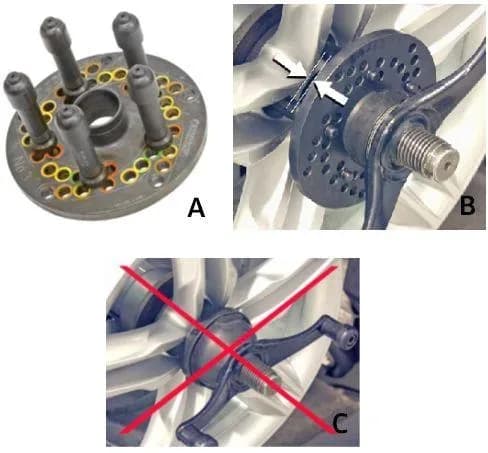
Também se aplica a
- Audi A4
- 2021–2022
- Audi A5
- 2021–2022
- Audi A6
- 2021–2022
- Audi A7
- 2021
- Audi e-tron
- 2022
- Audi Q3
- 2021–2022
- Audi Q5
- 2021
- Audi Q7
- 2021–2022
- Audi Q8
- 2021–2022
- Audi R8
- 2021
- Audi RS 5
- 2021
- Audi RS 7
- 2021–2022
- Audi RS Q8
- 2021–2022
- Audi S4
- 2021–2022
- Audi S5
- 2021–2022
- Audi S6
- 2021–2022
- Audi S7
- 2021–2022
- Audi S8
- 2021–2022
- Audi SQ5
- 2021–2022
- Audi SQ7
- 2021–2022
- Audi SQ8
- 2021–2022
- Audi TT
- 2021
- Audi TT RS
- 2021
- Audi TTS
- 2021
▸ Mostrar mais 18▾ Mostrar menos
Owners of 2012-2022 Audi vehicles may experience a noticeable steering wheel vibration, shimmy, or oscillation, particularly when driving at highway speeds between 55–80 mph (88–128 km/h). This condition can also manifest as a vibration felt in the seat, vehicle floor, footwell, or pedals.
This Technical Service Bulletin (TSB) 2022563/19, released on February 9, 2021, supersedes an earlier bulletin, Group 44 number 19-71 dated November 12, 2019. The TSB was revised to update the header (adding model year) and warranty information (updating labor operations). The TSB clarifies that while the vibration is noticeable, it does not lead to handling concerns or loss of vehicle control.
Important Warnings
- This bulletin is not applicable if your vehicle has a Repair Authorization on this topic. If an applicable Repair Authorization is not followed, the warranty claim will not be paid.
- For all warranty vibration repairs, a completed Tire Data Sheet and Hunter RFV printouts must be retained for warranty claim payment. Failure to do so will result in non-payment of the claim.
- Flat spots on tires are not a sign of a defect and therefore are not a warrantable condition.
Symptoms
Owners typically report the following symptoms related to the Audi steering wheel vibration:
- Vibration in the seat, vehicle floor, footwell, pedals, or steering wheel.
- Vibration while driving at highway speeds, specifically between 55–80 mph (88–128 km/h).
Technical Background
The root cause of the vibrations is often attributed to harmonic vibrations. These are primarily caused by the radial force variation (RFV) of the tires or an imbalance within the wheel and tire assembly. Tire Radial Force Variation (RFV), also known as tire uniformity, occurs when the tire's stiffness is not uniform around its circumference. As the tire rotates, this non-uniformity creates a varied force on the axle, leading to vibrations.
Common causes of wheel-related and tire-related vibrations include:
| Vibration Description | Possible Cause |
|---|---|
| Vibration felt in the steering wheel while at a constant speed | Increased radial forces or imbalance on the front tires |
| Vibration in the entire vehicle | Increased or critical radial forces or imbalance on the rear tires and possible on the front tires |
It is important to inspect tires with higher mileage and/or wear to determine the best correction (repair or replacement). Tire life and condition should be assessed before any diagnosis or repair for a vibration.
Repair Procedure Summary
The repair process involves several steps to accurately diagnose and correct the Audi steering wheel vibration:
1. Prepare Tires for RFV Measurement
Temporary flat spots can falsify radial force fluctuation measurements. To eliminate them:
- Set all tire pressures according to the owner's manual (normal load vs. full load).
- Test drive the vehicle for at least 12-15 miles at various speeds (up to 62 mph). Some tires may require longer test drives.
- Immediately raise the vehicle on a lift/hoist after the test drive to check balance and RFV before the tires cool down again.
2. Measure RFV and Balance
- Ensure the contact surfaces of the tire balancer flange and wheel are clean.
- Use an appropriate centering collet (not a cone) and a five-finger style clamping plate to mount the wheel on the balancer. Audi-recommended collets can be ordered through Equipment Solutions (part number HUN2018451).
- An incorrect style of clamp could damage the wheel.
- Set the tire pressure of each wheel to 36 psi (2.5 bar) for all measurements.
- Perform a CenteringCheck® to ensure proper wheel mounting on the VAS 6230/Hunter GSP9700 Road Force Measurement® system.
- With the SmartWeight® feature turned on, measure the RFV and balance of the wheel/tire assembly. Do not use the "Quick Match” mode, as it does not measure radial force.
3. Optimize RFV and Balance
- If a tire needs to be repositioned (match-mounted), use adequate lubrication to properly seat the tire on the wheel. Insufficient lubricant can prevent proper seating, while excessive lubricant can cause the tire to slip.
- Correct the balance and, if necessary, reduce RFV by match-mounting each wheel. The first harmonic vibration should be 18 lbs (80N) or less. If it cannot be reduced, the tire should be replaced.
- After balancing and/or optimizing RFV, perform a “check-spin” to ensure balance values are consistent. If not, check machine calibration and wheel/tire assembly mounting.
4. Reinstall Wheel and Tire Assemblies
- Follow instructions in Elsa at Repair Manual, Chassis >> Wheels and Tire General Information >> 44 Wheels, Tires, Wheel Alignment >> Wheels/Tires/Tire Pressure Monitoring Assembly >> Wheel, Changing and Mounting.
- Install wheels according to VAS 6230 instructions for the lowest vibration. The wheel/tire assembly with the lowest road force values should be installed closest to the driver in the following order: Left front, Right front, Left rear, Right rear.
- Set all tire pressures according to the owner's manual.
- Test drive the vehicle at the speed where vibrations were felt to verify the condition is repaired.
5. Upload Documentation
- Upload a completed Tire Data Sheet (attached to the TSB) to Doc-IT.
6. Unresolved Vibration Concerns
- If the vibration cannot be resolved, open a TAC ticket and advise TAC that a completed Tire Data Sheet has been uploaded to the TAC case.
Required Tools and Parts
To perform this repair, specific tools are necessary:
- VAS 6230/Hunter GSP9700 Road Force Measurement® System
- Audi-recommended collets (part number HUN2018451)
- VAS 6243 model-specific clamping plate (5-finger clamping device)
- Vetronix MTS 4100 NVH Analyzer (helpful for diagnosing vibration concerns)
Warranty Information
Warranty claims for this issue are processed under specific claim types:
- Before Delivery: Claim Type 910
- Up to 12 Months/12,000 Miles: Claim Type 110
- If the vehicle is outside any warranty, this Technical Service Bulletin is for informational purposes only.
Service Number: 4412 Damage Code: 0013
Labor Operations:
- Balance and radial force balance all 4 wheels: 4412 9999 (190 TU). This includes additional time for an extended road test prior to the service procedure. Documents listed in Step 5 must be uploaded for claim validation.
- 4 wheels, remove + reinstall: 4405 2004 (See SRT with associated operations).
Diagnostic Time:
- GFF: No allowance (0 TU)
- Road test prior to service procedure: 0121 0002 (10 TU)
- Road test after service procedure: 0121 0004 (10 TU)
Claim Comment: As per TSB #2022563/19.
All warranty claims must adhere to the Audi Warranty Policies and Procedures Manual and are subject to review or audit by Audi Warranty. Audi of America, Inc. does not warranty tires; individual tire manufacturers provide all underlying tire warranties.
Additional Information
Further information can be found in Elsa at:
- Wheel and Tire Guide >> Diagnosis and Testing
- Suspension, Wheels, Steering >> Wheel and Tire Guide >> 44 Wheels, Tires, Wheel Alignment >> Diagnosis and Testing >> Wheel and Tire Vibration >> Tire Flat Spots from Standing
- Chassis >> Wheels and Tire General Information >> 44 Wheels, Tires, Wheel Alignment >> Wheels/Tires/Tire Pressure Monitoring Assembly >> Wheel, Changing and Mounting
- SSP: Noise, Vibration, and Harshness 961403
This TSB references Chassis >> Wheel and Tire Guide >> Diagnosis and Testing as a necessary repair procedure. All parts and service references are subject to change, so always check with your Parts Department and/or ETKA for the latest information.
NHTSA ID: 10206168
Galeria
1 imagem
Frequently Asked Questions
- What causes the steering wheel vibration in my 2012-2022 Audi vehicle?
- The **Audi steering wheel vibration** is typically caused by harmonic vibrations resulting from radial force variation (RFV) in the tires or an imbalance in the wheel and tire assembly, as explained in TSB 2022563/19.
- Will a steering wheel vibration affect my Audi vehicle's handling?
- According to Audi TSB 2022563/19, while the vibration is noticeable, it does not lead to any handling concerns or loss of vehicle control for your Audi vehicle.
- What specialized tools are required to fix the Audi steering wheel vibration?
- Addressing the **Audi steering wheel vibration** requires specialized tools such as the VAS 6230/Hunter GSP9700 Road Force Measurement® System, Audi-recommended collets (part number HUN2018451), and a VAS 6243 model-specific clamping plate. A Vetronix MTS 4100 NVH Analyzer can also assist in diagnosis.
- Are flat spots on tires considered a defect under warranty for Audi vehicles?
- No, temporary flat spots on tires are not considered a defect and are not a warrantable condition. The TSB instructs technicians to eliminate temporary flat spots before performing RFV measurements and balancing to address the **Audi steering wheel vibration**.
- What are the warranty claim types for this vibration issue?
- For this **Audi steering wheel vibration** issue, warranty claims are typically filed as Claim Type 910 for vehicles before delivery, or Claim Type 110 for vehicles up to 12 months/12,000 miles. If the vehicle is outside these warranty periods, the bulletin serves as informational guidance.
Related Articles
2021 Audi e-tron Electrical Malfunction and Power Loss
A 2021 Audi e-tron owner reported a severe 'Electrical Malfunction' resulting in complete loss of power on the highway. The issue has persisted despite dealer attempts to fix it over five months, posing significant safety risks.
2021-2026 Audi UTR Troubleshooting & FAQs TSB 2081409/1
This Audi Technical Service Bulletin (TSB 2081409/1) provides comprehensive answers to frequently asked questions and troubleshooting steps for the Audi Universal Traffic Recorder (UTR) accessory, covering topics like SD card compatibility, video playback, Wi-Fi issues, and more.
2021-2025 Audi Emergency Call System Fault TSB
Audi has released Technical Service Bulletin 2059528/18 to address an "Emergency call function: malfunction! Function unavailable. Please contact service" warning, often accompanied by a red SOS LED and DTC B200000. This issue affects various 2021-2025 Audi models and is due to a software problem…
2021-2026 Audi Adaptive Light System Fault C12B3FA TSB
Audi has released Technical Service Bulletin 2054202/7 to address an intermittent 'Audi adaptive light: system fault' message and DTC C12B3FA in various 2021-2026 models. This TSB outlines diagnosis and resolution for driver assistance system malfunctions.
2021-2026 Audi Parking Aid False Warnings TSB 2024323/12
This Technical Service Bulletin (TSB 2024323/12) details diagnostic and repair procedures for 2021-2026 Audi vehicles experiencing false parking aid warnings. Learn about environmental factors, sensor checks, and proper installation to resolve issues like 'Parking aid does not work / warning is…
Leave a comment
Comments are moderated and may take a moment to appear. Only your first name and the initial of your last name are shown publicly.
Comments
Be the first to comment.