Audi Navigates Economic Headwinds, Debuts Q9 and A2 e-tron
Audi AG has reported a challenging financial performance for the first nine months of 2026, particularly in the third quarter, leading to an adjusted full-year forecast. Despite economic pressures, the company is moving forward with new model introductions, including the Audi Q9 and the fully…

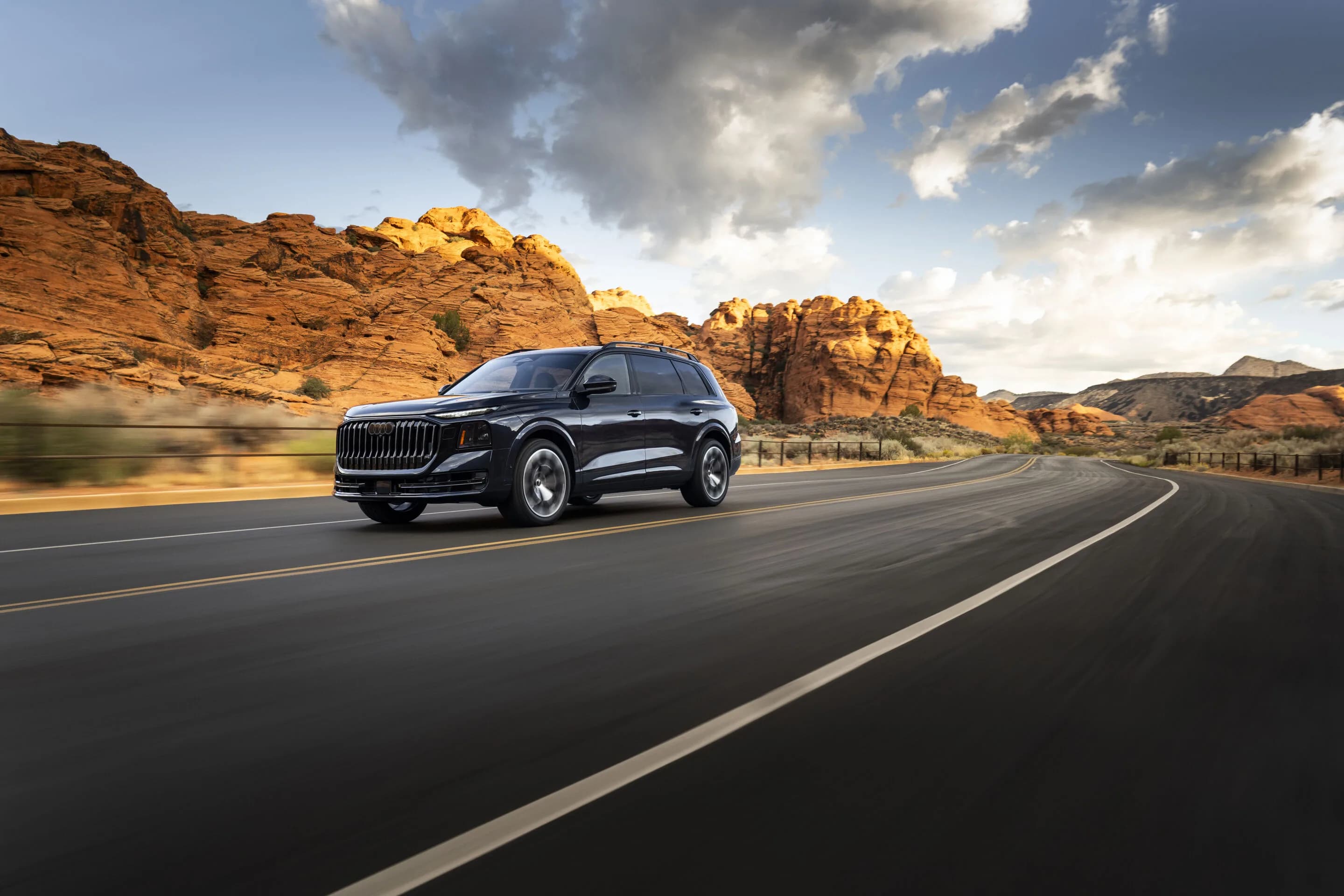
Audi AG experienced a difficult financial period during the first nine months of 2026, with its performance notably impacted in the third quarter. The company announced a decline in revenue and operating profit, prompting an adjustment to its full-year forecast. Despite these economic pressures, Audi is proceeding with significant product launches, including the new Audi Q9 and the fully electric Audi A2 e-tron, as part of its strategy to enhance competitiveness.
Financial Performance and Market Challenges
From January to September 2026, Audi Group's revenue reached 42.1 billion euros, a decrease from 48.4 billion euros in the same period of 2025. Operating profit fell to 1.2 billion euros from 1.6 billion euros, resulting in an operating margin of 2.7 percent, down from 3.2 percent. Worldwide deliveries for the Brand Group Progressive totaled 1,056,103 vehicles, a reduction from 1,191,141 units in the prior year.
The company attributed these results to a challenging economic environment, intensified competition, and a market slump in China, particularly for combustion engine vehicles. Additional factors included growing export pressure from Chinese manufacturers in Europe, the rapid expansion of electric mobility, and geopolitical uncertainties leading to increased energy costs and US tariffs. The ongoing transition of entry-level models, such as the Audi A1 and Q2 to the Audi A2 e-tron, also contributed to the impact.
For the full year 2026, Audi has revised its financial outlook, projecting revenue between 55 billion and 59 billion euros, an operating margin of 3 to 5 percent, and net cash flow of 2.5 billion to 3.5 billion euros.
Strategic Response and New Model Launches
In response to the market conditions, Audi is implementing measures focused on cost reduction, complexity streamlining, and efficiency improvements across its operations. The company is also making targeted investments in new products and future technologies, including software, artificial intelligence, and advanced driver assistance systems. This strategic approach aims to strengthen Audi's presence in key growth markets.
New models are central to Audi's renewal strategy. Order books for the Audi Q9, a new flagship SUV, are set to open in November, with its European market launch scheduled for early November. This model is particularly relevant for the US market. The fully electric Audi A2 e-tron, a compact model, will begin its market launch in Europe in December. Developed in Ingolstadt, the Audi A2 e-tron was brought to market 21 months faster than previous comparable models.
Audi is also reinforcing its performance segment with the new Audi RS 5, which is the brand's first RS plug-in hybrid. Production for the 2026 Audi RS 5, manufactured in Neckarsulm, is already sold out, with European orders nearly doubling initial expectations.
Global Market Focus and Future Outlook
Audi's strategy includes aligning new models with the preferences of its core markets. The Audi Q7 and the upcoming Audi Q9 are designed to strengthen the brand's position in the United States. Plans for local production in the US aim to establish a foundation for profitable growth in this important market. While Audi brand deliveries globally declined by 11.4 percent, plug-in hybrid models saw a worldwide increase of 103 percent.
Deliveries of fully electric vehicles (BEVs) globally decreased by 12 percent to 143,748 units. However, Germany and China showed significant growth in BEV deliveries, increasing by 39.1 percent and 84.7 percent respectively. North American BEV deliveries declined by 87.8 percent. Audi's focus remains on securing the future viability of its German production sites through ongoing dialogue with the Group Works Council to develop further measures for competitiveness and employment.
Despite the economic headwinds, Audi's continued investment in new models like the Audi Q9 and Audi A2 e-tron, alongside strategic efficiency measures, indicates a clear path forward for the brand and its customers. The adjusted forecasts reflect a realistic outlook as the company navigates a dynamic global automotive landscape.
Leave a comment
Comments are moderated and may take a moment to appear. Only your first name and the initial of your last name are shown publicly.
Comments
Be the first to comment.