2021-2022 Hyundai Elantra Coolant Leak TSB 21-01-048H
Hyundai TSB 21-01-048H addresses coolant leaks from the Water Temperature Sensor (WTS) in 2021-2022 Elantra vehicles. This is caused by machining burrs on the cylinder head mounting port. The repair involves inspecting for leaks, repairing the burr, and replacing the WTS.
 David Chen2021 Hyundai Elantra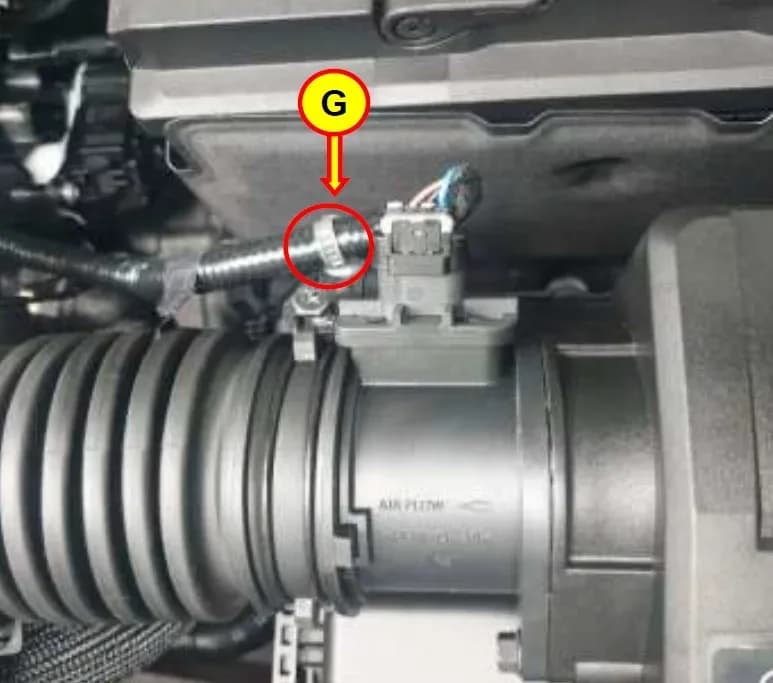
Si applica anche a
- Hyundai Elantra
- 2022
Hyundai has released Technical Service Bulletin (TSB) 21-01-048H, also known as Service Campaign T6Q, to address a potential coolant leak issue in certain 2021-2022 Elantra vehicles. This bulletin specifically targets models equipped with 2.0L Nu engines.
The TSB describes a condition where a coolant leak may occur at the Water Temperature Sensor (WTS). This leak is attributed to machining burrs present at the mounting port of the cylinder head, which can prevent the WTS from sealing correctly.
Symptoms
Owners of affected 2021-2022 Hyundai Elantra vehicles may notice signs of a coolant leak. The primary symptom is visible coolant residue around the Water Temperature Sensor (WTS) area. This area is located on the cylinder head, specifically near the mid-point between the intake manifold and intake hose.
Diagnosis / Trigger Conditions
To diagnose this issue, technicians will perform a visual inspection for coolant leak residue. The inspection focuses on the cylinder head and surrounding areas, particularly near the Water Temperature Sensor (WTS) and the lower end of the intake hose and intake manifold.
Important Warnings
Hyundai has issued several critical advisories related to this service campaign:
- "Do not replace the WTS if no leaks are found."
- "Do not order the WTS without confirming that a coolant leak is found during inspection."
- "Do not remove the intake manifold for inspection." (The intake manifold is only removed if a leak is confirmed and the repair procedure is initiated).
- "Be sure to turn the engine off and confirm that the cooling fan is off prior to performing the leak inspection."
- "Additional coolant may be drained when the WTS is removed."
- "Use shop air to remove any excess coolant from previous leaks in addition to the coolant that may have drained after the WTS was removed. Use a shop towel if necessary to wipe dry the WTS mounting hole for the next steps."
- "After the burr of the WTS O-ring sealing surface has been sanded away, use shop air to blow away the removed burr chips and sanding debris from the WTS mounting hole and its surrounding areas. Use a lint free shop towel to wipe clean the WTS mounting hole and any remaining coolant residue from the cylinder head and the cylinder block."
- "This is important to lubricate and prevent any pinching damage to the WTS O-ring seal during installation."
- "Be sure to connect the WTS to the engine wiring harness during the reassembly."
- "Low coolant level and/or improper air bleeding of the cooling system may results in poor engine cooling, improper HVAC system performance, and abnormal noise from the cooling system."
Repair Procedure Summary
If a coolant leak is confirmed, the repair involves a multi-step process to correct the machining burrs and replace the Water Temperature Sensor (WTS). The procedure includes:
- Preparation: The vehicle's front is covered for protection, the ignition is turned off, and the battery's negative terminal is disconnected. Radio presets are recorded before battery disconnection.
- Disassembly: Various components are removed or loosened to gain access. This includes the wiring holder/protector, engine under cover, and the upper mounting bolt of the intake manifold bracket. The intake hose, PCSV hose, and injector connectors are disconnected. The engine wiring connector and harness clamp are separated from the intake manifold, which is then removed.
- WTS Removal & Area Preparation: A drain pan is placed underneath the vehicle to collect coolant. The WTS connector is disconnected, and the WTS is removed from its mounting hole. Any existing coolant is cleared using shop air and a lint-free towel.
- Burr Repair: A piece of 400 grit sandpaper, wrapped around a Phillips screwdriver tip, is used to carefully sand away the machining burr from the WTS O-ring sealing surface. This is done by rotating the sandpaper in a circular motion for several repetitions while maintaining a perpendicular angle to the WTS mounting hole. After sanding, shop air is used to remove debris, and the area is wiped clean.
- New WTS Installation: The O-ring of the new WTS is lubricated with coolant, as is the newly repaired mounting hole, to prevent damage during installation. The new WTS (part number 39220-2J100) is then carefully pushed into the mounting hole with slight rotation, ensuring the O-ring is fully seated. The WTS mounting bolt is fastened.
- Reassembly: All removed parts, including the intake manifold, wiring harness, and other components, are reinstalled in the reverse order of removal. Specific tightening torques are applied to bolts and clamps. The radio presets are reprogrammed.
- Cooling System Service: The cooling system is refilled and air-bled according to the shop manual's specifications.
- Final Verification: A final check is performed to ensure there are no coolant leaks near the newly installed WTS, and any spilled coolant is wiped from the vehicle.
Required Tools or Parts
For the repair of the 2021-2022 Hyundai Elantra coolant leak, the following items are specified:
- 400 Grit Sand Paper: Commercially available, cut into 4
Galleria
30 immagini
Frequently Asked Questions
- What causes the coolant leak in 2021-2022 Hyundai Elantra vehicles?
- The coolant leak in certain 2021-2022 Hyundai Elantra models is caused by machining burrs at the mounting port of the cylinder head, which prevents the Water Temperature Sensor (WTS) from sealing properly, as identified in TSB 21-01-048H.
- How can I tell if my Hyundai Elantra has this coolant leak issue?
- You may observe visible coolant residue around the Water Temperature Sensor (WTS) area on the cylinder head, near the intake manifold and intake hose. Your dealer will perform a visual inspection as part of Service Campaign T6Q.
- Will my Water Temperature Sensor (WTS) be replaced if there's no leak?
- No, Hyundai explicitly states in TSB 21-01-048H that the Water Temperature Sensor (WTS) should not be replaced if no coolant leaks are found during the inspection. The new WTS part number 39220-2J100 is only for leak repair.
- What is involved in the repair for the Hyundai Elantra coolant leak?
- The repair involves inspecting for coolant leaks, disassembling components to access the cylinder head, carefully sanding away the machining burrs from the WTS mounting port, installing a new Water Temperature Sensor (WTS), reassembling the components, and refilling/bleeding the cooling system. The process is detailed in Hyundai Service Campaign T6Q.
Related Articles
2021-2025 Hyundai P218100 Cooling System Performance TSB
Hyundai has issued Technical Service Bulletin 25-EM-007H for 2021-2025 Elantra, Kona, and Sonata Hybrid models with 2.0L engines. This bulletin addresses a P218100 cooling fault related to the Integrated Thermal-Management Module (ITM), requiring a thermostat spring installation and an ECU…
2021-2025 Hyundai Elantra Inoperable Horn Warranty Extension
Hyundai has issued a warranty extension for certain 2021-2025 Elantra, Elantra N, and Elantra Hybrid vehicles experiencing an inoperable horn. The coverage is now 10 years or 120,000 miles, and repairs will be performed free of charge under TSB 25-BE-005H-2.
2021-2025 Hyundai Elantra Inoperable Horn Warranty Extension
Hyundai has issued a warranty extension (TSB 25-BE-005H-1) for 2021-2025 Hyundai Elantra vehicles that may experience an inoperable horn. This extension covers horn assembly replacement for up to 10 years or 120,000 miles at no cost to owners.
2021-2025 Hyundai Elantra Inoperable Horn TSB
Hyundai Technical Service Bulletin 25-BE-005H-1 addresses an inoperable horn condition in 2021-2025 Hyundai Elantra, Elantra N, and Elantra Hybrid vehicles. The manufacturer is extending the warranty for horn replacement to 10 years or 120,000 miles.
2021 Hyundai Elantra Engine Stall TSB
Hyundai has released Technical Service Bulletin 23-01-006H for 2021 Elantra vehicles equipped with the 2.0L MPI IVT. This bulletin addresses a potential engine stall condition that may occur after Forward Collision Avoidance (FCA) activation by updating the Transmission Control Unit (TCU) software.
Leave a comment
Comments are moderated and may take a moment to appear. Only your first name and the initial of your last name are shown publicly.
Comments
Be the first to comment.