2022-2023 BMW EVAP Micro-Leak Fault Code 190302
BMW has issued a manufacturer communication (NHTSA ID 10239602) regarding a micro-leak in the fuel evaporative (EVAP) system, identified by fault code 190302. This affects 2022-2023 BMW models, indicating a leakage greater than 0.5 mm.
 David Chen2023 BMW X5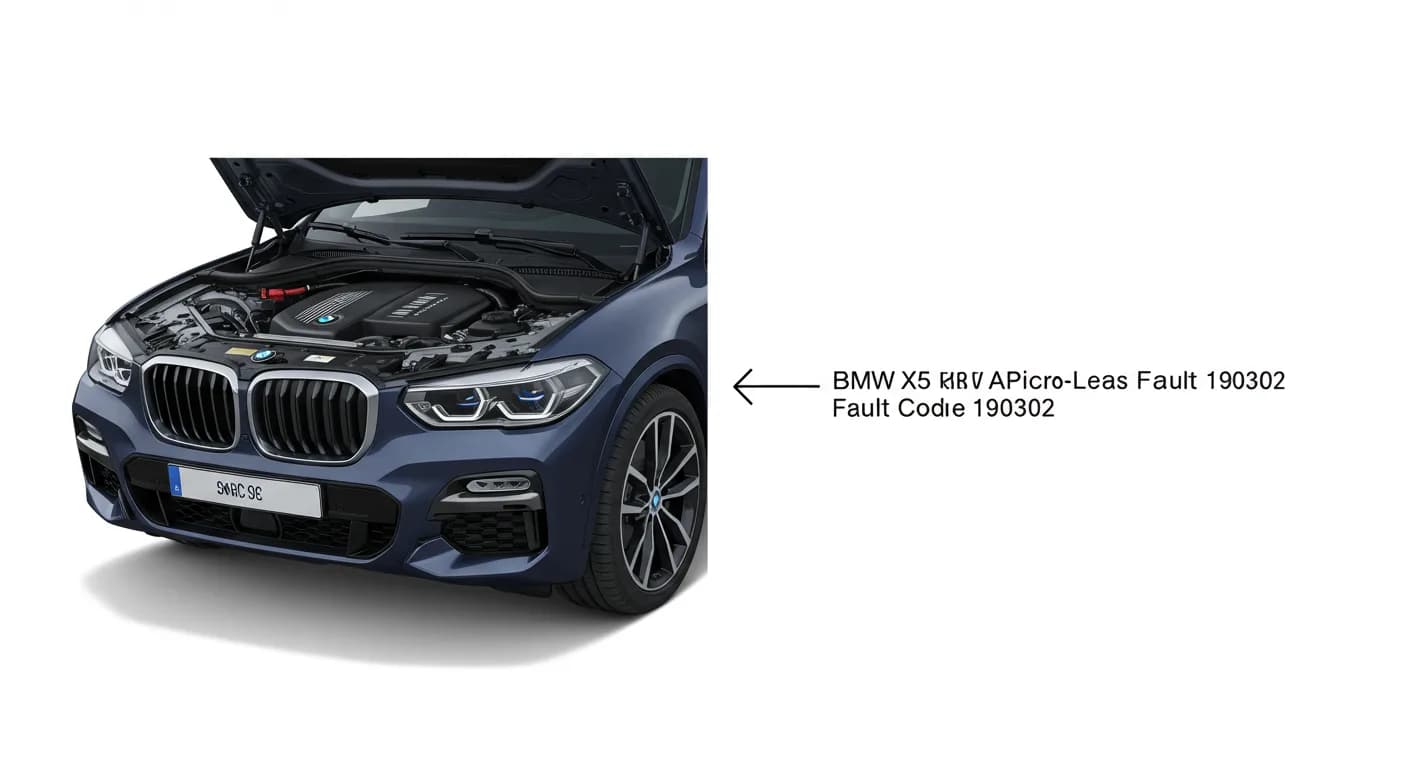
Si applica anche a
- BMW 230i
- 2023
- BMW 330e
- 2021–2023
- BMW 330i
- 2021–2023
- BMW 430i
- 2021–2023
- BMW 530e
- 2021–2023
- BMW 530i
- 2021–2023
- BMW 540i
- 2021–2023
- BMW 740i
- 2021
- BMW 745e
- 2021
- BMW 750Li
- 2022
- BMW 840i
- 2021–2022
- BMW i4
- 2022–2023
- BMW M3
- 2021–2023
- BMW M340i
- 2021–2023
- BMW M4
- 2021–2023
- BMW M440i
- 2021–2022
- BMW M5
- 2021–2022
- BMW M550i
- 2021–2023
- BMW M760i
- 2021
- BMW M760Li
- 2022
- BMW M8
- 2021–2023
- BMW M850i
- 2021–2022
- BMW X3
- 2021–2023
- BMW X4
- 2021–2023
- BMW X5
- 2021–2022
- BMW X6
- 2021–2022
- BMW X7
- 2021–2023
- BMW Z4
- 2021–2023
▸ Mostra altri 22▾ Mostra meno
BMW has released a manufacturer communication, NHTSA ID 10239602, addressing a specific issue related to the fuel evaporative (EVAP) system. This technical service bulletin (TSB) focuses on diagnosing and resolving micro-leaks within this system, which can trigger a diagnostic trouble code in the Digital Motor Electronics (DME) unit.
The document highlights that vehicles may present with a BMW X5 EVAP micro-leak condition, indicating a problem with the fuel tank ventilation and scavenging air system. This is a crucial component for emissions control, preventing fuel vapors from escaping into the atmosphere.
Symptoms
Owners of affected 2022-2023 BMW vehicles might notice an illuminated check engine light or other warning indicators on their dashboard. The underlying cause is a micro-leak in the fuel evaporative (EVAP) system, which the vehicle's diagnostic system detects.
Fault Codes / DTCs
When a micro-leak is present, the vehicle's Digital Motor Electronics (DME) system will store a specific fault code:
| Code | Description |
|---|---|
| 190302 | "fuel tank ventilation and scavenging air system, micro-leak: leakage more than 0.5 mm" |
This fault code, 190302, precisely identifies the nature of the problem: a leakage in the EVAP system exceeding a specified threshold.
Diagnosis / Trigger Conditions
The system responsible for detecting this issue is the Natural Vacuum Leak Detection (NVLD) system, part of the overall EVAP system. The NVLD system continuously monitors the fuel tank's integrity for leaks. If it detects a leakage greater than 0.5 mm, it will trigger the fault code 190302.
When a vehicle arrives for diagnosis with a BMW X5 EVAP micro-leak and the fault code 190302, technicians will investigate the fuel tank ventilation and scavenging air system. The manufacturer communication NHTSA ID 10239602 provides guidance for addressing this specific condition.
Repair Procedure Summary
While the manufacturer communication does not detail the specific repair steps, it indicates that the TSB is intended to guide technicians in diagnosing and resolving the
Frequently Asked Questions
- What does BMW fault code 190302 mean?
- BMW fault code 190302 indicates a micro-leak in the fuel tank ventilation and scavenging air system, which is part of the evaporative (EVAP) emissions control system. Specifically, it means a leakage greater than 0.5 mm has been detected.
- What is the EVAP system and why is a micro-leak a problem?
- The EVAP (Evaporative Emission Control) system prevents fuel vapors from escaping into the atmosphere. A micro-leak, as indicated by the BMW X5 EVAP micro-leak fault, means the system is not sealed properly, leading to increased emissions and potentially triggering a check engine light.
- Which BMW models are affected by the EVAP micro-leak issue?
- This manufacturer communication (NHTSA ID 10239602) applies to various 2022-2023 BMW models, including the X5, X3, X4, X7, i4, M4, M3, and others, that experience the 190302 fault code.
- What should I do if my BMW has a check engine light and I suspect an EVAP micro-leak?
- If your BMW's check engine light is on and you suspect an EVAP micro-leak, it is recommended to have your vehicle diagnosed by an authorized BMW service center. They can read the fault codes, confirm the presence of 190302, and perform the necessary repairs according to the manufacturer's guidelines.
Related Articles
2022-2025 BMW X5 Headliner Light Issue
BMW has issued a manufacturer communication (NHTSA ID 11022360) regarding a concern where the headliner light in 2022-2025 BMW X5 vehicles may partially illuminate or not illuminate at all. This issue points to a potential problem within the vehicle's electrical system.
2023-2025 BMW X5 X7 Tailgate Buzzing Sound TSB
BMW Service Information Bulletin SIB 51 04 24 addresses a buzzing sound from the upper tailgate interior trim panel in 2023-2025 BMW X5 and X7 models. This noise is caused by a welding burr contacting the sheet metal and can be resolved by removing the burr.
2023 BMW X5/X6/X7 Emissions Recall 25E-A04 DME Software Update
BMW has issued Emissions Recall 25E-A04, identified as Service Information Bulletin (SIB) 12 07 25, for certain 2023 BMW X5, X6, and X7 vehicles. The recall addresses a programming error in the Digital Motor Electronics (DME) that can lead to a deviation in the engine's fuel-air mixture. This…
2023-2024 BMW Emissions Recall 25E-A02 Software Update
BMW's Emissions Recall 25E-A02 addresses a software issue in the integrated brake system control unit for certain 2023-2024 BMW X5, X7, X1, X6, 530i, 740i, and X2 models. This update resolves a California Air Resources Board (CARB) compliance concern regarding permanently stored fault memories.
2021-2025 BMW Groaning Noise From Doors SIB 51 30 19
BMW has issued Service Information Bulletin SIB 51 30 19 to address a groaning noise emanating from the door frames of various 2021-2025 models. This noise, often heard over rough roads or during body flex, is caused by excessive friction between the window guide and the door opening.
Leave a comment
Comments are moderated and may take a moment to appear. Only your first name and the initial of your last name are shown publicly.
Comments
Be the first to comment.