2022-2026 Audi e-tron GT Battery Charging Requirements TSB
Audi Technical Service Bulletin 2069572/2 outlines critical 12V battery charging and recovery requirements for 2022-2026 e-tron GT and RS e-tron GT models during service or showroom display. Failure to follow these guidelines can lead to battery damage and potential warranty denial.
 Sarah Mitchell2026 Audi S e-tron GT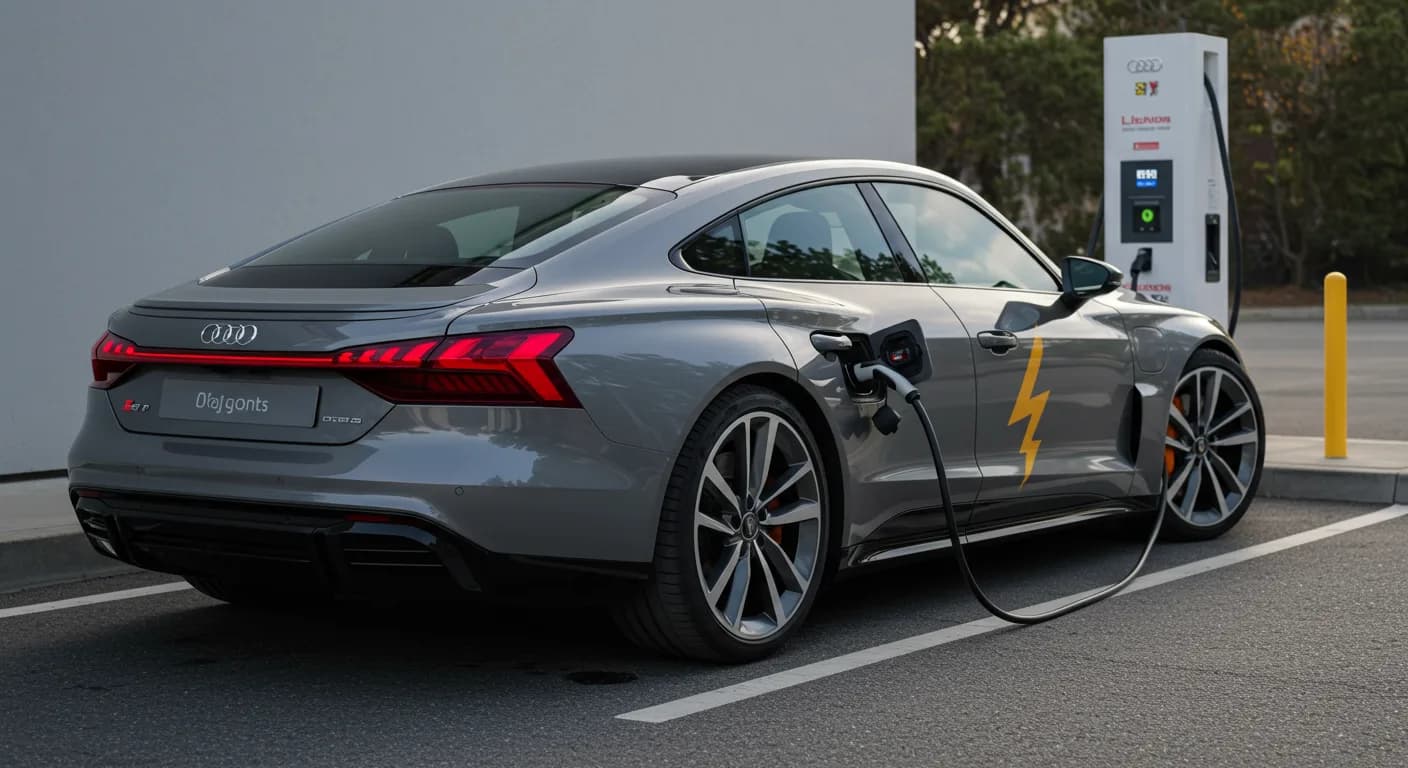
Si applica anche a
- Audi e-tron GT
- 2022–2025
- Audi RS e-tron GT
- 2022–2024
Audi has released Technical Service Bulletin (TSB) 2069572/2, which details essential battery recovery and charging requirements for 2022-2026 Audi e-tron GT and RS e-tron GT models. This bulletin is crucial for maintaining the health of the vehicle's 12V LiFePo starter/auxiliary battery, especially when the car is undergoing service or is on display in a showroom. Proper Audi e-tron GT battery charging procedures are vital to prevent battery damage and ensure correct vehicle operation.
This TSB, dated October 30, 2023, supersedes an earlier bulletin, Group 00 number 23-64, from March 3, 2023, reflecting updated information and an expanded model year coverage.
Symptoms of Incorrect Charging
Failing to adhere to the specified Audi e-tron GT battery charging requirements can lead to several issues. Owners might experience:
- Starter / auxiliary battery failure: The 13.2V LiFePo starter/auxiliary battery, with a 60Ah capacity, can become irreversibly damaged.
- Starter / auxiliary battery discharge: The battery may drain completely, especially if the ignition is left on for extended periods or if electronic malfunctions occur.
- Inaccurate State of Charge (SOC) readings: The battery manager may report incorrect state of charge, leading to misdiagnosis or further issues.
Important Warnings for Owners
Audi has issued critical warnings regarding the Audi e-tron GT battery charging process:
- "Warranty claims related to a damaged or drained starter / auxiliary battery -A- that resulted from not using a battery charger, or using an inappropriately sized battery charger that doesn't meet the minimum requirements listed above, may be denied."
- NOTICE: "If the contactors of the 12V battery are open due to low SoC, it may be necessary to 'jump start' the battery charger by touching the charger cable clamps from a 12V source (jump start pack / other 12V battery) for a couple seconds until the charger starts charging."
This TSB is informational and does not fall under Audi's warranty coverage for repairs related to non-compliance.
Technical Background
The Audi e-tron GT is equipped with a LiFePo starter/auxiliary battery. Due to the vehicle's architecture and its advanced 12V battery technology, specific charging and maintenance requirements are necessary. These requirements ensure the battery remains healthy during service work or when the vehicle is displayed. Running the vehicle with only the ignition on, such as in a showroom, or experiencing certain electronic malfunctions, can drain the starter/auxiliary battery. Without a sufficiently sized charger, this can lead to irreversible damage.
Required Charging Specifications
For proper Audi e-tron GT battery charging, any 12V battery charger used must meet the following minimum requirements:
- Continuous output current: At least 80 Amperes (ideally 90 Amperes or more).
- Target charging voltage: 14.8 Volts.
- Absolute maximum voltage: 15.5 Volts. Any voltage spikes exceeding this limit could damage the battery.
Recommended Chargers
Audi suggests specific chargers that meet these requirements:
- Associated ESS6100: Ensure this charger is used in Diag+ mode with a charging voltage set to 14.8V.
- Deutronics VAS5908: This charger should also be set to a charging voltage of 14.8V. Depending on the situation, releasing pin 6161 or activating Diag+ mode by pressing and holding the select button might be necessary if the charger hasn't been connected or started.
Owner Action
If you own a 2022-2026 Audi e-tron GT or RS e-tron GT, it's important to be aware of these specific Audi e-tron GT battery charging requirements. When your vehicle is serviced or if you are considering using an external charger, ensure that the facility or equipment used complies with the specifications outlined in TSB 2069572/2. Failure to do so could result in battery damage, which may not be covered under warranty.
Source: NHTSA ID: 10244529
Frequently Asked Questions
- What is Audi TSB 2069572/2 about?
- Audi Technical Service Bulletin 2069572/2 provides detailed guidelines for the proper 12V battery recovery and charging of 2022-2026 Audi e-tron GT and RS e-tron GT models during service or when displayed in a showroom.
- Why are specific charging requirements needed for the Audi e-tron GT?
- The Audi e-tron GT uses a specialized LiFePo starter/auxiliary battery. Due to the vehicle's advanced electrical architecture, precise charging parameters are necessary to prevent battery drain, irreversible damage, and inaccurate state of charge readings, especially during extended periods of ignition-on or service.
- What happens if the correct charger isn't used for my e-tron GT?
- Using an inappropriately sized or incorrectly configured charger for your Audi e-tron GT can lead to starter/auxiliary battery failure, complete discharge, and inaccurate state of charge (SOC) measurements by the battery management system. This can result in costly repairs.
- Will Audi cover battery damage if I don't follow these guidelines?
- According to TSB 2069572/2, Audi may deny warranty claims for damaged or drained starter/auxiliary batteries if the damage resulted from not using a battery charger that meets the specified minimum requirements. This TSB itself is informational and not applicable to Audi warranty coverage for such issues.
Related Articles
2022-2026 Audi e-tron GT 12V Battery Discharged TSB 2075846/3
Audi Technical Service Bulletin 2075846/3 addresses a discharged 12V battery condition in 2022-2026 e-tron GT and RS e-tron GT vehicles, often accompanied by DTC P1D6C00. This TSB outlines a software update procedure to resolve the issue.
2025-2026 Audi e-tron GT Active Suspension Noise TSB
Audi has released Technical Service Bulletin 2080798/1 for 2025-2026 e-tron GT and RS e-tron GT models equipped with active suspension (PR code 1P8). It addresses noises heard when driving over bumps and outlines diagnostic procedures for technicians.
2026 Audi e-tron GT Roll Stabilization Configuration Aborted TSB
Audi Technical Service Bulletin 2080608/1 addresses an issue where roll stabilization configuration for diagnostic addresses 00D4 and 00D5 is aborted on 2026 Audi e-tron GT and RS e-tron GT vehicles. This TSB provides diagnostic steps for technicians.
2021-2026 Audi Ceramic Brake Repair Advisory
Audi has released a manufacturer communication, NHTSA ID 11027374, regarding ceramic brake repairs on various 2021-2026 Audi models. Technicians are required to contact the Technical Assistance Center (TAC) before proceeding with any brake service on vehicles equipped with ceramic brakes.
2022-2026 Audi e-tron GT C1399F0 Brake-In Mode TSB
Audi Technical Service Bulletin (TSB) 2063679/6 addresses Diagnostic Trouble Code (DTC) C1399F0 in 2022-2026 Audi e-tron GT, RS e-tron GT, and S e-tron GT models. This code indicates the vehicle is in a normal brake application mode for new or replaced brake components and typically requires no…
Leave a comment
Comments are moderated and may take a moment to appear. Only your first name and the initial of your last name are shown publicly.
Comments
Be the first to comment.