2022-2026 Audi e-tron GT C1399F0 Brake-In Mode TSB
Audi Technical Service Bulletin (TSB) 2063679/6 addresses Diagnostic Trouble Code (DTC) C1399F0 in 2022-2026 Audi e-tron GT, RS e-tron GT, and S e-tron GT models. This code indicates the vehicle is in a normal brake application mode for new or replaced brake components and typically requires no…
 Sarah Mitchell2026 Audi S e-tron GT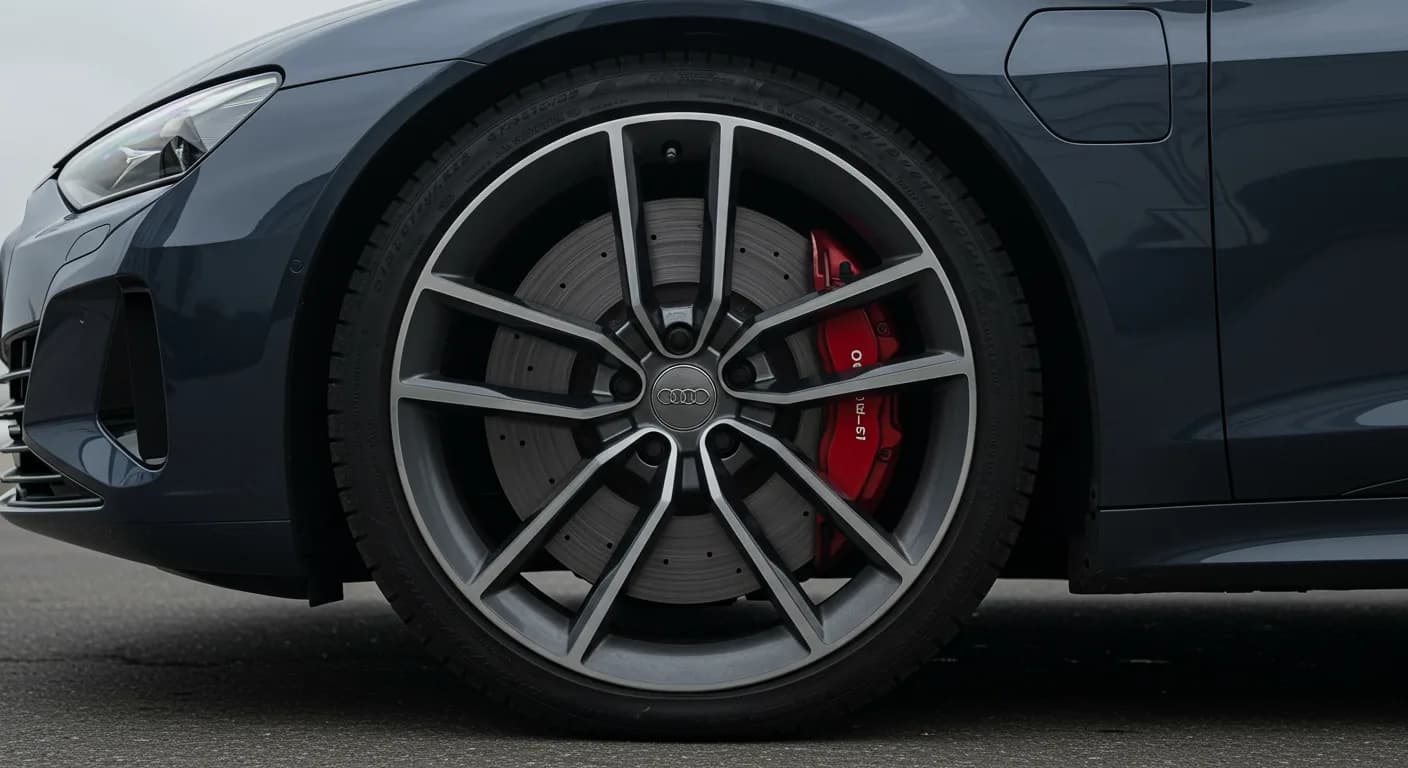
Si applica anche a
- Audi e-tron GT
- 2022–2026
- Audi RS e-tron GT
- 2022, 2023, 2024, 2026
Audi has released Technical Service Bulletin (TSB) 2063679/6 to address instances where Diagnostic Trouble Code (DTC) C1399F0 may be stored in the Anti-lock Braking System (ABS) control module. This bulletin, issued for the United States market, clarifies that this DTC is often associated with a normal brake application mode, particularly in new vehicles or after brake component replacement, and typically does not signify a fault requiring repair.
This information applies to 2022-2026 Audi e-tron GT, RS e-tron GT, and S e-tron GT models. The TSB was released for publishing on October 22, 2025, with previous revisions on September 10, 2024, and January 12, 2024, primarily updating model year information and technical background details.
Symptoms
Owners of affected Audi e-tron GT models might notice certain behaviors that lead to concern, particularly related to the braking system. These observations are often linked to the vehicle's brake application mode, which is a normal process.
Common customer complaints include:
- Recuperation too low when braking on new vehicle. This refers to the reduced energy recovery that occurs during the brake-in period.
- Concerns after brake discs or brake pads have been replaced.
- A feeling of decreasing functionality from the brake booster.
- A perception of no function from the anti-lock braking system (ABS).
- The foot brake feeling too hard or too difficult to move.
- The electronic stabilization control (ESC) brake assist functionality appearing as if it "cannot be switched on/activated."
Despite these perceived issues, the TSB clarifies that these are expected characteristics during the brake-in process.
Fault Codes / DTCs
The primary diagnostic indicator for this condition is a specific Diagnostic Trouble Code (DTC) stored in the ABS control module.
| Code | Description | Module |
|---|---|---|
| C1399F0 | Brake application mode active | ABS control unit |
This DTC C1399F0 is logged when the brake application mode is active, indicating that the system is functioning as designed to properly bed in new brake components.
Diagnosis / Trigger Conditions
The brake application mode, which leads to the storage of DTC C1399F0, is an intentional function designed to properly break in new brake pads and discs. This mode is active under two main conditions:
- On new vehicles: When the vehicle is brand new, the brake application mode is active to ensure optimal performance of the braking system from the start.
- After brake disc and/or brake pad replacement: If brake discs or pads are replaced, the mode automatically activates to bed in the new components. Technicians can also manually initiate this mode using the ODIS diagnostic system via the function labeled "003 Brake-In Service Brakes."
During this brake application mode, the vehicle's recuperation function is temporarily deactivated, and braking is performed manually. The system does not actively signal this process to the driver through the instrument cluster or the MMI, meaning the 2026 Audi S e-tron GT owner will not receive a direct notification that this mode is active. The DTC C1399F0 and the brake application mode will automatically deactivate once the required amount of energy has been reached, signaling the completion of the brake-in process. The progress of this mode can be monitored by technicians using the measured value "Progress of the break-in of service brakes" in the ABS control unit.
Important Warnings
Owners and technicians should be aware of the following critical information regarding this condition and Audi TSB 2063679/6:
- No measure is necessary: The TSB explicitly states that no repair or corrective measure is required for DTC C1399F0 when it is stored due to the brake application mode. This code indicates normal operation, not a fault.
- Informational only: This TSB is purely informational and is not applicable to any Audi Warranty. This means that any perceived issues related to this normal brake-in process are not covered under warranty as they are not defects.
- No customer notification: The vehicle's instrument cluster or MMI will not actively signal to the customer that the brake-in process is occurring. Therefore, owners should not expect a dashboard warning or message related to this specific condition.
Repair Procedure Summary
For the condition described by DTC C1399F0 in the ABS control module, the Audi TSB 2063679/6 specifies that no measure is necessary. This is because the DTC indicates the normal operation of the brake application mode, which is designed to properly bed in new brake components. The system is self-correcting and will deactivate the mode and the DTC automatically once the brake-in process is complete. There is no production solution or service action required from the dealership to resolve this condition.
Owner Action
If you own a 2022-2026 Audi e-tron GT, RS e-tron GT, or S e-tron GT and encounter DTC C1399F0, it is important to understand that this is typically a normal operational state. If you have recently purchased your vehicle or had brake discs and/or pads replaced, the vehicle is likely in its brake application mode. You do not need to take any action or seek a repair for this specific code, as it will resolve itself once the brake-in process is complete. If you have any persistent concerns about your braking system that extend beyond the expected characteristics of a brake-in period, it is always advisable to consult with an authorized Audi service center.
Source: NHTSA ID: 11025367
Frequently Asked Questions
- What does DTC C1399F0 mean on my Audi e-tron GT?
- DTC C1399F0 in your Audi e-tron GT indicates that the vehicle is in a normal brake application mode. This mode is activated in new vehicles or after brake disc and/or pad replacement to properly bed in the brake components, as explained in Audi TSB 2063679/6.
- Does DTC C1399F0 mean my Audi's brakes are faulty?
- No, DTC C1399F0 does not mean your Audi's brakes are faulty. According to Audi TSB 2063679/6, this code signifies a normal, temporary operating condition during the brake-in process. No repair is necessary, and the mode will deactivate automatically.
- What should I do if I see DTC C1399F0 in my Audi e-tron GT?
- If your 2022-2026 Audi S e-tron GT or other e-tron GT model has DTC C1399F0, you generally do not need to do anything. This code is part of a normal brake-in process that will complete on its own. The vehicle will not actively notify you of this mode, and recuperation may be reduced during this time.
- How long does the brake-in process last in my Audi e-tron GT?
- The Audi TSB 2063679/6 indicates that the brake-in process, during which DTC C1399F0 may be active, lasts until a required amount of energy is reached through braking. The system automatically deactivates the mode and the DTC once this condition is met, without any specific time frame provided for owners.
Altre revisioni di questo TSB
Related Articles
2022-2026 Audi e-tron GT 12V Battery Discharged TSB 2075846/3
Audi Technical Service Bulletin 2075846/3 addresses a discharged 12V battery condition in 2022-2026 e-tron GT and RS e-tron GT vehicles, often accompanied by DTC P1D6C00. This TSB outlines a software update procedure to resolve the issue.
2025-2026 Audi e-tron GT Active Suspension Noise TSB
Audi has released Technical Service Bulletin 2080798/1 for 2025-2026 e-tron GT and RS e-tron GT models equipped with active suspension (PR code 1P8). It addresses noises heard when driving over bumps and outlines diagnostic procedures for technicians.
2026 Audi e-tron GT Roll Stabilization Configuration Aborted TSB
Audi Technical Service Bulletin 2080608/1 addresses an issue where roll stabilization configuration for diagnostic addresses 00D4 and 00D5 is aborted on 2026 Audi e-tron GT and RS e-tron GT vehicles. This TSB provides diagnostic steps for technicians.
2021-2026 Audi Ceramic Brake Repair Advisory
Audi has released a manufacturer communication, NHTSA ID 11027374, regarding ceramic brake repairs on various 2021-2026 Audi models. Technicians are required to contact the Technical Assistance Center (TAC) before proceeding with any brake service on vehicles equipped with ceramic brakes.
2022-2026 Audi e-tron GT Brake Disc Hotspots TSB
Audi Technical Service Bulletin 2073824/2 addresses customer complaints about hotspots and discoloration on the friction surface of tungsten carbide brake discs in 2022-2026 Audi e-tron GT vehicles. The TSB states this is a visual phenomenon caused by thermal stress during braking and does not…
Leave a comment
Comments are moderated and may take a moment to appear. Only your first name and the initial of your last name are shown publicly.
Comments
Be the first to comment.