2022-2026 Audi 12V Starter Battery Discharge TSB
Audi has released Technical Service Bulletin 2080517/2 addressing 12V starter battery discharge and malfunctioning issues in 2022-2026 models. Learn about the symptoms, diagnostic steps, and potential causes, including customer influence and charging system faults.
 Marcus Weber2022 Audi e-tron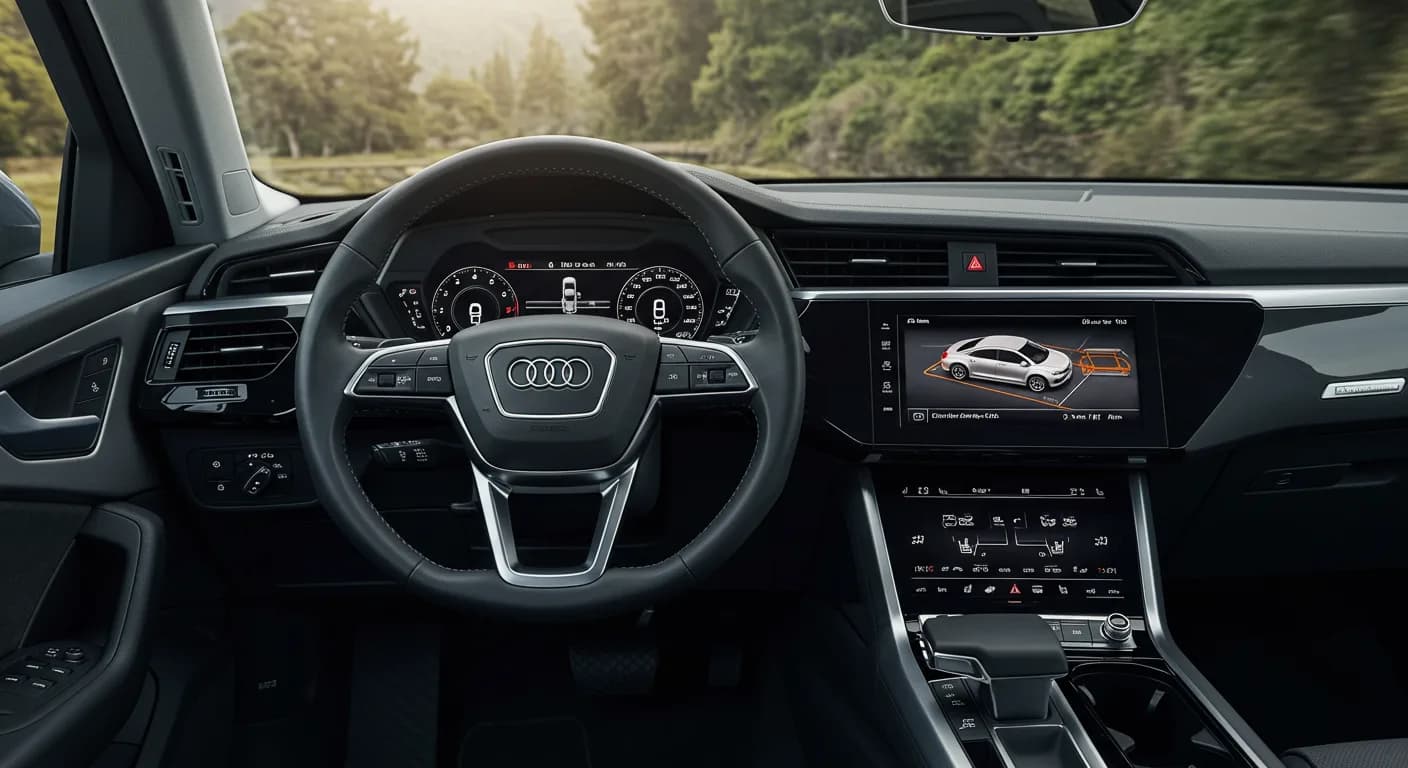
Si applica anche a
- Audi A3
- 2022–2026
- Audi A4
- 2021–2025
- Audi A4 allroad
- 2021–2025
- Audi A5
- 2021, 2022, 2023, 2024, 2026
- Audi A6
- 2021–2026
- Audi A6 allroad
- 2021–2026
- Audi A7
- 2021–2025
- Audi A7 e
- 2021–2022
- Audi A8 L e
- 2021
- Audi e-tron
- 2021, 2023
- Audi e-tron GT
- 2022–2025
- Audi e-tron Sportback
- 2021–2022
- Audi Q3
- 2021–2025
- Audi Q5
- 2021–2026
- Audi Q5 e
- 2021, 2023, 2024, 2025
- Audi Q7
- 2021–2026
- Audi Q8
- 2021–2026
- Audi R8
- 2021–2023
- Audi RS 3
- 2022–2026
- Audi RS 5
- 2021–2024
- Audi RS 6 Avant
- 2021–2026
- Audi RS 7
- 2021–2026
- Audi RS e-tron GT
- 2022–2026
- Audi RS Q8
- 2021–2026
- Audi S e-tron GT
- 2026
- Audi S3
- 2022–2026
- Audi S4
- 2021–2025
- Audi S5
- 2021, 2022, 2023, 2024, 2026
- Audi S6
- 2021–2025
- Audi S7
- 2021–2025
- Audi S8
- 2021–2026
- Audi SQ5
- 2021–2026
- Audi SQ7
- 2021–2026
- Audi SQ8
- 2021–2026
- Audi TT
- 2021–2023
- Audi TT RS
- 2021–2022
- Audi TTS
- 2021–2023
▸ Mostra altri 31▾ Mostra meno
Symptoms of a Discharging or Malfunctioning 12V Starter Battery
Owners of 2022-2026 Audi vehicles may experience issues with their 12V starter battery discharging or malfunctioning. These problems can manifest in several ways, often leading to difficulty starting the vehicle or unexpected electrical behavior.
Common symptoms and underlying causes include:
- Battery discharge: The 12V battery loses charge, potentially leading to a no-start condition.
- Battery malfunction: The battery may not hold a charge or perform as expected, even if not fully discharged.
- Premature wear: The battery reaches its end-of-life sooner than anticipated, sometimes due to neglected battery maintenance programs.
Technical reasons for an Audi e-tron battery discharge or malfunction can stem from:
- Customer influence: This includes leaving the ignition or lights on, driving very short distances, or long periods of vehicle inactivity.
- No-load currents: Unintended electrical draws when the vehicle is off.
- Bus system issues: Problems like bus sleep inhibitors or bus alarms preventing the vehicle's electrical system from properly shutting down.
- Insufficient charging: The battery was not adequately charged during stock vehicle maintenance or when the vehicle was on the showroom floor. Showroom vehicles require a permanently connected charger with at least 30 A charging current.
- Incorrect battery checks: Improper diagnostic procedures can lead to misdiagnosis.
Diagnostic Addresses for Battery Charging Issues
When the 12V battery is not charging, technicians will investigate specific diagnostic addresses depending on the vehicle's system type. These addresses help pinpoint the source of the problem, such as a defective alternator or starter-alternator.
For 48V MHEV systems, relevant diagnostic addresses include:
- 0001: Engine/motor control unit
- 00CC: Belt-driven starter-alternator
- 0019: Gateway
- 0021: 48V battery
- 00C4: Voltage converter
- 0051: Powertrain generator
For PHEV systems, technicians will check diagnostic address 0051. For BEV systems, diagnostic address 00C6 is relevant.
Diagnosis and Trigger Conditions
Diagnosing an Audi e-tron battery discharge or malfunction involves a systematic approach to identify the root cause. This process often begins with comprehensive battery testing and analysis of historical vehicle data.
Initial diagnostic steps include:
- Guided Fault Finding (GFF): Technicians use the “A – Battery (12V), test” plan within GFF for both new vehicles (pre-delivery inspection) and used vehicles (after first delivery).
- Advanced Battery Testing: If GFF is inconclusive or unavailable, specialized tools like VAS 6161 or VAS 5097A are used. The recommended procedure involves fully charging the battery for at least 12 hours (or until 80% State of Charge), letting it rest for two hours, testing with VAS 5097A, resting for another 30 minutes, and then performing a load test. Both test results should indicate “good” or better.
- History Data Analysis: Decrypted history data (for TSC, not raw data) is crucial for determining why the battery discharges or fails to charge. This includes analyzing “history data 6” for trip energy balance and “history data 7” for stationary energy balance.
If excessive discharge or no-load current is suspected, technicians will:
- Check for any retrofitted equipment (e.g., towing brackets, GPS trackers, dash cams) that might draw power.
- Utilize the GFF/ODIS test plan for “No-load current too high” if logged in diagnostic address 0019, paying attention to the timeframe relative to the customer complaint.
- Perform an “Own test plan -> No-load current measurement” or check for bus wake-up/sleep inhibitors.
Repair Procedure Summary
The repair procedure focuses on accurately diagnosing and addressing the specific cause of the 12V starter battery issue. It involves a series of checks and, if necessary, corrective actions for charging and battery conditions.
Key aspects of the repair process include:
- Addressing Charging Issues: If the 12V battery is not charging, technicians will investigate the alternator (for conventional systems), belt-driven starter-alternator (for MHEV systems), DC/DC converter, or wiring issues. Specific test plans for alternators and event memory entries in control units (like diagnostic address 0001) are utilized.
- Troubleshooting Charging/Testing Faults:
- Poor Contact: If the battery isn't charging despite a connected charger, clamps may have poor contact due to dirt, oxidation, or incorrect adjustment. Technicians will ensure good contact, clean/replace clamps, and adjust the charger according to instructions.
- Damaged Charger: A damaged charger might be the cause, requiring measurement of charging current with an ammeter.
- Incorrect Tester Capacity Adjustment: If the test result from VAS 5097A doesn't match the battery's actual condition, the battery capacity setting on the tester may be incorrect and needs adjustment.
- Physical Damage to Cables/Clamps: Issues like a cracked copper bridge in clamps (Figure 1 in the TSB) or a cracked copper core (Figure 3 in the TSB) necessitate replacing the cable with new clamps. Poor contact or oxidation on contact surfaces (Figure 2 in the TSB) requires cleaning or replacing the clamps.
- Event Memory Management: For vehicles with MHEV, PHEV, or BEV systems, technicians will check event memory entries in relevant diagnostic addresses. If entries exist, the corresponding test plans in Guided Fault Finding are followed. After diagnosis, event memory is erased, and the system is re-evaluated using meaningful history data.
Required Tools or Parts
Specific tools are essential for accurate diagnosis and testing of the 12V starter battery system:
- VAS 6161: A battery tester used for comprehensive battery assessment.
- VAS 5097A: Another specialized battery tester, often used in conjunction with specific charging and resting procedures.
Owner Action and Warranty Information
If you experience an Audi e-tron battery discharge or other 12V starter battery issues, it is recommended to visit an authorized Audi service center. Technicians will follow the procedures outlined in TSB 2080517/2 to diagnose and resolve the problem.
Regarding warranty:
- Batteries sent in for warranty claims without proper battery checks via Guided Fault Finding and historical data will be charged back.
- If the analysis indicates that customer behavior (e.g., leaving lights on, ignition on) caused the battery discharge, invoicing under warranty is generally not permitted.
- Similarly, if faulty batteries are replaced due to incorrect handling (such as failure to perform stock vehicle maintenance or not keeping showroom vehicles connected to a charger), these replacements may not be covered under warranty.
- For vehicles outside of warranty, this Technical Service Bulletin serves as informational guidance only, and repair costs would typically be the owner's responsibility.
Frequently Asked Questions
- Why is my Audi's 12V starter battery discharging frequently?
- Frequent 12V starter battery discharge in your Audi can be caused by various factors, including customer usage patterns (like leaving lights on), excessive no-load currents, issues with the vehicle's bus system (bus sleep inhibitors, bus alarms), or insufficient charging during vehicle maintenance.
- What diagnostic steps will a technician take for an Audi 12V battery issue?
- Technicians will typically start with Guided Fault Finding using the "A – Battery (12V), test" plan. They may also use specialized battery testers like VAS 6161 or VAS 5097A, and analyze decrypted historical data to determine if the battery is discharging excessively or not charging properly.
- Are there specific diagnostic addresses related to the Audi 12V battery not charging?
- Yes, for 48V MHEV systems, diagnostic addresses like 0001 (engine/motor control unit), 00CC (belt-driven starter-alternator), 0019 (gateway), 0021 (48V battery), 00C4 (voltage converter), and 0051 (powertrain generator) are relevant. PHEV systems use 0051, and BEV systems use 00C6.
- Will my Audi 12V battery replacement be covered under warranty?
- Warranty coverage for a 12V battery replacement depends on the cause. If the issue is due to customer behavior (e.g., leaving lights on) or incorrect vehicle handling (e.g., improper stock maintenance), it may not be covered. Batteries sent for warranty without proper diagnostic checks and historical data may also be charged back.
Related Articles
2022 Audi e-tron Problems: Electrical System & Braking Concerns
The 2022 Audi e-tron has faced significant owner complaints regarding its electrical system, including sudden power loss and charging hazards, as well as various braking malfunctions. This profile details these issues and relevant service bulletins.
2022-2026 Audi Guided Fault Finding Reporting Obligation
Audi has issued Technical Service Bulletin TPI 2033392, also known as Transaction No. 2081531/1, regarding a reporting obligation for technicians when Guided Fault Finding produces an unexpected result. This TSB outlines the process for contacting Audi Product Support for diagnostic assistance.
2022-2026 Audi Infotainment System Complaints
Audi has released Technical Service Bulletin (TSB) 2081405/1 to address various customer complaints regarding infotainment systems in 2022-2026 Audi vehicles. This TSB helps technicians diagnose issues often caused by external media or mobile devices, rather than vehicle technology.
2018-2026 Audi Models Cracking Noise TSB 2061464/11
Audi Technical Service Bulletin 2061464/11 describes a cracking noise from the front or rear axle when changing direction in various 2018-2026 Audi models. The issue is due to stub axle movement and is resolved by bonding the stub axle to the wheel bearing with locking fluid.
2022-2026 Audi Parking Aid False Warnings TSB 2024323/13
Audi has released Technical Service Bulletin 2024323/13 to address customer complaints of false parking aid warnings. This bulletin details various environmental and vehicle-specific conditions that can cause the parking aid system to issue alerts even when no obstacles are present. It provides…
Leave a comment
Comments are moderated and may take a moment to appear. Only your first name and the initial of your last name are shown publicly.
Comments
Be the first to comment.