2023-2026 Audi Engine Oil Leak Detection TSB 2060750/4
Audi Technical Service Bulletin 2060750/4 details a procedure for detecting engine oil leaks using a fluorescent UV additive. This TSB applies to various Audi models from 2023-2026 and provides guidance for technicians on identifying and addressing engine oil leaks.
 Ahmet Topcu2023 Audi e-tron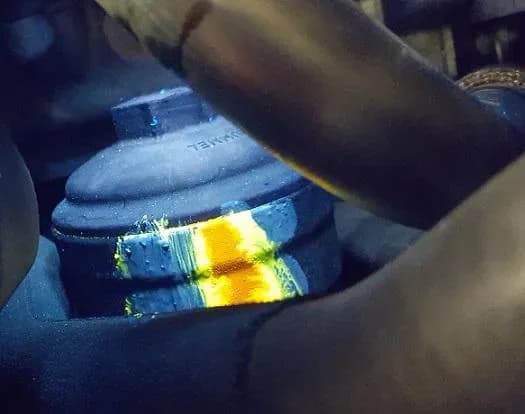
Si applica anche a
- Audi A3
- 2022–2025
- Audi A4
- 2021–2025
- Audi A4 allroad
- 2021–2025
- Audi A5
- 2021–2024
- Audi A6
- 2021–2025
- Audi A6 allroad
- 2021–2025
- Audi A7
- 2021–2025
- Audi A7 e
- 2021–2022
- Audi A8 L e
- 2021
- Audi e-tron
- 2021–2022
- Audi e-tron GT
- 2022–2025
- Audi e-tron Sportback
- 2021–2022
- Audi Q3
- 2021–2025
- Audi Q5
- 2021–2025
- Audi Q5 e
- 2021, 2023, 2024, 2025
- Audi Q7
- 2021–2025
- Audi Q8
- 2021–2025
- Audi R8
- 2021–2023
- Audi RS 3
- 2022–2024
- Audi RS 5
- 2021–2024
- Audi RS 6 Avant
- 2021–2025
- Audi RS 7
- 2021–2025
- Audi RS e-tron GT
- 2022–2024
- Audi RS Q8
- 2021–2025
- Audi S e-tron GT
- 2026
- Audi S3
- 2022–2025
- Audi S4
- 2021–2025
- Audi S5
- 2021–2024
- Audi S6
- 2021–2025
- Audi S7
- 2021–2025
- Audi S8
- 2021–2025
- Audi SQ5
- 2021–2025
- Audi SQ7
- 2021–2025
- Audi SQ8
- 2021–2025
- Audi TT
- 2021–2023
- Audi TT RS
- 2021–2022
- Audi TTS
- 2021–2023
▸ Mostra altri 31▾ Mostra meno
Audi Technical Service Bulletin (TSB) 2060750/4, released on August 1, 2025, provides detailed instructions for technicians on how to effectively locate engine oil leaks using a specialized UV leak detection additive. This bulletin is crucial for accurately diagnosing and addressing oil leaks in various Audi models from 2023 to 2026. The primary goal is to enhance the precision of Audi engine oil leak detection within the engine compartment and lubrication system.
What's Being Addressed
This TSB addresses common customer and workshop complaints related to engine oil issues. Owners may report symptoms such as the engine lubrication system having "engine oil -> too little," visible "contamination -> contaminated with oil" in the engine compartment, or general "leaks -> oil leaking." Workshop findings often confirm an oil leak in the engine area, sometimes linked to "engine oil consumption -> too high" or leaks from specific components like the cylinder head, valvetrain, or oil pan.
The technical background explains that a fluorescent yellow leak search additive is used. This additive mixes with the engine oil and glows fluorescent yellow under a UV lamp, making leaks visible. The additive is safe for both gasoline and diesel engines and does not require an oil change after use. It can remain in the engine.
It is important to note a discrepancy between the TSB's content and the vehicles linked by NHTSA. While the TSB explicitly states it applies to "All Combustion Engines," the NHTSA linked vehicles list includes electric models such as the 2023 Audi e-tron and 2026 Audi S e-tron GT. Owners of electric vehicles who encounter this TSB should consult their Audi dealer for clarification, as engine oil leaks are specific to combustion engines.
Important Warnings
Audi has issued a critical warning regarding the use of the leak detection additive:
- "The UV leak detection additive G 052 940 A1 is not approved for gearboxes!"
This means the additive should only be used for Audi engine oil leak detection and not in transmission systems.
Repair Procedure Summary
Technicians will follow a straightforward two-step process for Audi engine oil leak detection:
- Additive Application: Add 10 mL of the leak search additive G 052 940 A1 into the engine via the oil filler neck. This quantity is sufficient for up to 5 quarts of engine oil. For larger oil capacities, the amount of additive should be doubled. Audi confirms that adding this product will not cause any damage to the engine.
- Leak Detection: After adding the fluid, the engine is run to circulate the additive. Technicians then use a UV lamp, specifically a VAS 231005 (WVA-074) or an equivalent tool, to inspect the engine and surrounding areas for fluorescent yellow glow, indicating the exact location of the oil leak.
Required Parts and Tools
To perform the oil leak detection procedure outlined in TSB 2060750/4, specific parts and tools are required:
- Part Number: G 052940A1 (Leak search additive, 10 mL quantity)
- Tool Number: VAS231005 (WVA-074) or equivalent (UV lamp)
Technicians are advised to always check with their Parts Department and/or ETKA for the latest information on parts and bulletins.
Warranty Information
This Technical Service Bulletin is informational only if the vehicle is outside of any warranty coverage. For warranty claims, the Service Number is 1701 and the Damage Code is 0055. Labor operations for cleaning the engine are coded as 1001 2952 with an estimated time of 20 TU (Technical Units). All warranty claims must comply with the Audi Warranty Policies and Procedures Manual and are subject to review by Audi Warranty.
Frequently Asked Questions
- What is Audi TSB 2060750/4 about?
- Audi Technical Service Bulletin 2060750/4 describes a procedure for technicians to detect engine oil leaks using a special fluorescent UV additive and a UV lamp. This helps accurately pinpoint the source of oil leaks in combustion engines.
- How are engine oil leaks detected using this TSB?
- The process involves adding 10 mL of the G 052 940 A1 UV leak additive to the engine oil. After the engine runs to circulate the additive, a UV lamp (such as VAS 231005) is used to scan for fluorescent yellow glow, which indicates an oil leak.
- Can the UV additive G 052 940 A1 be used in gearboxes?
- No, Audi explicitly states that the "UV leak detection additive G 052 940 A1 is not approved for gearboxes!" It is intended only for engine oil leak detection.
- What Audi models are covered by this TSB?
- This TSB applies to a wide range of Audi models from 2023 to 2026, including various A-series, S-series, RS-series, Q-series, and e-tron GT models. However, the TSB's content is specific to combustion engines, so owners of electric models should consult their dealer for clarification.
Related Articles
Should 2023 Audi e-tron Owners Worry? Recall & TSB Roundup
The 2023 Audi e-tron faces significant safety concerns, including recalls for potential brake pedal detachment and charging cable overheating. Owners have also reported serious issues like unintended acceleration and electrical system malfunctions. This guide covers all known problems and solutions.
2023 Audi e-tron Brake Pedal Recall
Audi has issued a recall (NHTSA ID: 26V240000, Audi Recall 46P7) for certain 2019-2024 E-Tron and 2020-2024 E-Tron Sportback vehicles, including the 2023 Audi e-tron. The recall addresses a potential issue where the brake pedal may detach from the brake booster, leading to a loss of brake function.
2015-2027 Audi Noise Diagnosis with Frequency Analysis App TSB
Audi has released Technical Service Bulletin 2051095/11 detailing the Audi Frequency Analysis app. This app helps technicians diagnose noise complaints more precisely across 2015-2027 Audi models. Learn how the app works, where to download it, and its features for effective vehicle noise analysis.
2023 Audi e-tron AC/DC Charging Not Possible TSB
This manufacturer communication (NHTSA ID 11031035) provides critical information for 2023 Audi e-tron owners facing issues with AC/DC charging. It specifically highlights problems linked to software version 00C6: 0093/3119, which can prevent the vehicle from charging.
2023-2025 Audi Rear Seat Reminder Message TSB 2074943/2
Audi Technical Service Bulletin 2074943/2 explains the instrument cluster message 'Please check rear seats and be aware of door safelock' in various 2023-2025 Audi models. This informational TSB details the rear occupant detection system designed to prevent children and pets from being left in…
Leave a comment
Comments are moderated and may take a moment to appear. Only your first name and the initial of your last name are shown publicly.
Comments
Be the first to comment.