2023-2026 Audi Speaker Rattles, Vibrations, Audio Interference TSB
If your 2023-2026 Audi is experiencing speaker rattles, vibrations, humming, whining, or other audio interference, Technical Service Bulletin 2018187/14 provides detailed diagnostic and repair procedures. This TSB helps identify whether the noise originates from the speaker itself or vibrating…
 Ahmet Topcu2023 Audi e-tron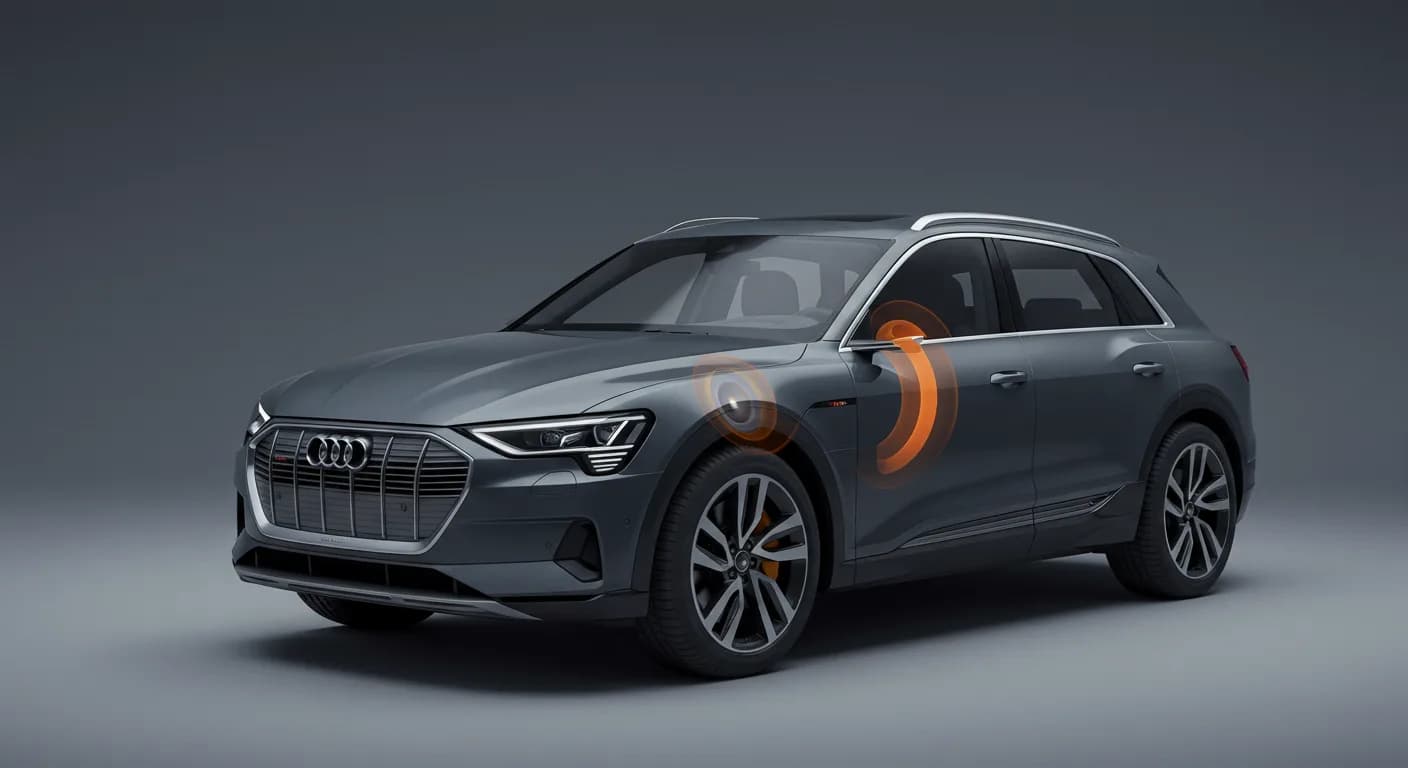
Si applica anche a
- Audi A3
- 2022–2025
- Audi A4
- 2021–2025
- Audi A4 allroad
- 2021–2025
- Audi A5
- 2021–2025
- Audi A6
- 2021–2025
- Audi A6 allroad
- 2021–2025
- Audi A7
- 2021–2025
- Audi A7 e
- 2021–2022
- Audi A8 L e
- 2021
- Audi e-tron
- 2021–2022
- Audi e-tron GT
- 2022–2025
- Audi e-tron Sportback
- 2021–2022
- Audi Q3
- 2021–2025
- Audi Q5
- 2021–2025
- Audi Q5 e
- 2021, 2023, 2024, 2025
- Audi Q7
- 2021–2025
- Audi Q8
- 2021–2025
- Audi R8
- 2021–2023
- Audi RS 3
- 2022–2025
- Audi RS 5
- 2021–2025
- Audi RS 6 Avant
- 2021–2025
- Audi RS 7
- 2021–2025
- Audi RS e-tron GT
- 2022–2024
- Audi RS Q8
- 2021–2025
- Audi S e-tron GT
- 2026
- Audi S3
- 2022–2025
- Audi S4
- 2021–2025
- Audi S5
- 2021–2025
- Audi S6
- 2021–2025
- Audi S7
- 2021–2025
- Audi S8
- 2021–2025
- Audi SQ5
- 2021–2025
- Audi SQ7
- 2021–2025
- Audi SQ8
- 2021–2025
- Audi TT
- 2021–2023
- Audi TT RS
- 2021–2022
- Audi TTS
- 2021–2023
▸ Mostra altri 31▾ Mostra meno
Symptoms of Speaker Rattles and Audio Interference
Owners of 2023-2026 Audi vehicles may report various audio disturbances originating from one or more speakers. These symptoms include "cracking," "grinding," "rattling," "humming," "whining," or other forms of "interference." These noises can significantly degrade the audio experience in your vehicle. If you notice any of these issues, your Audi e-tron speaker rattles might be a symptom of a common problem addressed by this bulletin.
Technical Background
The root cause of these audio issues often stems from vibrations. Parts of the speakers themselves, such as their brackets, cables, or covers, can vibrate at specific frequencies. Additionally, interior fittings like door covers, the rear shelf, facings, or other covers can also resonate, transmitting noise that appears to come from the speakers. This phenomenon makes it challenging to pinpoint the exact source of the noise, as vehicle components can transmit sounds from other areas into the passenger compartment. This is particularly relevant for complaints about noise during phone calls.
Important Warnings for Owners
Audi has issued specific warnings to ensure proper diagnosis and prevent unnecessary part replacements:
- "Parts must not be replaced without a good reason as stated in this TSB. Such claims may be debited."
- "Claims for speaker covers that are replaced without being damaged may be denied."
- "If no unexpected noise can be heard, the speaker must not be replaced."
- "Do not claim on the service number of the speaker!" when the noise is traced to a casual component like trim.
These warnings emphasize the importance of thorough diagnosis before any parts are replaced.
Diagnosis and Repair Procedure Summary
Technical Service Bulletin 2018187/14 provides a detailed, step-by-step procedure for technicians to diagnose and resolve speaker-related noise complaints. The process begins with ensuring the customer complaint can be repeatedly reproduced and that the audio system is set to default tone settings.
- Preparation: Technicians will remove all loose items from storage compartments in the doors, glove box, dash panel, and hat-shelf to eliminate potential external noise sources.
- Initial Assessment: The technician will reassess if the noise persists. They may apply pressure to speaker covers to see if the noise disappears. If a speaker cover is identified as the source, it will be reinstalled correctly, possibly with additional dampening material like felt, or replaced if damaged.
- Bolt Tightness Check: All bolts securing the affected speaker will be checked and tightened. If tightening resolves the issue, the labor will be claimed under the loudspeaker service number with damage type SA018 "loose".
- Foreign Object Inspection: The speaker will be inspected for any foreign objects or debris (FOD), which will be removed if found.
- Speaker Dismount and Test: The speaker may be dismounted from the vehicle for an isolated sound test. During this test, the speaker magnet is held, and the membrane faces upwards. The speaker will also be checked for visible damage to its membrane or foam bead. If no unexpected noise is heard during this isolated test, the speaker must not be replaced.
- Interior Component Inspection: If the speaker itself is not the source, the vehicle's interior will be thoroughly checked for loose bolts, trim pieces, fluttering labels, or wires that could be vibrating in resonance. Any such components will be secured or replaced. Labor for these repairs should be claimed under the service number of the casual component, not the speaker.
- Speaker Reinstallation Check: If the speaker was dismounted and no issues were found, it will be reinstalled, ensuring it is seated centrally and flush. This checks if the noise was due to the speaker being under tension.
- Loudspeaker Swap Test: In some cases, technicians may swap the problematic loudspeaker on the right with the opposite loudspeaker on the left. If the complaint moves with the speaker, the speaker must be replaced. If the noise does not move, further diagnosis of the amplifier or main unit is required.
Warranty Information
When claiming labor for eliminating rattling noises on trim parts under warranty, the specific service number of the trim piece must be used, along with a damage type appropriate for the location and cause of the complaint. This ensures accurate warranty claims.
Examples of service numbers for various components include:
- Door Components: 5811 (Door handle), 5817 (Door lock), 5819 (Cable), 5867 (Lock cylinder), 7059 (Door trim front), 7073 (Door trim rear), 9732 (Wiring harness for door), 9733 (Wiring harness for central locking system).
- Dash Panel Components: 7018 (Dash panel), 7022 (Dash panel cover), 7058 (Trim strip for dash panel), 9740 (Wiring harness for steering column), 9774 (Wiring harness for dash panel).
- Other: 6815 (Glove box), 7014 (Loudspeaker cover), 7030 (Luggage compartment cover).
All parts and service references in TSB 2018187 are subject to change. Technicians are advised to consult the Parts Department and/or ETKA for the latest information.
Source: NHTSA ID: 11002981
Frequently Asked Questions
- What are the common symptoms of speaker issues covered by Audi TSB 2018187/14?
- Owners may experience "cracking," "grinding," "rattling," "humming," "whining," or other audio interference coming from one or more speakers. These noises can also occur specifically during phone calls.
- How does Audi diagnose the source of speaker rattles or vibrations?
- Audi technicians follow a detailed procedure outlined in TSB 2018187/14. This involves removing loose items, checking speaker covers, tightening speaker bolts, inspecting for foreign objects, and potentially dismounting the speaker for an isolated test. They also inspect interior trim for resonance.
- Will my Audi e-tron speaker rattles be covered under warranty?
- If the speaker rattles or vibrations are due to a manufacturing defect or an issue covered by TSB 2018187/14, the repair may be covered under warranty. However, Audi warns that "Parts must not be replaced without a good reason" and claims for undamaged speaker covers may be denied.
- What is the significance of damage type SA018 "loose" mentioned in the TSB?
- Damage type SA018 "loose" is used for warranty claims when the speaker rattle is resolved by simply tightening loose bolts on the loudspeaker. This specific code helps ensure accurate documentation and processing of the repair.
Related Articles
Should 2023 Audi e-tron Owners Worry? Recall & TSB Roundup
The 2023 Audi e-tron faces significant safety concerns, including recalls for potential brake pedal detachment and charging cable overheating. Owners have also reported serious issues like unintended acceleration and electrical system malfunctions. This guide covers all known problems and solutions.
2023 Audi e-tron Brake Pedal Recall
Audi has issued a recall (NHTSA ID: 26V240000, Audi Recall 46P7) for certain 2019-2024 E-Tron and 2020-2024 E-Tron Sportback vehicles, including the 2023 Audi e-tron. The recall addresses a potential issue where the brake pedal may detach from the brake booster, leading to a loss of brake function.
2015-2027 Audi Noise Diagnosis with Frequency Analysis App TSB
Audi has released Technical Service Bulletin 2051095/11 detailing the Audi Frequency Analysis app. This app helps technicians diagnose noise complaints more precisely across 2015-2027 Audi models. Learn how the app works, where to download it, and its features for effective vehicle noise analysis.
2023 Audi e-tron AC/DC Charging Not Possible TSB
This manufacturer communication (NHTSA ID 11031035) provides critical information for 2023 Audi e-tron owners facing issues with AC/DC charging. It specifically highlights problems linked to software version 00C6: 0093/3119, which can prevent the vehicle from charging.
2023-2025 Audi Rear Seat Reminder Message TSB 2074943/2
Audi Technical Service Bulletin 2074943/2 explains the instrument cluster message 'Please check rear seats and be aware of door safelock' in various 2023-2025 Audi models. This informational TSB details the rear occupant detection system designed to prevent children and pets from being left in…
Leave a comment
Comments are moderated and may take a moment to appear. Only your first name and the initial of your last name are shown publicly.
Comments
Be the first to comment.