2021-2024 Audi AC Leak Diagnosis with Calibration Gas TSB
Audi has released TSB 2064077/3 detailing a new calibration gas method for diagnosing AC refrigerant leaks in 2021-2024 models experiencing insufficient cooling. This method improves detection in hard-to-reach areas like the evaporator core.
 Sarah Mitchell2021 Audi e-tron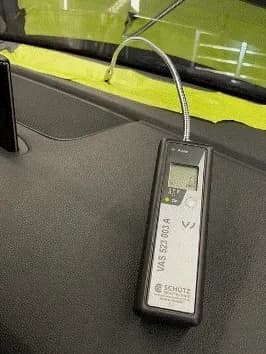
Si applica anche a
- Audi A3
- 2022–2024
- Audi A4
- 2021–2024
- Audi A4 allroad
- 2021–2024
- Audi A5
- 2021–2024
- Audi A6
- 2021–2024
- Audi A6 allroad
- 2021–2024
- Audi A7
- 2021–2024
- Audi A7 e
- 2021–2022
- Audi A8 L e
- 2021
- Audi e-tron
- 2022–2023
- Audi e-tron GT
- 2022–2024
- Audi Q3
- 2021–2024
- Audi Q5
- 2021–2024
- Audi Q7
- 2021–2024
- Audi Q8
- 2021–2024
- Audi R8
- 2021–2023
- Audi RS 3
- 2022–2024
- Audi RS 5
- 2021–2024
- Audi RS 6 Avant
- 2021–2024
- Audi RS 7
- 2021–2024
- Audi RS e-tron GT
- 2022–2024
- Audi RS Q8
- 2021–2024
- Audi S3
- 2022–2024
- Audi S4
- 2021–2024
- Audi S5
- 2021–2024
- Audi S6
- 2021–2024
- Audi S7
- 2021–2024
- Audi S8
- 2021, 2023, 2024
- Audi SQ5
- 2021–2024
- Audi SQ7
- 2021–2024
- Audi SQ8
- 2021–2024
- Audi TT
- 2021–2023
- Audi TT RS
- 2021–2022
- Audi TTS
- 2021–2023
▸ Mostra altri 28▾ Mostra meno
Symptoms of Insufficient AC Cooling
Owners of 2021-2024 Audi vehicles may experience their cabin air conditioning system providing insufficient cooling or not functioning at all. This symptom often indicates a leak in the refrigerant circuit, which can be challenging to locate using traditional diagnostic methods. If you notice your Audi e-tron AC leak diagnosis is needed, this TSB provides the latest approach.
Technical Background: New Leak Detection Method
Traditionally, refrigerant leaks were diagnosed using methods such as adding contrast dye and UV light inspection, electronic halogen leak detectors, or pressurizing the circuit with nitrogen and applying soap solution. However, these methods can be unreliable, especially when trying to find leaks in hard-to-access areas like the evaporator core. False-positive readings from halogen detectors are common, and visual inspection of the evaporator core is problematic.
Audi has introduced an advanced diagnostic method utilizing calibration gas (95% nitrogen / 5% hydrogen) and an electronic hydrogen detector (VAS523003A). This technique has proven more effective for diagnosing leaks in concealed parts of the refrigerant circuit, such as the evaporator core hidden within its housing. This method was first mandated for the R744 refrigerant system in the Q4 e-tron, which prohibits the use of additives, necessitating a new set of tools and procedures.
Important Warnings and Advisories
Audi has issued several critical warnings and advisories for technicians and owners regarding this diagnostic procedure:
- High Voltage Safety: "High voltage increases the risk of fatal injury. Severe bodily injury or death by electrocution or electric arcs is possible." Therefore, when servicing a high voltage vehicle, it is mandatory to "Have an Audi high-voltage technician or an Audi high-voltage expert de-energize the high-voltage system." The same applies when re-energizing the vehicle: "Have an Audi high-voltage technician or an Audi high-voltage expert to bring the high-voltage system back into service."
- AC System Operation with Calibration Gas: "The air conditioning system must not be activated while the circuit is charged with calibration gas. Running the air conditioning system while it is charged with calibration gas will damage the compressor. If necessary apply a warning sign to the vehicle stating 'Do Not Run' or a similar warning to prevent accidental operation while the circuit is filled with calibration gas for the purposes of diagnosis."
- Evaporator Core Replacement: "If no leak is detected through the defroster outlet using this method the evaporator core is not the source of the refrigerant leak and the evaporator core is not to be replaced." This prevents unnecessary and costly evaporator replacements.
- Q5 Relay and Fuse Carrier Reinstallation: For Q5 models, if the evaporator is confirmed leaking and replaced, it is "critically important that this Relay and Fuse Carrier 3 -SR3- in particular be reinstalled in its correct original position. Failure to reinstall the Relay and Fuse Carrier 3 precisely will result in water intrusion and subsequent component damage."
Repair Procedure Summary
The diagnostic procedure for an Audi e-tron AC leak diagnosis using calibration gas involves several precise steps:
- Refrigerant Recovery: If the vehicle has insufficient cabin cooling, recover any remaining refrigerant from the circuit. Compare the recovered amount to the specified volume; a significantly lower amount (more than 50% lost) indicates an active leak.
- Calibration Gas Preparation: Obtain a tank of calibration gas, which consists of 95% nitrogen and 5% hydrogen. This gas must be sourced locally.
- Pressure Regulator Connection: Connect the VAS 584005 pressure regulator, part of the AT-448 Tool Set, to the calibration gas tank. Ensure the tank valve remains closed initially. The pressure regulator included in the NITROKITG is not suitable for this flammable gas mixture.
- Vehicle Preparation: Set the HVAC system to full defrost, close all instrument panel vents, ensure the fresh air intake is closed (recirculation mode), and completely close off the cabin (windows, sunroof, doors, rear lid). Turn off the vehicle completely (key off, no blower inactive).
- High Voltage De-energization: For high voltage vehicles, an Audi high-voltage technician or expert must de-energize the vehicle before proceeding.
- Circuit Evacuation: Evacuate the vehicle's refrigerant circuit for 15 minutes.
- NITROKITG Connection: After evacuation, connect the service manifold from the NITROKITG Automotive A/C Nitrogen Leak Test Kit to the high side service port, using the appropriate snap coupler for the refrigerant platform (R134a or R1234yf). Only one port needs to be connected for diagnosis.
- Calibration Gas Charging: Fill the circuit with calibration gas to an absolute pressure of no greater than 14 bar. It is crucial that the AC system is not activated during this step to prevent compressor damage. A "Do Not Run" warning sign should be applied to the vehicle.
- Pressure Equalization: Allow the circuit pressure to equalize for 20 minutes before beginning leak detection.
- Leak Detection: Close off the defroster outlets with masking tape, leaving a small opening for the VAS 523003A gas leak detector probe. The detector reacts to the hydrogen component of the calibration gas, which is lighter than air and will rise to the probe's position. Perform the leak diagnosis immediately after charging and the equalization period, as hydrogen evaporates quickly. If no leak is found through the defroster outlet, the evaporator core is not the source of the leak and should not be replaced. Continue diagnosis on other refrigerant circuit components.
- Post-Diagnosis: Once all leak sources are identified, close the valve on the calibration gas tank. Slowly ventilate any remaining calibration gas until the circuit pressure equalizes with atmospheric pressure. Proceed with necessary repairs, evacuate the refrigerant circuit, and recharge the system.
- High Voltage Re-energization: An Audi high-voltage technician or expert must bring the high-voltage system back into service.
Required Tools and Parts
Specialized tools are required for this advanced leak detection method:
| Tool Number | Tool Description |
|---|---|
| VAS581009 | R744 CO2 A/C Service Unit |
| VAS584005 | Pressure Reducer and Hose |
| NITROKITG | Automotive A/C Nitrogen Leak Test Kit |
| VAS523003A | Gas Leak Detector |
Warranty Information
This Technical Service Bulletin (TSB 2064077/3) provides guidance for warranty claims. The service number is 8760, and the damage code is 0050. Labor operations include:
- Evaporator remove and reinstall (All models except e-tron GT): 8760 1950
- Heating, ventilation unit remove and reinstall (e-tron GT): 8515 1950
- Air conditioner check: 8760 0199 (includes time for diagnosis supported by punch time, max 130 TU)
Diagnostic time (0150 0000) is allowed for BEV and PHEV vehicles (max 50 TU), but not for non-BEV and non-PHEV vehicles. Road test procedures before and after service have no allowance (0 TU). Warranty claims are subject to the Audi Warranty Policies and Procedures Manual and may be audited. If the vehicle is outside of any warranty, this TSB is for informational purposes only.
NHTSA ID: 10244532
Galleria
8 immagini
Frequently Asked Questions
- What are the symptoms of an AC refrigerant leak in my 2021-2024 Audi?
- The primary symptom is insufficient cabin cooling or a complete failure of the air conditioning system. If your Audi's AC isn't working as expected, it could indicate a refrigerant circuit leak.
- Why is a new AC leak detection method necessary for Audi vehicles?
- Traditional methods for detecting AC refrigerant leaks can be unreliable, especially for leaks in hard-to-access areas like the evaporator core. Audi's new calibration gas method, detailed in TSB 2064077/3, offers a more effective and precise way to locate these hidden leaks.
- What is calibration gas and how is it used for an Audi e-tron AC leak diagnosis?
- Calibration gas is a mixture of 95% nitrogen and 5% hydrogen. In the diagnostic process, this gas is charged into the evacuated AC system. An electronic hydrogen detector (VAS523003A) is then used to detect the hydrogen component, which rises and pinpoints the exact location of the leak, even in concealed areas.
- Are there any safety warnings associated with this AC leak diagnosis procedure?
- Yes, several critical warnings exist. For high-voltage vehicles, an Audi high-voltage technician must de-energize the system before service. Additionally, the AC system must never be activated while charged with calibration gas, as this can damage the compressor. A "Do Not Run" warning sign should be placed on the vehicle.
- What should I do if my 2021-2024 Audi's AC is not cooling properly?
- If your Audi's AC is not cooling properly, it's recommended to have it inspected by an authorized Audi service center. They can perform the advanced calibration gas leak detection method outlined in TSB 2064077/3 to accurately diagnose and repair any refrigerant leaks.
Related Articles
2021 Audi e-tron Electrical Malfunction and Power Loss
A 2021 Audi e-tron owner reported a severe 'Electrical Malfunction' resulting in complete loss of power on the highway. The issue has persisted despite dealer attempts to fix it over five months, posing significant safety risks.
2021-2026 Audi UTR Troubleshooting & FAQs TSB 2081409/1
This Audi Technical Service Bulletin (TSB 2081409/1) provides comprehensive answers to frequently asked questions and troubleshooting steps for the Audi Universal Traffic Recorder (UTR) accessory, covering topics like SD card compatibility, video playback, Wi-Fi issues, and more.
2021-2025 Audi Emergency Call System Fault TSB
Audi has released Technical Service Bulletin 2059528/18 to address an "Emergency call function: malfunction! Function unavailable. Please contact service" warning, often accompanied by a red SOS LED and DTC B200000. This issue affects various 2021-2025 Audi models and is due to a software problem…
2021-2026 Audi Adaptive Light System Fault C12B3FA TSB
Audi has released Technical Service Bulletin 2054202/7 to address an intermittent 'Audi adaptive light: system fault' message and DTC C12B3FA in various 2021-2026 models. This TSB outlines diagnosis and resolution for driver assistance system malfunctions.
2021-2026 Audi Parking Aid False Warnings TSB 2024323/12
This Technical Service Bulletin (TSB 2024323/12) details diagnostic and repair procedures for 2021-2026 Audi vehicles experiencing false parking aid warnings. Learn about environmental factors, sensor checks, and proper installation to resolve issues like 'Parking aid does not work / warning is…
Leave a comment
Comments are moderated and may take a moment to appear. Only your first name and the initial of your last name are shown publicly.
Comments
Be the first to comment.