2015-2026 Audi Steering Wheel Vibration TSB 2022563/23
Audi has released Technical Service Bulletin 2022563/23 to address customer complaints of steering wheel shimmy, vibration, and oscillation in various 2015-2026 models. This bulletin outlines diagnostic and repair procedures for technicians.
 Marcus Weber2023 Audi e-tron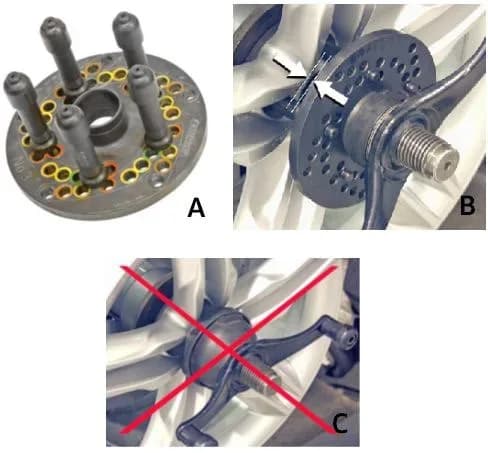
Si applica anche a
- Audi A3
- 2022–2025
- Audi A4
- 2021–2025
- Audi A4 allroad
- 2021–2025
- Audi A5
- 2021–2025
- Audi A6
- 2021–2025
- Audi A6 allroad
- 2021–2024
- Audi A7
- 2021–2025
- Audi A7 e
- 2021–2022
- Audi A8 L e
- 2021
- Audi e-tron
- 2022
- Audi e-tron GT
- 2022–2025
- Audi Q3
- 2021–2025
- Audi Q5
- 2021–2025
- Audi Q5 e
- 2024–2025
- Audi Q7
- 2021–2025
- Audi Q8
- 2021–2024
- Audi R8
- 2021–2023
- Audi RS 3
- 2022–2025
- Audi RS 5
- 2021–2025
- Audi RS 6 Avant
- 2021–2025
- Audi RS 7
- 2021–2025
- Audi RS e-tron GT
- 2022–2024
- Audi RS Q8
- 2021–2025
- Audi S e-tron GT
- 2026
- Audi S3
- 2022–2025
- Audi S4
- 2021–2025
- Audi S5
- 2021–2025
- Audi S6
- 2021–2025
- Audi S7
- 2021–2024
- Audi S8
- 2021–2025
- Audi SQ5
- 2021–2025
- Audi SQ7
- 2021–2025
- Audi SQ8
- 2021–2025
- Audi TT
- 2021–2023
- Audi TT RS
- 2021–2022
- Audi TTS
- 2021–2023
▸ Mostra altri 30▾ Mostra meno
Audi has issued Technical Service Bulletin (TSB) 2022563/23 to address customer reports of steering wheel shimmy, vibration, and oscillation in various 2015-2026 Audi models. This bulletin supersedes TSB 23-97, dated January 20, 2023, and provides updated information regarding warranty labor operations and added model years.
Symptoms
Owners of affected Audi vehicles may experience the following:
- "A vibration is felt in the seat, vehicle floor, footwell, pedals, or steering wheel." This condition does not typically lead to handling concerns or loss of vehicle control.
- "A vibration is felt while driving at highway speeds from 55 – 80 mph (88 – 128 km/h)."
If you notice an Audi e-tron steering wheel vibration, it's important to have it diagnosed by a qualified technician.
Important Warnings for Owners and Technicians
- Warranty Claims: For all warranty vibration repairs, a completed Tire Data Sheet and Hunter RFV printouts must be retained for warranty claim payment. Failure to do so will result in non-payment of the claim.
- Repair Authorization: This bulletin is not applicable if the vehicle has a Repair Authorization on this topic. If an applicable Repair Authorization is not followed, the claim will not be paid.
- Tire Warranty: Audi of America, Inc. does not warranty tires originally installed or sold as a replacement. Individual tire manufacturers provide their own warranties.
Diagnosis and Trigger Conditions
The TSB emphasizes that temporary flat spots on tires can falsify radial force fluctuation measurements. These flat spots develop after a warm tire cools down following a period of rest. To ensure accurate diagnosis of an Audi e-tron steering wheel vibration, technicians must eliminate temporary flat spots before checking balance and radial force variation (RFV).
To eliminate temporary flat spots, technicians should:
- Set all tire pressures according to the owner's manual, based on normal or full load requirements.
- Test drive the vehicle for 12-15 miles at various speeds (up to 62 mph). Some tires may require longer test drives.
- Immediately after the test drive, raise the vehicle on a lift to check balance and RFV before the tires cool down.
Repair Procedure Summary
The repair procedure outlined in the TSB involves four main steps to address the steering wheel vibration:
- Prepare Tires for RFV Measurement: This involves ensuring tire pressures are correct and eliminating any temporary flat spots through a test drive.
- Measure RFV and Balance: Technicians must ensure the tire balancer flange and wheel contact surfaces are clean. It is mandatory to use the appropriate centering collet (Figure 2, Image A) and a five-finger style clamping plate (Figure 3, Image A) to mount the wheel. Incorrect clamping methods (Figure 2, Image B; Figure 3, Image C) can damage the wheel. Tire pressure must be set to 36 psi (2.5 bar) for all measurements. A CenteringCheck® should be performed using the VAS 6230/Hunter GSP9700 Road Force Measurement® system. The SmartWeight® feature should be used to measure RFV and balance, as it checks both static (hop) and couple (wobble) vibrations. The "Quick Match" mode should not be used as it does not measure radial force.
- Optimize RFV and Balance: If a tire needs to be match-mounted on a wheel, adequate lubrication is crucial for proper seating. Excessive lubricant can cause the tire to slip. The balance should be corrected, and RFV reduced to 18 lbs (80 N) or less for the first harmonic vibration. If the source of the vibration cannot be reduced to this level, the tire should be replaced. After balancing and RFV optimization, a "check-spin" is performed to ensure consistent balance values. If values are inconsistent, the machine's calibration and wheel/tire assembly mounting should be checked.
- Reinstall Wheel and Tire Assemblies: Wheels should be installed according to VAS 6230 instructions, with the wheel/tire assembly having the lowest road force value installed closest to the driver (left front). The order for installation is: lowest road force value (left front), second-lowest (right front), third-lowest (left rear), and highest (right rear). Tire pressures are reset to owner's manual specifications, and a final test drive is conducted to verify the repair.
Required Tools or Parts
Technicians will need specific tools to perform the diagnosis and repair:
- VAS 6230/Hunter GSP9700 Road Force Measurement® System: Used to check balance and RFV values.
- VAS 6243 model-specific clamping plate (5-finger clamping device): Used in conjunction with a centering collet for proper wheel mounting.
- Audi-recommended collets (part number HUN2018451): Can be ordered through Equipment Solutions.
- Vetronix MTS 4100 NVH Analyzer: Helpful for diagnosing vibration concerns and narrowing down possible sources.
Warranty Information
Warranty claims for this issue can be submitted under the following claim types:
- 910: Before vehicle delivery.
- 110: Up to 12 Months/12,000 Miles.
- If the vehicle is outside any warranty, this Technical Service Bulletin is informational only.
Claims must be submitted in accordance with the Audi Warranty Policies and Procedures Manual. The claim comment should reference "As per TSB 2022563/23". The diagnostic time for a road test prior to service is 10 TU (0121 0002), and a road test after service is also 10 TU (0121 0004).
Additional Information
Further details and resources can be found in Elsa at:
- Repair Manual, Suspension, Wheels, Steering >> Wheel and Tire Guide >> 44 Wheels, Tires, Wheel Alignment >> Diagnosis and Testing >> Wheel and Tire Vibration >> Tire Flat Spots from Standing.
- Repair Manual, Chassis >> Wheels and Tire General Information >> 44 Wheels, Tires, Wheel Alignment >> Wheels/Tires/Tire Pressure Monitoring Assembly >> Wheel, Changing and Mounting.
- SSP: Noise, Vibration, and Harshness 961403.
NHTSA ID: 10242940
Frequently Asked Questions
- What causes steering wheel vibration in 2015-2026 Audi models?
- Steering wheel vibration, shimmy, or oscillation in 2015-2026 Audi vehicles can be caused by issues with tire balance, radial force variation (RFV), or temporary flat spots on tires. Audi TSB 2022563/23 provides detailed diagnostic steps to identify and correct these issues.
- Will my Audi dealer charge me to fix an Audi e-tron steering wheel vibration?
- If your vehicle is still under warranty (either before delivery or up to 12 months/12,000 miles), the repair for an Audi e-tron steering wheel vibration, as outlined in TSB 2022563/23, may be covered. However, specific documentation like a completed Tire Data Sheet and Hunter RFV printouts are required for warranty claim payment.
- What is Radial Force Variation (RFV) and how does it relate to steering wheel vibration?
- Radial Force Variation (RFV) refers to the change in the radial force exerted by a tire as it rotates, primarily due to manufacturing inconsistencies or flat spots. High RFV can lead to vibrations felt in the steering wheel, seat, or floor. Audi TSB 2022563/23 details procedures for measuring and optimizing RFV to resolve vibration issues.
- What tools are used to diagnose and fix Audi steering wheel vibration?
- Audi technicians use specialized equipment such as the VAS 6230/Hunter GSP9700 Road Force Measurement® System, VAS 6243 model-specific clamping plates, Audi-recommended collets (part number HUN2018451), and sometimes a Vetronix MTS 4100 NVH Analyzer to accurately diagnose and correct steering wheel vibration issues.
Related Articles
Should 2023 Audi e-tron Owners Worry? Recall & TSB Roundup
The 2023 Audi e-tron faces significant safety concerns, including recalls for potential brake pedal detachment and charging cable overheating. Owners have also reported serious issues like unintended acceleration and electrical system malfunctions. This guide covers all known problems and solutions.
2023 Audi e-tron Brake Pedal Recall
Audi has issued a recall (NHTSA ID: 26V240000, Audi Recall 46P7) for certain 2019-2024 E-Tron and 2020-2024 E-Tron Sportback vehicles, including the 2023 Audi e-tron. The recall addresses a potential issue where the brake pedal may detach from the brake booster, leading to a loss of brake function.
2015-2027 Audi Noise Diagnosis with Frequency Analysis App TSB
Audi has released Technical Service Bulletin 2051095/11 detailing the Audi Frequency Analysis app. This app helps technicians diagnose noise complaints more precisely across 2015-2027 Audi models. Learn how the app works, where to download it, and its features for effective vehicle noise analysis.
2023 Audi e-tron AC/DC Charging Not Possible TSB
This manufacturer communication (NHTSA ID 11031035) provides critical information for 2023 Audi e-tron owners facing issues with AC/DC charging. It specifically highlights problems linked to software version 00C6: 0093/3119, which can prevent the vehicle from charging.
2023-2025 Audi Rear Seat Reminder Message TSB 2074943/2
Audi Technical Service Bulletin 2074943/2 explains the instrument cluster message 'Please check rear seats and be aware of door safelock' in various 2023-2025 Audi models. This informational TSB details the rear occupant detection system designed to prevent children and pets from being left in…
Leave a comment
Comments are moderated and may take a moment to appear. Only your first name and the initial of your last name are shown publicly.
Comments
Be the first to comment.